Every few months, the same tired narrative surfaces: Bitcoin mining is boiling the oceans, burning down forests, and single-handedly accelerating climate catastrophe. Mainstream media runs the same recycled charts, politicians draft knee-jerk legislation, and the uninformed nod along. Here is the problem with all of that — it is almost entirely wrong, and the people repeating it have never set foot in a mining facility or cracked open an ASIC.
At D-Central Technologies, we have been building, repairing, and deploying Bitcoin mining hardware since 2016. We are not theorizing from a university office. We are the Bitcoin Mining Hackers who have physically installed miners in Canadian homes, converted ASICs into space heaters, and helped thousands of home miners turn their excess energy into sats. We have the receipts — and the calloused hands to prove it.
This article dismantles the myths, presents the data as it stands in 2026, and shows why Bitcoin mining is not the environmental villain it is made out to be. In fact, it is quietly becoming one of the most powerful forces for energy innovation on the planet.
The State of Bitcoin Mining Energy Use in 2026
Before we address the myths, let us ground ourselves in current reality. As of early 2026, the Bitcoin network operates at over 800 EH/s (exahashes per second), with a mining difficulty exceeding 110 trillion. The block reward sits at 3.125 BTC following the April 2024 halving. These are the numbers that matter — not the sensationalized headlines.
| Metric | 2026 Value | Context |
|---|---|---|
| Network Hashrate | 800+ EH/s | Securing $1.5T+ in value |
| Mining Difficulty | 110T+ | All-time high, up 50%+ from 2024 |
| Block Reward | 3.125 BTC | Post-April 2024 halving |
| Est. Renewable Energy Share | ~56-60% | Highest of any major industry |
| Est. Global Energy Consumption | ~0.1-0.2% of global electricity | Less than household tumble dryers in the US |
The Cambridge Centre for Alternative Finance (CCAF) has consistently shown that Bitcoin mining accounts for a fraction of a percent of global electricity production. To put that in perspective: data centres powering Netflix, Instagram, and TikTok consume far more electricity than Bitcoin mining, yet no one calls for banning cat videos. The selective outrage tells you everything about who is driving the narrative and why.
Myth #1: Bitcoin Mining Runs on Fossil Fuels
This one refuses to die, so let us bury it with data. Multiple independent studies — including reports from the Bitcoin Mining Council (BMC) and CCAF — estimate that 56% or more of Bitcoin mining is powered by renewable or sustainable energy sources. That makes Bitcoin mining the most renewable-heavy major industry on Earth. Not close to it. The most.
Why? Because miners are relentlessly driven by economics. Electricity is our single largest operational cost. Cheap electricity is almost always renewable electricity — stranded hydroelectric in Quebec and British Columbia, excess wind in West Texas, geothermal in Iceland, solar overproduction across the American Southwest. Miners do not burn coal because they love pollution. They hunt for the cheapest electrons on the planet, and those electrons increasingly come from renewables.
Here in Canada, we know this firsthand. Our hosting operations in Quebec run on some of the cleanest, cheapest hydroelectric power in the world. Hydro-Quebec generates over 99% of its electricity from water. When critics claim Bitcoin mining is dirty, they conveniently ignore that entire regions — including Canada, Norway, Iceland, and parts of South America — mine almost exclusively on renewables.
Myth #2: Bitcoin Mining Wastes Energy
This myth confuses “energy I do not value” with “wasted energy.” The same logic would condemn Christmas lights, tumble dryers, and air conditioning as waste. Energy is not wasted when it secures the most robust monetary network ever created — a network that provides censorship-resistant transactions to billions of people who cannot rely on their governments or banking systems.
But even setting aside the philosophical argument, Bitcoin mining actively reduces energy waste in measurable ways:
Stranded and Curtailed Energy
Renewable energy installations — wind farms, solar arrays, hydroelectric dams — frequently produce more electricity than the grid can absorb. This surplus gets curtailed (literally thrown away) because there is nowhere for it to go. Bitcoin miners are the ultimate buyer of last resort. They can set up anywhere, scale up or down in minutes, and consume energy that would otherwise be wasted. In Texas alone, ERCOT data shows miners have absorbed gigawatts of otherwise-curtailed wind energy.
Methane Flaring and Venting
Methane is 80 times more potent than CO2 as a greenhouse gas over a 20-year period. Oil fields routinely flare or vent methane directly into the atmosphere because capturing and transporting it is uneconomical. Companies like Upstream Data and Crusoe Energy have demonstrated that deploying Bitcoin miners at wellheads converts this wasted methane into productive energy, reducing its climate impact by over 90% compared to direct venting. Bitcoin mining is not creating emissions here — it is eliminating them.
Heat Recapture: Mining as Heating
Every watt of electricity consumed by a Bitcoin miner is converted into heat with near-perfect efficiency. In cold climates like Canada, that heat is not waste — it is a feature. At D-Central, we pioneered the Bitcoin Space Heater concept, converting ASIC miners into fully functional home heating systems. Your miner heats your house while stacking sats. Zero energy is wasted — it simply does double duty.
| Heat Recapture Application | How It Works | Net Environmental Impact |
|---|---|---|
| Home Space Heating | ASIC miners replace electric heaters, warm air ducted through home | Net zero — replaces equivalent electric heat |
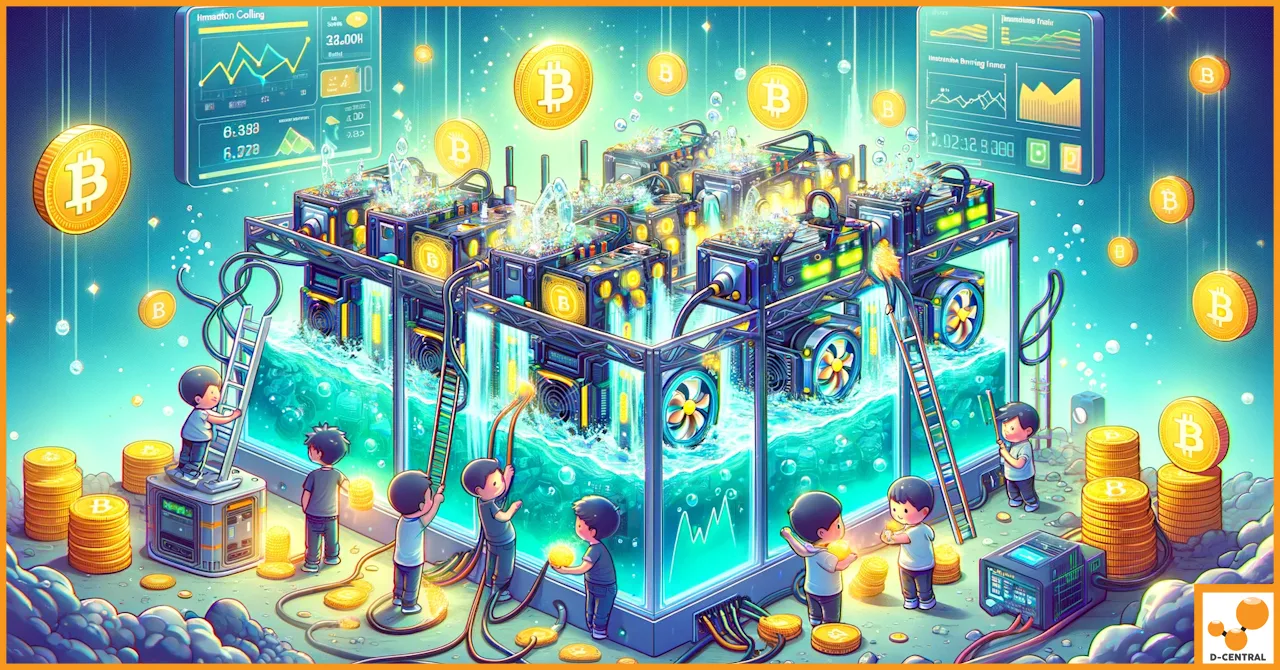
| Hot Water Heating | Immersion-cooled miners transfer heat to domestic hot water tanks | Displaces gas or electric water heaters |
| Greenhouse Heating | Mining exhaust heats greenhouses in cold climates | Enables year-round growing, displaces propane heating |
| Industrial Drying | Waste heat used for lumber drying, food dehydration | Reduces industrial fossil fuel consumption |
| District Heating | Large-scale mining operations feed heat into municipal district heating networks | Displaces natural gas heating at community scale |
Myth #3: Bitcoin Mining Has No Societal Benefit
This argument only works if you believe that censorship-resistant money, financial sovereignty, and a decentralized settlement layer have no value. We would politely but firmly disagree.
Bitcoin mining secures a network that processes hundreds of billions of dollars in transactions per year without any central authority. It provides financial access to the unbanked. It enables permissionless wealth transfer across borders. It gives dissidents, refugees, and victims of authoritarian regimes a way to preserve their purchasing power. If you think that has no societal value, you have never had your bank account frozen or your currency hyperinflated.
But beyond the monetary network itself, Bitcoin mining creates tangible physical benefits:
- Grid stabilization: Miners act as controllable load, absorbing excess generation during low-demand periods and curtailing during peak demand. Texas has documented billions of dollars in grid savings from miner participation in demand response programs.
- Renewable energy financing: Mining operations provide guaranteed baseload demand that makes marginal renewable projects financially viable. A solar farm that cannot sell 30% of its output to the grid becomes profitable when miners buy that excess.
- Methane reduction: As noted above, mining at oil and gas wellheads is actively reducing greenhouse gas emissions — not theoretical future reductions, but measured, verified reductions happening right now.
- Job creation: Mining operations create skilled technical jobs in rural and remote communities that often have limited economic opportunities. From electricians and HVAC technicians to firmware engineers and operations managers, mining builds real local employment.
- Heat as a byproduct: In northern climates like Canada, mining heat directly displaces fossil fuel heating, creating a net environmental benefit.
Myth #4: More Efficient Alternatives Exist
The “just use proof-of-stake” crowd fundamentally misunderstands what Bitcoin is solving for. Proof-of-work is not a bug — it is the entire point. It anchors digital scarcity to physical reality through thermodynamic cost. Proof-of-stake systems trade energy expenditure for plutocracy: the more coins you hold, the more power you have. That is not decentralization — it is a digital recreation of the existing financial system’s power structures.
Bitcoin chose proof-of-work deliberately and will not change. The energy expenditure is the security budget. It is what makes Bitcoin immutable, censorship-resistant, and trustless. Comparing Bitcoin’s energy use to proof-of-stake networks is like comparing the fuel consumption of an armored vault transport to a bicycle and concluding the vault is wasteful. They are not doing the same thing.
Bitcoin Mining as a Grid Flexibility Tool
One of the most underappreciated aspects of Bitcoin mining is its role as a grid flexibility tool. Modern power grids face a fundamental challenge: generation must match demand at every moment. As variable renewable sources like wind and solar grow, this balancing act becomes increasingly difficult.
Bitcoin miners are uniquely suited to solve this problem. Unlike traditional industrial loads, miners can:
- Ramp down in seconds when grid demand spikes, freeing up electricity for critical uses
- Ramp up instantly when excess renewable generation would otherwise be curtailed
- Relocate to areas with stranded energy that has no other buyer
- Operate 24/7 providing consistent baseload demand that improves the economics of renewable installations
ERCOT (the Texas grid operator) has publicly recognized Bitcoin miners as among the most responsive demand response participants in their system. During Winter Storm Elliott in 2022, miners voluntarily curtailed nearly 100% of their load within minutes, freeing up gigawatts for residential heating. That is not environmental destruction — that is grid heroism.
The future of energy grids is renewable, variable, and distributed. Bitcoin mining fits into that future perfectly as a flexible, interruptible, location-agnostic load. Grid operators are increasingly realizing this, and progressive jurisdictions are actively courting miners for their grid-balancing benefits.
The Canadian Advantage: Cold Climate, Clean Power, Bitcoin Mining
Canada occupies a unique position in the global mining landscape. We have some of the coldest climates on Earth — which dramatically reduces cooling costs and makes heat recapture from mining directly useful for half the year or more. We have massive hydroelectric capacity, particularly in Quebec and British Columbia, providing some of the cleanest and cheapest electricity on the planet.
At D-Central, we leverage these advantages every day. Our hosting facility in Quebec runs on hydro power. The miners we help home miners deploy across Canada serve double duty — producing Bitcoin and heating Canadian homes through our long winters. When you mine Bitcoin in Canada with a Bitcoin Space Heater, your effective electricity cost for mining drops to near zero because you were going to heat your home anyway.
This is not a thought experiment. This is what thousands of Canadian home miners are doing right now. They are not wasting energy. They are using it twice.
The Real Environmental Story: Mining Drives Energy Innovation
Here is what the critics never mention: Bitcoin mining is the only industry that actively seeks out the cheapest, most stranded energy on Earth. That economic incentive has made Bitcoin miners the de facto R&D department for energy innovation.
Miners have funded and deployed:
- Methane capture systems at remote oil wells that would never have been economically viable otherwise
- Micro-hydro installations on rivers too small for traditional grid connection
- Solar installations in regions where grid interconnection costs make traditional deployment uneconomical
- Waste heat recapture systems that are now being adopted by non-mining industries
- Demand response technologies that improve grid stability for everyone
None of this happens without the economic incentive that Bitcoin mining provides. The profit motive — earning 3.125 BTC per block at current rewards — drives miners to find energy that nobody else wants and put it to productive use. Critics who demand miners stop mining are inadvertently calling for less renewable energy development, more methane venting, and more curtailed clean power. The irony is staggering.
What You Can Do: Mine Bitcoin Responsibly at Home
You do not need a warehouse full of machines to participate in environmentally responsible Bitcoin mining. Home mining — especially in cold climates — is one of the most energy-efficient ways to mine, because every watt serves double duty.
Here is how to get started with D-Central:
- Bitcoin Space Heaters: Our Bitcoin Space Heater editions convert ASIC miners into silent, effective home heaters that mine while they warm your space. Available in multiple configurations.
- Open-Source Solo Miners: The Bitaxe and other open-source miners let you participate in solo mining with minimal power consumption. They run on 5-15 watts and can heat a small workspace while you try your luck at hitting a full 3.125 BTC block reward.
- Repaired and Refurbished ASICs: Our ASIC repair service extends the life of mining hardware, keeping functional equipment out of landfills and reducing the environmental impact of manufacturing new machines.
- Expert Consulting: Not sure where to start? Our mining consulting service helps you design a home mining setup optimized for your energy situation, climate, and goals.
| Home Mining Approach | Power Draw | Heat Output | Best For |
|---|---|---|---|
| Bitaxe Solo Miner | 5-15W | Minimal (desk warmer) | Solo mining, education, lottery blocks |
| Space Heater Edition (S9) | ~1,200W | ~4,000 BTU/hr | Heating small rooms, supplemental heat |
| Space Heater Edition (S19) | ~3,000W | ~10,000 BTU/hr | Primary room heating, garage/workshop |
| Full ASIC (Standard) | 3,000-5,000W | 10,000-17,000 BTU/hr | Dedicated mining + whole-room heating |
FAQ
Does Bitcoin mining really use more energy than some countries?
Bitcoin mining consumes roughly 0.1-0.2% of global electricity production. Comparing it to entire countries is a misleading framing — many of those countries have tiny populations and economies. The relevant comparison is to other industries: Bitcoin mining uses less energy than gold mining, less than data centres, and less than household clothes dryers in the United States alone. The energy secures a global monetary network processing hundreds of billions in annual transactions.
What percentage of Bitcoin mining uses renewable energy?
Estimates from the Bitcoin Mining Council and Cambridge Centre for Alternative Finance place the renewable and sustainable energy share at 56% or higher as of 2025-2026. This makes Bitcoin mining the most renewable-heavy major industry in the world. In regions like Quebec, Iceland, and Norway, the figure approaches 100%. D-Central’s hosting operations in Quebec run entirely on hydroelectric power.
Is proof-of-stake better for the environment than proof-of-work?
Proof-of-stake uses less energy, but it solves a fundamentally different problem. Proof-of-work anchors digital scarcity to physical reality through thermodynamic cost — this is what makes Bitcoin censorship-resistant and truly decentralized. Proof-of-stake systems concentrate power in the hands of the largest token holders, recreating the centralized power structures Bitcoin was designed to eliminate. The energy expenditure is Bitcoin’s security budget, not a flaw.
How does Bitcoin mining help reduce methane emissions?
Oil and gas operations routinely flare or vent methane — a greenhouse gas 80 times more potent than CO2 over 20 years — because capturing it is uneconomical. Bitcoin miners deployed at wellheads convert this wasted methane into electricity for mining, reducing its climate impact by over 90% compared to direct venting. This is actively happening at thousands of sites across North America and is one of the most effective methane reduction strategies available today.
Can I mine Bitcoin at home without increasing my energy bill?
In cold climates like Canada, absolutely. If you heat your home with electricity, a Bitcoin Space Heater replaces your existing electric heater while mining Bitcoin. Since every watt consumed by the miner becomes heat with near-perfect efficiency, your heating bill stays the same — but now you are also earning Bitcoin. D-Central’s Space Heater editions are specifically designed for this dual-purpose use.
How does Bitcoin mining stabilize the electrical grid?
Bitcoin miners are highly flexible loads that can ramp up or down in seconds. During peak demand, miners curtail operations to free up electricity for critical uses. During off-peak periods or when renewable generation exceeds demand, miners absorb the surplus. Grid operators like ERCOT in Texas have documented significant grid stability improvements and cost savings from miner participation in demand response programs.
What makes Canada ideal for Bitcoin mining?
Canada offers three key advantages: abundant clean hydroelectric power (especially Quebec and BC), cold climate that reduces cooling costs and makes waste heat directly useful, and a stable regulatory environment. Mining in Canada during winter means your ASIC is simultaneously producing Bitcoin and heating your home — effectively mining at zero marginal energy cost for heating. D-Central’s hosting operations in Quebec leverage all of these advantages.
Does ASIC repair help the environment?
Yes. Repairing and refurbishing mining hardware extends its operational life by years, keeping functional electronics out of landfills and reducing demand for new manufacturing. D-Central’s ASIC repair service has repaired thousands of miners, each one representing avoided e-waste and avoided manufacturing emissions. It is one of the most directly impactful environmental actions in the mining industry.