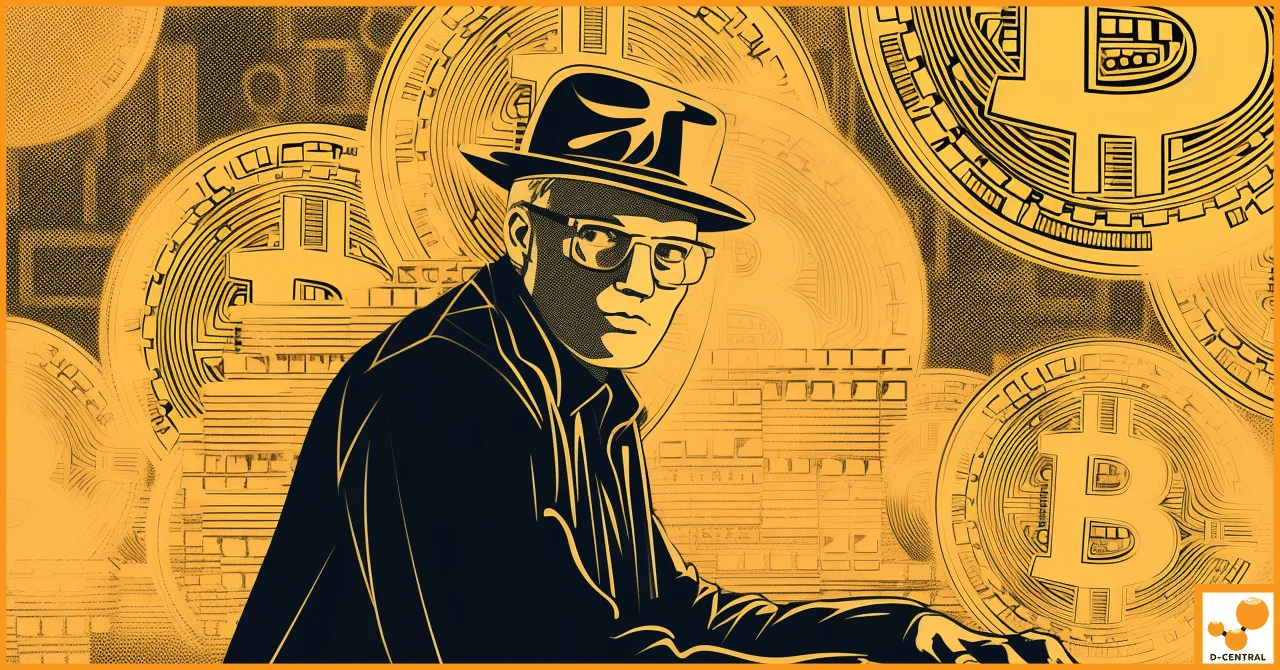
The Cypherpunks did not ask permission. They wrote code. They shipped systems. They built the cryptographic foundations that Satoshi Nakamoto would later assemble into the most consequential invention of the 21st century: Bitcoin.
If you mine Bitcoin today — whether you are running a Bitaxe solo miner on your desk or a fleet of S21s in a warehouse — you owe a debt to a mailing list that operated from 1992 to roughly 2013. The Cypherpunks mailing list was not a social club. It was an arsenal. Every tool, protocol, and philosophical argument that makes Bitcoin possible was forged, debated, or stress-tested there first.
This is the story of how a loose collective of cryptographers, hackers, and principled rebels engineered the preconditions for sound digital money. And it is a story that every miner should understand, because mining is the physical manifestation of everything the Cypherpunks fought for: censorship resistance enforced by proof-of-work, not promises.
The Cypherpunks Mailing List: Where the Code Was Written
The list launched in 1992, born out of informal gatherings in the San Francisco Bay Area organized by Tim May, Eric Hughes, and John Gilmore. These were not academics publishing papers for tenure committees. They were builders who believed that cryptography was a weapon of liberation — and that governments would eventually try to outlaw it.
Eric Hughes captured the ethos perfectly in “A Cypherpunk’s Manifesto” (1993):
“Cypherpunks write code. We know that someone has to write software to defend privacy, and since we can’t get privacy unless we all do, we’re going to write it.”
The mailing list became the coordination layer for this mission. At its peak, it had over 2,000 subscribers and generated roughly 30 messages per day. The discussions were technically dense — public-key cryptography, zero-knowledge proofs, anonymous remailers, digital cash protocols — but always grounded in a practical question: How do we build systems that cannot be shut down by any authority?
| Key Figure | Contribution | Relevance to Bitcoin |
|---|---|---|
| Tim May | The Crypto Anarchist Manifesto (1988) | Philosophical framework for unstoppable digital systems |
| Eric Hughes | A Cypherpunk’s Manifesto (1993) | Established “code, not laws” as operating principle |
| Adam Back | Hashcash (1997) | Direct ancestor of Bitcoin’s proof-of-work mining algorithm |
| Wei Dai | b-money proposal (1998) | Described computational proof-of-work for money creation |
| Nick Szabo | Bit Gold concept (1998-2005) | Closest pre-Bitcoin design: proof-of-work chain with unforgeable timestamps |
| Hal Finney | Reusable Proofs of Work (RPOW, 2004) | First recipient of a Bitcoin transaction; early code contributor |
Every one of these contributors engaged with the mailing list. The ideas did not appear in isolation. They were iteratively refined through years of debate, failed experiments, and relentless peer review. That process is exactly what makes Bitcoin robust today.
Hashcash to SHA-256: How Proof-of-Work Became Bitcoin Mining
If you are a miner, this section is your origin story.
In 1997, Adam Back published Hashcash — a proof-of-work system originally designed to combat email spam. The concept was elegant: force a sender to expend computational effort before sending a message. The cost is trivial for legitimate senders but prohibitive for spammers blasting millions of messages.
Satoshi Nakamoto took this principle and weaponized it for consensus. In the Bitcoin whitepaper, Hashcash is cited explicitly. The proof-of-work mechanism that secures every block — the reason your ASIC miner burns electricity to find valid hashes — descends directly from a Cypherpunk’s anti-spam tool.
Here is the lineage, compressed:
| Year | System | Innovation |
|---|---|---|
| 1993 | Pricing via Processing (Dwork & Naor) | Academic proof that computational puzzles can regulate access |
| 1997 | Hashcash (Adam Back) | Practical proof-of-work using SHA-1 partial hash collisions |
| 1998 | b-money (Wei Dai) | Proposed proof-of-work as the basis for creating money |
| 2004 | RPOW (Hal Finney) | Made proof-of-work tokens reusable and transferable |
| 2008 | Bitcoin (Satoshi Nakamoto) | Combined proof-of-work with a blockchain to solve double-spending without a trusted third party |
When you watch your Antminer compute trillions of SHA-256 hashes per second, you are witnessing the final form of an idea that was first sketched on a mailing list in the 1990s. Mining is not just a business. It is the enforcement mechanism for a Cypherpunk dream: money that no government can print, confiscate, or censor.
Digital Cash Before Bitcoin: The Failed Experiments That Paved the Way
Bitcoin did not emerge from nothing. It was built on the wreckage of previous attempts at digital cash — each of which failed for reasons that Satoshi specifically engineered around.
DigiCash (David Chaum, 1989): The first serious digital cash system. It used blind signatures to enable anonymous electronic payments. Technically brilliant, but it relied on a central server operated by Chaum’s company. When the company went bankrupt in 1998, the system died with it. Lesson: centralized digital cash is a single point of failure.
e-gold (1996): A gold-backed digital currency that processed billions in transactions. It was shut down by the U.S. government in 2007 on money laundering charges. Lesson: if the operator can be identified and raided, the system is not censorship-resistant.
b-money (Wei Dai, 1998): A theoretical proposal posted to the Cypherpunks mailing list. It described a system where money was created by solving computational puzzles and transactions were broadcast to a network. Wei Dai could not solve the problem of reaching consensus without a central coordinator. Lesson: the consensus problem is the hardest part.
Bit Gold (Nick Szabo, 1998-2005): The closest precursor to Bitcoin. Szabo proposed chaining proof-of-work solutions together with timestamps. But Bit Gold also lacked a decentralized consensus mechanism. Lesson: chaining proofs of work is necessary but not sufficient.
Satoshi solved what all of these projects could not: decentralized consensus through a combination of proof-of-work, the longest-chain rule, and economic incentives (block rewards). The block reward — currently 3.125 BTC after the April 2024 halving — is not just a payment to miners. It is the economic engine that makes trustless consensus possible. Every hash you compute is a vote for the legitimate chain.
Why Miners Are the True Cypherpunks
The Cypherpunks wrote code. Miners run it.
This is not a metaphor. The entire security model of Bitcoin depends on miners performing proof-of-work. Without miners, there is no censorship resistance. Without censorship resistance, Bitcoin is just another database that someone with enough power can alter or shut down.
Consider what mining actually does:
- Enforces immutability: Once a block is buried under enough subsequent blocks, reversing it requires re-doing all the proof-of-work. With the network currently exceeding 800 EH/s, that is computationally impossible for any attacker.
- Prevents censorship: As long as honest miners control a majority of hashrate, no entity can prevent valid transactions from being included in blocks.
- Distributes power: Every independent miner is a node in the decentralization network. The more geographically and politically distributed miners are, the harder Bitcoin is to attack.
This is why home mining matters. Every Bitaxe on a desk, every Space Heater in a basement, every Antminer in a garage is a vote for decentralization. The Cypherpunks understood that systems survive not because of laws or institutions, but because of cryptographic and economic incentives that make attacking them more expensive than defending them. Mining is that defense.
At D-Central Technologies, we have been in this fight since 2016. We are Bitcoin Mining Hackers — we take institutional-grade mining technology and hack it into solutions that work for the individual. Bitcoin Space Heaters that turn proof-of-work into home heating. Open-source Bitaxe miners that put solo mining within reach of anyone. ASIC repair services that keep hardware in the fight instead of in a landfill.
The Cypherpunks gave us the philosophy and the cryptography. We provide the hardware and the expertise to put it into practice.
The Cypherpunk Legacy: Principles That Still Guide Bitcoin Development
The Cypherpunks mailing list went quiet years ago, but its principles are embedded in Bitcoin’s DNA. These are not abstract ideals — they are engineering constraints that shape every protocol decision:
1. Privacy is a right, not a feature request. Bitcoin uses pseudonymous addresses, not account names. Your transaction history is not linked to your government identity by default. Tools like CoinJoin, Taproot (activated 2021), and the Lightning Network add additional privacy layers. The Cypherpunks would recognize all of these as implementations of their core thesis.
2. Decentralization is non-negotiable. The block size wars of 2015-2017 were fundamentally a Cypherpunk argument: should Bitcoin prioritize throughput (bigger blocks, fewer nodes, more centralization) or sovereignty (small blocks, anyone can run a node, maximum decentralization)? The small-block side won, preserving the ability of individuals — not corporations or governments — to verify the entire blockchain independently.
3. Code is law. Bitcoin’s consensus rules are enforced by software, not by courts or regulators. If a transaction is valid according to the protocol, it will be processed. No judge can issue an injunction against a SHA-256 hash. This is the Cypherpunk dream made operational.
4. Permissionless innovation. Anyone can build on Bitcoin. Anyone can mine it. Anyone can run a node. No application process. No KYC to participate in consensus. This open architecture is a direct expression of the Cypherpunk ethos: technology should empower individuals, not gatekeep them.
From Mailing List to Mining Rig: The Thread That Connects
There is a straight line from Eric Hughes writing “Cypherpunks write code” in 1993 to a home miner in Canada plugging in a Bitaxe and pointing it at a solo mining pool in 2026.
That line runs through Hashcash, through b-money and Bit Gold, through Satoshi’s whitepaper, through the Genesis Block, through the block size wars, through Taproot, through the Lightning Network, and through every halving that tightens Bitcoin’s monetary policy.
Mining is not separate from Bitcoin’s Cypherpunk heritage. It is the heritage, made physical. Every watt of electricity converted into a SHA-256 hash is a continuation of the work that started on that mailing list over three decades ago.
The Cypherpunks believed that cryptography could create systems beyond the reach of coercion. Bitcoin proved them right. And miners — from the largest industrial operations to the smallest Bitaxe on a bookshelf — are the ones who keep proving it, block after block, hash after hash.
Need your mining hardware repaired? D-Central Technologies has been servicing ASICs since 2016. We keep your machines hashing so you can keep contributing to the most important decentralized network ever built.
FAQ
Who were the Cypherpunks and why do they matter to Bitcoin?
The Cypherpunks were a collective of cryptographers, programmers, and privacy advocates active from the early 1990s onward. They communicated primarily through an email mailing list launched in 1992. Their work on public-key cryptography, digital signatures, proof-of-work systems, and digital cash proposals directly informed Bitcoin’s design. Key Cypherpunk contributors include Adam Back (Hashcash), Hal Finney (first Bitcoin transaction recipient), Wei Dai (b-money), and Nick Szabo (Bit Gold).
How did the Cypherpunks mailing list influence Bitcoin’s creation?
The mailing list served as a proving ground for the cryptographic and economic concepts that Bitcoin combines. Proof-of-work (Hashcash), digital cash proposals (b-money, Bit Gold), anonymous transaction systems, and decentralized consensus mechanisms were all debated and refined on the list. Satoshi Nakamoto’s whitepaper explicitly cites Hashcash and b-money, and the Bitcoin codebase incorporated solutions to problems the Cypherpunks had been working on for over a decade.
What is proof-of-work and how does it connect to the Cypherpunks?
Proof-of-work is a system that requires a computer to perform a measurable amount of computation before it can perform an action. Adam Back invented Hashcash in 1997 as a Cypherpunk anti-spam tool. Satoshi Nakamoto adapted this concept into Bitcoin’s mining algorithm, where miners compete to find valid SHA-256 hashes. This mechanism secures the network against double-spending and censorship without requiring any trusted third party.
Why did earlier digital cash systems like DigiCash and e-gold fail?
DigiCash failed because it was centralized — when the company went bankrupt in 1998, the system died. e-gold failed because its operators could be identified and prosecuted — the U.S. government shut it down in 2007. Both systems demonstrated that digital cash requires decentralization and censorship resistance to survive. Bitcoin solved these problems by eliminating central points of failure through proof-of-work consensus and distributed nodes.
How does Bitcoin mining carry forward the Cypherpunk mission?
Mining is the enforcement layer of Bitcoin’s censorship resistance. Every miner performing proof-of-work contributes to a network that no single entity can control, shut down, or censor. The more distributed mining is — across geographies, jurisdictions, and individual operators — the stronger this resistance becomes. Home mining with devices like Bitaxe solo miners and Bitcoin Space Heaters directly advances the Cypherpunk goal of decentralized, permissionless systems.
What is the current state of Bitcoin mining and how does D-Central Technologies fit in?
As of 2026, the Bitcoin network exceeds 800 EH/s of total hashrate, the block reward is 3.125 BTC following the April 2024 halving, and mining hardware ranges from open-source Bitaxe solo miners to industrial-scale ASIC machines. D-Central Technologies has been supporting miners since 2016 with hardware sales, ASIC repair services, mining consulting, and custom builds like Bitcoin Space Heaters. We are Bitcoin Mining Hackers — we make institutional-grade technology accessible to home miners who want to contribute to Bitcoin’s decentralization.