Cloud mining promises the dream: rent hashrate from someone else’s data center, collect Bitcoin rewards, never touch a cable. No noise. No heat. No maintenance. Just passive income flowing into your wallet while someone else does the work.
Here is the uncomfortable truth that the cloud mining industry does not want you to hear: the entire model is structurally broken, and the vast majority of cloud mining operations — past and present — have been outright scams, Ponzi schemes, or such terrible deals that the outcome is indistinguishable from theft.
This is not speculation. It is a decade of documented history. From HashOcean to BitClub Network, from Mining Max to scores of anonymous operations that vanished overnight, cloud mining has destroyed more capital than almost any other category of cryptocurrency fraud. And in 2026, with Bitcoin’s price attracting a fresh wave of newcomers, the scammers are back — wearing new logos, running new dashboards, making the same old promises.
At D-Central Technologies, we have been building, repairing, and operating Bitcoin mining hardware since 2016. We have seen every variant of this scam. This guide breaks down exactly how cloud mining fraud works, why the model fails even when the operator is honest, and — most importantly — what you should do instead if you actually want to mine Bitcoin on your own terms.
Why Cloud Mining Is Structurally Broken
Before we dissect the scams, you need to understand why cloud mining fails as a business model even in the best-case scenario. The economics simply do not work in the customer’s favor.
The Operator Always Wins
If a mining operator has profitable hardware running in a facility with cheap electricity, they face a simple decision: keep 100% of the mining revenue, or sell you a “contract” and keep a fraction. No rational operator sells hashrate contracts when they could mine directly — unless the contract revenue exceeds the mining revenue. That means you are paying more than the hashrate is worth.
This is not a cynical interpretation. It is basic economics. The only scenarios where selling hashrate contracts makes sense for the operator are:
- The hardware does not exist — pure fraud, no mining is happening at all
- The hardware is obsolete or failing — the operator is offloading risk to you
- The contracts are overpriced — you pay a premium that guarantees the operator profits regardless of Bitcoin price or difficulty
- It is a Ponzi scheme — early “returns” are funded by new customer deposits, not actual mining revenue
In every case, you lose. The operator extracts value from you that exceeds what they return. This is not a bug in cloud mining — it is the feature.
You Cannot Verify Anything
When you own a miner, you can see it running. You can check the hashrate on your pool dashboard. You can measure the power consumption at the wall. You can verify every satoshi that flows into your wallet. The entire chain of custody is transparent and under your control.
Cloud mining eliminates all of that verification. You see a dashboard — built by the operator. You see numbers — generated by the operator. You see “payouts” — determined by the operator. There is no independent way to confirm that any mining is actually happening on your behalf. You are trusting a stranger on the internet with your money, and your only evidence that they are holding up their end is… their word.
In the Bitcoin ecosystem, we have a saying: “Don’t trust, verify.” Cloud mining is the exact opposite of that principle. It is “trust completely, verify nothing.”
Difficulty and Halving Destroy Returns
Even if a cloud mining operator is completely honest and actually running real hardware, Bitcoin’s protocol-level mechanics work against contract holders. Mining difficulty adjusts upward as more hashrate joins the network. The April 2024 halving cut the block subsidy from 6.25 BTC to 3.125 BTC. A hashrate contract purchased in early 2024 produces roughly half the BTC in early 2026 — and that is before difficulty increases are factored in.
Cloud mining contracts are typically fixed-duration (12 months, 24 months, “lifetime”). Over the contract period, your share of the block reward steadily decreases while your upfront payment remains the same. The operator has already collected your money. You bear 100% of the protocol risk.
The Anatomy of a Cloud Mining Scam
Cloud mining scams follow predictable patterns. Once you know the playbook, they become easy to spot.
The Ponzi Structure
The most common and most dangerous variant. The operator builds a professional-looking website with a sleek dashboard. Early customers receive “payouts” that appear to confirm the operation is legitimate. These payouts come not from mining revenue but from deposits made by newer customers. The operator uses early success stories to fuel marketing — often through affiliate programs that pay generous referral bonuses.
The scheme works as long as new money flows in faster than old money flows out. When growth slows — because of market conditions, regulatory attention, or simply running out of new victims — withdrawals are frozen, support stops responding, and the operator disappears with whatever funds remain. BitClub Network operated this way for years before its founders were arrested and charged with a $722 million fraud.
The Fake Dashboard
Some operations skip the Ponzi mechanics entirely. They build a website, accept deposits, display a dashboard with fabricated hashrate numbers and fake earnings accumulating in real time, and then make withdrawals impossible. Minimum withdrawal thresholds, “maintenance fees” that eat your balance, “verification” processes that never complete — the tactics vary, but the result is the same: your money never comes back.
The Legitimate-Looking Bad Deal
This is the most insidious variant because it is technically not fraud. The operator actually owns hardware and actually mines Bitcoin. But the contract terms are structured so that the operator profits handsomely while the customer barely breaks even — or more often, loses money after fees, maintenance charges, and difficulty adjustments are accounted for. The fine print does all the damage: “maintenance fees” of $0.10-0.15/TH/day, automatic contract termination if daily revenue falls below the maintenance fee, no refunds on terminated contracts.
By the time difficulty increases and the halving cut your revenue in half, the maintenance fee has consumed everything. Your contract terminates. The operator keeps the hardware. You keep nothing.
Red Flags: How to Spot Cloud Mining Fraud in 2026
The scammers have gotten more sophisticated over the years, but the fundamental tells remain the same. Here is what to watch for:
Guaranteed Returns
Bitcoin mining returns are inherently variable. They depend on network difficulty, Bitcoin price, transaction fees, hardware efficiency, electricity costs, and luck. Anyone who guarantees a specific daily, weekly, or monthly return is lying. Full stop. No legitimate mining operation can guarantee returns because the protocol itself does not guarantee them.
No Verifiable Hardware
A real mining operation has real hardware in a real facility. They should be able to show you photos, video tours, hardware serial numbers, pool dashboard statistics, and on-chain transaction hashes for their coinbase rewards. If the operator cannot or will not provide this evidence, assume the hardware does not exist.
Anonymous or Unverifiable Team
Legitimate mining companies have real people behind them with real identities, real business addresses, and real regulatory filings. If the “About” page features stock photos, first names only, or no team information at all — walk away. Check corporate registries, LinkedIn profiles, and domain registration records. Scammers hide behind anonymity for obvious reasons.
Referral-Heavy Marketing
When a “mining company” spends more energy on its affiliate program than on its mining operations, you are looking at a recruitment-driven scheme. Multi-tier referral bonuses (5% for direct referrals, 3% for second-level, 1% for third-level) are the structural signature of a Ponzi. Legitimate mining operations do not need multi-level marketing to attract customers.
Accepting Only Cryptocurrency Payments
Scammers prefer cryptocurrency payments because they are irreversible. Credit card chargebacks and bank wire recalls give victims recourse. Bitcoin transactions do not. If a cloud mining service only accepts crypto and refuses traditional payment methods, they are deliberately eliminating your ability to recover funds when things go wrong.
Newly Registered Domain
Check the domain registration date using a WHOIS lookup. If the domain was registered weeks or months ago but the website claims years of operational history — that is a fabrication. Most cloud mining scam sites have a lifespan of 6-18 months before they execute their exit strategy.
No Physical Address or Jurisdiction
A company that mines Bitcoin at scale has a physical facility, pays electricity bills, and is registered in a jurisdiction with corporate laws. If there is no verifiable physical address, no corporate registration number, and no clear legal jurisdiction — there is no recourse when they take your money.
The Graveyard: Notable Cloud Mining Scams
History is the best teacher. Here are some of the most significant cloud mining frauds:
- BitClub Network (2014-2019) — $722 million Ponzi scheme. Founders arrested, convicted of conspiracy to commit wire fraud. Operated for five years using fake mining dashboards and an aggressive multi-tier referral program.
- HashOcean (2015-2016) — Claimed massive mining operations, offered “free” hashrate to new signups. Vanished overnight with an estimated $50+ million in customer funds.
- Mining Max (2016-2017) — South Korea-based scheme that defrauded 18,000 investors of approximately $250 million. Operator spent funds on personal luxury goods.
- Bitcoin Cloud Services / Hashprofit (various) — Dozens of smaller operations that followed the same template: professional website, Ponzi payouts, exit scam. Most operated for 3-12 months.
- Various 2024-2025 schemes — The post-halving Bitcoin price surge triggered a new generation of cloud mining scams, many now incorporating AI buzzwords (“AI-optimized mining,” “machine learning hashrate allocation”) to appear cutting-edge. Same fraud, new wrapper.
The pattern is clear. Cloud mining scams are not anomalies — they are the norm. The few legitimate cloud mining operations that have existed (such as the early days of Genesis Mining) eventually became bad deals as difficulty increased and contract terms worked against customers.
The Alternative: Own Your Hashrate, Verify Everything
The entire cloud mining pitch rests on the assumption that mining is too complicated, too expensive, or too noisy for normal people. That assumption was arguably valid in 2015. It is not valid in 2026.
The open-source mining revolution has changed everything. Today, you can run your own verified, sovereign mining operation — from a whisper-quiet solo miner on your desk to a full ASIC setup heating your home. Here is what real, verifiable mining looks like:
Solo Mining with Open-Source Hardware
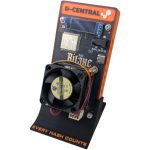
The Bitaxe family of open-source solo miners represents everything cloud mining is not. The hardware is open-source — you can inspect every component, every circuit trace, every line of firmware. You plug it in, point it at a solo mining pool, and you can verify your hashrate independently. Every hash your machine produces is yours. No intermediary, no dashboard controlled by a stranger, no “maintenance fees” silently eating your balance.
Is a single Bitaxe likely to find a block? The odds are long — but they are real, and they are verifiable. You are participating in the Bitcoin network directly, strengthening decentralization, and every hash genuinely counts. That is more than any cloud mining contract can honestly claim.
D-Central stocks the full Bitaxe ecosystem — every variant, every accessory, every power supply — because we believe that sovereign, verifiable mining is the future. We were one of the first companies to manufacture Bitaxe accessories, including the original Bitaxe Mesh Stand, and we have been supporting the open-source mining community since its earliest days.
Home Mining with ASICs
If you want serious hashrate, a full ASIC miner running in your home gives you everything cloud mining promises and everything it cannot deliver: real hardware you own, real hashrate you verify, and real Bitcoin flowing to a wallet you control. Modern ASIC miners can double as space heaters, turning your electricity cost into both Bitcoin and useful heat. That is a value proposition no cloud mining contract can match.
Noise and heat management are solvable problems. Sound-dampening enclosures, duct adapters, and purpose-built Bitcoin space heaters make home ASIC mining practical even in apartments and small homes. D-Central has been building these solutions since 2016 — custom Antminer editions, space heater conversions, shrouds, and cooling systems designed for residential environments.
Hosted Mining — With Verification
If you genuinely cannot run hardware at home, the honest alternative to cloud mining is hosted mining — and there is a critical difference. With hosted mining, you own the hardware. It sits in a facility, but it is your machine, with your serial number, pointed at your pool, depositing to your wallet. You can verify everything on the pool dashboard. If you want to pull the machine out and take it home, you can. The hosting provider is a landlord, not a black box.
D-Central operates a mining hosting facility in Laval, Quebec, where Canadian miners can colocate their own hardware with competitive electricity rates. You ship us your miner (or buy one from us), we rack it, power it, cool it, and maintain it — but you own it, you control the pool configuration, and you verify the hashrate. That is the sovereignty-preserving alternative to cloud mining.
The Sovereignty Test: Five Questions That Expose Every Scam
Before you put money into any mining venture — cloud or otherwise — ask these five questions. If the answer to any of them is “no,” you are taking on counterparty risk that is not worth the convenience.
- Do I own the hardware? If you do not own the physical machine, you are trusting someone else to mine honestly on your behalf. That trust has been violated far more often than it has been honored.
- Can I independently verify the hashrate? Can you log into a third-party mining pool and see your machine’s contributions? Or are you relying on a dashboard controlled by the same entity that took your money?
- Do rewards go directly to my wallet? If mining rewards pass through the operator’s wallet before reaching yours, the operator controls whether you get paid. Your wallet, your keys, your Bitcoin.
- Can I take my hardware home? If you are using a hosted mining service, can you physically retrieve your machine at any time? If the answer is no, you do not really own it.
- Is the operator a real, verifiable entity? Physical address, corporate registration, named individuals, established history. If you cannot sue them in a court of law, you have no recourse when something goes wrong.
Cloud mining fails every single one of these questions. Owning your own miner — whether a Bitaxe on your desk or an S21 in a hosting facility — passes all five.
What to Do If You Have Been Scammed
If you have already lost money to a cloud mining scam, here are the steps you should take:
- Document everything. Screenshots of the website, your account dashboard, transaction records, email communications, wallet addresses you sent funds to. Save it all before the site disappears.
- Report to authorities. File complaints with your national financial regulator (in Canada: the Canadian Anti-Fraud Centre; in the US: the FTC and FBI’s IC3). These reports matter even if individual recovery is unlikely — they build cases for enforcement actions.
- Report to blockchain analysis firms. Companies like Chainalysis and CipherTrace track fraudulent wallet clusters. Your report may help freeze funds at exchanges where the scammer attempts to cash out.
- Warn others. Post your experience on Bitcoin forums, Reddit, and social media. Detailed accounts of scam mechanics help others avoid the same trap.
- Be wary of “recovery” services. Scam victims are often targeted by secondary scammers who claim they can recover lost cryptocurrency — for an upfront fee, of course. These are almost universally fraudulent.
Frequently Asked Questions
Is all cloud mining a scam?
Not every cloud mining operation is an outright scam, but the business model is structurally disadvantageous for the customer. Even legitimate operators build contract terms that ensure they profit regardless of market conditions, while you bear all the protocol risk (difficulty increases, halvings, price drops). The few historically legitimate cloud mining companies — like Genesis Mining in its early years — eventually delivered poor returns as difficulty increased. The model itself is the problem.
How is hosted mining different from cloud mining?
The critical difference is hardware ownership. With hosted mining, you own the physical machine. It has your serial number, runs on your pool account, and deposits rewards to your wallet. You can verify hashrate independently and retrieve the hardware at any time. With cloud mining, you own nothing — you are buying a number on someone else’s dashboard. D-Central operates a hosting facility in Laval, Quebec where you own and control your hardware.
Can I mine Bitcoin at home without specialized equipment?
Yes. Open-source solo miners like the Bitaxe are small, quiet, and use minimal electricity (5-25W depending on the model). They plug into a standard wall outlet and connect via Wi-Fi. You will not generate the hashrate of a full ASIC, but you are running a real, verified miner that participates directly in the Bitcoin network. Multiple Bitaxe owners have found solo blocks — it is unlikely on any given day, but every hash genuinely counts.
What is the cheapest way to start mining Bitcoin in 2026?
A Bitaxe solo miner is the lowest-cost entry point for real, sovereign Bitcoin mining. With prices starting well under $200 and power consumption of just a few watts, the barrier to entry has never been lower. Check the D-Central shop for current availability and pricing on all Bitaxe variants and accessories.
Why do cloud mining scams keep appearing?
Because they work. Every Bitcoin bull market brings new entrants to the space who are excited about mining but intimidated by the hardware. Cloud mining scams exploit that gap between desire and knowledge. The promise of “passive income” without technical complexity is irresistible to many newcomers — and by the time they realize the operation is fraudulent, their money is gone and the scammer has moved on to the next operation.
How do I verify that a mining operation is real?
Ask for pool dashboard access showing the specific machines mining on your behalf. Cross-reference the hardware serial numbers with the manufacturer. Check the company’s physical address, corporate registration, and the identities of its operators. Verify on-chain that coinbase rewards are flowing to the wallets they claim. If any of these verification steps are blocked or refused — assume the operation is not real.
Is solo mining with a Bitaxe realistic?
It depends on what you mean by “realistic.” A single Bitaxe has extremely long odds of finding a block on any given day. But blocks have been found by solo miners with modest hashrate — it does happen. The value proposition of a Bitaxe is not guaranteed returns (nothing in mining is guaranteed). It is sovereignty, verification, participation in the Bitcoin network, education, and the genuine possibility — however small — of hitting a full block reward. That is infinitely more honest than any cloud mining contract.
Should I invest in cloud mining if the company has positive reviews?
Be extremely skeptical of positive reviews for cloud mining companies. Ponzi schemes generate genuinely positive early reviews because early customers actually receive payouts — funded by later customers’ deposits. BitClub Network had glowing testimonials for years before its $722 million fraud was exposed. Positive reviews prove nothing about long-term legitimacy. Apply the five sovereignty questions above instead.
The Bottom Line: Don’t Trust, Verify
Cloud mining is the anti-Bitcoin. It takes a system designed for trustless verification and wraps it in a layer of opaque trust. It takes a technology built for individual sovereignty and hands control to an unaccountable intermediary. It promises the rewards of mining while stripping away every mechanism that makes mining verifiable.
The Bitcoin protocol is built on proof of work — and so is honest mining. If you cannot prove the work is being done, you are not mining. You are gambling on someone else’s honesty, and the historical odds of that bet are catastrophic.
Own your hardware. Verify your hashrate. Control your keys. Whether that means a Bitaxe on your desk, an ASIC in your basement, or a machine you own in a hosting facility — the principle is the same. Sovereignty is not a feature. It is the point.
D-Central Technologies has been helping Canadians and miners worldwide build sovereign mining operations since 2016. From open-source solo miners to full ASIC setups, from hardware sales to repair services to hosting — we exist to make real, verifiable mining accessible to everyone. No dashboards you cannot verify. No hashrate you cannot prove. No trust required.
Every hash counts — but only if it is yours.