Everybody outside Canada thinks our winters are a hardship. Miners know better. When it’s minus twenty outside, the heat pouring off an ASIC stops being a problem to engineer around and becomes the entire point. Cold-climate mining isn’t about “free cooling” — that’s a half-truth the content mills repeat. It’s about what you do with the heat, and on that front the North has a structural advantage nobody can compete with.
This is the honest version: what cold climates actually buy you, what they don’t, and how to set up a home rig that turns a Canadian winter into an asset on your balance sheet.
The myth: cold air makes your miner more efficient
Let’s kill this one first, because it’s everywhere. An ASIC chip’s energy efficiency — joules per terahash — is a property of the silicon and the firmware, not the room temperature. A Bitmain S19j Pro runs at roughly 30.5 J/TH whether it’s in a Yukon cabin or a Florida garage. Cold ambient air does not make the chip hash more per watt.
What cold air actually does:
- Lets the fans work less. A miner’s fans ramp to hold the chips at a target temperature. Feed them cold intake air and they spin slower to do the same job — that’s a real, but small, power saving (fans are a single-digit percentage of total draw).
- Widens your thermal headroom. Cold intake means the chips sit further from their throttle point, which makes overclocking safer and more stable. That’s where the genuine efficiency gain lives — not in the ambient temperature itself, but in the headroom it gives you to tune the miner harder.
- Reduces thermal stress cycling. Stable, cool operating temperatures are easier on solder joints and components than a chip that’s constantly riding its limit. That helps longevity — modestly, not magically.
So yes, cold helps. But “free cooling” is the small advantage. The big one is heat reuse.
The real advantage: your miner is a heater you get paid to run
Here’s the math that actually matters. An electric resistance heater converts essentially 100% of the electricity it draws into heat. So does an ASIC miner — every watt that goes in comes out as heat, the only difference is that the miner also produced hashes and a shot at block rewards on the way through. The heat is not waste. The heat is a second product.
If you live somewhere that needs heating five-plus months a year — which is most of Canada — that changes the entire profitability equation. You were going to spend that electricity on heat regardless. Running it through a miner first means the same heating dollars are now also buying you sats. In a cold climate, the heating season is when home mining makes the most sense, not the least.
We’ve broken the numbers down in detail — see the 5-year cost comparison of a Bitcoin space heater vs. a regular electric heater — but the headline is simple: in a heating climate, the miner’s electricity isn’t a pure cost. It’s offset by heat you’d have paid for anyway.
What “cold climate” hardware actually means
There’s no such thing as a special “cold-weather miner.” There’s the right tool for what you’re trying to do. Two honest categories:
If you want heat: a full-size ASIC
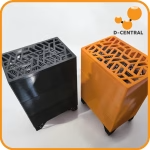
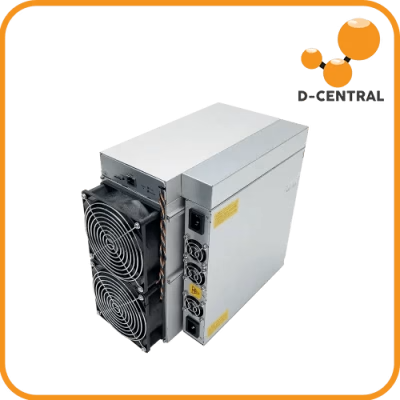
To meaningfully warm a room, you need a meaningful amount of heat. That means a full-size ASIC pulling somewhere in the 1,000–3,000 W range — the same scale as the space heater you’d otherwise buy. D-Central’s Antminer S9 Space Heater Edition is built for exactly this: an S9-class hashboard repackaged and tuned to be quiet and livable in a home, putting out real, usable warmth. The BitChimney and the full Space Heater lineup take the same idea further. These are genuine heaters that happen to mine — not the other way around.
The best miners for space heaters guide walks through which models make the most sense for a heat-first build, and the mining heater comparison page stacks every option side by side.
If you want to learn and tinker: a Bitaxe
Be clear about what a Bitaxe is and isn’t. A Bitaxe is an open-source, single-board solo miner that draws on the order of 15 W — about as much heat as a phone charger under load. It is not a space heater and won’t warm a room. What it is: the best on-ramp into mining there is, a real shot at solo block lottery, and a platform you can overclock and tune — which is exactly where a cold ambient room pays off. The board generations run Max, Ultra, Supra, and Gamma; D-Central pioneered key Bitaxe accessories including the original Mesh Stand and the heatsinks. If you’re new, start with our complete guide to what a Bitaxe is, then browse the Bitaxe lineup.
Most cold-climate home miners end up running both: a full-size ASIC doing the heavy heating in the main living space, and a Bitaxe or two on the desk for the solo lottery and the joy of tinkering.
Setting up for a Canadian winter
Get the heat where you want it
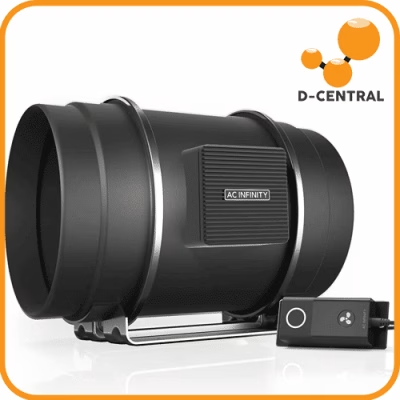
A miner dumping heat into an unfinished basement that nobody uses is wasting most of its value. Put the heat where you live, or duct it there. Shrouds and duct adapters let you channel exhaust into a room, up a stairwell, or into a return air path. The point of cold-climate mining is heat reuse — if the heat isn’t displacing your furnace or baseboards, you’ve left money on the table.
Manage humidity, not “extreme cold”
The real winter hazard for hardware isn’t the cold — it’s condensation. If you pull a frigid miner into a warm, humid room, moisture can condense on the board. The fix is simple: keep miners running continuously (a running miner is always above dew point), and if you move cold hardware indoors, let it warm up sealed in a bag before powering on. Don’t site miners somewhere genuinely sub-freezing if they’ll be cycled on and off.
Don’t forget summer
The honest cold-climate plan accounts for the months that aren’t cold. In a Canadian summer, that same heat is a liability. Plan to scale down, duct heat outdoors, or shift to your low-wattage Bitaxe for the warm season. Some miners simply run the big ASIC October through April and treat the rest of the year as Bitaxe-only. Cold-climate mining is a seasonal strategy, not a year-round set-and-forget.
Wire it properly
A full-size ASIC is a serious sustained electrical load — treat it like the heater it is. That usually means a dedicated circuit, and depending on the unit, possibly a 240V drop. Our space heater electrical guide covers circuit sizing, breakers, and what an electrician needs to know before you plug a kilowatt-scale miner into your home.
Run the numbers for your situation
Cold-climate advantage is real, but it’s not universal — it depends on your power price, your heating season length, and what you’re heating with now. Don’t guess. Plug your actual electricity rate and a real miner’s specs into our mining profitability calculator, then use the power cost calculator to model the heating offset. If you’re displacing expensive electric resistance or oil heat, the case is strong. If you’re already on cheap heat, the math is tighter and worth checking honestly.
Provincial context matters too — power rates, regulations, and grid mix vary wildly across Canada. Our provincial guide to Bitcoin mining in Canada breaks down the landscape province by province.
We are the North
D-Central has been building home mining hardware for the Canadian climate since 2016. Not because cold is a marketing angle — because it’s our reality, and it’s a genuine edge. A long heating season turns the single biggest cost of mining into a service you were already buying. That’s not spin; it’s thermodynamics and a utility bill.
If you want to mine heat, start with the Antminer S9 Space Heater Edition or the full Space Heater lineup. If you want to learn the craft and chase a solo block, grab a Bitaxe. Either way, when winter shows up, you’ll be one of the few people in the building genuinely glad to see it.