Solar and Bitcoin mining get sold as a feel-good combo: clean energy, free electricity, save the planet. The reality is more interesting and a lot more demanding. Pair them well and you’ve built something genuinely powerful — an off-grid-capable, sovereign energy-and-money machine. Pair them badly and you’ve spent twenty grand on panels to mine three dollars a day at noon. The difference is entirely in the engineering, and most “green mining” articles skip the part that matters.
Here’s the honest version: when solar-powered home mining actually makes sense, the real problem you have to solve, and how to size a system that works instead of one that looks good in a brochure.
Why this pairing is more than a green talking point
Strip away the sustainability marketing and there’s a real technical synergy here, and it’s about sovereignty more than carbon:
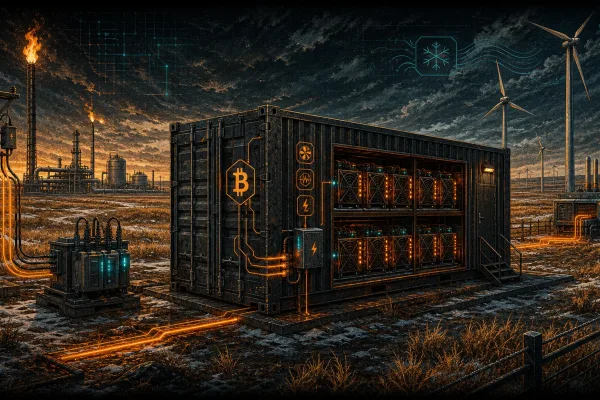
- A miner is the perfect dump load. Solar arrays routinely produce more than the house can use mid-day. That surplus is normally wasted, sold back to the utility for pennies, or curtailed entirely. A Bitcoin miner is an infinitely interruptible, perfectly scalable load that converts that otherwise-wasted electricity directly into the hardest money on earth. Nothing else absorbs intermittent power this gracefully.
- It turns stranded energy into a balance sheet. Selling surplus back to the grid means accepting whatever the utility decides to pay you. Mining it means you keep 100% of the value, denominated in an asset you control.
- It’s a step toward energy independence. Solar plus storage plus mining is the foundation of a setup that doesn’t need the grid’s permission to operate. For the sovereignty-minded miner, that’s the whole point.
So the concept is sound. But notice the word that keeps showing up: surplus, intermittent, interruptible. That’s the catch, and it defines everything.
The real problem: mining wants 24/7, the sun doesn’t
Here’s the engineering truth that brochures gloss over. Bitcoin mining profitability is a function of uptime. A miner only earns while it’s hashing. Solar produces power in a bell curve — nothing at night, a ramp in the morning, a peak around midday, a fade into evening. In a Canadian winter, that productive window can shrink to a few usable hours, exactly when you’d most want to mine for the heat.
So you have three honest options, and you should pick deliberately:
- Solar-only, daytime mining. The miner runs when the sun’s out and sits idle otherwise. Cheapest to build — no battery bank. The trade-off is brutal on profitability: you’re getting maybe 4–6 productive hours a day instead of 24. The math only works with a low-power miner whose opportunity cost of being idle is small.
- Solar plus battery storage. Panels charge a battery bank, the miner runs off the battery, the system smooths the bell curve toward continuous operation. This is the “real” off-grid setup — and the batteries are usually the single most expensive component, often costing more than the panels themselves.
- Solar plus grid (hybrid). Solar covers what it can, the grid fills the gaps, the miner runs 24/7. The most practical option for most homes — you get full uptime, real solar offset, and no five-figure battery bank. The downside is you’re still grid-connected, so it’s “greener and cheaper,” not “sovereign.”
There is no universally correct answer. There’s the answer that fits your budget, your latitude, and whether your goal is cost savings or genuine independence. What there isn’t is a free lunch.
Match the miner to the energy source
This is where the wattage of your miner stops being a detail and becomes the whole design constraint. Solar systems are sized in watts, and so are miners — they have to match.
Low-power miners: the natural solar fit
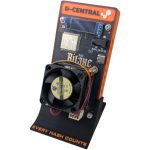
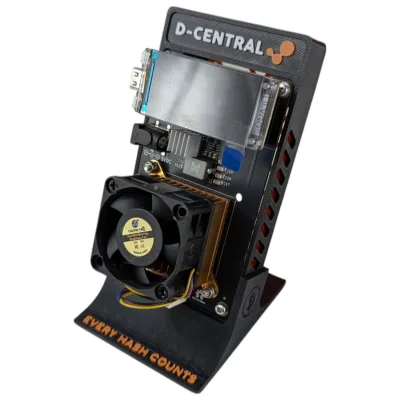
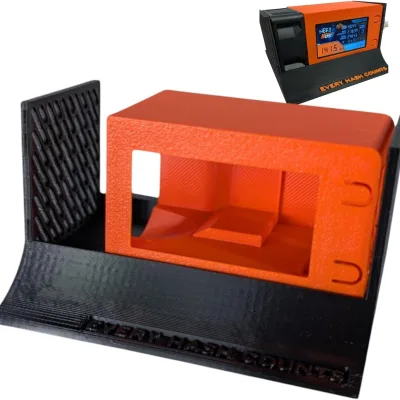
A Bitaxe draws on the order of 15 W. That is a rounding error for even a modest solar array, and it can run off a small battery for a long time. For solar-only or modest battery setups, the open-source class of miners — Bitaxe, NerdAxe, NerdQAxe — is the obvious match. You can run several of them on the surplus a typical home array produces, the intermittency barely hurts because the per-unit stakes are low, and you get a real shot at solo block discovery while learning the craft. The Bitaxe board generations run Max, Ultra, Supra, and Gamma; D-Central pioneered the ecosystem and built the original Mesh Stand and heatsinks. Start with the complete Bitaxe guide, then browse the Bitaxe lineup.
Full-size ASICs: only with serious solar behind them
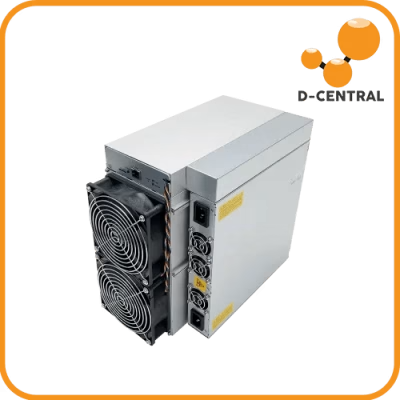
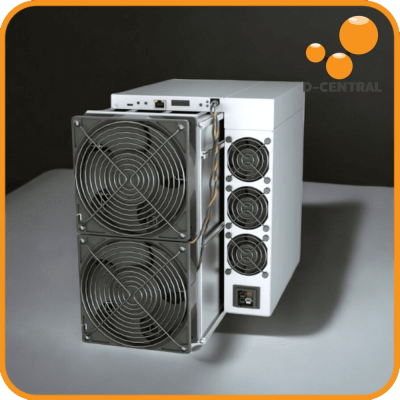
A full-size ASIC like the Antminer Slim Edition pulls 1–3 kW continuously. To run that off solar alone, around the clock, you need a substantial array and a large, expensive battery bank — a serious capital project, not a weekend install. For most homes the realistic move is a hybrid setup, or running the full-size miner only during peak solar hours and accepting the reduced uptime.
There’s also a smarter framing for full-size units in a cold climate: if the miner is also heating your home, the solar electricity is doing double duty — heat plus hash. D-Central’s Space Heater lineup is built around that dual-purpose logic, and the 5-year heater cost comparison shows why that changes the equation.
How to actually size a solar mining system
Work it in this order — and start from the load, not the panels:
- Pin down your real load. Add up the actual wattage of every miner plus any cooling and networking gear. A miner’s true draw — wall power, not chip power — is the number that matters. D-Central’s product specs and the Bitaxe power consumption guide give you honest figures.
- Decide your uptime target. Daytime-only? 24/7? This single decision determines whether you need a battery bank, and the battery bank is usually the budget.
- Account for your latitude and season. Solar output in a Canadian December is a fraction of July. Size for the season you actually want to mine in, not the annual average — averages lie.
- Right-size the inverter and storage. The inverter has to handle the miner’s continuous draw plus startup surge. Battery capacity is set by how many hours of no-sun operation you want to cover.
- Build in headroom. Panels degrade, wiring has losses, and you’ll want to expand. Oversize modestly.
Then validate the economics honestly. Drop your panel cost, battery cost, expected solar hours, and a real miner’s specs into our mining profitability calculator, and model the energy side with the power cost calculator. If the payback period is measured in many years, that’s not a reason to quit — it’s a reason to start smaller, with a Bitaxe and a modest array, and scale once the setup proves itself.
The Canadian angle
Canada is a genuinely interesting place for this. Long summer days give strong seasonal solar output, the cold means a full-size miner’s heat is a useful by-product for much of the year, and rural properties often have the roof and ground space to build a real array. The catch is the winter solar trough — which is exactly why a hybrid setup, or a low-power Bitaxe fleet, tends to be the pragmatic Canadian answer. We dig into the regional specifics — provincial energy mix, net metering rules, climate — in our solar Bitcoin mining Canada guide and the rooftop solar and home mining breakdown.
Frequently asked questions
Can I run my home mining setup entirely on solar?
Technically yes, practically it depends on scale. A few Bitaxe-class miners off a modest array and a small battery bank? Very achievable. A fleet of full-size ASICs running 24/7 off solar alone? That requires a large array and a battery bank that often costs more than the miners. Most people land on a hybrid grid-and-solar setup for full-size hardware.
What’s the most expensive part of a solar mining system?
Almost always the battery storage — not the panels. Batteries are what let you mine when the sun isn’t shining, and they’re the component that turns a “cheap daytime setup” into a “real off-grid setup.” If you see a solar mining build that looks suspiciously affordable, check whether it has meaningful storage.
Does intermittent solar power damage miners?
Clean power cycling — the miner shutting down at dusk and starting at dawn — is fine. What hurts hardware is dirty power: voltage sag, surges, or an undersized inverter clipping under load. Size your inverter properly and use quality power conditioning. The risk isn’t the on/off cycle; it’s bad power quality.
Is solar mining worth it financially?
It depends entirely on your grid electricity price, your latitude, and your install cost. Where grid power is expensive and sun is plentiful, the case is strong. Where power is already cheap, solar mining is more about sovereignty and using stranded surplus than about beating your hydro bill. Run your own numbers — don’t trust a generic claim.
The bottom line
Solar-powered home mining is real, and at its best it’s one of the most sovereign things you can build — your own energy, your own money, no permission required. But it’s an engineering project, not a slogan. The honest path is to start small: a Bitaxe or two on a modest array, learn how your real-world solar production behaves across the seasons, and scale only once the numbers prove out.
D-Central has been building home mining hardware for the energy-conscious Canadian miner since 2016 — low-power open-source units that pair naturally with solar, and full-size builds for those ready to commit to a serious array. Browse the Bitaxe and open-source lineup to start, and read the solar mining Canada guide before you size a single panel.