If you mine Bitcoin on a Bitmain Antminer, you have probably seen the phrase “custom firmware” thrown around in forums and seller listings, usually next to bold promises about efficiency and hashrate. It is one of the most searched, least clearly explained topics in mining. So let us strip away the hype. This is a plain-English guide to what custom Bitmain firmware actually is, why miners flash it, the honest risks involved, and where the open-source frontier sits today.
We build mining hardware and write firmware for a living, and we have deep respect for the projects that paved this road. Our goal here is not to sell you on one tool. It is to give you the mental model so you can make your own call.
What “custom firmware” means on a Bitmain Antminer
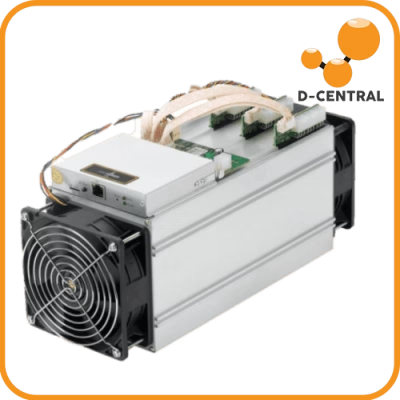
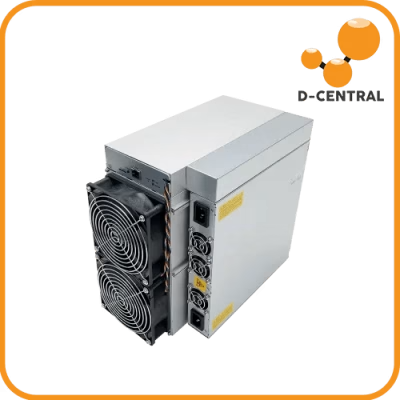
Every Antminer ships with stock firmware written by Bitmain. Firmware is the low-level software baked into the miner’s control board. It boots the machine, talks to the hash boards, sets clock frequencies and voltages, manages the fans, and serves the web dashboard you log into. On most older models the brains running that firmware is a Xilinx Zynq 7010 system-on-chip with a dual-core ARM Cortex-A9 running at 667MHz, paired with a small FPGA. Newer machines moved to different control boards (BeagleBone, Amlogic, or CVitek silicon), but the principle is identical: a tiny Linux computer choreographs three hash boards full of ASIC chips.
Custom firmware (sometimes called third-party Antminer firmware or aftermarket firmware) simply replaces that stock software with an alternative build. The hash boards, power supply, and ASIC chips stay exactly the same. What changes is the software deciding how hard to push those chips and how much control it hands back to you. Think of it like installing a different operating system on the same laptop: the hardware is untouched, but the experience and the capabilities can be very different.
For a hands-on, model-specific walkthrough, our complete guide to custom firmware for the Antminer S19 goes deeper on one machine. This page is the wider map.
Why miners flash custom firmware
People do not void warranties on expensive hardware for fun. There are concrete, repeatable reasons miners reach for custom firmware.
Autotuning that is calculated, not guessed
The headline feature of most custom firmware is autotuning. A good autotuner measures how each individual chip behaves and derives the optimal frequency and voltage for it at runtime. This is worth emphasizing because it is widely misunderstood: these values are calculated live for your specific machine, not pulled from a fixed table of presets. Two identical S19s off the same pallet will end up tuned slightly differently because their chips are physically different. That per-machine calibration is where a lot of the efficiency gains come from.
Per-domain voltage control
Here is a detail sellers love to get wrong. Custom firmware does not control voltage per chip. On a hash board, groups of chips share a DC-DC converter and form a voltage domain. An S19 board, for example, has 76 BM1398 chips arranged into 38 domains of two chips each. Tuning happens at the domain level, not the individual chip level. Anyone promising “per-chip voltage tuning” is either confused or marketing. What custom firmware genuinely offers is finer-grained per-domain control than stock, which lets it nurse weak sections of a board instead of throttling the whole machine.
Efficiency and the underclocking sweet spot
Most miners assume custom firmware is about overclocking for more hashrate. The bigger story is the opposite. Underclocking, running the chips slower and cooler, can dramatically improve joules per terahash. On a 126 TH-class S19, tuning down toward roughly 67 TH can push efficiency from a stock figure near 34 J/TH to around 24 J/TH, a meaningful improvement in power cost per coin. When electricity is your largest expense, squeezing efficiency often beats chasing raw hashrate.
120V operation and home-mining flexibility
Some custom firmware adds support for running certain models on a standard North American 120V/110V household circuit, by capping power draw to a level a normal outlet can safely deliver. For home miners and Bitcoin space-heater setups, that is the difference between plugging in and rewiring a room. Support varies by firmware and model, so it is never a blanket guarantee.
Control, telemetry, and fleet management
Beyond tuning, custom firmware usually ships better dashboards, richer per-chip telemetry, faster curtailment for demand-response programs, and APIs that play nicely with fleet management software. For anyone running more than a handful of machines in a Hashcenter, that operational tooling alone can justify the switch.
The honest risks
We are not going to pretend this is free of downside. Flashing custom firmware carries real trade-offs, and a craftsman tells you about them up front.
- It voids your Bitmain warranty. Replacing the stock firmware almost always ends the manufacturer’s coverage. If the machine is new and still under warranty, weigh that carefully. We cover the specifics in does custom firmware void your Bitmain warranty.
- You can brick a miner. A bad flash, a power cut mid-write, or incompatible firmware can leave a control board unbootable. Recovery is often possible (SD-card reflash, re-imaging the NAND), but it takes know-how and downtime.
- Aggressive tuning stresses hardware. Push voltage and frequency too far and you trade longevity and stability for short-term hashrate. Heat is the enemy of ASICs. Good autotuners protect against this; reckless manual overclocking does not.
- Trust matters. Firmware runs with full control of your machine and your pool credentials. With closed-source firmware you are trusting a vendor’s binary that you cannot inspect. That is a real consideration for sovereignty-minded miners, and it is the entire reason the open-source movement exists.
The landscape today: stock, closed, partial, and open
The custom firmware world is not a single product. It is a spectrum, and the most useful way to understand it is by how open the code is and what it costs you in dev fees, the small percentage of hashrate the firmware mines to its developers.
Stock Bitmain firmware
Zero dev fee, zero custom features, fully closed. It works and it is supported, but it leaves efficiency and control on the table. It is the baseline everything else is measured against.
VNish and LuxOS (closed source, proprietary)
These are the mature, widely deployed commercial options, and they earned their reputations honestly. VNish runs on well over a million devices and supports most Antminer models, with dev fees in the 2 to 2.8% range depending on the features you enable. LuxOS is SOC 2 certified, known for ultra-fast curtailment, and charges a 2.8% dev fee. Both are excellent at what they do. The catch is the same for both: the source code is closed. You get the binary, you trust the vendor, and you cannot audit what is running on your hardware.
Braiins OS+ (partially open)
Braiins deserves a lot of credit for pushing the industry toward openness. Braiins OS+ is the only major third-party Antminer firmware that natively supports Stratum V2, its mining engine is written in Rust, and the company open-sourced control board hardware (the BCB100). Dev fees sit in the 2 to 2.5% range. It is important to be precise, though: Braiins OS+ is partially open. The hardware design is public, but core binaries and the web UI are not open source. That is still far more transparent than the fully closed options, and the project genuinely moved the needle for everyone.
The open-source frontier: DCENT_OS
DCENT_OS publishes GPL-3.0 authored daemon, dashboard and Buildroot integration source. The current Experimental release provides six scoped source bundles, including the BB3 supplement; these do not establish complete corresponding source or reproducibility for third-party boot, kernel and FPGA components. Read the source scope and remaining evidence requirements before treating an open project as a fully reproducible firmware image.
For the full feature-by-feature breakdown, see our mining firmware comparison, and for the broader context on what “open” really means, the open-source mining firmware options pillar is the place to start.
Where DCENT_OS fits
The beta20261002 catalog now contains 20 Experimental artifact sets across 19 model names. Availability belongs to an exact board and file, not every controller sharing a model name: raw SD trials, the base-S9 first-install archive, the Xilinx S19j Pro runtime update and the BB3 developer SD payload have different prerequisites. The BB3 developer payload has no supported consumer installation path. Start with controller identification, then use the exact release card and its installation route. Published files and signature checks do not prove a witnessed hardware installation or production readiness.
It is not a finished product you can deploy across a fleet tomorrow, and we are not going to tell you it is. What it represents is a direction: one more layer of the mining stack moving from closed binaries you have to trust toward open code you can verify. If that idea matters to you, the DCENT_OS project page is where to follow along, and our sovereignty hub frames why this fight is worth having for Bitcoin at large.
How to choose
There is no single right answer, only the right answer for your situation. A few honest guidelines:
- Machine still under warranty and you are risk-averse? Stay on stock until coverage lapses, then revisit.
- Want proven efficiency gains and broad model support right now? The established commercial firmware (VNish, LuxOS) is mature and reliable, with the understood trade-off that it is closed source.
- Need Stratum V2 today? Braiins OS+ is currently the only major third-party Antminer firmware that supports it natively; on open-source hardware, the Bitaxe’s AxeOS/ESP-Miner added a native SV2 client in v2.14.0 (June 2026).
- You value being able to audit and own the software on your hardware above all else? That is the open-source lane. It is younger and narrower in model coverage today, but it is where sovereignty-minded mining is heading. If you specifically want the source code, our piece on VNish alternatives when you want the source code walks through the options.
Whatever you pick, match the firmware to your goal, your tolerance for risk, and how much you care about trusting versus verifying the code on your miner.
Frequently asked questions
What is custom Bitmain firmware in simple terms?
It is alternative software that replaces the stock firmware on an Antminer. The hardware stays the same; the new software changes how the machine is tuned and how much control and visibility you get. Most miners flash it for better efficiency, autotuning, and fleet management.
Does custom firmware actually make my miner more efficient?
It can, often significantly. The gains come from runtime autotuning and per-domain voltage control, with the largest improvements usually coming from underclocking for better joules per terahash rather than overclocking for raw hashrate. Results depend on the model, the chips in your specific unit, and your cooling.
What is a firmware dev fee?
A dev fee is a small slice of your hashrate that the firmware mines to its developers as payment for the software. Stock Bitmain firmware has no dev fee. Among third-party options the fees are ranges, roughly 2 to 2.5% for Braiins OS+, 2 to 2.8% for VNish, and 2.8% for LuxOS. The trade is straightforward: you give up a sliver of hashrate for efficiency and features that usually net out ahead.
Will custom firmware void my warranty or brick my miner?
Flashing custom firmware almost always voids the Bitmain warranty, and a failed flash can brick a machine, though recovery is usually possible with the right tools. These are real risks worth weighing against the benefits, especially on a new unit still under coverage.
Is there a fully open-source option for Antminers?
Braiins open-sourced its BCB100 control-board hardware but keeps the mining daemon and web UI closed, so that is partial. DCENT_OS publishes GPL-3.0 authored daemon, dashboard and Buildroot integration source, with six scoped source bundles for the current Experimental release. That does not establish complete third-party boot, kernel or FPGA corresponding source. The current catalog contains 20 artifact sets across 19 model names, each with its own board and installation prerequisites. The BB3 developer payload has no supported consumer installation path. File availability is not hardware qualification. Check the exact release card, installation route and source coverage.