
Open-Source Bitcoin Mining Firmware: Projects, Licenses and Hardware Support
What counts as open mining firmware?
Open Bitcoin mining firmware is not one category. Some projects are complete firmware for open Bitaxe-class hardware; some are mining daemons or platform layers; some target industrial Antminer control boards; and some are proofs of concept. Compare the license, public repository, exact hardware, build boundary, release evidence and recovery path—not the word open alone.
This maintained project list is deliberately neutral. D-Central includes competitors and upstream projects, credits maintainers, marks unknown licenses as unknown, and separates source availability from public installation maturity.
Methodology and inclusion rules
- A public repository is required for inclusion in the open-firmware table.
- The license must be linked or marked unconfirmed; a public repository without a license is not automatically open source.
- Firmware, daemon, platform layer, hardware project and proof of concept are distinct.
- Supported hardware means an exact documented target, not a chip family or roadmap headline.
- Release activity, buildability, artifact provenance and recovery are recorded separately.
- Corrections and missing projects are welcome with primary-source links.
How to evaluate a project
| Question | Evidence to require |
|---|---|
| Is it open source? | Repository, explicit license, third-party notices and the boundary around vendor blobs/boot inputs. |
| Does it support my miner? | Exact model, ASIC, control-board revision, artifact and accepted-share evidence. |
| Can I install it? | Named incumbent-firmware route, backup, first-install record and recovery proof. |
| Does it perform well? | Raw wall-power, pool-side hashrate, J/TH, thermal, reject and stability data. |
| Can I trust the binary? | Checksums/signatures, source/build provenance, SBOM when available and independent reproduction. |
Industrial Antminer firmware is the hard case
Industrial miners combine closed vendor boot chains, multiple control boards, hash-board generations and high-cost recovery risk. A GPL daemon does not automatically make a complete image redistributable, and accepted shares on a bench do not automatically make a first-install path safe.
Where DCENT_OS fits
DCENT_OS is D-Central Technologies’ GPL-3.0 open-source Bitcoin mining firmware for selected Bitmain Antminer ASIC miners. The daemon, dashboard and Buildroot integration are public; complete images also require documented vendor boot inputs not redistributed in the source repository. Guarded artifacts exist for exact S9 XIL and S19j Pro XIL lanes, and neither is production-ready. See the dated evidence ledger. The S9 is where the open-firmware question is most alive, because it is the one generation with several mature choices and the least to lose: the open-source firmware options for an S9 in 2026 compares them side by side, including where the brick risk actually sits.
Attribution and corrections
ESP-Miner/AxeOS, cgminer, Braiins’ open work, OSMU and the broader open-mining community established much of this category. D-Central’s role is to maintain a factual registry and contribute its own work without claiming it invented open mining. Submit corrections through D-Central with repository, license and release links.
Run it on real hardware
Firmware needs a machine to run on. These are the refurbished ASICs and open-source miners we hand-build and ship from Montreal — the same hardware our firmware work is grounded in.
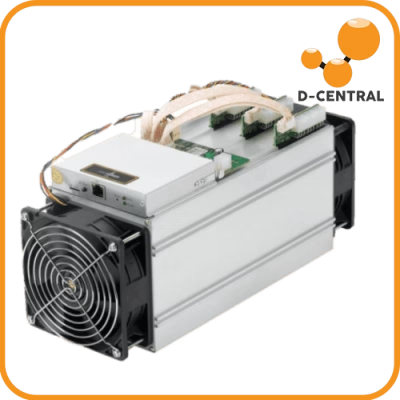 Bitmain Antminer S9
Price range: $35.00 through $155.00 CADIn Stock — Shop
Bitmain Antminer S9
Price range: $35.00 through $155.00 CADIn Stock — Shop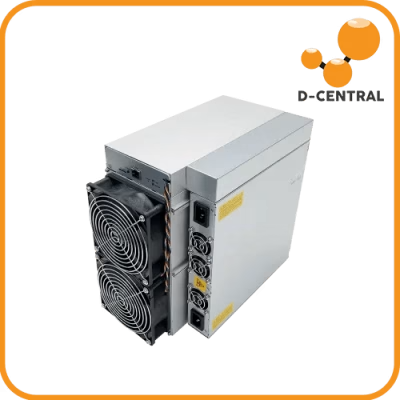 Bitmain Antminer S19
$600.00 CADIn Stock — Shop
Bitmain Antminer S19
$600.00 CADIn Stock — Shop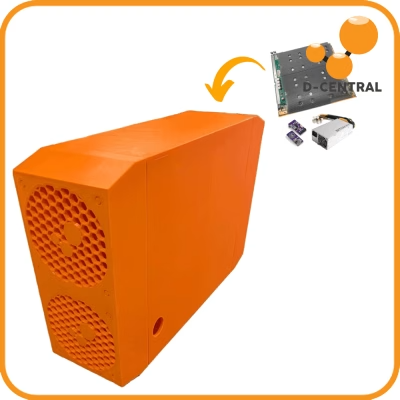 Antminer Slim Edition
Price range: $560.00 through $745.00 CADIn Stock — Shop
Antminer Slim Edition
Price range: $560.00 through $745.00 CADIn Stock — Shop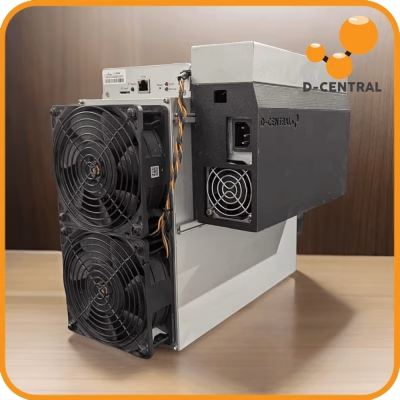 Antminer Loki Edition
Price range: $585.00 through $803.00 CADIn Stock — Shop
Antminer Loki Edition
Price range: $585.00 through $803.00 CADIn Stock — Shop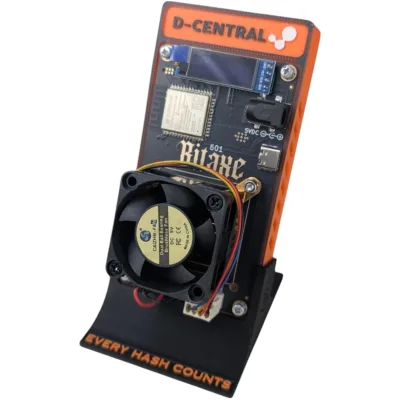 The Bitaxe
Price range: $184.99 through $224.99 CADIn Stock — Shop
The Bitaxe
Price range: $184.99 through $224.99 CADIn Stock — Shop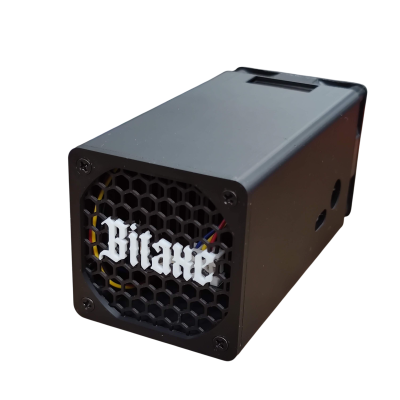 The Modern Minibit Gamma
$229.99 CADIn Stock — Shop
The Modern Minibit Gamma
$229.99 CADIn Stock — Shop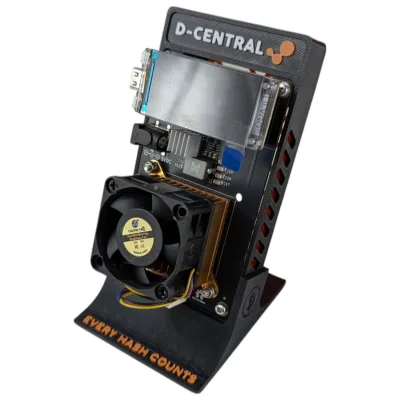 The Nerdaxe
Price range: $169.99 through $199.99 CADIn Stock — Shop
The Nerdaxe
Price range: $169.99 through $199.99 CADIn Stock — ShopRelated products, repair, and setup paths
- how D-Central diagnoses ASIC repairs
- ASIC troubleshooting library
- ASIC manuals and repair guides
- replacement hashboards
- ASIC control boards
- ASIC power supplies
- S19 family replacement hashboard
- C52 replacement control board
- APW12 S19 power supply
- compare specs in the ASIC miner database
- compare ASIC miner specs
- ASIC miner database
- ASIC repair services
- Antminer S19 specs and profitability
- buy a tested Antminer S19
- Antminer S19 maintenance guide
- Antminer S19 repair service
- Antminer S21 specs
- Bitmain Antminer S21
- Antminer S21 maintenance guide
- BM1370BC S21 Pro chip
- Antminer S9 specs
- Bitmain Antminer S9
- Antminer S9 maintenance guide
- S9 hashboard repair parts bundle
Last reviewed August 19, 2026.