Most home mining advice is written for people with a detached house, a garage, and a basement nobody uses. That’s not the reality for a huge share of would-be miners. You’re in a condo, an apartment, a shared building — thin walls, neighbours on the other side of them, a hydro bill you don’t fully control, and zero tolerance for a screaming box in the closet. The good news: urban mining is absolutely doable. The bad news: you can’t brute-force it the way a rural miner can. You have to be smart.
Here’s the honest playbook for mining Bitcoin from a dense-city home — what actually works, what the constraints really are, and how to pick hardware that fits your building instead of fighting it.
The five real constraints — and how hard each one bites
Urban mining content loves to list “challenges” without ranking them. Let’s rank them, because they are not equal:
- Noise — the dealbreaker. This is the one that gets people evicted or reported. A stock full-size ASIC is as loud as a vacuum cleaner running 24/7. In a building with shared walls, that’s a non-starter without serious intervention.
- Heat — the underrated one. A kilowatt-scale miner in a small, poorly ventilated apartment will turn it into a sauna. In summer, you’ll be paying to mine and paying to air-condition the heat back out. That’s a double loss.
- Power — the silent ceiling. Older urban buildings have limited circuit capacity, and you often can’t add a dedicated circuit without landlord approval. You may be capped at what one standard 15A outlet can safely deliver continuously.
- Space — annoying but solvable. Genuinely the easiest of the five. Vertical mounting, a shelf, a closet — space is a layout problem, not a hard limit.
- Rules — know before you plug in. Leases, condo bylaws, and building electrical codes. Less about “is mining legal” (it is) and more about whether your specific living situation allows a continuous high-draw device.
Notice the pattern: noise, heat, and power are the real fight. Pick hardware that wins those three and the rest falls into place.
The urban miner’s hardware decision
This is the fork in the road, and most generic guides duck it. There are two genuinely different paths for a city home, and they suit different people.
Path 1: Go small and silent — the Bitaxe
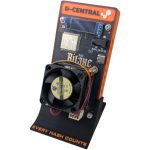
For most apartment dwellers, this is the answer. A Bitaxe is an open-source single-board solo miner drawing roughly 15 W — less than a desk lamp. It’s near-silent, produces a trivial amount of heat, and runs happily off any normal outlet. It sidesteps the noise problem, the heat problem, and the power problem in one move. The board generations are Max, Ultra, Supra, and Gamma, and D-Central is a Bitaxe pioneer — we built the original Mesh Stand and developed the heatsinks that the ecosystem now takes for granted.
The honest trade-off: a single Bitaxe’s odds of solo-mining a block are a lottery ticket, not an income stream. But that’s the correct framing — it’s a real chance at a full block reward, a genuine contribution to network decentralization, and the best hands-on education in mining you can buy. For an urban beginner, starting here and learning the craft beats overcommitting to hardware your building can’t handle. Start with our complete guide to the Bitaxe, then browse the Bitaxe lineup. The wider open-source family — NerdAxe, NerdQAxe, Nerdminer — gives you more boards to tinker with at the same apartment-friendly power level.
Path 2: Go full-size — but only if you can solve noise and heat
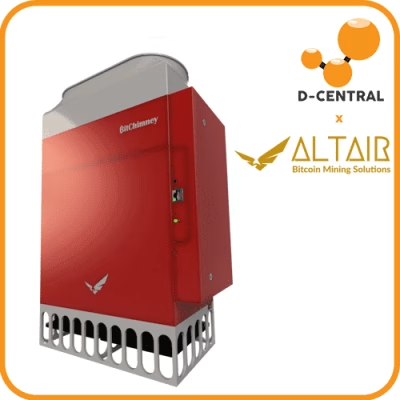
If you want meaningful hashrate from a city home, you need a full-size ASIC — and you need to commit to taming it. D-Central’s Antminer Slim Edition and the quieter-tuned custom builds exist precisely because stock Antminers are unlivable in shared housing. They run quieter, often at reduced power, trading some raw hashrate for the ability to coexist with neighbours.
Even so, “quieter” isn’t “quiet.” Plan on additional noise mitigation — a sound-dampening enclosure, acoustic panels, careful placement against an exterior wall rather than a shared one. And you must have a plan for the heat. Which leads to the smartest urban full-size strategy:
The urban power move: mine your heat in winter
If you’re in a heating climate — most of urban Canada — the heat problem flips into an advantage half the year. A full-size ASIC is, electrically, an electric space heater that also mines. Run it during the heating season and it displaces baseboard or electric heat you were paying for anyway. D-Central’s Antminer S9 Space Heater Edition and the full Space Heater lineup are built around this: real heaters, tuned for home noise levels, that happen to mine. The 5-year cost comparison vs. a regular electric heater runs the numbers. In summer, you scale that unit down or shut it off and let a Bitaxe carry the season.
Solving noise — the constraint that ends most urban mining
Noise is worth its own section because it’s what gets people shut down. Real options, roughly in order of effectiveness:
- Choose quiet hardware first. A Bitaxe is inherently silent. A quiet-tuned full-size build is the next best thing. You cannot soundproof your way out of a stock Antminer in a thin-walled apartment — start with the right unit.
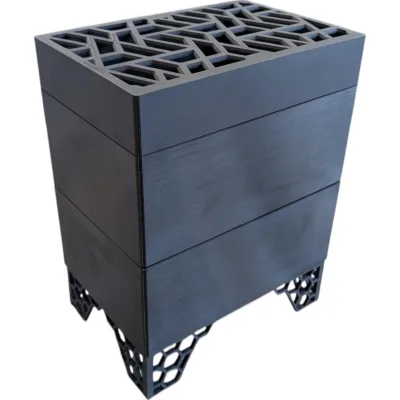
- Build or buy a sound enclosure. A proper dampening box with managed airflow can cut a full-size miner’s noise dramatically. The catch is airflow — seal it wrong and you cook the hashboard.
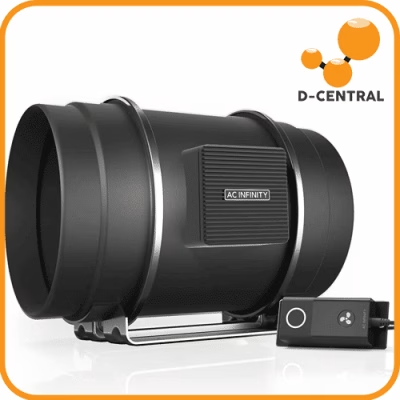
- Use shrouds and slower, larger fans. Ducting exhaust through a shroud lets you run quieter fans and direct the noise (and heat) away from living and shared spaces.
- Placement matters. Against an exterior wall, in a closet with the door’s gap sealed, away from the bedroom and the neighbour’s. Free decibels.
For the full treatment, see our complete guide to quiet home mining and the miner noise levels comparison so you know what you’re signing up for before you buy.
Heat and power in a confined space
Heat management in an apartment comes down to honesty about the season. In winter, duct the heat into your living space and bank the savings. In summer, you either duct it out a window, scale the miner down, or switch to your low-wattage Bitaxe — running a kilowatt heater in July while your AC fights it is the worst outcome in mining.
On power: don’t assume your apartment can take a full-size load. A continuous high-draw device on an old circuit is a fire risk, not a clever hack. Know your circuit’s rating, never run a big miner on a daisy-chained power strip, and if you need a dedicated circuit, that’s a conversation with your landlord and an electrician — covered in our space heater electrical guide. If your building genuinely can’t support it, that’s not a failure — it’s the signal to mine the Bitaxe path instead.
Apartment-specific tactics — from circuit limits to landlord conversations — are collected in our dedicated Bitcoin mining in apartments guide.
Space and rules — the easy ones
Space is the least of your worries. A Bitaxe lives on a shelf or a desk. A full-size miner fits in a closet or under a counter. Vertical mounting, wall brackets, and decent cable management handle the rest. Don’t overthink it.
On rules: mining Bitcoin at home is legal. The real questions are contractual and electrical — does your lease or condo board restrict continuous high-draw devices, and does your building’s wiring support what you want to run? Read your lease, check your bylaws, and size your hardware to what you’re actually allowed to plug in. We’re not lawyers, but we’ll always tell you to pick the unit that keeps you on good terms with your building and your neighbours.
Run your specific numbers before you buy
Urban power is often pricier than rural power, and that changes which hardware makes sense. Before you commit, drop your real electricity rate and a specific miner’s specs into our mining profitability calculator, and model your running cost with the power cost calculator. If the math is tight on a full-size unit, the Bitaxe path is rarely the wrong call for a city home.
The bottom line
Urban home mining isn’t about overcoming a list of obstacles one by one. It’s about one decision made well: match your hardware to your building. Apartment with thin walls and a tight power budget? A near-silent Bitaxe lets you mine, learn, and chase a solo block without a single neighbour complaint. Got a unit with the wiring and the willingness to tame noise and heat? A quiet-tuned full-size ASIC — run as a winter heater — earns its keep.
D-Central has been hacking institutional mining hardware into home-friendly gear since 2016, and a lot of that work — the Slim Edition, the Space Heater builds, the Bitaxe accessories — exists specifically because mining from a normal home in a normal city is hard. Browse the Bitaxe and open-source lineup or the quiet-tuned Antminer builds, and pick the one your building can actually live with.