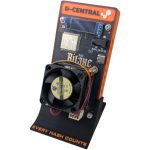
When you power on your Bitaxe for the first time, one decision will shape your entire mining experience more than any overclock setting or heatsink upgrade: which mining pool you point it at.
For full-scale ASIC miners pushing 200+ TH/s, pool selection is a minor optimization. For a Bitaxe running at 500 GH/s to 3 TH/s, it is the defining variable. Your pool determines whether you are chasing a life-changing solo block, accumulating micro-satoshis through pooled mining, or contributing to the decentralization of Bitcoin’s hash rate distribution. Each path has radically different economics, philosophy, and practical implications.
This guide breaks down every pool worth considering for Bitaxe and low-hashrate open-source miners, with real configuration instructions, honest payout math, and the cypherpunk perspective on why your pool choice is a vote for the kind of Bitcoin network you want to exist.
Why Pool Selection Is Critical for Low-Hashrate Miners
A Bitaxe Ultra running at ~500 GH/s represents roughly 0.000000065% of the total Bitcoin network hashrate. A Bitaxe Hex at ~3 TH/s improves that by 6x, but you are still a statistical rounding error against the ~750 EH/s network. This extreme ratio between your hashrate and the network total creates dynamics that simply do not apply to industrial miners.
The Mathematics of Being Small
At 500 GH/s, your expected time to find a solo block is measured in thousands of years. Use our Solo Mining Probability Calculator to run the numbers for your specific hashrate. This does not mean solo mining is irrational — it means you need to understand what you are actually doing and choose your pool accordingly.
Key factors that hit differently at low hashrate:
- Pool fees — A 2% fee on a solo pool costs you nothing until you find a block, then it costs 0.0625 BTC. A 2% fee on a pooled mining operation takes 2% of every satoshi you earn, every day. At low hashrate, the fee structure matters more than the fee percentage.
- Minimum payout thresholds — Some pools require 0.001 BTC or more to withdraw. At 500 GH/s in a pooled setup, reaching that threshold could take months. Choose a pool with unreachable minimums and your sats sit in someone else’s custody indefinitely.
- Share difficulty — Pools that set share difficulty too high for your hashrate will result in inconsistent share submission, making your dashboard look dead and potentially reducing your effective contribution.
- Vardiff (Variable Difficulty) — Good pools automatically adjust share difficulty to your hashrate. This is essential for Bitaxe miners. If a pool does not support vardiff or sets a minimum share difficulty above your capability, avoid it.
- Connection stability — Every disconnect and reconnect costs you shares. Pools with servers geographically close to you and stable infrastructure matter more when every share counts.
Solo vs. Pooled: The Fundamental Choice
For a comprehensive breakdown of this decision, read our Pool Mining vs Solo Mining guide. But here is the short version for Bitaxe owners:
Solo mining means you submit shares to a pool that forwards your work to the Bitcoin network, but if your share happens to be a valid block, you get the entire block reward (currently 3.125 BTC, minus pool fee). The odds are astronomically low, but the payoff is enormous. This is lottery mining, and most Bitaxe owners choose this path because the expected pooled mining income (often less than $0.10/day) does not justify the electricity cost anyway.
Pooled mining means your shares are combined with everyone else’s in the pool. When the pool finds a block, the reward is split proportionally. You earn predictable, tiny amounts — but they are real satoshis, not lottery tickets. Some miners prefer this for the psychological satisfaction of watching a balance grow, even if slowly.
Solo Mining Pools for Bitaxe (The Primary Choice)
The overwhelming majority of Bitaxe miners run solo. Here are the three pools that matter.
Solo CKPool — The Default Standard
Website: solo.ckpool.org
Fee: 2%
Stratum: V1
Payout: Full block reward minus 2% fee, paid directly to your configured Bitcoin address
Minimum Payout: None (paid per block found)
Solo CKPool is the default pool pre-configured in AxeOS and the most widely used solo mining pool in the Bitaxe community. Written and maintained by Con Kolivas (the “CK” in CKPool), it is purpose-built for solo miners.
Why Bitaxe miners choose Solo CKPool:
- Pre-configured in AxeOS — Works out of the box. Power on your Bitaxe, enter your Bitcoin address, and you are mining.
- Excellent vardiff support — Automatically adjusts share difficulty for low-hashrate devices. Your Bitaxe will submit shares consistently without choking on difficulty that is too high.
- Battle-tested reliability — CKPool has been running since 2014. The infrastructure is mature and stable.
- Transparent statistics — Clean dashboard showing your hashrate, shares submitted, best difficulty share, and worker status.
- Multiple server locations — Stratum endpoints in multiple regions for lower latency.
Connection details:
Stratum URL: stratum+tcp://solo.ckpool.org:3333
Username: YOUR_BITCOIN_ADDRESS
Password: x
The 2% fee in context: You pay nothing unless you find a block. If your Bitaxe hits a valid block (3.125 BTC at current subsidy), the pool takes 0.0625 BTC and you receive 3.0625 BTC. Given that the alternative is buying a lottery ticket, 2% on a $250,000+ payout is reasonable. That said, zero-fee alternatives exist — read on.
OCEAN (DATUM Protocol) — The Cypherpunk’s Pool
Website: ocean.xyz
Fee: 0% (currently; OCEAN uses a transparent fee model)
Stratum: V2 (via DATUM protocol)
Payout: Non-custodial, TIDES payout scheme
Minimum Payout: None (non-custodial payouts directly in coinbase transaction)
OCEAN is not just a mining pool — it is a philosophical statement. Founded by Jack Dorsey and Luke Dashjr, OCEAN represents a fundamentally different approach to mining pool architecture. For a deep dive, see our OCEAN Mining Pool Review & Setup Guide.
Why OCEAN matters for Bitaxe miners:
- Non-custodial payouts — This is the big one. OCEAN pays miners directly in the coinbase transaction of blocks the pool finds. Your Bitcoin never touches OCEAN’s wallet. This is trustless mining in the truest sense. No withdrawal requests, no minimum thresholds, no custody risk.
- DATUM protocol (Stratum V2) — OCEAN implements Stratum V2 through their DATUM gateway protocol. This gives miners the ability to construct their own block templates, which is a meaningful step toward mining decentralization. More on Stratum V2 below.
- Transparent block template construction — OCEAN is transparent about which transactions are included in blocks. No opaque transaction selection, no MEV-style extraction.
- TIDES payout scheme — Transparent Index of Distinct Extended Shares. A payout method designed for fairness and transparency. Read our Mining Pool Payout Methods Explained guide for the full breakdown.
- Decentralization mission alignment — If you are running a Bitaxe because you believe in decentralized mining, OCEAN is the pool that most directly aligns with that ethos.
Connection details (direct Stratum V2):
Stratum URL: stratum+tcp://mine.ocean.xyz:3334
Username: YOUR_BITCOIN_ADDRESS
Password: x
For DATUM gateway (advanced, run your own block template construction):
Running a DATUM gateway requires a Bitcoin full node and the DATUM gateway software. This is more involved but represents the ultimate in mining sovereignty — you choose which transactions go in your block templates.
The OCEAN trade-off: Because OCEAN uses TIDES (a pooled payout scheme), your Bitaxe is technically pool mining on OCEAN, not solo mining. You earn proportional payouts when OCEAN finds blocks, rather than waiting for your own solo block. For many Bitaxe owners, this is actually preferable — you get the decentralization benefits of OCEAN with more regular (though tiny) payouts. However, if you want the pure lottery experience of solo mining, Solo CKPool or Public Pool is the path.
Public Pool — Zero-Fee Solo Mining
Website: web.public-pool.io
Fee: 0%
Stratum: V1
Payout: Full block reward paid to your Bitcoin address (zero deduction)
Minimum Payout: None (paid per block found)
Public Pool is exactly what the name implies: a free, open, zero-fee solo mining pool. It was built specifically for the open-source mining community and has become a favorite among Bitaxe miners who want the solo mining experience without any fee overhead.
Why Bitaxe miners choose Public Pool:
- Truly zero fees — If your Bitaxe finds a block, you keep the entire 3.125 BTC block reward. No deductions, no percentage cuts.
- Purpose-built for small miners — The pool’s vardiff and infrastructure are optimized for low-hashrate devices like Bitaxe, Nerdminer, and other open-source miners.
- Clean, simple interface — Dashboard shows your workers, hashrate, shares, and best difficulty share. No clutter.
- Community-driven — Open-source pool software, transparent operation.
- Good track record — Multiple solo blocks have been found by low-hashrate miners on Public Pool, validating that the system works.
Connection details:
Stratum URL: stratum+tcp://public-pool.io:21496
Username: YOUR_BITCOIN_ADDRESS
Password: x
The zero-fee consideration: The 0% fee means every satoshi of a found block is yours. Compared to Solo CKPool’s 2%, that is a difference of 0.0625 BTC per block (~$6,250 at $100k BTC). The trade-off is that Public Pool has a smaller infrastructure footprint than CKPool. For most Bitaxe miners, this is an acceptable trade-off.
Solo Pool Comparison Table
| Feature | Solo CKPool | OCEAN (DATUM) | Public Pool |
|---|---|---|---|
| Pool Type | Solo | Pooled (TIDES) | Solo |
| Fee | 2% | 0% | 0% |
| Stratum Version | V1 | V2 (DATUM) | V1 |
| Payout Model | Full block (minus fee) | Non-custodial TIDES | Full block |
| Custody | Non-custodial (per block) | Non-custodial (coinbase tx) | Non-custodial (per block) |
| Minimum Payout | None | None | None |
| Vardiff Support | Excellent | Good | Good |
| AxeOS Default | Yes | No | No |
| Block Template Control | No | Yes (with DATUM gateway) | No |
| Best For | Simplicity, reliability | Decentralization, regular payouts | Zero-fee solo mining |
| Decentralization Score | Medium | High | Medium-High |
Pooled Mining for Bitaxe (The Alternative Path)
Some Bitaxe owners prefer the steady drip of satoshis over the lottery approach. If that is you, here are pooled mining options that accept low-hashrate devices — and the honest math on what to expect.
Realistic Payout Expectations
Let us be direct about the numbers. At current network difficulty and Bitcoin price:
- Bitaxe Ultra (~500 GH/s): Expect roughly 50-150 sats/day in a pooled setup (before electricity costs). That is approximately $0.05-$0.15/day at $100k BTC.
- Bitaxe Hex (~3 TH/s): Expect roughly 300-900 sats/day pooled. Approximately $0.30-$0.90/day.
Neither of these covers electricity costs in most regions. Pooled mining with a Bitaxe is not a profit strategy — it is a sat-stacking philosophy combined with supporting the Bitcoin network. If you want to run the exact numbers for your setup, use our Mining Profitability Calculator.
Braiins Pool
Website: braiins.com/pool
Fee: 2% (0% with Braiins OS firmware — not applicable to Bitaxe)
Payout: Scoring (similar to PPLNS)
Minimum Payout: Configurable, Lightning Network payouts available
Stratum: V1 and V2
Braiins (formerly Slush Pool, the world’s first mining pool) is a strong choice for pooled Bitaxe mining. Their Lightning Network payout option is particularly relevant for low-hashrate miners — it lets you withdraw tiny amounts without waiting to accumulate an on-chain minimum.
Connection details:
Stratum URL: stratum+tcp://stratum.braiins.com:3333
Username: USERNAME.WORKER_NAME
Password: x
Note: Braiins requires account registration. You mine to your account, not directly to a Bitcoin address.
NiceHash
Website: nicehash.com
Fee: 2%
Payout: PPS (you sell hashrate, paid in BTC)
Minimum Payout: 0.00001 BTC (Lightning)
Stratum: V1
NiceHash operates differently — you are selling your hashrate to buyers on their marketplace. The advantage for Bitaxe miners is the extremely low Lightning payout threshold, meaning you can actually receive your earnings regularly. The disadvantage is the philosophical one: your hashrate goes wherever the buyer points it, which may not align with decentralization values.
Connection details:
Stratum URL: stratum+tcp://sha256.auto.nicehash.com:9200
Username: YOUR_NICEHASH_BTC_ADDRESS.WORKER_NAME
Password: x
A Note on Pool Choice and Decentralization
If you are running a Bitaxe, you almost certainly care about Bitcoin’s decentralization. Every hash you point at a major centralized pool (Foundry, AntPool, F2Pool) makes the centralization problem worse. Even at 500 GH/s, your pool choice is a vote. OCEAN, Public Pool, Braiins, and Solo CKPool all represent better choices for the network than feeding the dominant pools that already control too much hashrate. For a full analysis of the current pool landscape, see our Best Bitcoin Mining Pools 2026 guide.
Pool Configuration in AxeOS: Step-by-Step
Every Bitaxe runs AxeOS, the firmware that manages your miner. Changing pools is straightforward — here is how to do it.
Step 1: Access AxeOS Web Interface
- Connect your Bitaxe to your local network via WiFi (configured during initial setup).
- Find your Bitaxe’s IP address (check your router’s DHCP client list, or use a network scanner like Fing).
- Open a web browser and navigate to
http://YOUR_BITAXE_IP(usually something likehttp://192.168.1.xxx). - The AxeOS dashboard will load, showing your current mining status.
Step 2: Navigate to Settings
- Click the Settings or Configuration tab in the AxeOS interface.
- Locate the Stratum section — this is where pool configuration lives.
Step 3: Configure Your Pool
You will see three fields:
- Stratum URL: Enter the pool’s stratum address (e.g.,
stratum+tcp://solo.ckpool.org:3333) - Stratum User: Enter your Bitcoin address (for solo pools) or your pool username (for account-based pools like Braiins)
- Stratum Password: Enter
x(most pools do not use the password field, but it cannot be left empty)
Step 4: Configure Fallback Pool (Recommended)
AxeOS supports a fallback pool configuration. If your primary pool goes offline, your Bitaxe automatically switches to the fallback. This is important — every minute of downtime is wasted electricity and missed shares.
Recommended fallback configuration:
Primary: stratum+tcp://public-pool.io:21496 (zero-fee solo)
Fallback: stratum+tcp://solo.ckpool.org:3333 (reliable backup)
Or if you prefer OCEAN as primary:
Primary: stratum+tcp://mine.ocean.xyz:3334 (OCEAN)
Fallback: stratum+tcp://public-pool.io:21496 (zero-fee solo backup)
Step 5: Save and Verify
- Click Save to apply the new configuration.
- Your Bitaxe will restart the mining process and connect to the new pool.
- Watch the AxeOS dashboard — within 30-60 seconds, you should see shares being submitted.
- Verify on the pool’s website by searching for your Bitcoin address (on solo pools) or checking your account dashboard (on account-based pools).
For complete Bitaxe setup and configuration guidance, visit our Bitaxe Hub.
Stratum V1 vs Stratum V2: What Bitaxe Miners Need to Know
Stratum is the protocol your miner uses to communicate with the pool. There are two versions, and the difference matters for anyone who cares about mining decentralization.
Stratum V1 (Current Standard)
- How it works: The pool sends your miner a block template. Your miner hashes that template. The pool decides which transactions are in the block.
- Implication: The pool has total control over block construction. Miners are dumb hashers.
- Used by: Solo CKPool, Public Pool, Braiins (also supports V2), NiceHash, and most other pools.
Stratum V2 (The Future)
- How it works: Miners can construct their own block templates and submit them to the pool. The pool validates the proof-of-work, but the miner chose which transactions to include.
- Implication: Power shifts from pools to miners. No single pool operator can censor transactions or extract value from block template manipulation. This is a massive improvement for Bitcoin’s censorship resistance.
- Used by: OCEAN (via DATUM protocol), Braiins Pool (optional), and emerging implementations.
Stratum V2 on Bitaxe
AxeOS has been adding Stratum V2 support. The current state:
- OCEAN’s implementation works with Bitaxe through their stratum endpoint. Basic V2 connectivity is functional.
- Full DATUM gateway (where you construct your own block templates) requires running a Bitcoin full node alongside the gateway software. This is advanced but doable — especially if you are already running a node on a Start9 or Umbrel server.
- Braiins V2 support varies by firmware version. Check the AxeOS release notes for the latest compatibility.
Our recommendation: If you have the technical ability, running OCEAN with Stratum V2 is the most sovereignty-preserving mining setup available for a Bitaxe. If that is too complex, use any of the solo pools on V1 — you are still contributing to decentralization simply by running a Bitaxe instead of letting large farms accumulate even more hashrate.
Monitoring Your Mining: Dashboards and Share Rates
Once your Bitaxe is hashing away, monitoring is essential — not because you need to optimize every minute, but because problems (disconnections, overheating, firmware glitches) are silent killers that waste electricity without producing work.
AxeOS Dashboard (Local Monitoring)
The AxeOS web interface on your Bitaxe shows:
- Current hashrate — Should be close to your expected rate (e.g., ~500 GH/s for a Bitaxe Ultra, ~3 TH/s for a Hex).
- Shares accepted/rejected — Rejected shares should be very low (under 1%). High rejection rates indicate a pool or network issue.
- Best difficulty share — The highest difficulty share your Bitaxe has submitted. A fun metric to watch, and technically the closest you have come to finding a block.
- Temperature — Keep your ASIC chip temperature within safe ranges. Overheating throttles performance.
- Uptime — How long since the last restart. Stability is key.
Pool Dashboards (Remote Monitoring)
Each pool provides a dashboard accessible by searching your Bitcoin address or logging into your account:
- Solo CKPool: Visit
https://solo.ckpool.org/users/YOUR_BTC_ADDRESSto see workers, hashrate, and share history. - OCEAN: The OCEAN dashboard at
ocean.xyzshows your hashrate contribution, estimated earnings (in TIDES shares), and payout history. - Public Pool: Visit
web.public-pool.ioand search your Bitcoin address to see your workers and share statistics.
What to Watch For
- Consistent hashrate — Your reported pool hashrate will fluctuate (this is normal with low hashrate and statistical variance), but the trend should average near your expected rate.
- Share submission rate — You should see shares being submitted regularly. If shares stop for more than a few minutes, check your connection.
- Stale shares — Stale shares mean your work arrived after the pool already moved to a new block. Some stales are normal; a high stale rate suggests network latency issues.
- Worker online status — Most pools show whether your worker is “online” or “offline.” Set up monitoring (even a simple daily check) to catch disconnections.
Multi-Bitaxe Pool Strategy: Diversification
If you are running multiple Bitaxe units (or a mix of Bitaxe, NerdAxe, NerdQAxe, and other open-source miners), spreading them across different pools is strategically sound.
Why Diversify?
- Network decentralization — Pointing all your miners at one pool concentrates hashrate. Spreading across pools strengthens Bitcoin’s resistance to pool centralization.
- Risk distribution — If one pool has downtime, your other miners keep hashing.
- Mixed strategy — Run some miners on solo pools (lottery tickets) and others on OCEAN (regular micro-payouts). Best of both worlds.
- Experimentation — Try different pools to compare dashboard quality, share consistency, and overall experience.
Recommended Multi-Miner Allocation
For 2-3 Bitaxe units:
Bitaxe #1: Public Pool (zero-fee solo mining)
Bitaxe #2: OCEAN (decentralized pooled mining, TIDES payouts)
Bitaxe #3: Solo CKPool (reliable solo mining)
For mixed fleet (Bitaxe + NerdQAxe + NerdAxe):
Bitaxe Hex (highest hashrate): Solo CKPool or Public Pool (best solo odds)
NerdQAxe: OCEAN (support decentralization)
NerdAxe / Nerdminer: Public Pool (zero-fee, no reason to pay fees at ultra-low hashrate)
This approach ensures you have a ticket in multiple lotteries, contribute to different decentralized pools, and experiment with different Stratum implementations. For setup guides for all these open-source miners, visit the Bitaxe Hub.
Complete Pool Recommendation Matrix
Use this table to make your final pool decision based on what matters most to you.
| Pool | Type | Fee | Stratum | Min Payout | Custody | Best For |
|---|---|---|---|---|---|---|
| Solo CKPool | Solo | 2% | V1 | None | Non-custodial | Beginners, plug-and-play solo mining |
| OCEAN | Pooled (TIDES) | 0% | V2 (DATUM) | None | Non-custodial | Cypherpunks, decentralization, regular payouts |
| Public Pool | Solo | 0% | V1 | None | Non-custodial | Zero-fee solo mining, cost-conscious miners |
| Braiins Pool | Pooled | 2% | V1 / V2 | Configurable | Custodial (account) | Sat stacking, Lightning payouts |
| NiceHash | Hashrate Market | 2% | V1 | 0.00001 BTC (LN) | Custodial (account) | Maximum payout flexibility |
Our Recommendation
If we had to put a single Bitaxe on a single pool, here is how we would decide:
For the decentralization maximalist: OCEAN. Non-custodial, Stratum V2, transparent block templates, zero fees. This is the pool that most closely embodies the cypherpunk values that make Bitaxe worth running in the first place. You will not hit a solo block, but you will earn micro-payouts while strengthening the most decentralized pool in the ecosystem.
For the lottery miner who wants maximum reward: Public Pool. Zero fees mean you keep the entire 3.125 BTC if you find a block. Every satoshi of the block reward goes to your address. If you are solo mining, why give away even 2%?
For the miner who wants zero configuration: Solo CKPool. It is already set up in your AxeOS. Enter your Bitcoin address and mine. The 2% fee is a fair price for reliability and simplicity.
For the sat stacker who wants regular payouts: Braiins Pool with Lightning Network payouts. You will earn tiny amounts, but they are real and regular and they go to your Lightning wallet. Psychologically satisfying, even if the math does not make you rich.
The honest truth? At Bitaxe hashrates, pool selection is less about economics and more about what you believe in. You are not going to get rich from any of these options. You are participating in Bitcoin’s security model, supporting hashrate decentralization, and keeping the dream of permissionless mining alive. That is worth more than any payout spreadsheet can capture.
Choose the pool that aligns with your values, configure it in AxeOS, and let your Bitaxe do what it was built to do — mine free, mine sovereign, mine decentralized.