Bitcoin mining is an arms race — not just for hash rate, but for energy. The miners who secure the most efficient, reliable, and affordable power sources are the ones who survive halving after halving. And in that race, hydroelectric power is the undisputed champion.
While mainstream media obsesses over Bitcoin’s energy consumption as if it were a moral failing, the reality on the ground tells a different story. Bitcoin mining is gravitating toward the cheapest, most abundant energy on the planet — and that energy is overwhelmingly renewable. Hydro power, in particular, has become the backbone of some of the largest and most profitable mining operations in the world.
This is not about greenwashing or ESG compliance theatre. This is about thermodynamics, economics, and the relentless logic of proof-of-work. Let us break down why hydro-powered Bitcoin mining matters, how it works, and what it means for the future of decentralized hash rate.
Why Energy Source Matters More Than Ever
After the April 2024 halving, the block subsidy dropped to 3.125 BTC. Miners who were barely profitable at 6.25 BTC per block got wiped out overnight. The ones who survived? They had two things: efficient hardware and cheap power.
The Bitcoin network now operates at over 800 EH/s (exahashes per second). At that scale, the margin between profit and loss is measured in fractions of a cent per kilowatt-hour. Energy is not just a cost — it is the cost. Hardware depreciates, difficulty adjusts upward, but your power contract is the variable that determines whether you mine at a profit or burn capital.
This is why serious miners do not just ask “how many terahash?” — they ask “what is my all-in cost per kWh, and how stable is that supply?”
| Energy Source | Typical Cost (USD/kWh) | Carbon Intensity | Reliability |
|---|---|---|---|
| Hydroelectric | $0.02 – $0.05 | Near zero | Very high (baseload) |
| Natural Gas | $0.04 – $0.08 | Moderate | High |
| Wind | $0.03 – $0.07 | Near zero | Intermittent |
| Solar | $0.03 – $0.06 | Near zero | Intermittent (daytime only) |
| Coal | $0.05 – $0.10 | Very high | High (baseload) |
| Grid Average (North America) | $0.08 – $0.15 | Mixed | High |
Notice the pattern: hydro sits at the top for cost, the bottom for emissions, and delivers baseload reliability that solar and wind simply cannot match. This is not ideology — it is physics.
How Hydro-Powered Bitcoin Mining Works
Hydroelectric power generation converts the kinetic energy of flowing water into electricity through turbines. The core advantage is that the “fuel” — water flowing downhill under gravity — is free and perpetual. Once a dam or run-of-river facility is built, the marginal cost of producing each additional kilowatt-hour is almost nothing.
For Bitcoin miners, this translates into several critical advantages:
Baseload stability. Unlike solar (which produces zero watts at night) or wind (which dies on calm days), hydroelectric dams produce power 24/7/365. Bitcoin mining hardware runs continuously — ASICs do not take breaks. A power source that matches this operational profile is ideal.
Predictable pricing. Hydro power contracts tend to be long-term and stable. When your electricity cost is locked in for years, you can model profitability with confidence through halvings, difficulty adjustments, and market cycles.
Cold climate synergy. Many of the world’s best hydroelectric resources are in northern latitudes — Canada, Scandinavia, Iceland, Pacific Northwest. These same cold climates naturally reduce cooling costs for mining operations. In Quebec, for example, miners benefit from both cheap hydro power and ambient temperatures that keep ASIC hardware running cool for much of the year.
Stranded energy monetization. Many hydroelectric facilities produce more power than local grids can absorb, especially during spring runoff when water flows peak. Bitcoin mining acts as a buyer of last resort for this excess energy — monetizing power that would otherwise be wasted by spilling water over the dam.
The Canadian Advantage: Hydro Power and Bitcoin Mining
Canada is a global powerhouse in hydroelectric generation. The country produces over 380 TWh of hydro power annually, making it the third-largest hydro producer in the world behind China and Brazil. Provinces like Quebec, British Columbia, Manitoba, and Newfoundland generate the vast majority of their electricity from water.
For Bitcoin miners, Canada offers a compelling combination:
| Factor | Canadian Advantage |
|---|---|
| Electricity Cost | Among the lowest in North America, especially in Quebec and Manitoba |
| Energy Mix | ~60% hydro nationally; Quebec is 95%+ hydro |
| Climate | Cold ambient temperatures reduce ASIC cooling costs significantly |
| Regulatory Environment | Generally favourable; no federal mining bans |
| Political Stability | Rule of law, property rights, and stable governance |
| Infrastructure | Reliable grid, fibre internet access, skilled workforce |
At D-Central Technologies, we have operated in this environment since 2016. Our hosting facility in Quebec leverages the province’s hydro-powered grid to deliver some of the most competitive power rates available to Bitcoin miners in North America. Quebec’s grid is over 95% hydroelectric — meaning that every hash produced in our facility is backed by clean, renewable energy.
This is not just a talking point. When you mine with hydro power, you are running the hardest money ever created on the cleanest baseload energy available. That is the convergence that makes Bitcoin mining in Canada uniquely powerful.
Bit Digital: A Case Study in Hydro-Powered Mining at Scale
Bit Digital (NASDAQ: BTBT) is one of the publicly-traded companies that has made hydro-powered mining central to its strategy. Originally founded in 2015 as a fintech company, Bit Digital pivoted to Bitcoin mining in 2019 and has since built one of the larger North American mining fleets.
Key facts about Bit Digital’s operations:
- Operations spread across multiple U.S. states and Canada
- Strategic partnerships with hosting providers that offer hydroelectric power
- Deployed next-generation hardware including the Antminer S19j Pro+ series
- Publicly committed to achieving carbon-free mining operations
Bit Digital’s approach validates what many in the mining community have known for years: chasing cheap, renewable power is not just environmentally responsible — it is the economically rational strategy. When your competitors are paying $0.08-0.12/kWh on grid power and you are locked in at $0.03-0.05/kWh on hydro, you have a structural advantage that compounds over every difficulty adjustment.
Hydro Power vs. Other Renewables for Mining
Not all renewable energy is created equal — at least not from a miner’s perspective. Here is how hydro stacks up against other green energy sources for Bitcoin mining specifically:
| Criteria | Hydro | Solar | Wind |
|---|---|---|---|
| Uptime | 90-95%+ | 20-30% (capacity factor) | 25-45% (capacity factor) |
| Predictability | Very high (seasonal variation) | Moderate (weather dependent) | Low (highly variable) |
| Storage Needed | No (reservoir acts as storage) | Yes (batteries for 24/7) | Yes (batteries for 24/7) |
| ASIC Compatibility | Excellent (continuous power) | Poor (intermittent harms ASICs) | Poor (intermittent harms ASICs) |
| Cooling Synergy | Often in cold climates | Often in hot/desert climates | Variable |
| Scalability | Limited by geography | Highly scalable | Moderately scalable |
The critical insight here is uptime. ASIC miners are designed to run continuously. Every hour your hardware sits idle because the sun set or the wind died is an hour of lost hash rate and lost revenue. Hydro power’s baseload profile matches the operational demands of mining hardware perfectly.
Furthermore, the constant power-cycling that comes with intermittent renewables is actively harmful to ASIC hardware. Thermal cycling — repeatedly heating up and cooling down — accelerates solder joint fatigue and shortens the lifespan of hash boards. We see this firsthand in our ASIC repair shop, where machines that have been subjected to unstable power supplies consistently show more wear than those running on stable baseload power.
The Bigger Picture: Bitcoin Mining as an Energy Buyer of Last Resort
One of the most powerful narratives in Bitcoin mining — and one that critics consistently fail to grasp — is that mining acts as a buyer of last resort for stranded or surplus energy. This is especially relevant for hydroelectric facilities.
Here is the dynamic: a hydroelectric dam produces power based on water flow, not market demand. During spring melt or heavy rain periods, these facilities often generate far more electricity than the local grid can absorb. Without a buyer, that energy is literally wasted — water is spilled over the dam without generating any economic value.
Bitcoin miners solve this problem. They can set up operations near these facilities, absorb the excess power, and convert it into sound money. When grid demand rises and the power is needed elsewhere, miners can curtail operations. This flexibility makes Bitcoin mining the ideal demand-response partner for utilities and grid operators.
This is not theoretical. It is happening right now across Canada, the Pacific Northwest, Scandinavia, and parts of Africa and South America. Bitcoin is monetizing stranded energy that would otherwise go to waste — and in doing so, it is subsidizing the buildout of renewable energy infrastructure.
What This Means for Home Miners and the Pleb Mining Movement
You do not need a 50 MW hydro contract to benefit from these principles. The same economic logic scales down to the individual level.
If you are a home miner in a region with cheap hydro power — like Quebec, British Columbia, or Manitoba — you already have a structural advantage. Your residential electricity rate might be $0.04-0.07/kWh CAD, which is competitive with many industrial mining operations globally.
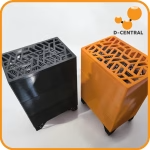
Combine that with a Bitcoin space heater — an ASIC miner configured to heat your home — and you are effectively mining at zero marginal energy cost during the heating season. The electricity you would have spent on an electric baseboard heater is instead producing heat and hash rate. The Bitcoin you earn is a bonus on top of the heating you were already paying for.
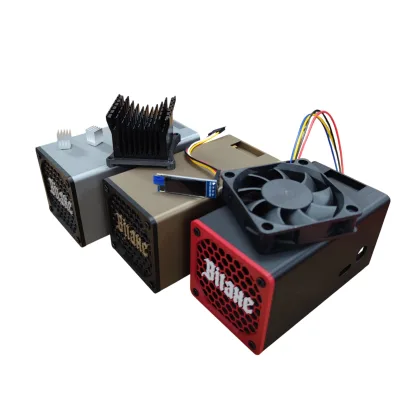
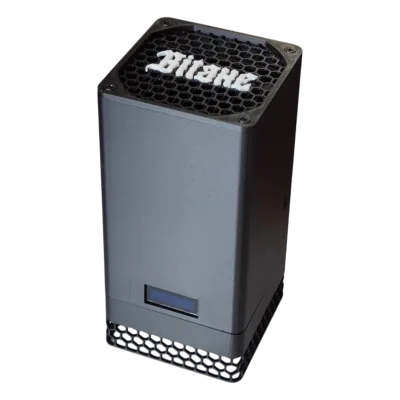
For those interested in solo mining and the decentralization mission, open-source miners like the Bitaxe offer a way to contribute to network hash rate distribution from your own home. Every hash counts — not just for the chance at a 3.125 BTC block reward, but for the health of the decentralized network itself.
How to Get Started with Hydro-Powered Mining
Whether you are looking to mine at home or at scale, here are the practical steps:
1. Know your power cost. Calculate your all-in electricity cost per kWh, including delivery charges, demand charges, and taxes. This is the single most important number in your mining operation.
2. Choose efficient hardware. Post-halving, efficiency (joules per terahash, or J/TH) is everything. Current-generation ASICs like the Antminer S21 series deliver under 20 J/TH, which is the threshold you need for profitability at most power rates. Browse our shop for the latest available hardware.
3. Consider dual-purpose mining. If you heat your home with electricity, a Bitcoin space heater turns your heating bill into a mining operation. This dramatically improves your economics.
4. Explore hosting options. If your local power rates are not competitive, consider hosted mining in Quebec, where hydro power rates and cold climate cooling give you the best of both worlds.
5. Maintain your hardware. ASICs are industrial machines that need care. Regular maintenance and prompt repairs extend hardware life and keep your hash rate online. D-Central operates a full ASIC repair service for all major manufacturers — Bitmain, MicroBT, Canaan, and more.
The Future of Hydro-Powered Mining
The trend is clear: Bitcoin mining is moving toward the cheapest, cleanest energy sources on the planet. Hydro power, with its baseload reliability, near-zero marginal cost, and minimal carbon footprint, is the natural fit.
As the network hash rate continues to climb and block subsidies continue to halve, the miners who survive will be the ones with the lowest all-in cost of production. That means efficient hardware, optimized operations, and — above all — cheap, reliable power.
In Canada, we are fortunate to sit on one of the largest hydroelectric reserves in the world. At D-Central, we have been leveraging this advantage since 2016, helping miners of all sizes — from home mining enthusiasts running a single Bitaxe to operations deploying hundreds of ASICs — tap into the power of water to secure the Bitcoin network.
The mission has not changed: decentralize every layer of Bitcoin mining. Hydro-powered mining is a critical piece of that puzzle — bringing clean, cheap, reliable energy to the hash rate that secures the hardest money ever created.
Frequently Asked Questions
Why is hydroelectric power considered the best energy source for Bitcoin mining?
Hydroelectric power delivers baseload reliability (90-95%+ uptime), near-zero marginal costs once infrastructure is built, and minimal carbon emissions. Unlike solar and wind, hydro produces power 24/7 regardless of weather conditions, which perfectly matches the continuous operational demands of ASIC mining hardware. The combination of low cost, high reliability, and clean generation makes it the optimal energy source for proof-of-work mining.
How does Canada’s hydroelectric capacity benefit Bitcoin miners?
Canada is the third-largest hydroelectric producer globally, generating over 380 TWh annually. Provinces like Quebec derive over 95% of their electricity from hydro, resulting in some of the lowest electricity rates in North America. Combined with cold ambient temperatures that reduce ASIC cooling costs, stable governance, and reliable infrastructure, Canada — and Quebec in particular — offers an exceptional environment for Bitcoin mining operations of all sizes.
Can home miners benefit from hydro-powered mining?
Absolutely. If you live in a province with cheap hydro power (Quebec, BC, Manitoba), your residential electricity rate is already competitive with many industrial mining operations worldwide. You can run a Bitcoin space heater that mines Bitcoin while heating your home, effectively mining at zero marginal energy cost during heating season. Even small-scale solo miners running a Bitaxe benefit from cheap hydro power, as the lower electricity cost improves the economics of every hash.
What is a Bitcoin space heater and how does it relate to hydro-powered mining?
A Bitcoin space heater is an ASIC miner configured to heat a room or home. Since all electricity consumed by a miner is converted to heat (thermodynamics guarantees this), the miner replaces an electric space heater while simultaneously earning Bitcoin. In hydro-powered regions with electric heating, this means you are mining Bitcoin with energy you were already going to spend on heat — making the Bitcoin earned essentially a bonus on top of your normal heating costs.
Does intermittent renewable energy (solar/wind) damage ASIC mining hardware?
Frequent power cycling from intermittent energy sources can accelerate wear on ASIC hardware. The thermal cycling — repeated heating and cooling as power fluctuates — stresses solder joints on hash boards and can shorten hardware lifespan. This is one reason baseload power sources like hydro are preferred for mining: they provide the stable, continuous power that ASICs are designed to run on. If you are using intermittent renewables, battery storage to smooth power delivery is strongly recommended.
How does Bitcoin mining act as a buyer of last resort for surplus hydro power?
Hydroelectric dams generate power based on water flow, not market demand. During periods of high water flow (spring melt, heavy rains), these facilities often produce more electricity than the local grid can absorb. Without a buyer, that energy is wasted. Bitcoin miners can absorb this surplus power, converting it into economic value. When grid demand rises, miners can curtail operations. This demand-response flexibility makes Bitcoin mining an ideal partner for utilities managing excess renewable generation.