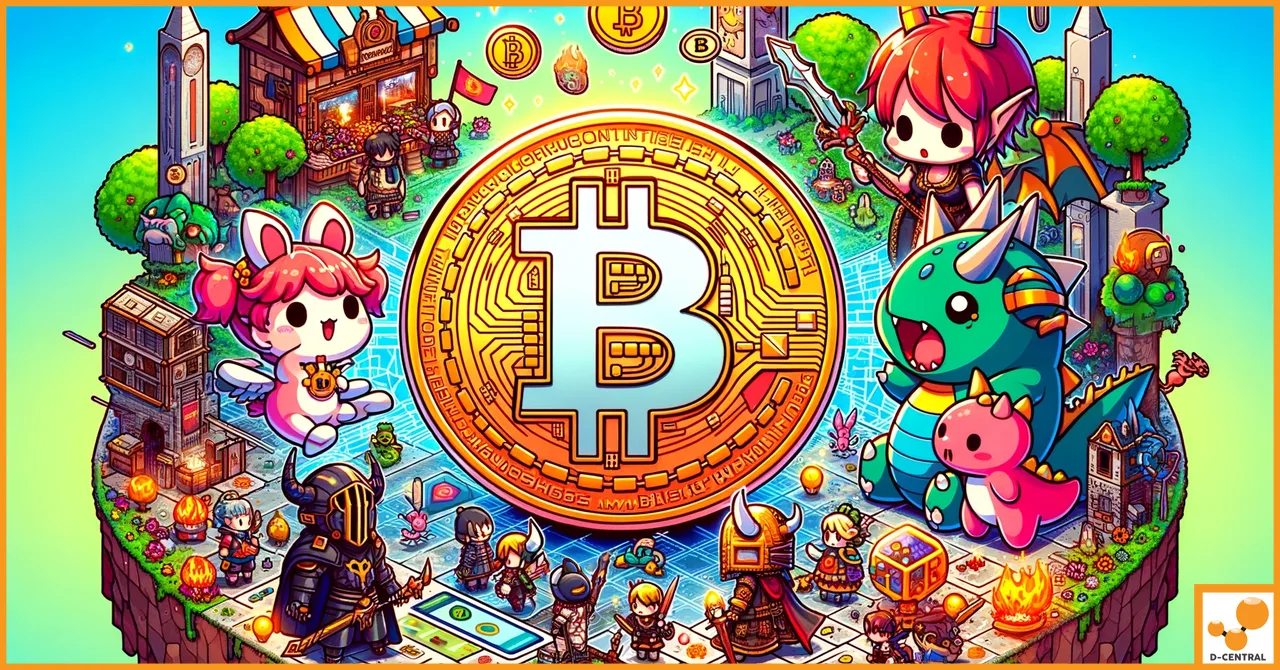
If you have ever farmed gold in World of Warcraft, manipulated the Grand Exchange in RuneScape, or run a manufacturing empire in Eve Online, you already understand something that most economists still struggle with: digital scarcity creates real value. And that understanding is exactly what makes the gamer-to-Bitcoiner pipeline one of the strongest on-ramps into the world of sound money.
This is not a fluffy think-piece about “the metaverse.” This is a technical breakdown of why virtual economies inside MMORPGs (Massively Multiplayer Online Role-Playing Games) taught an entire generation the economic principles that make Bitcoin work — and why those same principles drive home miners to stack sats through proof of work instead of trusting a central authority to manage their money.
Virtual Economies Are Real Economies
Dismiss in-game currencies as “play money” and you miss the point entirely. The economies inside major MMORPGs operate on the same fundamental principles as any real-world market — supply and demand, marginal utility, inflation, and market manipulation. The difference is that game developers play the role of central bankers, and players get to watch monetary policy failures play out in fast-forward.
World of Warcraft: Inflation in Action
World of Warcraft’s gold economy is a masterclass in what happens when a central authority controls the money supply. Blizzard Entertainment continuously injects gold into the economy through quest rewards, loot drops, and daily activities. The result is predictable: chronic inflation. Items that cost a few gold in 2005 cost thousands of gold by 2026. Gold sinks — repair costs, auction house fees, cosmetic mounts — are Blizzard’s version of taxation, designed to pull currency out of circulation and slow the debasement.
Sound familiar? It should. This is exactly what every central bank on the planet does with fiat currency, except game developers are at least honest about the mechanism. The Federal Reserve and the Bank of Canada print money to “stimulate the economy.” Blizzard prints gold to keep players grinding. Both debase the savings of everyone holding that currency.
Eve Online: The Free Market Experiment
Eve Online takes a radically different approach. CCP Games employed a full-time economist (Dr. Eyjolfur Gudmundsson held the role for years) to monitor the game’s economy, which functions as one of the most sophisticated free-market simulations ever built. Players mine resources, manufacture ships, set prices, form corporations, wage economic warfare, and even run Ponzi schemes. ISK (Interstellar Kredits) fluctuates based on genuine supply and demand, and the game has experienced bank runs, market crashes, and hyperinflation events that mirror real-world financial crises.
The lesson Eve Online teaches is brutal and clear: when trusted third parties control the money, the system is only as trustworthy as those parties. Every major Eve scam — from the EBank collapse to the Phaser Inc. fraud — is a microcosm of what happens in traditional finance when intermediaries abuse their position.
RuneScape: The Black Market Problem
RuneScape’s economy spawned one of the earliest and most active real-money trading (RMT) markets. Players farmed gold and sold it for real-world currency, creating an entire underground economy that Jagex (the developer) spent decades trying to suppress. Venezuelan players famously turned RuneScape gold farming into a survival strategy during their country’s hyperinflation crisis — proving that when your national currency fails, people will find an alternative store of value anywhere they can, even inside a video game.
This is the same impulse that drives Bitcoin adoption in countries with failing monetary systems. The difference is that Bitcoin does not have a developer who can ban your account, roll back transactions, or change the rules of the game.
Digital Scarcity: From Legendary Drops to 21 Million
Every MMORPG player understands scarcity intuitively. The legendary sword that only drops once per thousand boss kills is valuable precisely because it is rare. The mount that required a server-first achievement is prestigious because almost nobody has it. Gamers learned to value digital assets based on verifiable scarcity long before Satoshi Nakamoto published the Bitcoin whitepaper.
Controlled Scarcity vs. Programmatic Scarcity
There is a critical difference between how games and Bitcoin handle scarcity, and it is the difference that matters most.
In MMORPGs, scarcity is controlled by developers. A raid boss drops a legendary item at a 1% rate — until the developer patches it to 5% because player engagement is declining. An item that took months to earn can be made obsolete by a single expansion pack. The rules change at the whim of a central authority.
Bitcoin’s scarcity is programmatic and immutable. There will only ever be 21 million bitcoin. The fourth halving occurred in April 2024, reducing the block subsidy from 6.25 BTC to 3.125 BTC. As of early 2026, approximately 19.8 million BTC have been mined, leaving roughly 1.2 million left to be produced over the next century-plus. No developer, no government, no corporation can change this. The code is the code. The rules are the rules.
This is what makes Bitcoin fundamentally different from every in-game currency and every fiat currency. Game developers can nerf your loot table. Central banks can print more money. Nobody can print more bitcoin.
The Halving as a Difficulty Curve
Gamers understand difficulty curves — the progression system that makes early levels easy and late levels brutally hard. Bitcoin’s halving mechanism works the same way. Every 210,000 blocks (roughly four years), the reward for mining a block is cut in half. Mining bitcoin was easy in 2009. By 2026, it requires specialized hardware running SHA-256 computations at terahash-per-second speeds, consuming real electricity, doing real work.
This is proof of work — the mechanism that anchors Bitcoin’s digital scarcity to physical reality. Unlike a game developer who can spawn items out of thin air, new bitcoin can only be created by expending real energy. That thermodynamic anchor is what separates Bitcoin from every other digital asset that has ever existed.
The Gamer-to-Bitcoiner Pipeline
The overlap between the gaming community and the Bitcoin community is not coincidental. It is structural. Gamers arrived at Bitcoin with a pre-built mental framework for understanding digital value, and several characteristics make them uniquely receptive to Bitcoin’s value proposition.
Digital Natives Who Understand Digital Value
While mainstream economists were still debating whether “digital” things could have “real” value, gamers were already trading digital assets worth thousands of dollars. The CS:GO skin market, the Diablo III Real Money Auction House, the Eve Online PLEX system — all of these demonstrated that digital scarcity creates genuine economic value. When Bitcoin came along, gamers did not need to be convinced that a purely digital asset could be worth something. They already knew.
Trustless Systems Over Trusted Authorities
Every gamer who has been burned by a developer nerfing their hard-earned gear, banning their account, or shutting down a game server understands viscerally why trustless systems matter. When Blizzard shut down the Diablo III auction house, billions of dollars worth of player value evaporated. When a game studio closes, every digital item in that game ceases to exist.
Bitcoin cannot be shut down by a studio. It cannot be nerfed by a developer. It cannot be rolled back by a customer support ticket. The network runs because miners around the world — including home miners running hardware in their basements and garages — keep it running through proof of work. No single point of failure. No kill switch.
Early Bitcoin Mining Was Literally Gaming Hardware
The history of Bitcoin mining hardware traces directly through the gaming world. Satoshi Nakamoto mined the first blocks with a CPU. Early adopters switched to GPU mining — using the same graphics cards that powered their gaming rigs. The transition from GPU mining to FPGA to purpose-built ASICs mirrors the kind of hardware optimization that PC gamers have practiced for decades: squeezing maximum performance out of every watt.
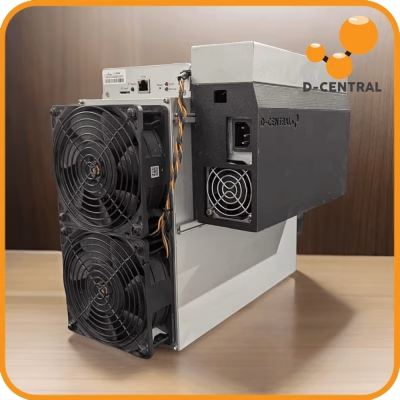
Today, the mining landscape has evolved dramatically. Full-scale ASICs like the Antminer S21 series push efficiency boundaries at the industrial level. But the open-source movement has brought mining back to its roots with devices like the Bitaxe — purpose-built solo miners that let individuals contribute hashrate to the network from their desk. It is the same hacker ethos that drove early GPU miners: take the technology, make it accessible, and decentralize the network.
Why This Matters for Bitcoin’s Future
The MMORPG parallel is not just an interesting analogy. It reveals something fundamental about Bitcoin’s trajectory and why decentralized mining matters.
Central Control Always Fails
Every MMORPG economy that has relied on central control has experienced the same problems: inflation, corruption, black markets, and player exodus. The developers who try to manage every aspect of their economies inevitably make mistakes, play favorites, or succumb to incentives that harm the player base. This is not a failure of any particular developer — it is a systemic problem with centralized control.
Bitcoin was designed to eliminate this failure mode entirely. There is no Blizzard for Bitcoin. There is no CCP Games. There is no Jagex. The monetary policy is set in code, enforced by consensus, and verified by every node on the network. The 21 million cap is not a promise from a corporation — it is a mathematical certainty enforced by tens of thousands of independent nodes.
Decentralization Is the Point
In Eve Online, the most resilient player organizations are the ones that decentralize their operations. A corporation that depends on a single leader or a single system is vulnerable. A coalition that distributes its assets, leadership, and operations across multiple regions is antifragile.
The same principle applies to Bitcoin mining. When mining is concentrated in a few large pools or a few geographic regions, the network is vulnerable. When mining is distributed across thousands of home miners running hardware in their homes — heating their houses with the waste heat, monetizing their excess energy, contributing hashrate from every corner of the globe — the network becomes genuinely unstoppable.
This is exactly why D-Central exists. We are Bitcoin Mining Hackers. We take institutional-grade mining technology and hack it into solutions that work for home miners, pleb miners, and anyone who believes that Bitcoin’s security should not depend on a handful of data centers. From Bitcoin space heaters that turn mining waste heat into home heating to open-source solo miners like the Bitaxe that let anyone contribute to network security, every product we build serves the same mission: decentralize every layer of Bitcoin mining.
Sound Money Needs Sound Mining
The MMORPG analogy ultimately breaks down in one critical way — and it is the way that matters most. Game economies exist to serve entertainment. Bitcoin exists to provide the world with a censorship-resistant, permissionless, hard-capped monetary system that no government, no corporation, and no developer can debase.
Every hash contributed to the Bitcoin network is a vote for sound money. Every home miner running a machine in their basement is a participant in the most important monetary experiment in human history. Every sat earned through proof of work is a sat that did not come from a printer.
The gamers who understood digital scarcity in 2005 were ahead of the curve. The miners who are securing the Bitcoin network in 2026 are building the future. Every hash counts.
Frequently Asked Questions
How are MMORPG economies similar to Bitcoin?
Both operate on principles of supply and demand, scarcity, and market dynamics. The critical difference is that MMORPG economies are controlled by game developers who can change the rules at any time, while Bitcoin’s monetary policy is encoded in software and enforced by a decentralized network of nodes and miners. Nobody can inflate Bitcoin’s supply beyond 21 million coins.
Why do gamers tend to understand Bitcoin faster than non-gamers?
Gamers have spent years managing digital assets, understanding digital scarcity, trading in virtual economies, and experiencing firsthand what happens when central authorities manipulate an economy. These experiences create a pre-built mental framework that maps directly onto Bitcoin’s value proposition — digital scarcity enforced by code rather than by trust in an authority.
What is Bitcoin’s halving and how does it relate to game difficulty curves?
Bitcoin’s halving occurs every 210,000 blocks (approximately four years), cutting the block subsidy in half. The fourth halving in April 2024 reduced the reward from 6.25 BTC to 3.125 BTC. This is conceptually similar to an MMORPG difficulty curve where resources become harder to obtain over time, reinforcing scarcity and long-term value. The next halving is expected around 2028.
How did gaming hardware influence Bitcoin mining?
Bitcoin mining began on CPUs, then moved to GPUs — the same graphics cards gamers used. This GPU mining era was the bridge between the gaming and mining communities. Mining eventually transitioned to FPGAs and then purpose-built ASICs for maximum efficiency. Today, open-source miners like the Bitaxe bring mining back to the individual level, echoing the early days when anyone with a gaming PC could mine.
Why does home mining matter for Bitcoin?
Home mining decentralizes the Bitcoin network’s hashrate, making it more resistant to censorship, government interference, and single points of failure. When thousands of individuals mine from their homes — even with small devices like a Bitaxe or a space heater miner — the network becomes genuinely distributed. D-Central’s mission is to make this accessible to everyone through open-source miners, mining heaters, and pleb-friendly hardware.
Can Bitcoin’s rules be changed like a game developer can change game rules?
No. This is the fundamental difference. A game developer can patch loot tables, inflate currency, ban accounts, or shut down servers with a single decision. Bitcoin’s rules — including the 21 million supply cap — are enforced by consensus across tens of thousands of independent nodes worldwide. Changing the rules would require convincing the vast majority of the network to adopt the change, which serves as a powerful safeguard against manipulation.
What is the connection between Bitcoin mining and home heating?
Bitcoin miners convert electricity into heat as a byproduct of proof-of-work computation. Bitcoin space heaters capture this waste heat and use it to warm your home, effectively making the electricity do double duty — securing the Bitcoin network while heating your living space. This dual-purpose approach can offset heating costs significantly, especially in cold climates like Canada.
Is solo mining with a small device like a Bitaxe realistic?
Solo mining with a Bitaxe is similar to playing a lottery — the odds of finding a block are small for any individual device, but the Bitaxe community has collectively found dozens of blocks. The point is not guaranteed returns — it is about participating directly in Bitcoin’s consensus mechanism, learning how mining works, and contributing to network decentralization. Every hash counts, and any hash could be the one that finds a block.