Bitcoin can be used as a settlement system in which independently validating nodes apply shared consensus rules and proof of work orders valid transactions. Settlement is probabilistic: confirmations add cumulative work and generally reduce, but never eliminate, reversal risk.
Settlement Rather Than a Fixed Payment Promise
A transaction is not irreversible merely because it appears in a block. The whitepaper models catch-up probability using attacker share and confirmation depth. Appropriate confirmation policy depends on value, counterparties, detected risk, and the consequences of delay.
What Nodes and Miners Actually Do
Full nodes validate blocks and transactions against their configured consensus rules. Mining software or a pool constructs candidate templates; hashing devices search candidate headers for valid proof of work. An ASIC is not a validating node, and hash attempts are not governance votes.
Block Production and Variable Time
Bitcoin targets a ten-minute long-run average, but individual intervals are random. Difficulty normally changes at 2,016-block retarget boundaries using the consensus elapsed-time calculation and a fourfold clamp; neither ten minutes nor one hour is guaranteed.
Capacity Is Not a Fixed TPS Number
Base-layer throughput depends on transaction weight and composition, not a universal transactions-per-second constant. Batching, input and output types, scripts, and witness data change how many transactions fit within the block-weight limit.
Hashrate Is Estimated
Bitcoin Core estimates hashes per second from accumulated work and elapsed block time over a selected window. It is not a directly measured live fleet total and does not reveal electricity use, miner count, ownership, geography, pool control, or absolute security.
Subsidy, Fees, and Maturity
The maximum subsidy is 3.125 BTC from heights 840,000 through 1,049,999 and becomes 1.5625 BTC at height 1,050,000; calendar dates are estimates. An accepted block may underclaim that maximum and may also claim eligible transaction fees, and its coinbase output matures after 100 blocks. Pools separately apply payout rules.
Lightning Network Tradeoffs
Lightning moves repeated payments into channels and settles channel states to Bitcoin. Success depends on route availability, outbound and inbound liquidity, fees, timelocks, channel state, and online monitoring. Custodial services add counterparty risk; self-custody adds operational and backup responsibilities. Lightning improves some payment workflows but does not make every payment instant, free, private, or guaranteed.
Proof of Work and Alternative Designs
Proof of work ties Bitcoin chain selection to cumulative computational work. Other consensus families use different resources, finality rules, penalties, and bootstrap assumptions. Energy use, participation, concentration, recovery, and censorship risks must be evaluated for a concrete implementation rather than ranked by labels alone.
Home Mining and Independent Control
Home mining can broaden geography and ownership when operators independently choose pools, templates, nodes, firmware, hosting, and connectivity. A compact miner behind an existing coordinator does not by itself decentralize those decisions. Direct solo mining can use locally controlled node and template infrastructure; a solo-pool service may still coordinate them.
Mining Hardware Is Not a Node
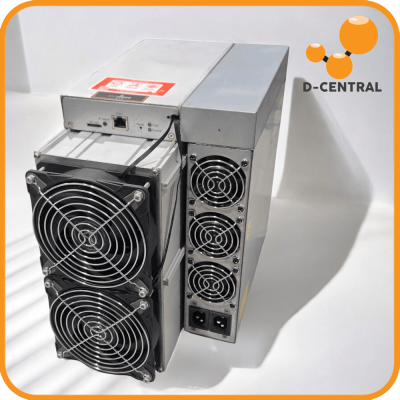
Devices in the Bitaxe ecosystem, the NerdAxe, and full-size ASIC miners perform hashing. Running a full node is a separate activity that validates blocks and transactions. Hardware specifications, AC-wall power, noise, and economics vary by model and operating profile.
Heat Reuse Boundaries
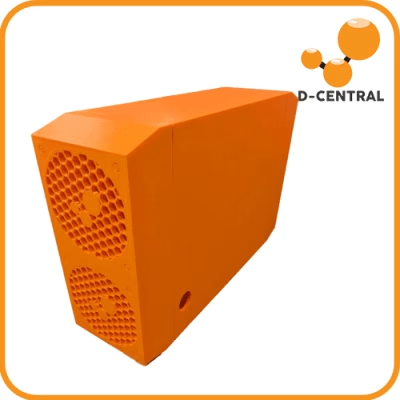
Nearly all miner electrical input ultimately becomes heat within a defined boundary. Useful heat from mining heaters depends on location, timing, ducting, controls, losses, capital, maintenance, and demand. It may displace comparable resistance heating, while a heat pump can deliver more useful heat per kilowatt-hour.
Operational Security
Settlement assurance also depends on wallet key management, transaction construction, fee policy, software integrity, network connectivity, and node configuration. Mining equipment maintenance and ASIC repair can improve uptime but do not replace independent validation.
Measuring Decentralization
Machine count and aggregate hashrate are incomplete measures. Pool and template coordination, ownership, hosting, firmware, node validation, connectivity, and jurisdiction should be assessed separately using dated evidence. An additional home miner can broaden control only when meaningful decisions are independent.
Mining and payment economics vary with difficulty, fees, subsidy, price, uptime, pool terms, routing liquidity, hardware, energy, maintenance, and capital. Illustrations should state their timestamp and assumptions rather than present current telemetry as protocol fact. Heat reuse products are described at the dedicated heat-reuse section.
Frequently Asked Questions
What makes Bitcoin a global settlement network rather than just a digital currency?
Independently validating nodes enforce consensus rules while proof of work orders valid transactions. Confirmations add cumulative work and reduce modeled reversal risk, but settlement remains probabilistic rather than irreversible.
How does the Lightning Network solve Bitcoin’s scalability limitations?
Lightning supports repeated off-chain payments through channels that ultimately settle to Bitcoin. Payment success depends on routes, liquidity, fees, timelocks, channel state, and monitoring; custody and self-custody have different counterparty and operational risks.
Why does Bitcoin use proof of work instead of a more “efficient” consensus mechanism?
Bitcoin’s deployed rules use cumulative proof of work for chain selection. Alternative designs use different resources, finality, penalty, and bootstrap assumptions. Comparisons should evaluate concrete threat models, participation, concentration, energy, recovery, and censorship tradeoffs rather than assume one universal efficiency ranking.
How is Bitcoin’s block subsidy determined?
The maximum subsidy is 3.125 BTC at heights 840,000 through 1,049,999 and becomes 1.5625 BTC at height 1,050,000. Calendar dates are estimates. An accepted block may underclaim that maximum and may also claim eligible fees, and its coinbase output matures after 100 blocks.
How does home mining contribute to Bitcoin’s settlement security?
It can broaden geography and ownership when operators independently control pools, templates, nodes, firmware, hosting, and connectivity. Hardware presence or submitted hashes alone do not prove decentralization, and an ASIC is not a validating node.
How does Bitcoin settlement compare to traditional bank wire transfers?
The systems have different operating, legal, reversal, identity, custody, availability, and finality models. Bitcoin confirmation time is variable and probabilistic; bank-wire timing and reversibility depend on institutions, jurisdictions, cutoffs, and compliance processes.
What role does D-Central Technologies play in Bitcoin’s settlement infrastructure?
D-Central supplies, adapts, and services mining equipment. Those services can support miner uptime and participation, while transaction validation, template control, custody, and settlement policy remain separate operator choices.