The best places to mine Bitcoin are rarely the places with good internet. Cheap stranded hydro power, a wood-heated cabin, a rural property with a solar array, a homestead an hour past where the cable company’s map gives up — these are exactly the off-grid, low-cost-power locations that make home mining work, and they’re exactly the places traditional ISPs never wired. For a long time that was a hard wall. Low-Earth-orbit satellite internet — Starlink and the services following it — knocked that wall down. If your mining site’s connectivity problem isn’t “slow” but “none,” this is the guide for you.
First, a reality check: mining barely uses the internet at all
Before you spec a satellite dish, understand what the connection actually does for a miner — because most people drastically overestimate it. When your Bitaxe, NerdQAxe, or Antminer mines in a pool, the network traffic is tiny. The pool sends a small “work template” describing the block to grind on. Your miner does the massive SHA-256 computation locally, on its own chips — that work never crosses the internet — and only sends back a short message when it finds a valid share. The whole conversation is kilobytes per minute. A home mining fleet’s daily data usage is smaller than a single phone photo.
This matters for two reasons. First, satellite data allowances are a non-problem for mining — the mining traffic itself will never come close to any cap. Second, it tells you what to actually optimize for: not raw speed, but consistency and uptime. A connection that’s modest but always-on beats a fast one that drops, every time.
Why old satellite internet failed miners — and why LEO changed it
Satellite internet existed for decades before it was usable for mining, and the reason it failed is worth understanding. Traditional satellite internet used satellites in geostationary orbit — roughly 35,000 km up. The laws of physics impose a brutal round-trip latency on that distance: signals took 600 milliseconds or more just to make the trip. For a miner constantly exchanging time-sensitive work templates and share submissions with a pool, that lag meant a painful rate of “stale shares” — work submitted too late to count — eating directly into earnings.
Low-Earth-orbit (LEO) constellations changed the geometry entirely. These satellites orbit at roughly 550 km — about sixty times closer — which collapses latency into the 20–50 millisecond range, comparable to a decent wired connection. That single change is what made satellite internet genuinely viable for remote mining. The block-solving math still happens on your chips locally; LEO just made the small messages travel fast enough that staleness stops being a meaningful tax.
The honest pros and cons for a remote miner
What satellite internet genuinely delivers
- It unlocks sites that had zero options. This is the whole point. A property with cheap power and no wired internet was previously un-mineable. Now it isn’t. Satellite turns “impossible location” into “viable location.”
- It serves the decentralization mission directly. Every miner that comes online in a place industrial operations would never bother with is hashrate distributed further from the big pools and big farms. Remote home miners on satellite internet are decentralization in physical form — which is the entire D-Central thesis.
- Fast deployment. No waiting on a utility to trench a line. The dish ships, you mount it, you’re online.
- Latency is now adequate. LEO latency is good enough that pool mining works normally, with no meaningful staleness penalty.
What you have to plan around
- Weather and obstructions cause dropouts. Heavy snow on the dish, a thick storm, a tree branch that grew into the sightline — satellite connections drop more often than wired ones. Every dropped minute is a minute your miner runs at full power earning nothing. Mount the dish with a genuinely clear view of the sky and keep it clear of snow.
- Cost is ongoing. Hardware plus a monthly service fee that’s typically higher than wired broadband. Fold that real number into your profitability math — it’s a fixed monthly cost against your mining revenue.
- Power draw of the dish itself. The dish and router consume power continuously — modest, but on an off-grid solar or battery setup, it’s a real line item in your energy budget alongside the miners.
- It depends on the grid you’re trying to escape. If your site is off-grid, your satellite gear needs to be on the same reliable power as your miners, or it goes down with everything else.
Building a remote mining site that actually stays online
A remote mining setup is a small system, and every part has to hold or the whole thing stops earning. Here’s what a serious off-grid build accounts for:
- Connectivity: LEO satellite dish with a clear sky view, mounted where snow won’t bury it and you can reach it to clear it.
- Power: Whatever your source — solar, hydro, grid-edge — it has to carry the miners and the satellite gear and survive your worst weather. Put critical gear on a UPS so a brief sag doesn’t corrupt firmware or force a risky cold restart.
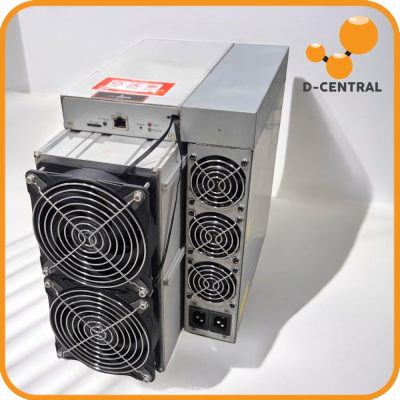
- The right miners for an unattended site: Remote means you can’t walk over and fix things. That argues for reliable, low-maintenance hardware. A quiet, low-power Bitaxe or NerdQAxe+ sips power and has very little to go wrong — ideal where every watt off a solar array counts. For more hashrate, a rebuilt Antminer Slim Edition or Loki Edition brings serious output in a package designed to actually live in a residential or cabin environment.
- Heat strategy: A remote cabin in a cold climate is the textbook case for capturing miner heat instead of venting it. An Antminer S9 Space Heater Edition or the DIY BitChimney turns the heat your miners produce into the heat the cabin needs — same watts, two jobs. Our heat recovery guide goes deeper.
- Remote monitoring and security: If you can’t physically see the site, you need to see it digitally — and you need it locked down. A miner on a remote network still must never be port-forwarded to the open internet; reach it through a VPN instead. Our home network security guide applies doubly to unattended sites.
- A failure plan: Satellite drops. Accept it and decide your response — a cellular backup connection where coverage exists, or simply budgeting for some lost hours. For sites where 5G coverage reaches, our 5G for home mining guide covers that as a primary or backup option.
Run the numbers before you commit
A remote mining site has costs a city setup doesn’t: the satellite hardware, the higher monthly service fee, possibly off-grid power infrastructure. Those are real, and they belong in your projection before you buy anything. Drop your hardware, your power cost, and your monthly connectivity cost into the Mining Profitability Calculator, and if you’re chasing the dream of solo-mining a full block from a cabin in the woods, model that honestly with the Solo Mining Calculator. The remote dream is real and it’s worth pursuing — but pursue it with the math in front of you, not the marketing.
Frequently asked questions
Is satellite internet fast enough for Bitcoin mining?
Speed was never the issue — mining uses only kilobytes per minute. The historical problem was latency, and old geostationary satellites had crippling lag. Modern low-Earth-orbit services (Starlink and similar) cut latency to 20–50 ms, which is perfectly adequate for pool mining.
Will mining blow through my satellite data cap?
No. The mining traffic itself is tiny — kilobytes per minute per miner — and won’t approach any data allowance. The block-solving computation happens locally on your miner’s chips and never travels over the connection. (Video monitoring feeds are a separate story, but the mining is featherweight.)
What’s the biggest risk with satellite mining?
Dropouts. Weather, snow on the dish, or obstructions in the sky view can interrupt the connection — and every minute offline is a minute your miner burns full power for zero earnings. Mount the dish with a clear sky view, keep it clear of snow, and have a plan for outages.
Why mine from a remote location at all?
Cheap or stranded power, free heat recovery in cold climates, and the decentralization payoff — remote home miners put hashrate in places industrial operations ignore. Satellite internet is what makes those sites reachable. It’s home mining at the literal edge of the grid.