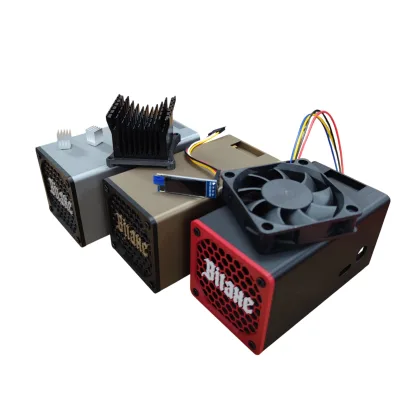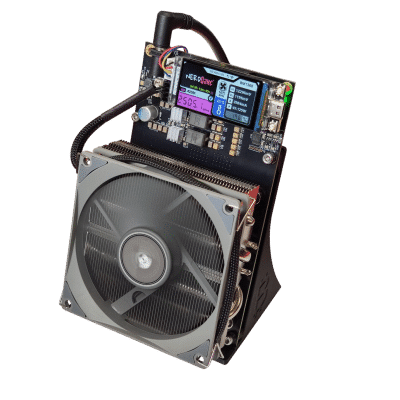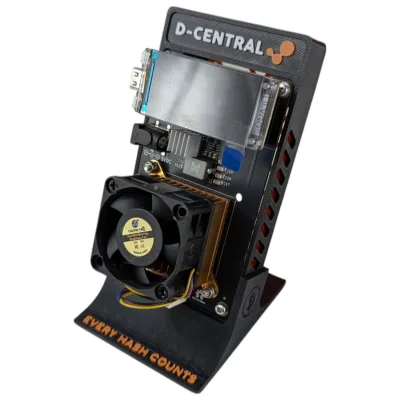
Let’s start with the claim you came here to check: does 5G “supercharge” your home Bitcoin mining? No. And any article promising “5G-ready miners” or “5G-optimized mining pools” is selling you marketing fog. Here’s the reality a Mining Hacker needs to hear plainly — Bitcoin mining is a problem of computation and electricity, not bandwidth. Your hashrate comes from your ASIC chips. Your profit comes from your power rate. The internet connection’s only job is to shuttle tiny messages between your miner and a pool, and it has been more than capable of that since the DSL era. That said, 5G is genuinely useful for one specific group of miners — and once you understand why, you’ll know exactly whether it applies to you.
How much internet does a miner actually use? Almost none.
This is the fact the hype articles bury. When a Bitaxe, a NerdQAxe, or an Antminer mines in a pool, the network conversation is astonishingly small. The pool sends the miner a “work template” — a few kilobytes describing the block to work on. The miner does its enormous SHA-256 computation locally, entirely on its own chips, and only sends back a short message when it finds a valid share. We’re talking kilobytes per minute. A single miner’s entire daily data usage wouldn’t fill a low-resolution photo.
So the “20 Gbps speeds!” and “1 million devices per square kilometer!” 5G spec-sheet numbers are completely irrelevant to mining. You are not streaming. You are not transferring files. The block-solving math never travels over your connection — it happens inside the box on your desk. A 5 Mbps connection from 2009 can comfortably run a full home mining fleet. Speed is a non-factor, and anyone telling you a faster pipe means more Bitcoin is either confused or hoping you are.
What actually matters: not speed, but uptime and latency
Connection quality does matter to mining — just not the part 5G ads emphasize. Two characteristics count, and bandwidth is neither of them:
- Uptime. A miner with no connection to its pool is a space heater that earns nothing. It keeps drawing full power, the fans keep roaring, but every hash it computes during the outage is wasted because it can’t submit shares. Consistent connectivity — not fast connectivity — is what protects your earnings.
- Latency. Lower latency means your miner receives fresh work templates and submits found shares a hair sooner. In the rare cases this matters, it slightly reduces “stale shares” — work submitted against a block that the network already moved past. For a home miner in a pool, this is a marginal optimization measured in fractions of a percent, not a profit multiplier.
Notice what’s missing from that list: download speed. A rock-solid 25 Mbps connection that never drops beats a 2 Gbps connection that flakes out twice a day, every single time, for mining. Stability is the metric. The hype gets this exactly backwards.
So where does 5G genuinely help? Coverage, not speed.
Here’s the honest, useful version of the 5G story — and it’s a real one. 5G’s value to a Bitcoin miner has nothing to do with how fast it is. It’s about where it reaches.
If your mining site has good wired internet — cable, fibre, DSL — keep it. It’s cheaper, it’s stable, and it’s already overqualified for the job. 5G changes nothing for you.
But if you’re a Canadian miner — and a lot of the best home mining happens exactly where the grid and the wires get thin — 5G fixed wireless can be the thing that makes a site possible at all. A cabin running on cheap hydro or a wood-heated property. A rural homestead with a solar array and no cable company within 40 kilometres. A garage at the edge of town where the ISP “service area” map just stops. In those places, the choice isn’t “5G vs. fibre.” It’s “5G vs. nothing.” A 5G modem that pulls a reliable signal off a distant tower can be the difference between a mining operation and an empty room. That’s not a speed upgrade — it’s an access unlock, and it directly serves Bitcoin’s decentralization mission by letting hashrate exist in places industrial miners don’t bother with.
It overlaps heavily with the satellite-internet story for off-grid setups — if your site is remote enough that even cellular is marginal, our guide on remote home Bitcoin mining with satellite internet covers the other half of that picture.
If you do mine over 5G: the real considerations
For miners who genuinely need cellular connectivity, here’s what actually deserves your attention — none of it is “buy a faster plan”:
- Data caps are a non-issue. Because mining uses almost no data, even a modest cellular plan will never come close to a cap from the mining traffic itself. (Your miner’s web dashboard, remote monitoring, and any video feeds are a different story — but the mining itself is featherweight.)
- Signal stability beats signal speed. A consistent two-bar 5G signal that never drops is better for mining than a five-bar signal that comes and goes. Mount the modem or antenna for the most reliable signal, not the fastest reading.
- Plan for the outage, because cellular has them. Cellular networks get congested and drop. A wired or satellite backup connection, or at minimum accepting that you’ll lose some hours, is part of an honest 5G mining plan.
- The miner doesn’t care what the modem is. There is no such thing as a “5G-compatible miner.” Your Bitaxe or Antminer connects to a normal local network — Ethernet or Wi-Fi — and is completely unaware of whether that network’s uplink is fibre, cable, satellite, or a 5G modem. Any miner works behind any connection. Don’t let anyone upsell you on “5G-ready” hardware; it isn’t a thing.
Where your effort actually pays off
If you’ve been thinking about “upgrading to 5G” as a way to mine more, redirect that energy. The levers that actually move home mining profitability are:
- Your electricity rate — by a wide margin the biggest factor. Shaving cents off your per-kWh cost, or shifting load to off-peak windows, dwarfs anything connectivity can do. See time-of-use mining for the strategy.
- Your hardware’s efficiency — joules per terahash is the number that compounds. Compare options honestly with the ASIC Miner Comparison Tool.
- Heat recovery — if you’re in a cold climate, capturing the heat turns a cost into a benefit. A Space Heater Edition miner mines and heats your home off the same watts.
- The right miner for your situation — a quiet, low-power Bitaxe for clean desktop solo mining, a NerdQAxe+ for more open-source hashrate, or a rebuilt Antminer Slim Edition for serious home hashing without industrial noise.
Run your actual numbers through the Mining Profitability Calculator and the Power Cost Calculator. You’ll see immediately: the internet line never appears as a variable that changes the answer, because it isn’t one. Connectivity is a prerequisite to switch on — not a dial you turn up.
Frequently asked questions
Will 5G make my miner produce more hashrate?
No. Hashrate is produced entirely by your ASIC’s chips, locally. The internet connection only carries tiny pool messages — kilobytes per minute. Changing connection type or speed does not change how fast your miner computes hashes.
Is there such a thing as a “5G-ready” miner?
No — that’s marketing language with nothing behind it. Every miner connects to a normal local network and doesn’t know or care whether the uplink is fibre, cable, satellite, or a 5G modem. Any miner works behind any connection.
Then when does 5G actually help a Bitcoin miner?
When wired internet isn’t available at your site. For remote cabins, rural homesteads, or off-grid solar/hydro setups, 5G fixed wireless can be the connectivity that makes mining possible at all. It’s an access unlock for hard-to-reach locations — not a performance upgrade for places that already have decent internet.
How much data does home Bitcoin mining use?
Very little — on the order of kilobytes per minute per miner. The block-solving computation never travels over your connection; only small work templates and share submissions do. Even a modest cellular data plan will never hit a cap from mining traffic itself.