Let’s cut through the noise. The conversation around “Bitcoin for businesses” has been hijacked by finance bros talking about balance sheet allocation and portfolio diversification. That’s fine for Wall Street. But if you’re a business owner — especially one running a physical operation with real energy costs, real infrastructure, and real customers — there’s a far more powerful play than just buying BTC and hoping the line goes up.
You should be running the Bitcoin protocol itself.
At D-Central Technologies, we’ve spent since 2016 helping businesses — from small shops to industrial operators — integrate Bitcoin mining into their operations. Not as a speculative bet, but as a technology layer that transforms how you manage energy, generate revenue, and build sovereignty over your own financial infrastructure. That’s the Bitcoin Mining Hackers way.
The Real Case for Bitcoin in Business: It’s Technology, Not Speculation
Most “Bitcoin for business” articles will tell you to accept Bitcoin payments and put 5% of your treasury into BTC. That’s not wrong, but it’s surface-level thinking. The real opportunity is deeper.
Bitcoin is an open, permissionless, censorship-resistant monetary network. When you run a miner, you’re not “investing in crypto” — you’re operating a node in the most secure computational network ever built. You’re converting electricity into sound money. You’re participating in the decentralization of the global financial system.
For a business, this means:
- Energy monetization — Excess or stranded energy becomes revenue. Every kilowatt-hour your business wastes is a kilowatt-hour that could be hashing.
- Heat recovery — ASIC miners produce enormous thermal output. Businesses with heating needs — warehouses, workshops, greenhouses, pools, restaurants — can replace traditional heaters with Bitcoin mining hardware and get paid to stay warm.
- Non-custodial revenue — Mining revenue lands directly in your wallet. No payment processor, no bank, no intermediary. Pure peer-to-peer value transfer.
- Grid services — Miners can curtail load on demand, making your business a flexible grid participant. In some jurisdictions, this earns demand-response payments on top of mining revenue.
- Sovereignty — No one can freeze your mining operation the way they can freeze a bank account. Your hash rate is yours.
How Businesses Are Actually Using Bitcoin Mining in 2026
Forget the theoretical. Here’s what’s happening on the ground right now across Canada and beyond:
1. Heating with Hash Rate
Restaurants, auto shops, retail stores, and agricultural operations are replacing propane and electric heaters with Bitcoin Space Heaters. These units — built on proven ASIC platforms like the S9, S17, and S19 — push hot air into occupied spaces while generating Bitcoin. The energy bill stays roughly the same (or drops, depending on your current heating system), but now you’re accumulating sats instead of just burning fuel.
In Canada, where heating is a non-negotiable cost for half the year, this is not a gimmick — it’s an operational advantage. We are the North, and we’ve turned our climate into a competitive edge.
2. Monetizing Excess Energy
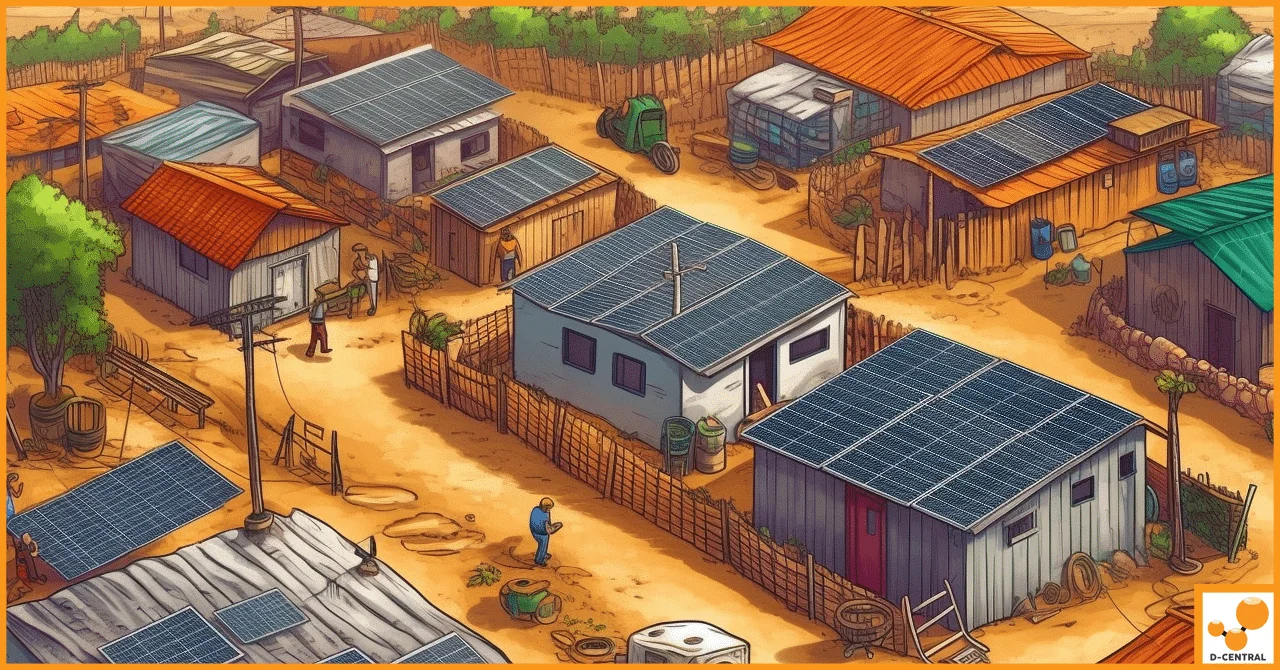
Businesses with solar panels, micro-hydro, or simply oversized electrical service can deploy miners to absorb excess capacity. A restaurant that’s provisioned for 200A but uses 120A during off-hours has 80A of headroom sitting idle. That headroom can run miners 16+ hours a day.
3. Accepting Bitcoin Payments (the Right Way)
Yes, accepting BTC payments matters — but do it properly. Run your own BTCPay Server. Don’t hand your transaction data to a third-party processor. BTCPay is open-source, self-hosted, and gives you complete control over your payment infrastructure. No KYC on your customers, no fees skimmed by middlemen, no risk of account termination because some compliance officer doesn’t understand your business.
4. Treasury Management
For businesses that generate revenue in Bitcoin (through mining or payments), holding BTC on the balance sheet is a natural extension — not a speculative play, but a reflection of the sound money you already earned through proof of work.
Choosing the Right Hardware for Your Business
The hardware decision depends on your scale, your electrical capacity, and your heating needs. Here’s a breakdown:
| Use Case | Recommended Hardware | Power | Best For |
|---|---|---|---|
| Office / retail heating | Bitcoin Space Heater (S9/S19 edition) | 800W–3,250W | Replacing existing electric heaters |
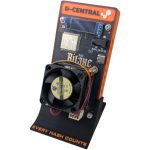
| Small business / desk miner | Bitaxe (Supra, Ultra, Gamma) | 5–25W | Solo mining, education, proof of concept |
| Workshop / warehouse | Antminer S21 or custom Slim Edition | 3,000–3,500W | High hash rate + industrial heating |
| Open-source enthusiast shop | NerdAxe, NerdQAxe, Bitaxe Hex | 5–100W | Community signal, education, low power |
| Large-scale operation | Hosted mining fleet | Variable | Dedicated facility with managed infrastructure |
Critical hardware note: Bitaxe units (Supra, Ultra, Gamma) use a 5V DC barrel jack (5.5×2.1mm) for power — NOT USB-C. The USB-C port is for firmware flashing only. The Bitaxe GT and Bitaxe Hex use a 12V DC XT30 connector. Getting the power supply wrong can damage your hardware. Check the Bitaxe Hub for complete specs on every model.
The Canadian Business Advantage
Canada is uniquely positioned for business Bitcoin mining, and D-Central has been proving this since 2016:
| Factor | Canadian Advantage |
|---|---|
| Climate | Cold winters = free cooling for 6+ months, heat recovery is genuinely useful |
| Energy costs | Quebec hydro rates among the lowest in North America (~$0.05–0.07/kWh commercial) |
| Regulatory clarity | Bitcoin is legal property; mining is a legitimate business activity |
| Renewable grid | Canada’s grid is 67%+ renewable (hydro, nuclear, wind), strong ESG narrative |
| Tax treatment | Mining expenses (hardware, electricity, hosting) are deductible business costs |
For businesses that want the hash rate without the on-site noise, D-Central operates hosted mining facilities in Quebec — purpose-built infrastructure with industrial power rates and 24/7 monitoring.
Getting Started: A Practical Roadmap
If you’re a business owner ready to go beyond just “accepting Bitcoin” and actually run the protocol, here’s the path:
Step 1: Audit Your Energy Profile
What’s your electrical capacity? What do you currently spend on heating? Where is energy being wasted? This determines your mining scale. D-Central’s mining consulting service can walk you through this assessment.
Step 2: Choose Your Integration Model
- On-site heat mining: Deploy Space Heaters or shrouded ASICs in your facility. Best for businesses with heating needs.
- On-site dedicated mining: Set up a dedicated mining closet or room. Best for businesses with excess electrical capacity.
- Hosted mining: Deploy machines at a D-Central facility. Best for businesses that want hash rate without on-site management.
- Hybrid: Heat-mine on-site during winter, send machines to hosting during summer. The Canadian seasonal strategy.
Step 3: Acquire Hardware
Browse D-Central’s full catalog — from Bitaxe solo miners for your front desk to industrial S21s for your warehouse. Every unit is tested, configured, and shipped from Canada.
Step 4: Set Up Self-Sovereign Infrastructure
Point your miners at a pool (or solo mine for the thrill of a 3.125 BTC block reward). Set up a BTCPay Server for customer payments. Run your own node. The deeper you go, the more sovereign your business becomes.
Step 5: Maintain and Scale
Miners are industrial hardware — they need maintenance. D-Central provides full ASIC repair services for when hash boards need attention, fans fail, or control boards need replacement. We’ve repaired thousands of units across every major manufacturer since 2016.
The Businesses That Will Thrive
The businesses that come out ahead in the next decade aren’t the ones that merely “accept Bitcoin” — they’re the ones that run the network. They mine. They accumulate. They build on a protocol that no government, no corporation, and no central bank can alter, censor, or inflate away.
This isn’t about chasing returns. It’s about building on the most robust, decentralized, and censorship-resistant technology ever created. It’s about turning your business’s energy footprint into a revenue stream. It’s about sovereignty.
Every hash counts. And your business can start contributing to the security of the Bitcoin network today.
FAQ
Is Bitcoin mining profitable for a small business in 2026?
Profitability depends on your electricity rate, hardware efficiency, and whether you capture the heat output. At Canadian hydro rates ($0.05–0.07/kWh), most modern ASIC miners are profitable. When you factor in displaced heating costs — replacing a $300/month propane bill with a miner that earns Bitcoin while heating the same space — the economics become compelling even at lower BTC prices.
Do I need technical expertise to run miners in my business?
Basic miners like the Bitaxe require minimal setup — plug in, connect to Wi-Fi, point at a pool. Industrial ASICs need proper electrical infrastructure (240V circuits, appropriate breakers) and ventilation or ducting. D-Central provides consulting, installation guidance, and ongoing repair support to keep your operation running.
How loud are Bitcoin miners? Can I run them in a customer-facing space?
Full-size ASICs (like the S19 or S21) run at 70–80 dB — comparable to a vacuum cleaner. They belong in a back room, basement, or utility closet. Bitcoin Space Heaters use shroud ducting to direct noise away from occupied spaces. For a truly silent option, Bitaxe units run near-silently and sit on a desk.
What are the tax implications of mining Bitcoin as a business in Canada?
In Canada, mined Bitcoin is treated as business income at fair market value when received. Hardware purchases, electricity, hosting fees, repairs, and maintenance are all deductible business expenses. Consult a tax professional familiar with digital asset reporting, but the framework is established and clear.
Can I mine Bitcoin with solar panels or other renewable energy?
Absolutely. Solar-powered mining is one of the best use cases — miners absorb excess solar production that would otherwise be curtailed or sold back to the grid at low rates. A 10kW solar array generating excess power during peak hours can run a miner profitably during those periods. Pair it with battery storage for 24/7 operation.
Should I solo mine or join a pool?
For full-size ASICs, pool mining provides consistent, predictable payouts. For open-source miners like the Bitaxe, solo mining is the whole point — you’re rolling the dice for a full 3.125 BTC block reward with the network hashrate above 800 EH/s. The odds are long, but the payout is life-changing. Many businesses run both: pool miners for steady revenue and a Bitaxe on the counter for the solo lottery.
What happens if my miner breaks down?
D-Central has been repairing ASICs since 2016 with dedicated repair services covering every major manufacturer — Bitmain, MicroBT, Canaan, Innosilicon, and more. We stock replacement hash boards, control boards, fans, and ASIC chips. Most repairs are completed and shipped back within days. Check our ASIC Repair page for details on supported models.
How does Bitcoin mining compare to just buying Bitcoin?
Buying Bitcoin is simple and immediate. Mining Bitcoin is an ongoing operational activity that converts electricity into BTC, generates usable heat, provides tax-deductible expenses, and contributes to network decentralization. For a business with energy infrastructure already in place, mining often delivers BTC at a cost basis below market price — plus you’re securing the network. They’re complementary strategies, not competing ones.