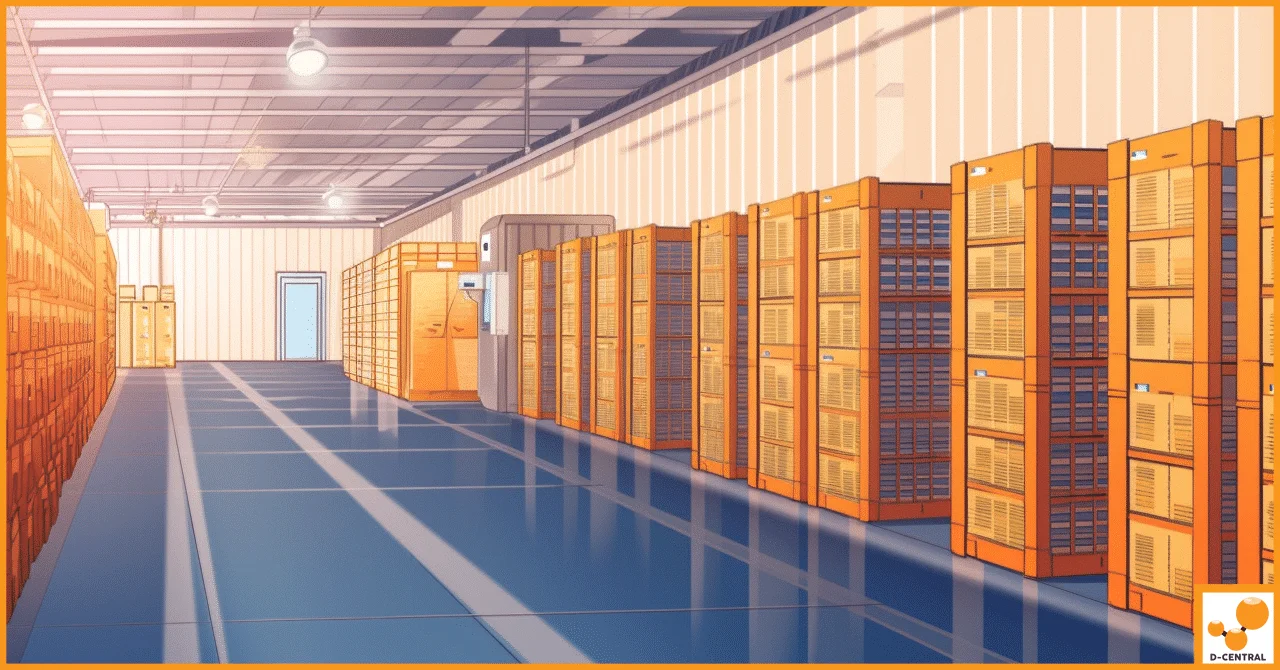
Here is a question that most people never think to ask: what happens to the heat produced by a Bitcoin miner? Every single watt of electricity consumed by an ASIC miner is converted to heat. A single Antminer S21 running at 3,500 watts produces approximately 11,942 BTU per hour of thermal output — equivalent to a decent space heater. Now imagine a rack of 50 of those machines inside a food storage warehouse that needs to maintain above-freezing temperatures year-round. That is not waste heat. That is a heating system that also earns bitcoin.
The concept is not theoretical. Across Canada and northern regions worldwide, operators are deploying Bitcoin miners as primary or supplemental heat sources in agricultural and food storage facilities. At D-Central Technologies, we have been at the forefront of dual-purpose mining since 2016 — building systems where every hash contributes to both network security and practical thermal output. Food storage warehouses represent one of the most compelling use cases for this approach.
Why Food Storage Warehouses Are Ideal for Bitcoin Mining Heat
Food storage warehouses, particularly those handling root vegetables, grains, canned goods, and dry staples, require precise temperature control. Most non-frozen food storage facilities must maintain temperatures between 10°C and 15°C (50°F–59°F) year-round. In Canadian winters, where external temperatures regularly plunge below -30°C, that means continuous heating for five to seven months of the year — a massive operational cost that directly impacts food prices.
Traditional heating solutions — natural gas boilers, electric radiant heaters, propane systems — consume energy and produce nothing but warmth. Bitcoin miners consume energy and produce warmth plus bitcoin. The thermodynamic output is identical. The economic output is fundamentally different.
Key characteristics that make food storage warehouses ideal:
- Large open volumes: Warehouses provide ample airflow for ASIC cooling without requiring specialized ducting in many configurations
- Consistent heat demand: Food storage requires stable temperatures 24/7, matching the always-on nature of Bitcoin mining
- Industrial power infrastructure: Most warehouses already have three-phase power and sufficient amperage to support mining equipment
- Tolerance for ambient noise: Unlike residential deployments, warehouse environments can accommodate ASIC noise levels (70–80 dB) without complaints
- Economic pressure to reduce overhead: Food storage margins are thin. Reducing the single largest operational cost (heating) directly improves viability
The Thermodynamics: How ASIC Heat Output Works
Every ASIC miner is, from a physics perspective, a 100% efficient electric heater that also happens to perform SHA-256 computations. This is not marketing spin — it is a fundamental thermodynamic reality. Every watt consumed becomes a watt of heat output. There is no energy lost to motion, light, or chemical processes. It is pure electrical-to-thermal conversion.
Here is what current-generation hardware delivers in terms of heat output:
| Miner Model | Power Draw | BTU/hr Output | Hashrate |
|---|---|---|---|
| Antminer S9 (Slim Edition) | 1,350 W | ~4,607 BTU | 14 TH/s |
| Antminer S19j Pro | 3,050 W | ~10,408 BTU | 104 TH/s |
| Antminer S21 | 3,500 W | ~11,942 BTU | 200 TH/s |
| Whatsminer M60S | 3,420 W | ~11,669 BTU | 186 TH/s |
The conversion is straightforward: 1 watt = 3.412 BTU/hr. A 10,000 sq ft food storage warehouse in Quebec requiring approximately 150,000 BTU/hr of heating capacity during peak winter could be served by roughly 13–15 Antminer S21 units. Those same machines, running at full capacity, would collectively produce approximately 3,000 TH/s of hashrate — a meaningful contribution to the Bitcoin network’s security, which now exceeds 800 EH/s total.
The Economics: Mining Revenue as a Heating Subsidy
This is where the math gets interesting. Traditional warehouse heating in Canada costs between $15,000 and $50,000 annually depending on facility size, insulation quality, and fuel source. Natural gas prices in Quebec and Ontario have risen significantly, and propane costs in rural areas are even higher.
With Bitcoin mining heat recovery, the calculation changes fundamentally:
- Electricity cost: You pay for the power to run the miners (this replaces your heating fuel cost)
- Bitcoin revenue: The miners generate bitcoin while producing that heat
- Net heating cost: Electricity cost minus bitcoin revenue
In many configurations, especially with access to cheap hydroelectric power (Quebec’s industrial rate can be as low as $0.05–0.07/kWh), the bitcoin revenue can offset 50–100% of the electricity cost. In some scenarios, the mining operation produces a net profit while heating the facility — meaning the warehouse is being heated for free, or even at a gain.
With the current block reward at 3.125 BTC (post-April 2024 halving) and difficulty above 110 trillion, individual unit profitability depends heavily on electricity rates. But the dual-purpose model fundamentally changes the breakeven calculation because you would be paying for heating regardless. The bitcoin becomes a bonus — or more accurately, the heat becomes a bonus of the mining operation.
System Design: Integrating Miners Into Warehouse HVAC
Deploying ASIC miners as warehouse heaters is not as simple as dropping machines on a shelf and letting them run. Proper system design ensures efficient heat distribution, safe operation, and reliable mining uptime. Here is what a well-designed installation looks like:
Airflow Architecture
ASIC miners intake cool air from one side and exhaust hot air from the other. In a warehouse deployment, you want to create a controlled airflow loop:
- Intake zone: Miners draw cool ambient air from the warehouse floor level
- Exhaust zone: Hot exhaust air (typically 45–65°C) is directed upward or into ductwork
- Distribution: Ceiling-mounted fans or simple ductwork distributes warm air throughout the facility
- Thermostat control: Temperature sensors trigger fan speed adjustments or miner power cycling to maintain target temperatures
For larger installations, custom shrouds and duct adapters channel the exhaust heat precisely where it is needed. D-Central carries universal ASIC shrouds and cooling accessories designed for exactly this type of deployment.
Power Infrastructure
A rack of 15 S21 miners draws approximately 52.5 kW. Most food storage warehouses with industrial power panels can accommodate this, but proper electrical planning is essential:
- Dedicated 240V circuits with appropriate breaker sizing
- PDU (power distribution units) rated for continuous ASIC loads
- Surge protection to safeguard mining hardware
- Backup power considerations (UPS for graceful shutdown, generator for continuity)
Noise Management
While warehouses are more tolerant of noise than homes, ASIC miners are loud. A single S21 produces approximately 75 dB at 1 meter. Fifteen units together can exceed 85 dB. Mitigation strategies include:
- Isolating the mining rack in a partitioned section of the warehouse
- Using acoustic enclosures or insulated rooms
- Running miners in a dedicated utility room with ductwork carrying heat into the main storage area
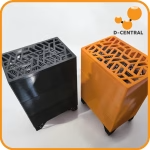
- Deploying quieter custom builds like D-Central’s Bitcoin Space Heater editions, which are specifically designed for noise-sensitive environments
Food Storage Requirements and Thermal Compatibility
Different food categories require different storage conditions. Not all food storage applications are equally suited to ASIC heat recovery:
| Food Category | Ideal Temp Range | ASIC Heat Compatibility |
|---|---|---|
| Root vegetables (potatoes, carrots) | 2–10°C (36–50°F) | Excellent — winter supplemental heating |
| Dry goods (grains, flour, rice) | 10–21°C (50–70°F) | Excellent — year-round in northern climates |
| Canned goods | 10–21°C (50–70°F) | Excellent — stable demand, forgiving range |
| Fresh produce | 0–4°C (32–39°F) | Limited — requires cooling, not heating |
| Frozen storage | -18°C (0°F) | Not compatible — active cooling required |
| Wine and spirits | 10–15°C (50–59°F) | Good — consistent demand, premium use case |
The ideal candidates are dry goods warehouses, root cellars, and general food distribution centers that need to prevent freezing during winter months. These facilities have wide temperature tolerance bands that align perfectly with the variable heat output of mining rigs.
The Canadian Advantage: Cold Climate + Cheap Hydro
Canada — and Quebec in particular — is uniquely positioned for this model. The combination of extreme cold winters (creating consistent high heating demand) and abundant, inexpensive hydroelectric power creates the perfect conditions for economically viable mining-as-heating.
Consider the numbers for a Quebec-based food storage warehouse:
- Heating season: October through April (approximately 7 months)
- Electricity cost: $0.05–0.07/kWh (industrial hydro rates)
- Traditional heating cost: $25,000–$40,000/year for a mid-size facility
- Mining-as-heating cost: Same electricity consumption, but offset by bitcoin revenue
- Net savings: 40–100% reduction in effective heating costs
During summer months when heating is not needed, the miners can be relocated to a dedicated mining hosting facility or simply powered down. Some operators maintain reduced mining during summer, using exhaust ventilation to expel heat outdoors while still earning bitcoin at a lower margin.
This seasonal flexibility is one of the key advantages of using portable ASIC hardware rather than fixed heating infrastructure. The miners are assets that can be redeployed based on economic conditions — something a furnace can never do.
Real-World Implementation: A Step-by-Step Approach
For food storage warehouse operators considering this approach, here is a practical implementation roadmap:
Phase 1: Assessment
- Calculate your annual heating costs and identify peak demand periods
- Audit your electrical infrastructure capacity (available amperage, panel space, voltage)
- Determine the BTU requirements per square foot for your storage type
- Consult with a mining consultant to model the economics
Phase 2: Hardware Selection
- Choose miners based on your heat demand and power budget
- Consider noise requirements — standard ASICs vs. enclosed/modified units
- Factor in reliability and repairability — D-Central provides full ASIC repair services for all major manufacturers
- Purchase appropriate PDUs, cables, and networking equipment
Phase 3: Installation
- Install dedicated electrical circuits with proper breaker sizing
- Set up mining racks with intake and exhaust orientation planned for heat distribution
- Install ductwork or fans to distribute warm exhaust air throughout the facility
- Deploy temperature monitoring sensors connected to your building management system
- Configure miners to a reliable mining pool and set up monitoring dashboards
Phase 4: Operation and Optimization
- Monitor temperature distribution and adjust airflow as needed
- Track bitcoin revenue against electricity costs monthly
- Implement automated controls to cycle miners based on temperature thresholds
- Schedule regular maintenance and cleaning (dust is the enemy of ASIC longevity)
- Plan for seasonal transitions — increased or decreased mining capacity as heating demand changes
Addressing Common Concerns
Humidity and Dust
Food storage warehouses can have variable humidity levels, and some produce environments generate particulate matter. ASIC miners are sensitive to both. Solutions include pre-filtering intake air, maintaining relative humidity below 65%, and scheduling regular compressed-air cleaning of miner heatsinks and fans. For high-humidity environments, a dedicated mining room with controlled air quality is recommended.
Regulatory and Insurance Considerations
Operating Bitcoin miners in a food storage facility may require updates to your insurance policy and compliance with local electrical and fire codes. Key considerations include:
- Inform your insurer about the mining equipment and its purpose
- Ensure all electrical work is performed by licensed electricians and inspected
- Install appropriate fire suppression systems near mining equipment
- Check local zoning regulations regarding cryptocurrency mining operations
- In Canada, mining income is taxable — consult with an accountant familiar with cryptocurrency
Equipment Reliability
ASIC miners are industrial equipment that can fail. Hashboard failures, fan breakdowns, and power supply issues are common over multi-year deployments. Having a relationship with a qualified ASIC repair provider is essential. D-Central has repaired thousands of miners since 2016, covering Bitmain, MicroBT, Canaan, and other manufacturers, with fast turnaround times from our Montreal, Quebec facility.
The Bigger Picture: Decentralizing Hash Rate
Beyond the economic and thermal benefits, deploying miners in food storage warehouses contributes to something larger: the geographic decentralization of Bitcoin’s hash rate. Every miner running in a Canadian warehouse, heated by Quebec hydro, is a miner that is not running in a centralized data center controlled by a single entity.
This matters. Bitcoin’s security model depends on hash rate being distributed across thousands of independent operators, jurisdictions, and energy sources. When a food warehouse in rural Quebec runs 15 S21 miners to heat their potato storage, they are — perhaps unknowingly — strengthening the most important monetary network in human history.
At D-Central, we call this the Mining Hacker ethos. Taking industrial-grade technology and deploying it in unconventional, decentralized ways. A data center full of miners is impressive. A food warehouse heated by miners is revolutionary.
Getting Started With D-Central
Whether you operate a food storage warehouse, agricultural facility, or any commercial space with significant heating requirements, D-Central can help you design and deploy a Bitcoin mining heat recovery system. Our services include:
- Mining consulting — site assessment, economic modeling, hardware recommendations
- Hardware sales — ASIC miners, power supplies, shrouds, cables, and accessories
- Bitcoin Space Heaters — custom-built dual-purpose mining units designed for heating applications
- ASIC repair — full repair services for all major miner manufacturers
- Mining hosting — seasonal hosting in Quebec for miners not needed during warm months
We have been building at the intersection of Bitcoin mining and practical energy use since 2016. We are not a reseller — we are Bitcoin Mining Hackers who understand both the technology and the real-world applications. If your warehouse is burning natural gas to stay warm, you are leaving bitcoin on the table.
Frequently Asked Questions
How much can a food storage warehouse save by using Bitcoin mining heat?
Savings depend on facility size, insulation quality, local electricity rates, and Bitcoin network conditions. In Quebec, where industrial hydro rates are $0.05–0.07/kWh, warehouse operators can typically reduce effective heating costs by 40–100%. In the best cases, the mining revenue fully offsets the electricity cost, resulting in free heating or even a net profit.
Will Bitcoin mining heat damage stored food products?
No, when properly designed. ASIC miners produce dry heat, which is actually beneficial for many food storage applications (dry goods, grains, canned products). The key is maintaining temperature within the required range using thermostat-controlled fan systems or miner power cycling. Humidity levels should be monitored, and a dedicated mining room with ductwork is recommended for sensitive storage environments.
How many Bitcoin miners do I need to heat my warehouse?
This depends on your facility’s BTU requirements. A rough calculation: each watt of mining power produces 3.412 BTU/hr. A 10,000 sq ft warehouse needing 150,000 BTU/hr of heating would require approximately 44 kW of mining equipment — roughly 12–15 Antminer S21 units. A professional site assessment can provide exact calculations for your specific facility.
What happens in summer when heating is not needed?
You have several options: relocate miners to a dedicated hosting facility for summer months, continue mining with exhaust ventilation to expel heat outdoors (lower margin but still profitable at cheap rates), or power down the miners and sell them if the economics make sense. The portability of ASIC hardware is a key advantage over fixed heating infrastructure.
Is Bitcoin mining in a food warehouse legal in Canada?
Yes. Bitcoin mining is legal in Canada. However, you should ensure compliance with local electrical codes, fire safety regulations, zoning bylaws, and insurance requirements. Mining income is taxable in Canada as either business income or capital gains depending on your situation. We recommend consulting with a local electrician, your insurance provider, and a cryptocurrency-aware accountant before deploying.
What maintenance do Bitcoin miners require in a warehouse environment?
Regular maintenance includes compressed-air cleaning of heatsinks and fans (monthly in dusty environments), monitoring hash rate for signs of hardware degradation, replacing worn fans, and ensuring firmware is up to date. Warehouse environments with particulate matter may require pre-filtration on miner intake air. D-Central provides full ASIC repair services for any hardware that develops issues over time.