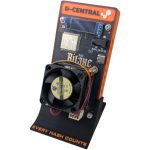
Running a Bitcoin full node is not optional — it is the foundation of sovereignty. Without your own node, you are trusting someone else to tell you the truth about Bitcoin. This guide walks you through building the complete sovereign mining stack: your own Bitcoin node, your own block templates, your own Lightning channels, and your own mining hardware. This is what “decentralize EVERY layer” actually means in practice.
Why Run a Full Node? Because “Don’t Trust, Verify” Is Not a Slogan
Every time you open a wallet that connects to someone else’s node, you are trusting a stranger. You are trusting that the balance they show you is real, that the transaction they confirmed actually has the confirmations they claim, and that they are not logging your addresses, your balances, and your transaction patterns. You are, in the most literal sense, trusting — and the entire point of Bitcoin was to eliminate trust.
A Bitcoin full node independently validates every single transaction and every single block from the genesis block to the present. It does not ask anyone for permission. It does not trust anyone’s word. It verifies everything for itself. When you run your own node, you become a first-class participant in the Bitcoin network, not a dependent consumer of someone else’s infrastructure.
Here is what running your own node gives you:
- Transaction Verification: Your node independently confirms that every transaction in every block follows Bitcoin’s consensus rules. No one can lie to you about what happened on the network.
- Privacy: When you query a third-party node for your balance, you reveal your addresses. Your own node eliminates this leak entirely. Your wallet talks to your node, on your local network, and nobody else sees a thing.
- Network Support: Every full node strengthens the Bitcoin network by relaying transactions and blocks, making the network more robust against attacks and censorship.
- Block Template Construction: With protocols like OCEAN’s DATUM and Stratum V2, your full node can construct its own block templates — meaning YOU choose which transactions go into the blocks your miner works on. This is the ultimate expression of mining sovereignty.
- Lightning Network Foundation: Running a Lightning node requires a Bitcoin full node as its backbone. If you want self-custodial Lightning payments, you need your own node. Period.
The Bitcoin blockchain is approximately 718 GB as of early 2026 and grows roughly 50-60 GB per year. A 1 TB SSD gives you comfortable headroom for several years. The hardware requirements are modest — a modern mini PC or even a Raspberry Pi 5 with sufficient storage can handle it. There is no excuse not to run one.
The Sovereign Mining Stack: What “Decentralize Every Layer” Actually Looks Like
At D-Central, when we say “decentralize EVERY layer of Bitcoin mining,” we mean it literally. Most miners — even home miners — still depend on centralized infrastructure at nearly every layer. They use a pool’s node to validate blocks. They use the pool’s block template to decide which transactions get included. They receive payouts to a custodial exchange. They check their balance on a third-party explorer.
The sovereign mining stack eliminates every one of these trust points:
| Layer | Centralized Default | Sovereign Alternative |
|---|---|---|
| Block Validation | Pool’s node | Your own Bitcoin Core / Knots node |
| Block Template | Pool constructs it | DATUM Gateway or Stratum V2 with your node |
| Mining Hardware | Cloud mining / Hosted | Your Bitaxe, NerdAxe, or home ASIC |
| Payouts | Custodial exchange | Lightning to your own node (BOLT12) |
| Wallet Backend | Third-party Electrum server | Your own Electrs / Fulcrum |
| Block Explorer | mempool.space (public) | Your own Mempool instance |
| Payments | Payment processor | Your own BTCPay Server |
This is the stack we are going to build in this guide. A Start9 or Umbrel server running Bitcoin Core, Electrs, Lightning, and Mempool — connected to your Bitaxe or ASIC miner through OCEAN’s DATUM gateway — with Lightning payouts flowing directly into your self-custodial wallet. No intermediaries. No custodians. No trust required.
Start9: The Sovereignty-First Platform
Start9 builds StartOS, a Linux distribution purpose-built for personal servers. If Umbrel is the iPhone of home servers — sleek, easy, opinionated — then Start9 is the Linux desktop: more control, more security, more sovereignty, with a thoughtful interface that makes self-hosting accessible without sacrificing principles.
StartOS Architecture
StartOS is an actual operating system — a full Linux distribution that you flash onto your hardware. This is a meaningful distinction. It controls the entire software stack from the OS kernel up, giving it deeper control over security, networking, and service management than solutions that run as applications on top of an existing OS.
Key architectural advantages:
- Encrypted backups: One-button encrypted backups for every installed service. Not just LND — everything. This alone sets Start9 apart.
- Rich configuration UI: Service configuration is presented through validated forms with descriptions, dropdowns, and toggles — no SSH required for any standard configuration.
- Tor-first networking: All services are accessible via Tor by default, with no configuration needed. Your node is reachable from anywhere without opening ports.
- Health checks: StartOS continuously monitors every service and alerts you to issues before they become problems.
- LAN encryption: Communications over your local network are encrypted via HTTPS with a unique certificate authority — not plain HTTP.
Start9 Hardware Options
Server One (2026): The flagship. AMD Ryzen 7 6800H processor (8 cores, 3.2 GHz base, turbo to 4.7 GHz), up to 32 GB LPDDR5 RAM, up to 4 TB NVMe storage. This machine handles Bitcoin Core, Lightning, Electrs, Mempool, BTCPay Server, and a dozen more services simultaneously without breaking a sweat. Backed by a 2-year hardware warranty and lifetime Start9 support.
Server Pure: Intel-based option with Intel i7-10710U, 16-32 GB DDR4 RAM, up to 4 TB NVMe. Notable for shipping with coreboot firmware and Intel Management Engine (IME) disabled — a serious security feature for the privacy-conscious. Currently on clearance, making it an excellent value if you can find one in stock.
DIY: StartOS can be flashed onto virtually any x86_64 machine. An old laptop, a mini PC, or a NUC — if it can run Linux, it can run StartOS. Free to download and install.
The Start9 Marketplace (Mining-Relevant Apps)
- Bitcoin Core / Bitcoin Knots: Full node with pruning options. Knots is recommended for DATUM users who want fine-grained control over block template policy.
- LND / Core Lightning (CLN): Lightning Network implementations. CLN supports BOLT12 natively, which is required for OCEAN Lightning payouts.
- Electrs / Fulcrum: Electrum server implementations that index the blockchain for your wallets. Connect Sparrow, Blue Wallet, or any Electrum-compatible wallet to your own backend.
- Mempool: Your own instance of the mempool.space block explorer. Monitor the mempool, track transactions, visualize fee rates — all privately.
- BTCPay Server: Accept Bitcoin payments with zero third-party dependencies.
- DATUM Gateway: Available as a service to connect your mining hardware to OCEAN through your own node.
- Specter Desktop: Multi-sig wallet coordinator for hardware wallet users.
Umbrel: The Approachable On-Ramp
Umbrel has done more to get normies running Bitcoin nodes than perhaps any other project. Its one-click setup and polished interface have onboarded thousands of people who would never have touched a command line. For the Bitcoin home miner who wants a working node with minimal friction, Umbrel is a legitimate choice.
UmbrelOS Architecture
Unlike StartOS, UmbrelOS is technically an application layer that installs on top of Debian or Ubuntu Linux. This makes it incredibly flexible — it runs on almost anything — but it also means it does not have the same OS-level control that StartOS provides.
Key features:
- 300+ apps: The Umbrel App Store has grown far beyond Bitcoin. AI tools, file storage, photo management, media servers — it is a full home server platform.
- Beautiful Bitcoin Node experience: The redesigned Bitcoin Node app (rebuilt in 2024-2025) includes a real-time globe visualization showing peer connections, advanced configuration editor, and home screen widgets for mempool size, peer count, and sync progress.
- Bitcoin Core v30.0: Ships with the latest Bitcoin Core, with one-click switching between versions.
- Tor, clearnet, and I2P: Flexible networking options with over 20 advanced settings.
- Encrypted backups: Hourly encrypted backups to USB, NAS, or another Umbrel device, with the Rewind feature for granular file recovery.
- 10-watt power consumption: The Umbrel Home hardware sips power — ideal for always-on operation alongside your mining setup.
Umbrel Hardware Options
Umbrel Home ($399): 2.9 GHz quad-core Intel CPU, 16 GB dual-channel RAM, 2 TB NVMe SSD (expandable to 4 TB). Clean, minimal hardware design. Wi-Fi, Bluetooth, 3x USB ports. 10-watt power draw. Handles Bitcoin Core, Lightning, and several additional apps comfortably.
Umbrel Pro (from $699): 8-core Intel Core i3, up to 16 TB storage, more RAM. Built for power users who want to run dozens of apps simultaneously or need massive storage for media libraries alongside their Bitcoin stack.
DIY: UmbrelOS installs on any Debian/Ubuntu machine. Raspberry Pi 5 (8 GB), Intel NUC, Beelink mini PCs, old laptops — the community runs Umbrel on everything. Free to install.
Start9 vs Umbrel: The Honest Comparison
Both platforms will get you a working Bitcoin node. The difference is philosophy, and that philosophy matters more than most people realize. Here is the breakdown:
| Feature | Start9 (StartOS) | Umbrel (UmbrelOS) |
|---|---|---|
| Architecture | Full Linux distro (OS-level control) | App layer on Debian/Ubuntu |
| Setup Difficulty | Easy (flash and go) | Very Easy (one-click install) |
| LAN Security | HTTPS encrypted (custom CA) | Plain HTTP (anyone on your WiFi can sniff traffic) |
| Service Backups | Encrypted backups for ALL services | Limited (LND only for most services historically, improved recently) |
| Configuration | Rich UI forms with validation | SSH/command-line for advanced config |
| App Count | ~80+ (Bitcoin/sovereignty focused) | 300+ (broad home server) |
| Bitcoin Focus | Core mission, sovereignty-first | Strong, but expanding to general home server |
| Tor Support | Default, built-in, automatic | Supported, configurable |
| Pre-built Hardware | Server One (~$600-900), Server Pure (~$1,000+) | Umbrel Home ($399), Umbrel Pro ($699+) |
| DIY Option | Free (any x86_64 machine) | Free (any Debian/Ubuntu machine, Raspberry Pi) |
| DATUM Gateway | Available in marketplace | Available in app store |
| Lightning (BOLT12) | CLN with native BOLT12 support | CLN and LND available |
| Open Source | Fully open source | Open source |
| Best For | Sovereignty maximalists, privacy-focused users | Beginners, broad home server use cases |
Our honest take: If Bitcoin sovereignty is your primary goal — especially if you are building the full mining stack — Start9 has the edge in security and privacy. If you want the easiest possible path to a working node and plan to run non-Bitcoin services too, Umbrel is harder to beat on user experience. Both are infinitely better than not running a node at all.
Hardware Requirements for Your Home Server
You do not need a datacenter rack to run a Bitcoin full node. You need modest, affordable hardware that can run 24/7 reliably. Here are your options, from budget to premium:
Budget: Raspberry Pi 5 ($100-180)
- Board: Raspberry Pi 5 (8 GB RAM) — ~$80
- Storage: 1-2 TB NVMe SSD via M.2 HAT — ~$60-100
- Case + Power: Official case + 27W USB-C PSU — ~$25
- Total: ~$165
- Best for: Umbrel DIY, basic Bitcoin Core + Lightning
- Limitation: Initial blockchain sync is slow (days). Fine once synced. Struggles with Electrs/Fulcrum indexing.
Mid-Range: Mini PC ($200-400)
- Hardware: Beelink SER5 or Intel NUC (AMD Ryzen 5 / Intel i5, 16 GB RAM, 500 GB internal SSD)
- Additional storage: 2 TB NVMe SSD (internal or USB 3.2 enclosure)
- Total: ~$250-400
- Best for: Start9 DIY or Umbrel DIY, full stack (Bitcoin Core + Lightning + Electrs + Mempool + BTCPay)
- Sweet spot: This is the price-to-performance sweet spot for most home miners building the sovereign stack.
Premium: Pre-Built Plug-and-Play ($399-900+)
- Umbrel Home: $399 — plug in, connect, done. 2 TB storage, quad-core Intel, 16 GB RAM.
- Start9 Server One: ~$600-900 — AMD Ryzen 7, up to 32 GB RAM, up to 4 TB NVMe. The most powerful pre-built option.
- Best for: Those who value time over money, want a polished out-of-box experience, and do not want to troubleshoot hardware compatibility.
Storage note: The Bitcoin blockchain is ~718 GB and growing ~55 GB/year. A 1 TB SSD is the minimum for a non-pruned full node. We recommend 2 TB for comfortable headroom, especially if you plan to run Electrs (which roughly doubles storage requirements for its index).
Setting Up Your Node: The High-Level Path
Both Start9 and Umbrel have made this process remarkably straightforward. Here is the high-level flow for each:
Start9 Setup
- Flash StartOS onto your hardware (USB installer for pre-built, or disk image for DIY).
- Initial setup via your browser — create your master password, configure your server name.
- Install Bitcoin Core (or Bitcoin Knots) from the Marketplace. Start the initial block download (IBD). On a fast connection and NVMe storage, expect 12-48 hours for full sync.
- Install Electrs or Fulcrum for wallet backend. This will index the blockchain after Bitcoin Core syncs — allow another 12-24 hours.
- Install Lightning (CLN recommended for BOLT12 support). Fund your channels once synced.
- Install Mempool for your private block explorer.
- Install DATUM Gateway if connecting miners to OCEAN.
- Connect your wallets: Sparrow Wallet, Blue Wallet, Zeus, or any Electrum-compatible wallet — point it at your Electrs/Fulcrum instance via Tor or local network.
Umbrel Setup
- Install UmbrelOS — flash the image for Raspberry Pi, or run the install script on any Debian/Ubuntu machine. For Umbrel Home, just plug it in.
- Access the dashboard at umbrel.local in your browser. Create your account.
- Install Bitcoin Node from the App Store. The gorgeous new interface shows sync progress, peer connections, and mempool stats in real time. IBD takes 12-48 hours depending on hardware.
- Install Electrs for wallet connectivity. Allow additional indexing time.
- Install Lightning Node (LND or CLN). For OCEAN BOLT12 payouts, install CLN.
- Install Mempool, BTCPay Server, and any other apps you want.
- Install DATUM from the App Store for mining sovereignty with OCEAN.
- Connect wallets using the connection details provided in each app’s interface.
The critical point: the initial blockchain download (IBD) is the bottleneck. On a Raspberry Pi 5 with USB SSD, this can take 3-5 days. On a mini PC with NVMe, 12-24 hours. On a Server One with fast internet, potentially under 12 hours. Be patient. Your node is verifying 15+ years of Bitcoin history from scratch — this is verification, not downloading.
Connecting Your Miner to Your Own Node
This is where the sovereign stack becomes real. Running a node is one thing. Actually using it for mining is where you graduate from participant to sovereign miner. Here are the three primary methods:
1. OCEAN Pool with DATUM Gateway (Recommended)
OCEAN is the only major mining pool that enables true miner sovereignty through the DATUM protocol (Decentralized Alternative Templates for Universal Mining). With DATUM, your node constructs the block template — you decide which transactions go into the blocks your hardware works on. The pool only coordinates the payout split.
How it works:
- Your Bitcoin full node (Bitcoin Knots recommended) provides block templates via the
getblocktemplateRPC call. - The DATUM Gateway (running on the same machine or your home server) receives these templates and distributes mining work to your hardware via Stratum v1.
- Your mining hardware (Bitaxe, NerdAxe, ASIC) connects to the DATUM Gateway as its pool endpoint.
- When blocks are found, the DATUM Gateway submits them directly to the Bitcoin network through your node AND communicates with OCEAN for payout coordination.
Requirements:
- Bitcoin full node (fully synced, Bitcoin Knots recommended)
- DATUM Gateway software (available in both Start9 and Umbrel app stores)
- 64-bit AMD/Intel system running Linux
- ~1 GB RAM for the gateway + 1 GB per 1,000 Stratum clients + node RAM requirements
- Stable internet connection
This is the gold standard for the sovereign mining stack. Your Bitaxe or NerdAxe connects to your DATUM Gateway, which talks to your Bitcoin Knots node, which constructs blocks based on YOUR mempool policy. OCEAN coordinates pooled rewards. You verify everything yourself.
2. Stratum V2 (The Protocol Standard)
Stratum V2 is the open-source mining protocol standard that enables the same miner-side block template construction that DATUM provides. The Stratum V2 Reference Implementation (SRI), built in Rust, uses a lean binary format that cuts bandwidth by ~60% for pools and ~70% for miners compared to Stratum v1.
The key Stratum V2 sub-protocol for sovereignty is the Job Declaration Protocol, which allows miners to propose their own block templates (constructed by their own node) to the pool. The pool can accept or reject, but the miner retains agency over transaction selection.
Stratum V2 adoption is growing, with pools like DEMAND launching as Stratum V2-native. As more pools adopt SV2, the ability to connect your home node to your miner through a sovereignty-preserving protocol becomes increasingly standard.
3. CKPool Solo Mining (True Solo Against Your Node)
For the true solo miner running a full node, you can set up ckpool-solo (or a similar Stratum server) that connects directly to your Bitcoin Core node via RPC. Your miner connects to ckpool-solo as its pool, and if you find a block, you keep 100% of the block reward — currently 3.125 BTC plus all transaction fees — with zero pool fees.
This is pure solo mining in its truest form. No pool. No intermediary. Your hardware, your node, your block, your bitcoin. The odds are astronomical for small miners, but every Bitaxe block win proves it is possible.
Requirements: A fully synced Bitcoin node (minimum ~5,000 blocks, ideally fully synced), ckpool-solo software, and a miner pointed at your local Stratum endpoint. Docker-based stacks exist that bundle Bitcoin Core + ckpool-solo for easy deployment.
Lightning Node for Mining Payouts
Here is a problem that plagues every small miner: the minimum on-chain payout threshold. When you mine with a Bitaxe contributing fractions of a terahash, accumulating enough satoshis to meet a pool’s minimum on-chain payout can take weeks or months. Meanwhile, your bitcoin sits in the pool’s custody. This is the antithesis of sovereignty.
Lightning solves this. OCEAN’s integration of BOLT12 Lightning payouts is transformative for home miners:
- No minimum payout threshold: Even tiny earnings get paid out via Lightning. Your sats come home immediately.
- BOLT12 offers: Unlike BOLT11 invoices that expire and require regeneration, BOLT12 offers are static and reusable. You set it once on OCEAN, and payouts flow automatically.
- Privacy via blinded paths: BOLT12 uses blinded routing paths, so the sender (OCEAN) does not learn your node’s public key or channel graph. Enhanced privacy out of the box.
- Self-custodial: Payouts land directly in your Lightning node — not an exchange, not a custodial wallet. Your keys, your sats.
- Fallback to on-chain: If a Lightning payout fails (insufficient liquidity), OCEAN retries every block. If accumulated earnings reach the on-chain threshold (0.01048576 BTC), they fall back to an on-chain payout to your Bitcoin address.
Setting up BOLT12 for OCEAN payouts:
- Install Core Lightning (CLN) on your Start9 or Umbrel server — it has native BOLT12 support.
- Generate a BOLT12 offer from your CLN node.
- Sign a message linking your OCEAN Bitcoin address to your BOLT12 offer (this proves ownership without exposing sensitive data).
- Configure the BOLT12 offer in your OCEAN account settings.
- Mine. Watch your sats arrive directly into your Lightning node with every payout cycle.
This is the complete loop: your Bitaxe hashes, OCEAN coordinates rewards, and Lightning delivers your sats to your own node — all without any third party ever holding your bitcoin.
The Complete Sovereign Setup: Full Stack Architecture
Let us put it all together. Here is the complete sovereign Bitcoin mining stack, from silicon to sats in your wallet:
| Component | Software | Role |
|---|---|---|
| Home Server | Start9 (StartOS) or Umbrel (UmbrelOS) | Operating system and service orchestration |
| Bitcoin Node | Bitcoin Core or Bitcoin Knots | Full blockchain validation, mempool management, block template construction |
| Electrum Server | Electrs or Fulcrum | Wallet backend — connect your wallets privately |
| Lightning Node | Core Lightning (CLN) | BOLT12 offers for mining payouts, instant payments, channel routing |
| Block Explorer | Mempool | Private transaction monitoring, fee estimation, mempool visualization |
| Mining Gateway | DATUM Gateway | Constructs mining work from your node’s block templates, communicates with OCEAN |
| Mining Hardware | Bitaxe / NerdAxe / ASIC | Proof of work — converting electricity into Bitcoin security |
| Payment Server | BTCPay Server | Accept Bitcoin payments for your business (optional but powerful) |
The data flow:
- Your Bitcoin Knots node syncs the blockchain, validates every block and transaction, and maintains your mempool based on your policy preferences.
- DATUM Gateway requests block templates from your node via
getblocktemplateRPC, generates mining work, and distributes it to your hardware via Stratum v1. - Your Bitaxe or ASIC receives work, hashes, and submits shares back to the DATUM Gateway.
- The DATUM Gateway communicates with OCEAN pool for reward coordination and submits found blocks directly to the network through your node.
- OCEAN calculates your share of rewards using the TIDES payout scheme and sends BOLT12 Lightning payments to your CLN node.
- Your sats land in your Lightning wallet, backed by your own node, verified by your own blockchain copy.
- You can spend on-chain (via channel close or submarine swap), via Lightning directly, or through your BTCPay Server for merchant payments.
- All balance lookups and transaction monitoring happen through your own Electrs + Mempool instances. No third parties ever see your financial activity.
This is zero-trust Bitcoin from end to end. Every byte is verified by your own hardware. Every sat is controlled by your own keys. Every transaction is broadcast through your own node. This is what financial sovereignty actually looks like.
Cost Analysis: Building the Sovereign Stack
Let us break down the total cost for three tiers of the complete sovereign mining stack:
Budget Build (~$300-400 total)
| Component | Option | Cost |
|---|---|---|
| Server | Raspberry Pi 5 (8 GB) + NVMe HAT + case | ~$120 |
| Storage | 1 TB NVMe SSD | ~$60 |
| OS | UmbrelOS (free) | $0 |
| Miner | Nerdminer (educational) or Bitaxe Supra | ~$50-200 |
| Total | ~$230-380 |
Note: The Pi 5 will struggle with Electrs indexing. Budget an extra day or two for initial sync. Suitable for Bitcoin Core + Lightning + Mempool without heavy indexing.
Recommended Build (~$600-900 total)
| Component | Option | Cost |
|---|---|---|
| Server | Beelink SER5 / Intel NUC (16 GB RAM) | ~$200-300 |
| Storage | 2 TB NVMe SSD | ~$100 |
| OS | StartOS or UmbrelOS (free) | $0 |
| Miner | Bitaxe Gamma 602 | ~$200-300 |
| Total | ~$500-700 |
This is the sweet spot. Enough power for the full stack (Bitcoin Knots + Electrs + CLN + Mempool + DATUM Gateway + BTCPay) running simultaneously. Fast initial sync. Reliable 24/7 operation.
Premium Build (~$1,000-1,500+ total)
| Component | Option | Cost |
|---|---|---|
| Server | Start9 Server One (32 GB, 4 TB) | ~$700-900 |
| OS | StartOS (pre-installed) | Included |
| Miner | Bitaxe Hex | ~$400-600 |
| Total | ~$1,100-1,500 |
Maximum sovereignty with zero compromises. The Server One handles everything without breaking a sweat, with room to grow. The Bitaxe Hex provides serious hashing power for a solo miner. This is the Mining Hacker’s ideal setup.
Ongoing costs: Electricity for the server is minimal — 10-30 watts depending on hardware, costing $1-5/month. Internet bandwidth requirements are modest: Bitcoin Core uses roughly 200 MB/day for block relay, plus additional bandwidth for serving peers. Your mining hardware’s electricity cost depends on your local power rates and the miner’s efficiency.
FAQ: Bitcoin Home Server and Sovereign Mining
Do I need a full node to mine Bitcoin?
You do not strictly need one for basic pool mining — you can point your miner at a pool and start hashing. But without your own node, you are trusting the pool’s node for block validation and template construction. For true sovereignty, especially with DATUM or Stratum V2, a full node is essential. It is the difference between being a miner and being a sovereign miner.
Can I run a node and a miner on the same machine?
The Bitcoin node and DATUM Gateway can absolutely share hardware. However, ASIC miners and Bitaxe devices are separate dedicated hardware that connects to your node/gateway over your local network. You do not run mining software on your node machine — the node provides work, and the miner does the hashing.
How long does the initial blockchain sync take?
On a fast mini PC with NVMe storage and a solid internet connection: 12-24 hours. On a Raspberry Pi 5 with USB SSD: 3-5 days. On a pre-built Start9 Server One: potentially under 12 hours. The blockchain is ~718 GB as of early 2026. Patience pays off — you are verifying every transaction since January 3, 2009.
Should I choose Start9 or Umbrel?
If sovereignty and privacy are your top priorities, Start9’s encrypted LAN, comprehensive backups, and sovereignty-first philosophy have the edge. If you want the easiest setup, broadest app selection, and a polished interface, Umbrel is excellent. Both support the full sovereign mining stack. The best choice is the one you actually set up and keep running.
What is the DATUM protocol and why does it matter?
DATUM (Decentralized Alternative Templates for Universal Mining) lets miners construct their own block templates using their own full node, even while participating in a pool (OCEAN). This means you — not the pool operator — decide which transactions go into the blocks you mine. It is a fundamental shift in mining sovereignty, moving block construction power from centralized pool operators back to individual miners. Read our complete OCEAN and DATUM guide for detailed setup instructions.
Can I use my node with a Bitaxe?
Absolutely. A Bitaxe connects to your DATUM Gateway (running on your node server) just like it would connect to any pool — you enter the gateway’s local IP address and port as the pool URL in the Bitaxe’s AxeOS settings. The Bitaxe does not know or care that it is talking to your own node; it just receives work and returns shares.
What is BOLT12 and why do I need it for mining payouts?
BOLT12 is a Lightning Network payment protocol that creates reusable, static payment offers. Unlike BOLT11 invoices (which expire and must be regenerated for each payment), a BOLT12 offer can receive payments indefinitely. OCEAN uses BOLT12 to send mining payouts to your Lightning node automatically — you set the offer once, and sats flow in with every payout cycle. BOLT12 also uses blinded paths for enhanced privacy.
How much storage do I need?
For Bitcoin Core alone: 1 TB minimum (blockchain is ~718 GB, growing ~55 GB/year). If running Electrs or Fulcrum (recommended for wallet connectivity), the index roughly doubles the storage requirement — budget 2 TB. If you also want large Lightning channel databases, Mempool data, and room to grow, 4 TB gives you peace of mind for years.
Can I run a pruned node instead of a full archival node?
You can, but with trade-offs. A pruned node still validates everything but discards old block data to save space. The catch: Electrs and Fulcrum require a full (non-pruned) node. DATUM Gateway also needs full block data for template construction. If you are building the sovereign mining stack, you need a full archival node. Pruned nodes are fine for personal transaction verification only.
What is Bitcoin Knots and why is it recommended over Bitcoin Core for DATUM?
Bitcoin Knots is a fork of Bitcoin Core maintained by Luke Dashjr (who also created OCEAN) that includes additional features and policy options. For DATUM users, Knots provides fine-grained control over mempool policy and block template construction — you can filter specific transaction types, set custom size limits, and enforce stricter policies on what enters your block templates. It is Bitcoin Core with more knobs to turn.
Is the sovereign mining stack worth it for a single Bitaxe?
Yes — but not for financial reasons. A single Bitaxe contributes a tiny fraction of the network’s hashrate. The value of the sovereign stack is principled: you are verifying your own transactions, constructing your own block templates, running your own Lightning node, and receiving your own payouts without any intermediary. You are doing what Bitcoin was designed for. That has value beyond the sats you earn. And if you expand your mining operation later, the infrastructure is already in place.
Can I use this setup for solo mining without a pool?
Yes. Instead of DATUM Gateway + OCEAN, you can run ckpool-solo connected to your Bitcoin Core node. Your miner points at ckpool-solo, and if you find a block, you get 100% of the reward (3.125 BTC + fees) with zero pool fees. The odds are extremely long for small miners, but solo mining is the purest form of Bitcoin mining. Check the Bitcoin mining glossary for more terms and concepts.
Your Node, Your Rules: The Path Forward
The sovereign mining stack is not a theoretical exercise. It is a practical, achievable setup that any motivated Bitcoiner can build for a few hundred dollars. A mini PC running Start9 or Umbrel. Bitcoin Knots validating every block. DATUM Gateway constructing your templates. A Bitaxe converting electricity into hashpower. Core Lightning receiving your payouts via BOLT12. All of it running on your desk, in your closet, or on a shelf next to your router.
This is what the cypherpunks envisioned. Not a world where we replaced bank intermediaries with pool intermediaries and exchange custodians. A world where individuals verify, validate, mine, transact, and store their own wealth without asking anyone’s permission.
The tools exist. The software is mature. The hardware is affordable. The only question is whether you are going to keep trusting third parties with your Bitcoin infrastructure, or whether you are going to take sovereignty into your own hands.
At D-Central, we have been building for this future since 2016. From the first Bitaxe Mesh Stand we manufactured to the complete ecosystem of open-source mining hardware we stock today, our mission has always been the same: decentralize EVERY layer of Bitcoin mining. The sovereign node stack is how that mission comes home — literally.
Start with a node. Add a miner. Build the stack. Verify everything. Trust no one.
Don’t trust. Verify.
Do I need a full node to mine Bitcoin?
You do not strictly need one for basic pool mining — you can point your miner at a pool and start hashing. But without your own node, you are trusting the pool’s node for block validation and template construction. For true sovereignty, especially with DATUM or Stratum V2, a full node is essential. It is the difference between being a miner and being a sovereign miner.
Can I run a node and a miner on the same machine?
The Bitcoin node and DATUM Gateway can absolutely share hardware. However, ASIC miners and Bitaxe devices are separate dedicated hardware that connects to your node/gateway over your local network. You do not run mining software on your node machine — the node provides work, and the miner does the hashing.
How long does the initial blockchain sync take?
On a fast mini PC with NVMe storage and a solid internet connection: 12-24 hours. On a Raspberry Pi 5 with USB SSD: 3-5 days. On a pre-built Start9 Server One: potentially under 12 hours. The blockchain is ~718 GB as of early 2026. Patience pays off — you are verifying every transaction since January 3, 2009.
Should I choose Start9 or Umbrel?
If sovereignty and privacy are your top priorities, Start9’s encrypted LAN, comprehensive backups, and sovereignty-first philosophy have the edge. If you want the easiest setup, broadest app selection, and a polished interface, Umbrel is excellent. Both support the full sovereign mining stack. The best choice is the one you actually set up and keep running.
What is the DATUM protocol and why does it matter?
DATUM (Decentralized Alternative Templates for Universal Mining) lets miners construct their own block templates using their own full node, even while participating in a pool (OCEAN). This means you — not the pool operator — decide which transactions go into the blocks you mine. It is a fundamental shift in mining sovereignty, moving block construction power from centralized pool operators back to individual miners. Read our complete OCEAN and DATUM guide for detailed setup instructions.
Can I use my node with a Bitaxe?
Absolutely. A Bitaxe connects to your DATUM Gateway (running on your node server) just like it would connect to any pool — you enter the gateway’s local IP address and port as the pool URL in the Bitaxe’s AxeOS settings. The Bitaxe does not know or care that it is talking to your own node; it just receives work and returns shares.
What is BOLT12 and why do I need it for mining payouts?
BOLT12 is a Lightning Network payment protocol that creates reusable, static payment offers. Unlike BOLT11 invoices (which expire and must be regenerated for each payment), a BOLT12 offer can receive payments indefinitely. OCEAN uses BOLT12 to send mining payouts to your Lightning node automatically — you set the offer once, and sats flow in with every payout cycle. BOLT12 also uses blinded paths for enhanced privacy.
How much storage do I need?
For Bitcoin Core alone: 1 TB minimum (blockchain is ~718 GB, growing ~55 GB/year). If running Electrs or Fulcrum (recommended for wallet connectivity), the index roughly doubles the storage requirement — budget 2 TB. If you also want large Lightning channel databases, Mempool data, and room to grow, 4 TB gives you peace of mind for years.
Can I run a pruned node instead of a full archival node?
You can, but with trade-offs. A pruned node still validates everything but discards old block data to save space. The catch: Electrs and Fulcrum require a full (non-pruned) node. DATUM Gateway also needs full block data for template construction. If you are building the sovereign mining stack, you need a full archival node. Pruned nodes are fine for personal transaction verification only.
What is Bitcoin Knots and why is it recommended over Bitcoin Core for DATUM?
Bitcoin Knots is a fork of Bitcoin Core maintained by Luke Dashjr (who also created OCEAN) that includes additional features and policy options. For DATUM users, Knots provides fine-grained control over mempool policy and block template construction — you can filter specific transaction types, set custom size limits, and enforce stricter policies on what enters your block templates. It is Bitcoin Core with more knobs to turn.
Is the sovereign mining stack worth it for a single Bitaxe?
Yes — but not for financial reasons. A single Bitaxe contributes a tiny fraction of the network’s hashrate. The value of the sovereign stack is principled: you are verifying your own transactions, constructing your own block templates, running your own Lightning node, and receiving your own payouts without any intermediary. You are doing what Bitcoin was designed for. That has value beyond the sats you earn. And if you expand your mining operation later, the infrastructure is already in place.
Can I use this setup for solo mining without a pool?
Yes. Instead of DATUM Gateway + OCEAN, you can run ckpool-solo connected to your Bitcoin Core node. Your miner points at ckpool-solo, and if you find a block, you get 100% of the reward (3.125 BTC + fees) with zero pool fees. The odds are extremely long for small miners, but solo mining is the purest form of Bitcoin mining. Check the Bitcoin mining glossary for more terms and concepts.