To start Bitcoin mining, choose an exact miner and revision, verify its electrical and cooling requirements, obtain a self-custody payout address, select pool or solo infrastructure, configure the documented interfaces, and measure accepted hashrate and wall power. Hardware prices, network conditions and returns change, so use a live profitability model before buying.
This guide is a decision and setup framework, not permission to perform electrical work or modify a power supply. D-Central sells hardware through its shop and offers related services, so treat product suggestions as commercially interested and compare exact documentation, quotes, warranty and alternatives.
What Is Bitcoin Mining?
Bitcoin mining searches candidate block headers for a hash below the current target. An ASIC performs the hashing. A pool server or solo-mining server commonly distributes jobs. A block-template builder selects candidate transactions and constructs template data. A fully validating node independently checks proof of work, transactions and every other consensus rule. These are distinct roles: owning an ASIC does not by itself mean you validate the chain or choose the template.
For block heights 840,000 through 1,049,999, the maximum scheduled subsidy is 3.125 BTC. A successful block can also claim included transaction fees, and its coinbase output becomes spendable only after 100 additional blocks satisfy coinbase maturity. Calendar dates, market value and future fees are not consensus guarantees.
Key Terms You Need to Know
| Term | Practical meaning |
|---|---|
| Hashrate | Work attempted per second. Pool-side accepted hashrate can differ from a device display. |
| Difficulty / target | Consensus parameters governing proof-of-work threshold; difficulty retargets every 2,016 blocks. |
| Subsidy and fees | The subsidy is height-based; transaction fees vary by the transactions included in a valid block. |
| J/TH | Energy per unit of hashrate. Compare measured wall power and accepted hashrate at the same mode. |
| Share | Proof submitted to a pool at an easier share target for accounting; normally not a valid Bitcoin block. |
| Full node | Software that independently validates consensus. It is not the hashing ASIC, wallet or pool account. |
Can Bitcoin Mining Be Profitable?
Profitability is possible but never fixed by a model name or headline electricity rate. Use current data, a dated delivered-hardware quote and the complete electricity tariff. The profitability calculator is an illustration, not a guarantee.
The Four Factors That Determine Mining Profitability
- Measured performance: accepted hashrate, wall power, uptime and rejected/stale shares for the exact revision and operating mode.
- Network and market inputs: current difficulty or a documented hashrate method, height-based subsidy, recent fees and Bitcoin price.
- Operating terms: all-in tariff, pool fee/accounting, cooling, curtailment, maintenance, tax and financing.
- Installed capital: delivered machine, PSU, electrical work, permits, network, ventilation, noise control, spares and residual value.
A Live Profitability Model
Record a timestamp and use low/base/high cases rather than one “real-world” price forecast. Re-run the live model after difficulty changes, tariff changes, firmware/power-mode changes or material downtime.
| Input | Use | Downside case |
|---|---|---|
| Accepted TH/s and wall kW | Sustained measurement at the intended mode | Rated tolerances, degradation and downtime |
| Network state and fees | Timestamped current values and documented method | Higher difficulty, lower transaction fees |
| All-in tariff and pool terms | Energy, delivery, demand, tax, pool accounting/fees | Rate change, curtailment, threshold or counterparty issue |
| Installed cost | All acquisition and infrastructure costs | Repair, financing and zero-resale case |
When Mining Makes Sense Without a Guaranteed Return
Some operators value hands-on learning, controllable load, hardware ownership or useful heat. A heat-reuse design can offset only the heating service actually displaced; a heat pump may deliver more useful heat per kilowatt-hour. An open-source compact miner can teach operation through the Bitaxe Hub, but neither education nor decentralization makes the electricity free.
Types of Bitcoin Mining
1. Solo Mining with a Compact ASIC
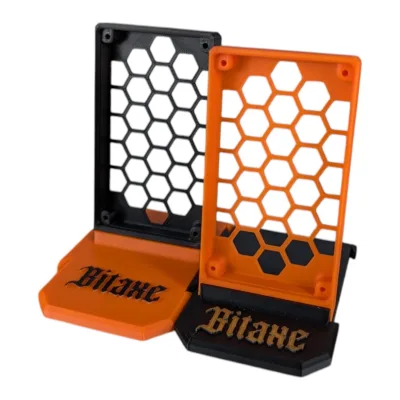
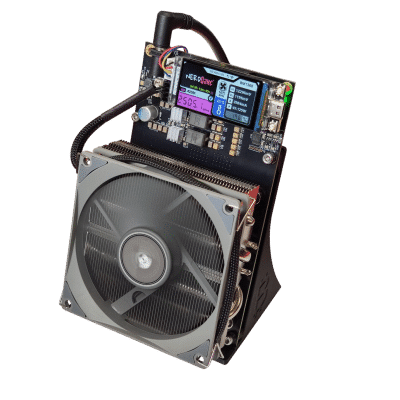
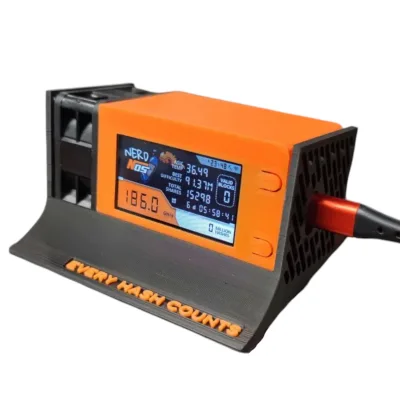
A compact Bitaxe-class miner can point to infrastructure you operate or to a solo-mining service. The service may still supply templates, node connectivity and payout configuration, so “solo pool” is not the same operational model as direct solo mining. Compare a single-chip Bitaxe with a multi-chip Hex, then model probability with the solo calculator.
For a miner hashrate h and contemporaneous network hashrate estimate H, illustrative discovery probability per block is approximately h/H. Trials are memoryless: prior misses do not make the next attempt due. Any positive hashrate can succeed, but a low-power device may wait far longer than a human lifetime—or find a block immediately. It is not a payout schedule.
2. Pool Mining with a Full ASIC
A pool accounts for lower-difficulty shares and pays under its current method, fees, thresholds, custody and terms. Pooling reduces payout variance for participants; it does not increase the expected gross discovery share of the same aggregate hashrate. A documented S21 XP revision needs exact input power, cooling and noise planning. Some systems offer greater template choice through protocols covered in the Stratum V2 guide, but support must be verified end to end. Model live conditions with the calculator.
3. Heat-Reuse Mining
A Bitcoin heat-reuse system directs miner heat to a useful load. Nearly all wall input ultimately becomes heat within a defined building boundary, but useful heat depends on demand, placement, distribution, controls, losses and noise. A historical 120 V firmware case study is not permission to bypass a PSU, access internal PSU conductors or operate any model outside its exact manufacturer input rating.
4. Cloud Mining: Verify or Avoid
Cloud-mining contracts add custody, counterparty, pricing, uptime, termination and verification risk. A dashboard balance does not prove physical hashrate or reserves. Read the legal entity, equipment rights, fee schedule, payout rules and exit terms; never rely on guaranteed-return language.
Mining Approach Comparison
| Approach | Infrastructure | Payout profile | Main verification |
|---|---|---|---|
| Direct solo | ASIC, node/template and coordination stack you operate | Extreme variance; subsidy plus included fees only on a valid block | Node, template, payout address and connectivity |
| Solo service | ASIC plus third-party server/template path | Extreme variance, less service fee/terms if successful | Template, fee, payout and counterparty terms |
| Conventional pool | ASIC plus pool account/endpoint | Lower variance under PPS/FPPS/PPLNS or other current terms | Accounting, fee, threshold, custody and template policy |
| Heat reuse | Any of the above plus safe heat distribution | Mining outcome plus only the heating value actually displaced | Electrical, thermal, acoustic and building integration |
| Cloud contract | Contract rather than controlled hardware | Counterparty-dependent | Entity, assets, pricing, termination and withdrawal |
Browse the hardware catalog only after selecting the operational approach and site envelope.
What Equipment Do You Need to Start Bitcoin Mining?
For Solo Mining with a Compact ASIC
- An exact board/build revision such as a Bitaxe, Bitaxe Hex, or supported device from the NerdQAxe++ setup guide.
- The documented external DC power supply, cable, connector and current capacity for that exact build.
- Supported cooling, stable network access and a payout address you independently verify.
- A computer or phone for the local configuration interface; the phone does not perform competitive SHA-256 mining.
- For display-only learning, distinguish a NerdMiner from an ASIC hasher.
| Compact option | Identity to verify | Power/cooling boundary |
|---|---|---|
| Single-chip Bitaxe | Board revision, ASIC, assembler, firmware | Exact external DC supply and supported heatsink/fan |
| Multi-chip board | Chip count, board/controller revision, tested operating point | Exact PSU, conductor, connector, protection and active cooling |
| Educational display miner | Whether it contains a competitive ASIC | Do not compare display hash rates with TH/s ASIC performance |
For Pool Mining with a Full ASIC
- An exact model and hashrate suffix, such as a documented S21 Pro revision, plus its matching PSU and manual.
- A site-specific electrical design using the nameplate voltage, phase, maximum current, connector, permitted continuous loading, conductors, terminals, protection and local code.
- Manufacturer-supported external connectors only. Do not open a PSU, connect to internal PSU conductors, bypass protection, improvise adapters or infer compatibility from underclocking.
- Engineered intake/exhaust, safe clearances, measured acoustics and a controlled shutdown path.
- A wired or supported wireless network, pool endpoints, verified payout address and monitoring.
Use a licensed electrician and the authority having jurisdiction for circuit and service work. An existing dryer or EV receptacle is not automatically suitable. Compare exact stock and delivery through the shop only after the site is approved.
| System | Required evidence | Do not assume |
|---|---|---|
| ASIC + PSU | Exact model/suffix, input, phase, current, connector and manual | Family name or wattage proves voltage compatibility |
| Branch circuit/PDU | Local design, permit/inspection where required, listed/rated components | Plug fit or breaker label proves continuous capacity |
| Cooling | Airflow/pressure or liquid-loop engineering and failure response | A generic fan percentage or temperature target is safe |
| Network/pool | Supported protocol, endpoint, failover, payout and security terms | Pool marketing proves template or custody properties |
For Heat-Reuse Mining
- A documented heat-reuse build identifying donor miner, PSU, firmware/power profile, enclosure and controls.
- Exact electrical input and locally approved installation; a modified miner is not automatically a listed residential appliance.
- Measured dBA with load, distance and room, plus required ventilation and clearances.
- A useful seasonal load and safe heat distribution. Hydro or immersion cooling adds fluid, pump, exchanger and leak/failure requirements.
- Insurance, lease/condominium, fire, building, noise and municipal review where applicable.
Hardware Comparison Table
| Category | Exact fields to compare | Best use |
|---|---|---|
| Compact ASICs | Board/build revision, ASIC, accepted hashrate, wall power, external DC input, cooling and firmware | Learning, low-power pool shares or high-variance solo attempts |
| Full air ASIC | Model suffix, rated mode/tolerance, AC input, phase/current, airflow, published noise method and warranty | Dedicated electrical and ventilation infrastructure |
| Hydro/immersion ASIC | Miner revision plus complete liquid loop, heat rejection, fluid, controls and failure modes | Engineered facilities or designed heat reuse |
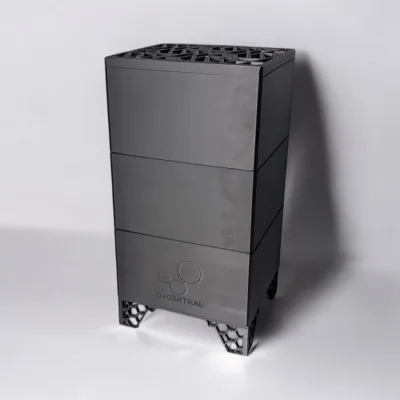
| Custom heater | Donor, power profile, input, enclosure, protection, measured heat/noise and compliance scope | Matched seasonal heat demand |
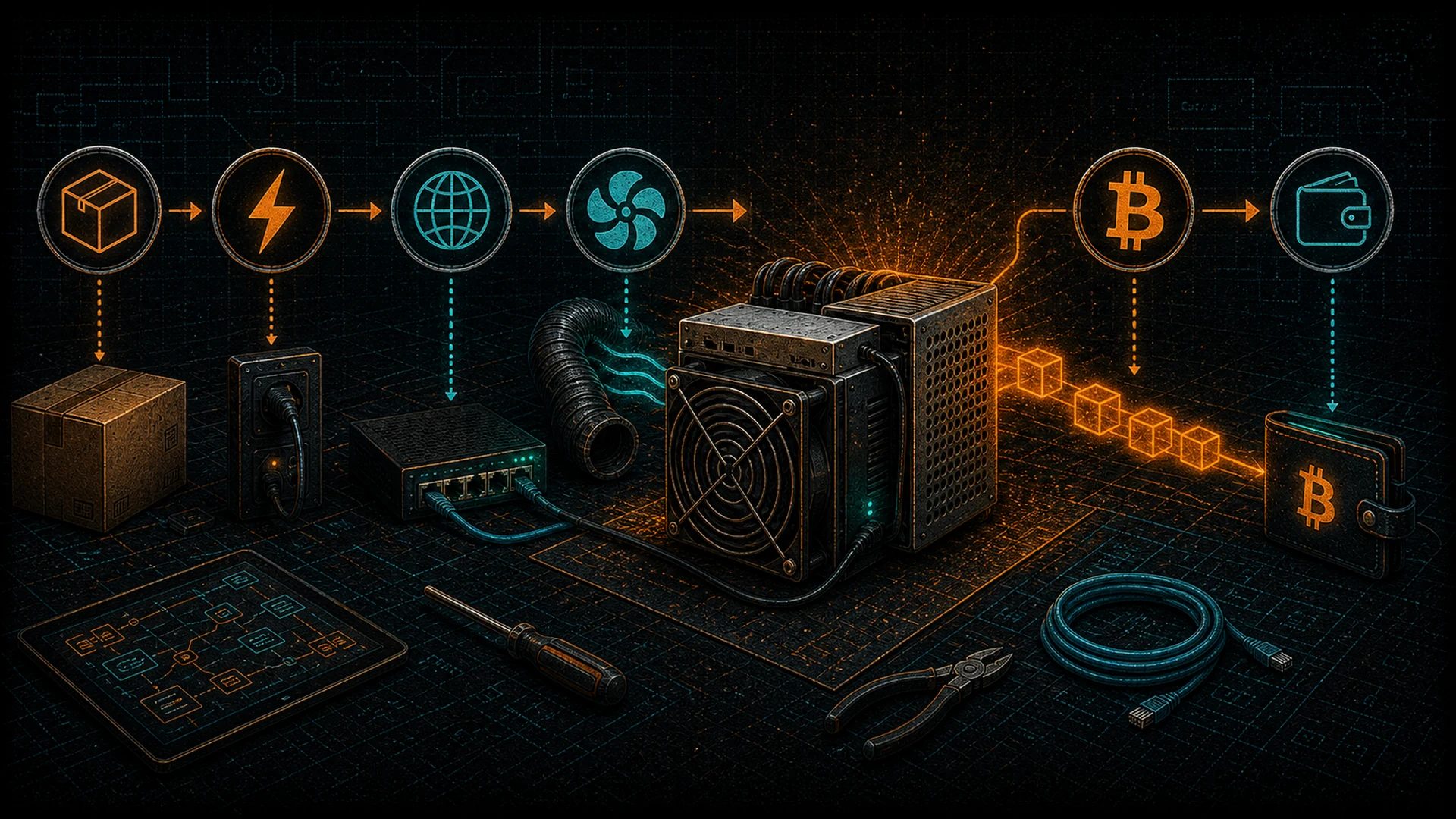
How to Start Bitcoin Mining: Seven-Step Setup Guide
Step 1: Choose Your Mining Approach
Choose direct solo, solo service, conventional pool or heat reuse based on control, payout variance, site limits and learning goals. The Getting Started guide can help organize the decision, but current primary documentation controls.
Step 2: Select and Purchase Your Hardware
Obtain a dated quote that identifies exact SKU/revision, condition, included PSU/cables, price, tax, freight, lead time, warranty, return/DOA terms and support. A Bitaxe product page is a starting point, not a substitute for the delivered board identity.
Step 3: Prepare Your Space
Verify electrical service and branch circuits, airflow, exhaust destination, intake quality, noise, clearances, moisture/condensation, physical security, network and shutdown. Heat output is approximately wall input at the building boundary. If heat will be reused, design the complete heating path; do not assume an apartment, garage or basement needs no ventilation.
Step 4: Get a Bitcoin Wallet
Use an address from a wallet whose custody, backup and recovery model you understand. Verify the payout address on a trusted display or independent channel. Mining does not guarantee privacy: hardware sellers, payment rails, pools, solo services, ISPs and address reuse can create identity or network links.
Step 5: Choose a Mining Pool or Solo Service
Compare the current payout method, fee, threshold, custody, withdrawal, uptime, jurisdiction, failover, template source and job-negotiation support. PPS, FPPS, PPLNS and score systems allocate variance and fees differently; labels and terms can change. A solo service is still a third party. Use the solo probability calculator for an illustration, not a promise.
Step 6: Set Up Your Miner
- With equipment de-energized, inspect labels, shipping damage, connectors, fans/heatsinks and the exact manual.
- Have approved electrical and cooling systems completed before energization. Use only supported external connections.
- Connect the miner to a controlled network and find it through router/DHCP records or documented discovery.
- Change default credentials and install only authentic, exact-model firmware. Follow the Bitaxe firmware guide or an exact supported Braiins OS guide; preserve recovery and rollback.
- Enter independently verified pool/solo endpoints and payout identity, configure deliberate failover, then start at the documented mode.
- Confirm pool-side accepted shares, wall power, temperatures, cooling response, logs and abnormal odor, sound or connector heat. De-energize unsafe equipment.
Step 7: Monitor and Optimize
Monitor accepted/rejected/stale shares, wall power with appropriately rated methods, manufacturer-defined sensors and limits, cooling status, pool credit, connectivity and protective-device events. There is no universal safe chip-temperature band or fan percentage across models. Change one supported variable at a time, measure again, and use the Bitaxe tuning guide only for the exact supported board. Re-run the profitability model with measured results.
Miner traffic is often modest, but there is no universal bytes-per-day figure across firmware, pools, telemetry and updates. Measure the exact deployment and prioritize latency, uptime, packet loss, failover, DNS/time and access control. Running a full node is a separate workload with initial block download, ongoing peer traffic, storage, verification and maintenance requirements.
Bitcoin Mining Cost Breakdown
Never freeze a hardware price or monthly profit into the plan. Gather live quotes and use the calculator with explicit assumptions.
| Cost category | Include | Common omission |
|---|---|---|
| Hardware | Exact revision, PSU, cables, freight, duties, tax, financing | Futures price treated as delivered stock |
| Electrical | Design, permits, circuit/PDU, protection, inspection | Assuming an existing receptacle is approved |
| Cooling/noise | Ventilation, ducting, liquid loop, controls, acoustic treatment | Ignoring summer rejection or maintenance |
| Operations | All-in tariff, pool terms, connectivity, spares, repair, downtime | Using energy-only cents/kWh |
| Risk | Difficulty, fees, price, warranty, tax, insurance, residual value | Guaranteed payback or resale assumption |
7 Common Bitcoin Mining Mistakes to Avoid
1. Ignoring Electricity Costs
Use measured wall power and the full tariff, not a regional average. The linked Texas case study is jurisdiction- and date-specific, not a transferable legal or price conclusion.
2. Buying Outdated or Unverified Hardware
Require exact identity, sustained pool-side test results, wall power, condition and warranty. Include repairability and parts in the model; D-Central’s repair service can be evaluated separately from the purchase.
3. Underestimating Noise, Heat and Ventilation
Noise depends on exact model, mode, load, ambient temperature, distance and room. Heat must be safely rejected or delivered to a real load. A heat-reuse configuration still needs ventilation/airflow, clearances, controls and seasonal planning.
4. Using Extension Cords, Power Strips or Internal PSU Workarounds
Do not improvise power distribution, bypass a PSU, attach to internal PSU conductors or assume underclocking changes an incompatible input rating. Use exact listed/rated components and qualified, site-specific electrical design. Consumer remote switches and plug meters may be unsuitable for continuous miner loads.
5. Falling for Cloud Mining and “Mining Apps”
A phone app may monitor hardware, display simulated work or sell a contract; it does not make a general-purpose phone competitive with SHA-256 ASICs. Reject guaranteed returns, unverifiable hashrate, pressure payments and blocked withdrawals.
6. Confusing Wallet Custody with Mining Privacy
Self-custody removes an exchange from key control, but it does not erase purchase, pool, network, shipping or address-linkage records. Avoid address reuse where appropriate, protect wallet backups and understand each service’s data retention and payout model.
7. Making Categorical Legal or Tax Assumptions
Do not assume mining is universally permitted or that every receipt is automatically taxed the same way. Check current federal, provincial/state, municipal, utility, electrical, fire, zoning, environmental, noise, tax, insurance, lease and condominium requirements for the exact location and activity. Use qualified legal and tax advisers.
Bitcoin Mining FAQ: Your Questions Answered
How much does it cost to start Bitcoin mining?
There is no durable minimum. Obtain dated quotes for the exact miner/build, PSU, shipping, tax, electrical work, permits, cooling, noise control, networking, maintenance and spares. A low-power compact ASIC needs less infrastructure than a full-size air, hydro or immersion system.
Can I mine Bitcoin on my phone?
A phone can configure or monitor supported miners, but its general-purpose processor is not competitive SHA-256 mining hardware. Apps may simulate mining or sell contracts; verify what they actually do and never grant wallet keys or pay for guaranteed returns.
How much Bitcoin can I mine in a day?
Pool payouts depend on accepted hashrate, current network conditions, payout accounting, fees, thresholds and uptime. Solo discovery is probabilistic and memoryless; a day can produce no block even when long-run expectation is positive. Use timestamped inputs and disclose assumptions.
Is Bitcoin mining legal in Canada and the US?
No single answer clears every site or activity. Federal, provincial/state, municipal, utility, electrical, fire, zoning, environmental, noise, tax, insurance, tenancy and condominium rules can differ and change. Check official current sources and qualified local advisers before operating.
Do I need special internet for Bitcoin mining?
Miner requirements vary by firmware, protocol, pool, telemetry and updates; measure the exact deployment. Reliability, latency, packet loss, DNS/time, failover and security matter. A full node is separate and adds initial block download, peer traffic, storage, validation and maintenance.
Can I mine Bitcoin in an apartment?
Only if the exact equipment and installation satisfy electrical capacity, ventilation, clearances, heat, noise, fire, insurance, lease, landlord and condominium requirements. A compact ASIC may be easier to accommodate; a heat-reuse miner is not automatically apartment-safe or ventilation-free.
What is the cheapest way to start mining Bitcoin?
A low-power compact ASIC or DIY kit can reduce infrastructure cost, but compare the exact included parts, external supply, cooling, assembly skill, warranty and shipping. Cheapest purchase price is not cheapest lifecycle cost.
How much electricity does Bitcoin mining use?
For one device, measure wall kilowatts in its exact mode and multiply by runtime; include cooling and auxiliary loads. Fleet or network estimates require a stated methodology and uncertainty. Do not infer a safe circuit or voltage from wattage alone.
Is solo mining worth it?
That depends on your goals and tolerance for extreme variance. Compare hashrate with a contemporaneous network estimate. Pooling lowers payout variance; solo attempts can succeed immediately, much later or never.
How long does it take to mine 1 Bitcoin?
There is no deterministic timer. Pools credit fractions under their accounting rules; solo miners either find valid blocks or do not. Expected results change with hashrate, difficulty, subsidy, fees and uptime, while actual block discovery remains random.
Start Mining with a Verified Plan
Write down the exact hardware revision, electrical approval, cooling and noise plan, pool/solo architecture, payout address, live economics, monitoring and shutdown procedure before energization. Keep the miner, template source, pool/service and validating node roles explicit.
How much does it cost to start Bitcoin mining?
There is no durable minimum. Obtain dated quotes for the exact miner/build, PSU, shipping, tax, electrical work, permits, cooling, noise control, networking, maintenance and spares. A low-power compact ASIC needs less infrastructure than a full-size air, hydro or immersion system.
Can I mine Bitcoin on my phone?
A phone can configure or monitor supported miners, but its general-purpose processor is not competitive SHA-256 mining hardware. Apps may simulate mining or sell contracts; verify what they actually do and never grant wallet keys or pay for guaranteed returns.
How much Bitcoin can I mine in a day?
Pool payouts depend on accepted hashrate, current network conditions, payout accounting, fees, thresholds and uptime. Solo discovery is probabilistic and memoryless; a day can produce no block even when long-run expectation is positive. Use timestamped inputs and disclose assumptions.
Is Bitcoin mining legal in Canada and the US?
No single answer clears every site or activity. Federal, provincial/state, municipal, utility, electrical, fire, zoning, environmental, noise, tax, insurance, tenancy and condominium rules can differ and change. Check official current sources and qualified local advisers before operating.
Do I need special internet for Bitcoin mining?
Miner requirements vary by firmware, protocol, pool, telemetry and updates; measure the exact deployment. Reliability, latency, packet loss, DNS/time, failover and security matter. A full node is separate and adds initial block download, peer traffic, storage, validation and maintenance.
Can I mine Bitcoin in an apartment?
Only if the exact equipment and installation satisfy electrical capacity, ventilation, clearances, heat, noise, fire, insurance, lease, landlord and condominium requirements. A compact ASIC may be easier to accommodate; a heat-reuse miner is not automatically apartment-safe or ventilation-free.
What is the cheapest way to start mining Bitcoin?
A low-power compact ASIC or DIY kit can reduce infrastructure cost, but compare the exact included parts, external supply, cooling, assembly skill, warranty and shipping. Cheapest purchase price is not cheapest lifecycle cost.
How much electricity does Bitcoin mining use?
For one device, measure wall kilowatts in its exact mode and multiply by runtime; include cooling and auxiliary loads. Fleet or network estimates require a stated methodology and uncertainty. Do not infer a safe circuit or voltage from wattage alone.
Is solo mining worth it?
That depends on your goals and tolerance for extreme variance. Compare hashrate with a contemporaneous network estimate. Pooling lowers payout variance; solo attempts can succeed immediately, much later or never.
How long does it take to mine 1 Bitcoin?
There is no deterministic timer. Pools credit fractions under their accounting rules; solo miners either find valid blocks or do not. Expected results change with hashrate, difficulty, subsidy, fees and uptime, while actual block discovery remains random.