Does Home Insurance Cover Bitcoin Mining Equipment?
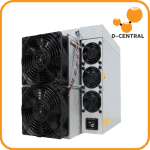
Here is the short, uncomfortable answer: probably not enough, and possibly not at all. Most standard homeowner insurance policies in both Canada and the United States classify mining rigs as “business equipment” or “business personal property.” These policies typically cap coverage for business-related equipment kept in the home at $2,500 to $5,000 CAD/USD. If you are running even a single Antminer S21 Pro — retailing north of $5,000 — you are already exceeding that limit before accounting for your power supply, networking gear, ventilation setup, or any secondary miners. The problem gets worse fast. A modest home mining closet with two or three ASICs, dedicated electrical work, and proper 240V wiring or a 120V setup, can easily represent $10,000 to $25,000 in equipment. A serious home operation with space heaters, a Bitaxe collection, and replacement parts? You could be looking at $30,000 or more in uninsured or underinsured hardware.The “Business Use” Trap
The critical issue is not just the dollar cap — it is the business activity exclusion. Most residential insurance policies contain clauses that exclude or limit coverage for losses arising from business activities conducted on the premises. Bitcoin mining — especially if you are reporting mining income on your taxes (as you legally must) — is a business activity in the eyes of insurers. This creates a dangerous paradox: the CRA and IRS expect you to report mining income, but doing so creates a paper trail that an insurer could use to deny a claim. If your mining rig causes an electrical fire, or if a thief targets your equipment, your insurer may investigate, discover the mining operation, and deny the claim on the grounds that the loss resulted from undisclosed business activity. The bottom line: Do not assume your existing home insurance covers your mining equipment. Read your policy, talk to your broker, and get it in writing.Risks Every Bitcoin Miner Should Insure Against
Bitcoin mining hardware faces a unique combination of risks that standard insurance products were never designed to cover. Understanding these risks is the first step toward building proper protection.Fire from Electrical Overload
This is the number-one risk for home miners. ASIC miners draw significant power — an Antminer S21 pulls approximately 3,500 watts continuously. Running multiple units on residential wiring that was designed for household appliances creates real fire risk if circuits are overloaded, connections are loose, or breakers are undersized. Fire safety for ASIC miners is not optional — it is foundational.Theft
Mining equipment is compact, valuable, and easily resalable. A single Antminer S21 is worth thousands of dollars and fits in a backpack. Unlike jewelry or electronics, miners have serial numbers that are rarely checked by pawn shops or secondhand buyers. Theft risk increases if your mining operation is visible or audible from outside your home, or if you have discussed your setup on social media.Power Surge and Electrical Damage
Grid instability, lightning strikes, and utility-side surges can destroy ASIC miners and their power supplies instantly. When a power surge hits, it travels through the path of least resistance — often directly through the sensitive components on your hashboards. A single surge event can destroy an entire mining operation in milliseconds.Water Damage
Basement operations are particularly vulnerable. A burst pipe, sump pump failure, or spring flooding can destroy mining equipment that sits at floor level. Even immersion-cooled setups, if improperly sealed, can suffer coolant leaks that damage other equipment.Equipment Failure and Breakdown
ASIC miners run 24/7 at high temperatures. Fan bearings wear out, thermal paste degrades, capacitors age, and hashboards develop faults over time. Manufacturer warranties are limited and often void if you have modified your miner with custom firmware or aftermarket cooling. Professional ASIC repair can restore failed hardware, but the cost of repair plus downtime represents a real financial risk.Home Insurance Implications for Bitcoin Miners
Running mining equipment in your home changes your risk profile in ways that insurers care about deeply. Ignoring this reality does not make it go away — it just means you will find out the hard way when you file a claim.Disclosure Requirements
Most insurance policies include a clause requiring you to disclose “material changes” to your property or its use. Installing mining equipment that significantly increases your electrical consumption, generates substantial heat, and constitutes a home business operation qualifies as a material change. Failure to disclose can void your entire policy — not just the mining-related portion.Premium Increases
Expect your premiums to increase if you disclose mining activity. The amount varies by insurer and province or state, but increases of 10% to 30% are common. Some insurers may require an inspection before adjusting your policy. Others may simply decline to continue coverage.Policy Exclusions to Watch For
Read your policy carefully for these common exclusions:- Business personal property limitations — the $2,500 to $5,000 cap mentioned above
- Business activity exclusions — losses arising from commercial activities conducted at home
- Electrical modification exclusions — damage resulting from non-permitted electrical work
- Wear and tear exclusions — gradual equipment degradation is almost never covered
- Intentional overloading — if an insurer determines you knowingly exceeded your electrical capacity
Home Business Riders and Endorsements
A “home business rider” or “home-based business endorsement” is an add-on to your existing homeowner policy that extends coverage for business equipment and business liability. These riders typically cost $150 to $500 per year and can increase your business equipment coverage to $10,000 to $25,000 or more. However, not all insurers will write home business riders for mining operations. Some underwriters consider the electrical and fire risk profile unacceptable for a residential rider. You may need to shop multiple brokers to find one that will cover mining specifically.Canadian Insurance Considerations
Canada presents unique opportunities and challenges for insuring a home mining operation. If you are mining Bitcoin in Canada, understanding the provincial landscape is essential.Provincial Differences
Insurance regulation in Canada is a provincial matter, which means coverage options, disclosure requirements, and premium structures vary by province:- British Columbia: Recent legislative amendments regarding cryptocurrency mining and electricity use have increased insurer scrutiny. BC hydro-powered mining operations may face additional questions about electrical capacity and compliance.
- Quebec: With some of the cheapest electricity in North America, Quebec attracts miners — but Hydro-Quebec has implemented specific policies around cryptocurrency mining consumption. Insurers in Quebec are increasingly aware of mining activity.
- Alberta: Deregulated electricity market means fewer utility-side restrictions, but insurers still require disclosure. The Alberta Insurance Council maintains strict guidelines around home business endorsements.
- Ontario: Standard home insurance policies through most Ontario insurers include business equipment sub-limits. Several Ontario brokerages now offer specialized technology equipment endorsements that can cover mining hardware.
CSA and Fire Code Compliance
In Canada, all electrical equipment must meet Canadian Standards Association (CSA) or equivalent Underwriters Laboratories (UL) certification standards. This matters enormously for insurance:- Power supplies must carry CSA or UL certification marks. Many aftermarket or imported power supplies lack proper certification, which can give insurers grounds to deny fire-related claims.
- Electrical installations must comply with the Canadian Electrical Code (CEC). If you have added dedicated circuits, sub-panels, or 240V outlets for your mining equipment, this work must be done by a licensed electrician and inspected to receive an ESA (Electrical Safety Authority) certificate in Ontario, or equivalent provincial inspection.
- Building code compliance includes adequate ventilation, smoke detection, and fire separation for rooms housing significant heat-generating equipment.
Canadian Tax and Insurance Intersection
The CRA treats Bitcoin mining as a business activity, requiring you to report mining income and allowing you to deduct expenses — including insurance premiums. This means your mining-related insurance premiums may be tax-deductible as a business expense, partially offsetting the increased cost. Consult our Bitcoin mining tax guide for Canadians for complete details on deductions.USA Insurance Considerations
The American insurance landscape for Bitcoin miners is equally complex, with significant state-by-state variation.Homeowner vs. Renter Considerations
Homeowners have more flexibility — they can modify their policies, add riders, and make electrical upgrades to their property. Renters face additional challenges:- Renter’s insurance typically has even lower limits for business equipment, often $1,000 to $2,500
- Lease violations — many leases prohibit high-power commercial equipment or “excessive” electricity use. A mining-related claim could expose a lease violation.
- Liability to landlord — if your mining equipment causes a fire that damages the building, you may be personally liable for damages to the structure and other tenants’ property, far exceeding your renter’s insurance limits
State Variations
Insurance regulation is handled at the state level in the United States:- Texas: Favorable regulatory environment for mining, with several insurers experienced in crypto mining coverage. Deregulated energy markets provide flexibility.
- New York: Stringent disclosure requirements and higher premiums. Some insurers will not write mining endorsements in NYC due to the fire risk profile of older buildings.
- Georgia and the Southeast: Growing mining presence with moderately priced insurance options. Hurricane risk adds a layer of coverage consideration.
- Wyoming: Among the most crypto-friendly states legally, though the insurer market for specialized mining coverage remains limited.
Umbrella Policies
A personal umbrella policy provides additional liability coverage above your homeowner or renter policy limits. For miners, this is worth serious consideration. If your mining equipment causes a fire that damages a neighbor’s property or injures someone, the liability can easily exceed your base policy limits. Umbrella policies typically provide $1 million to $5 million in additional coverage for $200 to $500 per year — a bargain relative to the risk.Commercial Equipment Coverage Options
When residential insurance falls short — and it almost always does for serious miners — commercial coverage options can fill the gap.Inland Marine Insurance
Despite the name, inland marine insurance has nothing to do with boats. It is a category of commercial insurance that covers movable property and specialized equipment. For Bitcoin miners, inland marine coverage can protect:- Individual ASIC miners and their power supplies
- Networking equipment (routers, switches, access points)
- Cooling infrastructure (fans, shrouds, ducting, immersion setups)
- Electrical infrastructure (sub-panels, PDUs, surge protectors)
- Replacement parts inventory
Scheduled Equipment Riders
Some insurers offer the ability to “schedule” individual pieces of high-value equipment on your home insurance policy, similar to how you would schedule jewelry or fine art. Each scheduled item is listed with its replacement value and covered for all risks (including accidental damage) with no deductible or a very low deductible. This approach works well for miners with a small number of high-value machines. The premium is typically 1% to 3% of the scheduled value per year. A $5,000 Antminer S21 would cost approximately $50 to $150 per year to schedule.Business Property Insurance
If your mining operation has grown beyond a hobby — multiple machines, dedicated space, significant revenue — a standalone business property insurance policy may be the most appropriate solution. These policies are designed for business equipment and operations, with coverage limits of $50,000 to $500,000 or more. Business property policies can include:- Equipment breakdown coverage — covers mechanical and electrical failure of mining hardware
- Business interruption coverage — compensates for lost mining revenue during covered downtime
- Replacement cost coverage — pays to replace equipment at current market price, not depreciated value
- Transit coverage — protects equipment during shipping (relevant when sending miners for ASIC repair)
Valuation Challenges Unique to Mining
Insuring mining equipment presents a valuation problem that insurers struggle with. ASIC miners depreciate rapidly as newer, more efficient models arrive — but during chip shortages or bull markets, used miners can appreciate dramatically. An Antminer S19j Pro that was worth $1,500 one year might be worth $3,000 the next, or $800 six months later. Ensure your coverage uses “agreed value” or “replacement cost” rather than “actual cash value” (which accounts for depreciation). Review your scheduled values at least every six months to ensure they reflect current market conditions.Fire Safety Best Practices for Bitcoin Miners
Insurance protects you financially after a disaster. Fire safety prevents the disaster from happening in the first place. These are not optional extras — they are the minimum standard for any responsible mining operation. For a comprehensive deep dive, see our full ASIC miner fire safety guide.Electrical Best Practices
- Dedicated circuits: Every mining rig should run on its own dedicated circuit, sized appropriately for the load. Never daisy-chain power strips or share circuits between miners.
- Professional installation: All electrical work should be performed by a licensed electrician and inspected per local code. Keep permits and inspection certificates — your insurer will want them.
- Quality power supplies: Use only CSA/UL-certified power supplies. Aftermarket power supplies without certification are a fire risk and an insurance liability.
- Surge protection: Install whole-house surge protection at the electrical panel, plus point-of-use surge protectors for each miner. Power surges are one of the most common causes of mining equipment loss.
- Regular inspection: Check connections, outlets, and breakers monthly. Look for discoloration, heat damage, or loose connections. Feel for unusual warmth at outlets and junction points.
Fire Detection and Suppression
- Smoke detectors: Install both ionization and photoelectric smoke detectors in your mining space. Ionization detectors respond faster to flaming fires; photoelectric detectors respond faster to smoldering fires. Use both.
- Fire extinguishers: Keep a Class C fire extinguisher (rated for electrical fires) within arm’s reach of your mining setup. Class ABC extinguishers also work. Never use water on an electrical fire.
- Thermal monitoring: Use smart temperature sensors with alerting capability in your mining space. Set alerts for temperatures exceeding safe thresholds. Many home automation systems can send push notifications if temperature spikes.
- Auto-shutoff: Consider smart plugs or PDUs with temperature-based auto-shutoff capability. If the room temperature exceeds a set limit, the system cuts power to the miners automatically.
Ventilation and Heat Management
Miners generate enormous amounts of heat. An Antminer S21 produces approximately 12,000 BTU per hour — equivalent to a large space heater running at maximum. Proper ventilation is both a safety requirement and an insurance consideration:- Ensure adequate airflow to prevent heat accumulation
- Never block exhaust vents or restrict intake airflow
- Keep combustible materials far away from mining equipment
- If using miners as space heaters, follow proper mining setup guidelines for heat distribution
Liability Considerations for Home Miners
Insurance is not just about protecting your equipment — it is about protecting yourself from liability to others.Noise and Nuisance Liability
ASIC miners are loud. A stock Antminer S21 runs at approximately 75 decibels — comparable to a vacuum cleaner running 24 hours a day. In apartments, condos, or homes with close neighbors, persistent mining noise can lead to:- Noise complaints that escalate to bylaw enforcement or civil action
- HOA/strata violations resulting in fines or forced removal of equipment
- Nuisance lawsuits from neighbors who claim their quality of life has been materially affected
Electrical Damage to Shared Infrastructure
In multi-unit buildings — apartments, condos, and townhouses — your electrical usage affects shared infrastructure. Mining operations that draw heavy loads can:- Overload shared electrical panels or transformers
- Cause voltage drops that affect other units
- Damage shared wiring that was not designed for continuous high loads
Fire Liability to Neighbors
If a mining-related fire damages neighboring properties, your liability could be catastrophic. In a worst-case scenario involving a multi-unit building, damages could reach hundreds of thousands or millions of dollars. This is where umbrella policies and proper commercial liability coverage become essential rather than optional.Record-Keeping for Insurance Claims
If the worst happens and you need to file a claim, the quality of your documentation will determine whether you receive fair compensation or face a protracted, underpaid settlement. Start documenting today — not after a loss.Equipment Documentation
- Serial numbers: Record the serial number of every miner, power supply, and significant accessory. ASIC miners have serial numbers on the control board and sometimes on the chassis. Photograph both.
- Purchase receipts: Save every receipt, invoice, and order confirmation. Digital copies backed up to cloud storage are ideal. Include shipping receipts — they establish your address and delivery date.
- Photographs: Take clear, well-lit photos of every piece of equipment from multiple angles. Include photos of serial number plates, model number stickers, and the overall setup. Update photos whenever you add, remove, or rearrange equipment.
- Firmware versions: Record the firmware version running on each miner. If you are running custom firmware like Braiins OS+ or Vnish, document this. Some insurers may consider modified firmware a factor in claims evaluation.
Operational Records
- Hashrate logs: Export and save hashrate logs from your mining pool dashboard. These establish that your equipment was operational and its approximate value in productive capacity.
- Electricity bills: Save every electricity bill. Your power consumption pattern establishes the scale of your operation and corroborates your equipment inventory.
- Maintenance records: Document every repair, cleaning, thermal paste replacement, fan swap, and firmware update. This shows responsible stewardship of your equipment.
- Electrical permits and inspections: Keep copies of all electrical permits, inspection certificates, and contractor invoices. These are your strongest evidence of compliance in a fire-related claim.
Valuation Documentation
- Current market values: Screenshot or save listings showing current market prices for your equipment at least quarterly. ASIC values fluctuate significantly, and having a recent valuation record strengthens your claim.
- Replacement cost research: Document what it would cost to replace your equipment at current market prices. Include shipping and customs fees if applicable.
- Appraisals: For large operations ($25,000+), consider getting a professional equipment appraisal annually. The cost is minimal compared to the protection it provides during claims.
Storage Recommendations
Store your documentation in multiple locations:- Cloud storage (encrypted) — survives fire, theft, and flood
- Physical copies in a fireproof safe or off-site location
- Email to yourself — creates a timestamped record
- Shared with your insurance broker — they can keep your inventory on file
Frequently Asked Questions
Will my home insurance cover my Bitcoin mining equipment?
Do I have to tell my insurance company that I mine Bitcoin?
Can my insurance company cancel my policy if I disclose mining?
What type of fire extinguisher should I keep near my miners?
Is Bitcoin mining insurance tax-deductible?
How much does it cost to insure a home mining operation?
What happens if my mining rig causes a fire in my apartment building?
Does overclocking or custom firmware affect my insurance coverage?
Should I insure my Bitaxe or small open-source miners?
What is the best insurance setup for a home miner with $10,000 to $20,000 in equipment?
Will my home insurance cover my Bitcoin mining equipment?
Most standard homeowner policies limit business equipment coverage to $2,500 to $5,000. If your mining equipment exceeds this value — and it almost certainly does — you need additional coverage. More importantly, the business activity exclusion in most policies means mining-related losses may be denied entirely. Contact your insurer to disclose your mining activity and discuss coverage options.
Do I have to tell my insurance company that I mine Bitcoin?
Yes. Insurance policies require you to disclose material changes to your property and its use. Operating mining equipment that significantly increases electrical load, heat production, and fire risk constitutes a material change. Failure to disclose can void your entire policy — not just the mining portion. Disclosure is non-negotiable.
Can my insurance company cancel my policy if I disclose mining?
It is possible. Some insurers may decline to continue coverage or may offer renewal only with exclusions. However, being cancelled for disclosure is far better than having a claim denied for non-disclosure. If one insurer will not cover you, shop for one that will — or add commercial coverage for your mining equipment specifically.
What type of fire extinguisher should I keep near my miners?
Keep a Class C fire extinguisher (rated for electrical fires) near your mining setup. Class ABC multi-purpose extinguishers also work. Never use a Class A (water-based) extinguisher on an electrical fire — you risk electrocution and will likely spread the damage. CO2 or dry chemical extinguishers are the safest options for electrical fires.
Is Bitcoin mining insurance tax-deductible?
In both Canada and the United States, insurance premiums for business equipment are generally tax-deductible as a business expense. Since mining is classified as a business activity by the CRA and IRS, your mining-related insurance premiums — whether a home business rider, scheduled equipment coverage, or commercial policy — should be deductible. Consult a tax professional for your specific situation.
How much does it cost to insure a home mining operation?
Costs vary widely depending on your approach: a home business rider typically costs $150 to $500 per year; scheduled equipment coverage runs approximately 1% to 3% of insured value annually; a standalone business property policy for a larger operation may cost $500 to $2,000 or more per year. The exact premium depends on your location, equipment value, electrical setup, and claims history.
What happens if my mining rig causes a fire in my apartment building?
You could be personally liable for damages to the building structure, other units, other residents’ property, and potentially injuries. In a multi-unit building, this liability can reach hundreds of thousands of dollars or more. Standard renter’s insurance limits are typically inadequate for this scenario. If you mine in an apartment, a personal umbrella policy ($1 million+ in additional liability coverage for $200 to $500 per year) is strongly recommended. Also review our apartment mining…
Does overclocking or custom firmware affect my insurance coverage?
Potentially, yes. If a claim investigation determines that overclocking caused a miner to exceed its rated power draw and contributed to an electrical fire, this could be used as grounds to reduce or deny the claim. Custom firmware that increases power consumption beyond manufacturer specifications introduces similar risk. Document your firmware choices and power settings as part of your record-keeping.
Should I insure my Bitaxe or small open-source miners?
While individual Bitaxe units are relatively affordable ($100 to $500), collections add up quickly — especially when you factor in accessories, power supplies, and custom heatsinks. If your total open-source mining equipment exceeds your policy’s business equipment sub-limit, additional coverage makes sense. The same disclosure and documentation principles apply regardless of whether you are running a Bitaxe or an Antminer S21.
What is the best insurance setup for a home miner with $10,000 to $20,000 in equipment?
For this range, a combination of a home business rider (for liability protection and basic equipment coverage) plus scheduled equipment coverage for your highest-value miners is typically the most cost-effective approach. Total annual cost would be approximately $300 to $800. As your operation grows beyond $25,000, consider transitioning to a standalone business property policy for more comprehensive coverage. Ensure you also carry an umbrella policy for liability protection.