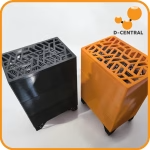
Michigan presents a paradox for Bitcoin miners: the state has some of the highest electricity rates in the Midwest at ~$0.19–0.23/kWh, but it also delivers some of the coldest, longest winters in the Lower 48. That combination makes Michigan a prime territory for the dual-purpose mining strategy — using Bitcoin miners as space heaters during the brutal November-through-April heating season. If you’re already paying DTE or Consumers Energy to run electric heaters, you might as well be earning Bitcoin with that electricity instead.
D-Central Technologies ships to Michigan and all US states. For Michigan miners dealing with high electricity costs and cold winters, we specialize in exactly the hardware strategies that make mining work: Bitcoin Space Heaters, efficient ASICs, and ultra-low-power solo miners like the Bitaxe.
Michigan Electricity Rates for Bitcoin Mining
Michigan’s electricity market is dominated by two major utilities: DTE Energy (southeastern Michigan including Detroit) and Consumers Energy (central and western Michigan). Both have seen significant rate increases over the past two decades.
Current Residential Rates (2026)
- DTE Electric: ~$0.2282/kWh (as of January 2026)
- Consumers Energy: ~$0.2239/kWh (as of January 2026)
- State average: ~$0.1991/kWh
- National comparison: Michigan rates are approximately 10–25% above the US national average of ~$0.18/kWh
These are not cheap rates. Michigan’s electricity costs have risen over 130% in the past two decades for Consumers Energy customers alone. For pure mining economics, this means efficiency is everything — and the heating-season strategy becomes not just recommended, but essential for most Michigan miners.
Monthly Mining Cost Estimates at Michigan Rates
- Antminer S21 (3,500W): ~$151–173 USD/month
- Antminer S19 (3,250W): ~$140–161 USD/month
- Bitaxe (15W): ~$2.15–2.50 USD/month — still negligible
- Bitcoin Space Heater S9 Edition (1,300W): ~$56–64 USD/month
At these rates, the value proposition is clear: solo mine with a Bitaxe year-round (the cost is invisible), and deploy ASICs and Space Heaters during the 6–7 month heating season when you’re replacing electricity you’d be spending on heat anyway.
Climate: Michigan’s Secret Weapon
What Michigan lacks in cheap power, it more than compensates for with climate. Michigan’s winters are among the coldest and longest in the continental US.
Temperature Profile
- Winter (December–February): Average -5°C to -12°C (23°F to 10°F). Upper Peninsula: -10°C to -18°C (14°F to 0°F). Lake-effect snow regions get extreme cold and precipitation.
- Spring (March–May): Slow warming from 0°C to 14°C (32°F to 57°F). Cold snaps common into April.
- Summer (June–August): Warm 22°C to 30°C (72°F to 86°F) with moderate humidity. Manageable for mining with basic ventilation.
- Fall (September–November): Rapid cooling from 18°C to -2°C (64°F to 28°F). Heating season starts October.
Michigan delivers 6–7 months of heating season in the Lower Peninsula and 7–8 months in the Upper Peninsula. That’s over half the year where your mining electricity cost is offset by heating value. A Bitcoin Space Heater running from October through April in a Detroit home is replacing the electric heater you’d be running anyway — but earning Bitcoin while it works.
Regulations and Legal Status in Michigan
Michigan has no specific legislation targeting cryptocurrency mining, and home mining operates under standard residential utility service.
Key Regulatory Points
- No mining bans or restrictions: Michigan has not enacted any legislation restricting Bitcoin mining. The Michigan Public Service Commission (MPSC) regulates electricity rates but has no special provisions for crypto mining.
- Utility rates set by MPSC: DTE and Consumers Energy rates are regulated through a public review process. No discriminatory crypto-mining rates exist.
- State income tax: Michigan has a flat 4.25% state income tax. Mining income (whether classified as business income or capital gains) is subject to this rate.
- Sales tax: 6% state sales tax applies to mining equipment purchases.
- Municipal considerations: Detroit, Grand Rapids, Ann Arbor, and other cities have noise ordinances. ASIC miners need indoor or enclosed installations to avoid violations.
- Electrical code: Michigan follows the National Electrical Code. Permits and licensed electricians are required for 240V circuit installations.
- UP vs. Lower Peninsula: The Upper Peninsula’s lower population density and rural character means fewer zoning constraints for mining setups, though accessing repair and electrical services may require more planning.
Best Mining Hardware for Michigan
Michigan’s high rates demand a focused strategy: efficiency year-round, heating value in winter.
- Bitaxe (all variants): The must-have for every Michigan miner. At $2.15–2.50/month, it’s negligible cost for solo mining participation. Run it year-round regardless of anything else in your setup.
- Bitcoin Space Heaters (S9, S19 editions): THE Michigan mining strategy. Replace electric heaters with Bitcoin-earning Space Heaters during the 6–7 month heating season. You’re paying for the electricity either way — you might as well mine with it.
- Antminer S21 (latest generation only): Only the most efficient ASICs should run year-round at Michigan rates. An S21 at 17.5 J/TH can work, but watch margins carefully during summer months when heat has no value.
- Seasonal strategy: Consider running ASICs October through April and shutting down non-essential units for July and August when rates bite hardest and heat is unwanted.
Visit the D-Central Shop for all hardware options.
Getting Started Mining in Michigan
- Know your rate: Check whether you’re on DTE or Consumers Energy and confirm your exact per-kWh rate. Both utilities offer online account access with rate details.
- Calculate your heating costs: This is critical in Michigan. Determine how much you currently spend on electric heating per month from October through April. This is your “free mining budget.”
- Start with a Bitaxe: Order from D-Central. Even at Michigan rates, under $2.50/month is nothing for solo mining participation.
- Invest in Space Heaters before winter: Order a Bitcoin Space Heater before October to maximize your first heating-season mining. Every watt replaces heating electricity you’d be buying anyway.
- Electrical preparation: Hire a licensed Michigan electrician for 240V circuit installation. Get permits through your local building department.
- Plan seasonally: Full operation October through April. Evaluate summer running based on Bitcoin price and your specific rate. Bitaxe runs year-round regardless.
- Consider the UP: If you have property in Michigan’s Upper Peninsula, the longer winters (7–8 months) and fewer zoning restrictions can make a compelling case for a more substantial mining operation.
Complete guide at Getting Started with Bitcoin Mining.
Frequently Asked Questions
Is Bitcoin mining legal in Michigan?
Yes. Bitcoin mining is fully legal in Michigan. There are no state laws restricting cryptocurrency mining at any scale. The Michigan Public Service Commission regulates electricity rates but has no special provisions targeting miners.
How much does it cost to mine Bitcoin in Michigan?
At Michigan’s average rates of $0.20–0.23/kWh (DTE/Consumers Energy), an Antminer S21 costs $151–173 USD/month. However, during the 6–7 month heating season, that cost is effectively offset by the heating value. A Bitaxe costs $2.15–2.50/month year-round.
Is Bitcoin mining profitable in Michigan in 2026?
Year-round ASIC mining at Michigan rates is challenging. The winning strategy is heating-season mining: run Space Heaters and efficient ASICs from October through April when electricity costs are offset by heating value. Solo mining with Bitaxe is always worth the minimal cost. Upper Peninsula miners with longer winters have an even stronger case.
Can I mine Bitcoin in my apartment in Michigan?
A Bitaxe is perfect for apartment mining — silent, minimal power, standard outlet. A Bitcoin Space Heater works great during Michigan’s long winters as a heater replacement. Full ASICs are too loud for apartment living. Verify your lease allows high-power appliances.
Should I mine year-round in Michigan or only during winter?
It depends on your hardware and goals. Bitaxe: always run year-round. Space Heaters: primarily October through April. Latest-generation ASICs (S21): evaluate monthly based on Bitcoin price vs. electricity cost. Older ASICs: heating season only. The key insight is that during 6–7 months of Michigan winter, your mining electricity replaces heating electricity, making the effective mining cost zero.