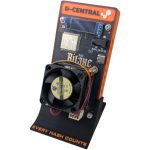
Introduction: Why Your Pool Choice Matters
Every hash you contribute to the Bitcoin network represents a vote for how that hash power gets used. When home miners point their ASICs at a mining pool, they’re not just choosing a payout method—they’re making a statement about Bitcoin’s decentralization, transaction selection, and network security. The pool you choose determines who builds the block templates, which transactions get prioritized, and whether your hash rate contributes to or undermines Bitcoin’s core principle: resistance to centralized control.
For Bitaxe operators running 500 GH/s and industrial miners running 500 TH/s alike, understanding pool architecture, reward methods, and decentralization tradeoffs is essential. This guide breaks down the major mining pools in 2026, comparing fees, payout structures, transparency, and their impact on Bitcoin’s hash rate distribution. Whether you’re solo mining for the lottery thrill or pooling hash rate for steady income, you’ll learn which pool aligns with your technical requirements and philosophical stance.
The Bitcoin Mining Hackers at D-Central Technologies have operated across multiple pools since 2016. We’ve seen hash rate concentration threaten network security, watched pools implement (or ignore) Stratum V2, and helped thousands of home miners choose the right pool for their setup. This comparison reflects real-world experience from the trenches of decentralized mining.
How Mining Pools Work
Bitcoin mining is a probabilistic race. Every hash your ASIC computes has a 1-in-difficulty chance of solving the current block. At today’s difficulty levels (approaching 100 trillion), a single Antminer S19 XP running 140 TH/s would take an average of 8 years to find a block solo. Mining pools solve this variance problem by aggregating hash rate from thousands of miners and distributing rewards proportionally.
Here’s the technical flow:
- Pool Connection: Your miner connects to the pool’s stratum server using the Stratum protocol (ideally Stratum V2 for encrypted, authenticated communication).
- Work Distribution: The pool sends your miner a block template with a unique extraNonce space. Your ASIC searches this space for a valid hash below the network difficulty target.
- Share Submission: When your miner finds a hash meeting the pool’s share difficulty (much lower than network difficulty), it submits the share as proof of work. The pool tracks your contribution.
- Block Discovery: When any miner in the pool finds a hash meeting Bitcoin’s network difficulty, the pool submits the block to the network and collects the 3.125 BTC block reward plus transaction fees.
- Reward Distribution: The pool distributes the reward to all contributors based on their share submissions and the pool’s chosen payout method (PPS, PPLNS, etc.).
The critical question: Who builds the block template? Most pools build templates centrally, selecting which transactions to include. This gives pool operators power over transaction censorship and MEV extraction. Transparent pools like Ocean and Braiins offer alternatives where miners retain more control over template construction.
Pool Reward Methods Explained
Mining pools use different mathematical models to distribute rewards. Each method balances variance, risk, and miner/operator incentives differently.
PPS (Pay Per Share)
How it works: The pool pays you a fixed amount for every valid share you submit, regardless of whether the pool finds a block. The pool absorbs all variance risk.
Pros: Zero variance. Predictable income. Ideal for miners who need steady cash flow.
Cons: Highest fees (typically 2-4%). Pool takes financial risk during bad luck streaks. You miss out on transaction fee upside.
Best for: Miners treating mining as a business with predictable expenses.
FPPS (Full Pay Per Share)
How it works: Like PPS, but includes your proportional share of transaction fees in addition to the block subsidy. The pool estimates average fee revenue and pays it out per share.
Pros: Predictable income including fee revenue. Lower variance than PPLNS.
Cons: High fees (2-3%). Fee estimates may lag actual mempool conditions.
Best for: Miners who want steady income but don’t want to leave transaction fee revenue on the table.
PPLNS (Pay Per Last N Shares)
How it works: When the pool finds a block, it distributes the full reward (subsidy + fees) proportionally among miners who submitted shares in the last N shares (typically the last few hours of mining). Miners share the variance with the pool.
Pros: Lowest fees (typically 0-2%). Full transaction fee revenue during high-fee periods. More aligned with Bitcoin’s incentive model.
Cons: High variance. Earnings fluctuate with pool luck. Pool hopping attacks possible (mitigated by the “last N shares” window).
Best for: Long-term miners who can absorb variance and want maximum revenue.
Solo Mining
How it works: You mine alone. If you find a block, you keep the entire 3.125 BTC reward plus fees. If you don’t find a block (the most likely outcome), you earn zero.
Pros: Maximum reward if you win. No pool fees. Total control over transaction selection. Philosophical purity.
Cons: Extreme variance. Most home miners will never find a block. Requires running a full node or using a solo pool proxy like Solo CK Pool.
Best for: Lottery miners, philosophical maximalists, and miners with excess hash rate who want to support decentralization. See our Solo Mining Calculator to understand your odds.
The Major Pools Compared
Here’s a detailed comparison of the leading mining pools in 2026. Data reflects current fee structures and features as of March 2026.
| Pool | Fee | Payout Method | Minimum Payout | Stratum V2 | Hash Rate Share |
|---|---|---|---|---|---|
| Braiins Pool | 2.5% (FPPS) 0% (PPLNS) |
FPPS, PPLNS | 0.0001 BTC | Yes (pioneer) | ~3% |
| Ocean | 0% (TIDES) 2% (Core Lightning) |
TIDES (PPLNS variant) | 0.00001 BTC (Lightning) 0.001 BTC (on-chain) |
Yes | ~1% |
| F2Pool | 2.5% (PPS+) | PPS+, PPLNS | 0.001 BTC | No | ~12% |
| ViaBTC | 4% (PPS+) 2% (PPLNS) |
PPS+, PPLNS, SOLO | 0.001 BTC | No | ~8% |
| Foundry USA | Undisclosed (institutional) | FPPS | N/A (institutional only) | No | ~32% |
| Solo CK Pool | 0.5% (if you find a block) | Solo (full block reward) | None (instant full block payout) | No | <0.1% |
Braiins Pool (Formerly Slush Pool)
The world’s first mining pool, founded in 2010 by the team behind Stratum protocol and Braiins OS+ firmware. Braiins pioneered Stratum V2, which encrypts miner-pool communication and allows miners to construct their own block templates (reducing pool operator control over transaction selection).
Decentralization score: 9/10. Transparent operations, open-source Stratum V2 reference implementation, no KYC requirements, supports miner sovereignty through template construction.
Best for: Miners who value transparency, protocol development support, and cutting-edge features like Stratum V2. PPLNS option appeals to long-term miners who want zero fees and full transaction fee upside.
Ocean
Launched in 2023 with backing from Jack Dorsey’s Block, Ocean positions itself as the most transparent and decentralization-focused pool. Key differentiators: non-custodial Lightning payouts, transparent block templates (miners can audit which transactions are included), and zero fees for on-chain payouts.
Ocean’s TIDES payout system is a PPLNS variant that includes transaction fees. The pool publishes every block template, share submission, and payout calculation on-chain for full auditability. Non-custodial Lightning payouts via Core Lightning mean Ocean never holds your funds—you receive sats directly to your Lightning node.
Decentralization score: 10/10. Maximum transparency, non-custodial payouts, no KYC, miners can verify every aspect of pool operation.
Best for: Philosophical maximalists, Lightning node operators, and miners who prioritize decentralization over predictable income. The 0.00001 BTC Lightning minimum makes Ocean viable even for Bitaxe solo miners.
F2Pool
One of the largest and longest-running pools (founded 2013), F2Pool offers global infrastructure, predictable PPS+ payouts, and support for over 40 cryptocurrencies (though we only care about Bitcoin). F2Pool’s size provides stability, but its centralized hash rate contribution and lack of Stratum V2 support raise decentralization concerns.
Decentralization score: 5/10. Large hash rate share, centralized template construction, no Stratum V2, but transparent fee structure and reliable payouts.
Best for: Miners prioritizing payout reliability and global infrastructure over decentralization features. The 2.5% fee is competitive for PPS+, and the pool’s size means consistent block discovery.
ViaBTC
Asia-focused pool with strong presence in China and competitive fee structures. ViaBTC offers the widest range of payout options (PPS+, PPLNS, and solo mining) and supports merged mining for other SHA-256 chains (which we ignore because Bitcoin maximalism).
Decentralization score: 4/10. Large hash rate concentration, no Stratum V2, centralized operations, but offers PPLNS and solo options for variance-tolerant miners.
Best for: Asian miners seeking local infrastructure and flexible payout options. The 2% PPLNS fee is competitive, and solo mining support lets you try lottery mining without running your own node.
Foundry USA
The 800-pound gorilla. Foundry controls over 30% of Bitcoin’s hash rate, making it the single largest pool—a concentration level that threatens network decentralization. Foundry serves institutional miners exclusively, with undisclosed fee structures and KYC requirements. The pool’s size attracts large operations seeking maximum payout reliability, but every TH/s pointed at Foundry centralizes hash rate distribution further.
Decentralization score: 2/10. Massive hash rate concentration, institutional gatekeeping, no transparency for retail miners, KYC requirements, no Stratum V2.
Best for: Large institutional operations that prioritize relationships and payout stability over decentralization. Home miners should avoid—Foundry’s dominance threatens the network security we’re all mining to protect.
Solo CK Pool
Not a pool in the traditional sense—Solo CK is a solo mining proxy that lets you mine for full block rewards without running your own Bitcoin node. When you find a block (a rare event for home miners), you receive the entire 3.125 BTC reward minus a 0.5% fee. If you don’t find a block, you earn nothing. Solo CK handles the node infrastructure while preserving the lottery mining experience.
Decentralization score: 8/10. True solo mining with minimal infrastructure overhead. You’re not pooling hash rate, so you’re not contributing to pool centralization. The 0.5% fee only applies if you win, making it the ultimate low-risk way to support decentralization.
Best for: Lottery miners, Bitaxe operators, and anyone who wants the thrill of potentially finding a full block. Check your odds with our Solo Mining Calculator before committing significant hash rate.
Decentralization Considerations
Mining pools concentrate power in ways that threaten Bitcoin’s core security model. When you point your ASIC at a pool, you’re delegating control over transaction selection, block template construction, and ultimately, the Bitcoin protocol itself. Here’s why pool choice matters for decentralization:
Hash Rate Concentration Risk
When a single pool controls more than 25% of network hash rate, it gains disproportionate influence over which chain becomes the longest (and therefore, canonical). At 51%, a pool could theoretically execute double-spend attacks or censor transactions. Foundry’s 32% share in 2026 is dangerously close to this threshold. Every miner who points hash rate at the largest pools pushes Bitcoin closer to centralized control.
What miners can do: Choose smaller pools. Distribute your hash rate across multiple pools. Consider solo mining a portion of your capacity. Use our Compare Miners tool to evaluate whether your hardware is viable for solo mining or would benefit more from PPLNS pooling.
Transaction Selection Censorship
Most pools build block templates centrally, selecting which transactions from the mempool get included in blocks. This gives pool operators power to censor specific transactions, addresses, or transaction types. We’ve seen pools exclude transactions from OFAC-sanctioned addresses, prioritize their own transactions, and extract MEV through transaction ordering.
Stratum V2’s job negotiation feature allows miners to construct their own block templates, stripping pools of this censorship power. Braiins and Ocean support this feature—miners running Stratum V2-compatible firmware can audit and control exactly which transactions their hash rate confirms.
KYC Requirements
Some pools (particularly institutional-focused operations like Foundry) require KYC for account creation. This links your hash rate contribution to your real-world identity, undermining Bitcoin’s censorship resistance. If a government can identify which pool you mine with and compel that pool to exclude your payouts, your hash rate becomes a liability rather than a sovereignty tool.
Privacy-preserving pools: Braiins, Ocean, Solo CK, F2Pool, and ViaBTC allow anonymous mining. You can connect with just a Bitcoin address—no email, no ID, no surveillance.
Why Hash Rate Distribution Matters
Bitcoin’s security model assumes hash rate is distributed among thousands of independent miners who act in their own economic self-interest. When hash rate concentrates in a few pools, we get:
- Single points of failure: A successful attack on Foundry’s infrastructure could knock out 32% of Bitcoin’s hash rate instantly.
- Regulatory capture: Governments can pressure large pools to censor transactions or enforce policy, as we’ve seen with OFAC compliance.
- Reduced Nakamoto Coefficient: Fewer entities need to collude to execute a 51% attack. The Nakamoto Coefficient (minimum entities needed to control 51% of hash rate) should be in the hundreds, not the single digits.
- Erosion of credible neutrality: Bitcoin’s value proposition depends on it being censorship-resistant. Pool centralization undermines this guarantee.
Every hash you contribute to a smaller pool or solo mining operation strengthens Bitcoin’s decentralization. This is the ethos behind D-Central’s mission: decentralization of EVERY layer of Bitcoin mining, starting with where you point your ASICs.
Best Pool for Different Miners
Your ideal pool depends on hash rate, variance tolerance, technical sophistication, and philosophical priorities. Here’s our recommendation matrix based on miner profiles:
Home Miners with 1-10 TH/s (Bitaxe, NerdAxe, Single ASIC)
Recommended: Ocean or Solo CK Pool
Reasoning: At sub-10 TH/s hash rates, your expected time to find a block solo is measured in decades, but your contribution to pool rewards is also minimal (fractions of a cent per day in most pools). Ocean’s 0.00001 BTC Lightning minimum payout makes frequent small withdrawals viable, and the zero-fee TIDES payout means you’re not bleeding 2-4% to fees. Solo CK Pool offers the lottery mining experience with zero upfront cost—if your Bitaxe finds a block, you just won a Bitcoin jackpot.
Alternative: Braiins PPLNS for zero-fee pooling if you want more predictable (but tiny) payouts.
Home Miners with 10-100 TH/s (Multiple ASICs, Small Farm)
Recommended: Ocean (TIDES) or Braiins (PPLNS)
Reasoning: At this hash rate level, you’re earning enough to justify regular payouts, but variance is still high enough that PPS fees hurt. Ocean’s transparent template construction and non-custodial Lightning payouts align with decentralization principles. Braiins’ zero-fee PPLNS option maximizes revenue, and Stratum V2 support future-proofs your operation as the protocol gains adoption.
Consider: Splitting hash rate 70% Ocean / 30% Solo CK to balance steady income with lottery upside.
Larger Operations (100+ TH/s, Multi-Site Farms)
Recommended: Braiins (FPPS or PPLNS) or F2Pool (PPS+)
Reasoning: At scale, cash flow predictability becomes critical for covering electricity bills and debt service. Braiins’ 2.5% FPPS fee is competitive, and their infrastructure is rock-solid. F2Pool’s global presence and 2.5% PPS+ rate offer similar reliability with broader geographic redundancy. PPLNS remains viable at this scale if you can tolerate variance—the zero-fee savings compound significantly on 100+ TH/s.
Avoid: Foundry unless you’re operating at PH/s scale and have institutional relationships. Don’t contribute to hash rate centralization if smaller pools meet your needs.
Solo Mining Enthusiasts (Any Hash Rate)
Recommended: Solo CK Pool
Reasoning: You’re here for the philosophical statement and the lottery thrill, not predictable income. Solo CK’s 0.5% fee is trivial compared to running your own node infrastructure, and the pool’s minimalist design means you’re truly solo mining (not pooling hash rate). Every hash you submit is an independent lottery ticket for a 3.125 BTC prize.
Reality check: Use our Solo Mining Calculator to understand your actual odds. A 100 TH/s miner has roughly a 1-in-3,000 chance of finding a block per year. Solo mining is a statement, not a revenue strategy. Budget accordingly.
Solo Mining: The Bitcoin Lottery
Solo mining is Bitcoin mining in its purest form: you against the network, competing for the full block reward with every hash. It’s how Satoshi mined the genesis block, how early adopters bootstrapped the network, and how philosophical maximalists continue to support decentralization today. It’s also a lottery with odds that would make Vegas blush.
How Solo Mining Works
Traditional solo mining requires running a Bitcoin full node (Bitcoin Core) and pointing your ASIC at your own node’s mining interface. Your miner requests block templates from your node, searches for valid hashes, and submits solutions directly to the Bitcoin network when found. There’s no pool operator, no share submissions, no payout variance smoothing—just you, your hardware, and probability.
Solo mining proxies like Solo CK Pool simplify this by running the full node infrastructure for you. You connect your miner to Solo CK’s stratum server, which provides block templates from their node. When you find a valid block, Solo CK submits it to the network and sends you 99.5% of the reward (keeping a 0.5% fee). You get the solo mining experience without the operational overhead of running a node.
The Math: Probability and Expected Value
Bitcoin’s difficulty adjusts every 2,016 blocks to maintain a 10-minute average block time. At a network difficulty of 88 trillion and network hash rate of 650 EH/s, here’s what your odds look like:
| Your Hash Rate | Probability per Day | Average Time to Block | Annual Probability |
|---|---|---|---|
| 500 GH/s (Bitaxe) | 0.000003% | ~91,000 years | 0.001% |
| 14 TH/s (Antminer S9) | 0.00009% | ~3,250 years | 0.03% |
| 100 TH/s (Antminer S19 XP) | 0.0006% | ~460 years | 0.22% |
| 1 PH/s (Small farm) | 0.006% | ~46 years | 2.2% |
The brutal reality: unless you’re operating at PH/s scale, you’ll likely never find a block. But probability is memoryless—your Bitaxe’s next hash could be the one that solves the block, regardless of how long you’ve been mining. This is why solo miners say “Every hash counts.”
Why Solo Mine When the Odds Are Against You?
Solo mining isn’t a revenue strategy—it’s a philosophical statement and a hedge against pool centralization. Here’s why miners still point hash rate at Solo CK Pool:
- Decentralization support: Every hash you solo mine is hash rate NOT controlled by Foundry, F2Pool, or other centralized pools. You’re strengthening Bitcoin’s hash rate distribution.
- Transaction sovereignty: You (or your solo pool proxy) build the block template, selecting which transactions to include. No pool operator censorship.
- The lottery thrill: There’s genuine excitement in knowing that every hash could win you 3.125 BTC. It’s Bitcoin mining as Satoshi designed it.
- Hedge strategy: Some miners allocate 10-20% of hash rate to solo mining as a lottery ticket while pooling the rest for steady income.
- Hardware disposal: Old, inefficient miners (S9s, Avalon 821s) that are no longer profitable for pooling can solo mine indefinitely—free lottery tickets on hardware that would otherwise be e-waste.
D-Central supports solo mining for all these reasons. We’ve helped customers configure Bitaxe units for Solo CK Pool, knowing they’ll likely never find a block. The value isn’t in expected revenue—it’s in supporting Bitcoin’s decentralization and keeping the cypherpunk spirit alive. Use our Solo Mining Calculator to model your odds, then decide whether the lottery ticket is worth the hash rate allocation.
FAQ: Mining Pool Questions
What’s the difference between PPS and PPLNS?
PPS (Pay Per Share) pays you a fixed amount for every share you submit, regardless of whether the pool finds blocks. The pool absorbs variance risk and charges higher fees (2-4%). PPLNS (Pay Per Last N Shares) distributes the full block reward proportionally among recent share contributors when the pool finds a block. You share variance with the pool but pay lower fees (0-2%) and earn full transaction fee revenue. PPS is predictable income; PPLNS is maximum revenue with higher variance.
How do I calculate my expected earnings on a pool?
Use our Mining Profitability Calculator. Input your hash rate, power consumption, electricity cost, and pool fee. The calculator uses current Bitcoin difficulty and block reward (3.125 BTC) to estimate daily/monthly revenue. Remember: PPS pools provide the estimate directly (minus fees), while PPLNS pools have variance—actual earnings fluctuate around the expected value based on pool luck.
Can I switch pools without losing accumulated shares?
Yes for PPS pools—they pay per share immediately, so nothing is “accumulated.” For PPLNS pools, switching means abandoning your shares in the current pool’s reward window (typically last 2-10 hours of mining). If the pool finds a block after you switch, you won’t be included in the payout for those abandoned shares. This is why PPLNS discourages pool hopping—miners who stick around are rewarded for loyalty.
What is Stratum V2 and why does it matter?
Stratum V2 is the next-generation mining protocol that encrypts communication between miners and pools, authenticates both parties, and allows miners to construct their own block templates (job negotiation). This strips pools of transaction censorship power and returns sovereignty to miners. Braiins and Ocean support Stratum V2. Miners running compatible firmware (like Braiins OS+) can audit and control which transactions their hash rate confirms, strengthening Bitcoin’s censorship resistance.
Should I solo mine with my Bitaxe?
Solo mining a Bitaxe (typically 400-700 GH/s) gives you roughly a 1-in-91,000-year chance of finding a block. You’ll likely never earn a satoshi. BUT: it’s philosophically pure, supports decentralization, and costs you nothing in pool fees. If your Bitaxe is a hobby project or learning tool (not a profit center), solo mining via Solo CK Pool is a perfectly valid choice. Think of it as a free lottery ticket that supports Bitcoin’s security model. Check our Solo Mining Calculator for exact odds with your hash rate.
Why are large pools like Foundry bad for Bitcoin?
Hash rate concentration in a single pool (Foundry controls ~32% of network hash rate) creates centralization risks: (1) Single point of failure—one infrastructure attack could drop 32% of hash rate instantly. (2) Regulatory capture—governments can pressure one entity to censor transactions. (3) Lower Nakamoto Coefficient—fewer pools need to collude for a 51% attack. (4) Transaction censorship—large pools control which transactions get confirmed. Bitcoin’s security model assumes distributed hash rate among thousands of independent miners, not oligopoly control by 3-5 pools.
How often should I change mining pools?
Only when: (1) Your current pool’s fee structure or features no longer align with your needs. (2) The pool’s hash rate share grows too large (contributing to centralization). (3) The pool implements policies you disagree with (KYC requirements, transaction censorship). (4) Technical issues cause frequent downtime or rejected shares. Don’t chase short-term variance—PPLNS luck evens out over weeks. Constantly pool hopping costs you PPLNS rewards and provides minimal benefit. Choose a pool aligned with your philosophy and hash rate level, then stick with it unless circumstances change.
Can I mine to multiple pools simultaneously?
Yes, most ASIC miners support failover/backup pool configuration, but they only mine to one pool at a time (primary pool unless it goes offline, then failover). To actively split hash rate across multiple pools, you need multiple miners or proxy/load-balancing software. Some miners use a 70/30 split (e.g., 70% Ocean for steady income, 30% Solo CK for lottery tickets) by pointing different ASICs at different pools. This distributes hash rate across pools, supporting decentralization while balancing revenue and variance.
What happens if my pool finds a block while I’m offline?
For PPS/FPPS pools: you’re paid for shares you submitted before going offline, even if the pool finds a block while you’re down. Your earnings are locked in per share. For PPLNS pools: if you’re offline when the pool finds a block, you only receive payout if your shares are still within the “last N shares” reward window. If you’ve been offline long enough that your shares aged out of the window (typically 2-10 hours), you miss the payout. This is why PPLNS rewards consistent, always-on miners over intermittent participants.
Conclusion: Pool Choice as Political Act
Every hash you compute is a vote for Bitcoin’s future. When you point your ASIC at Foundry, you’re voting for centralization. When you choose Ocean or Braiins, you’re voting for transparency and Stratum V2 adoption. When you solo mine via Solo CK Pool, you’re voting for hash rate distribution and transaction sovereignty. There’s no neutral choice—your pool selection either strengthens or weakens Bitcoin’s decentralization.
The Bitcoin Mining Hackers at D-Central Technologies have been making this choice since 2016. We’ve watched hash rate centralize, seen pools implement (or ignore) censorship resistance features, and helped thousands of miners navigate the tradeoffs between revenue optimization and philosophical alignment. Our recommendation: choose the smallest pool that meets your technical requirements. Accept variance if you can afford it. Support Stratum V2 adoption. Solo mine a portion of your hash rate if your operation allows.
Bitcoin’s security model depends on distributed hash rate controlled by independent miners who act in their own self-interest. Every TH/s you pull from Foundry and point at Ocean, Braiins, or Solo CK Pool moves us closer to that ideal. Every home miner running a Bitaxe on Solo CK Pool—even with 1-in-91,000-year odds—strengthens the network by diversifying hash rate sources.
Mining pools are infrastructure. Choose yours carefully. Use our Compare Miners tool to evaluate whether your hardware is suited for solo, PPLNS, or PPS pooling. Calculate profitability with our Mining Profitability Calculator. Understand your solo mining odds with our Solo Mining Calculator. Then point your hash rate where it does the most good for Bitcoin’s decentralization.
The protocol doesn’t care about your pool choice. But the network’s long-term security does. Choose accordingly.
Ready to start mining or upgrade your hardware? Browse our mining equipment catalog, explore the ASIC Miner Database, or dive into our Mining Glossary to master the technical terminology. Every hash counts. Make yours count for decentralization.