On this page
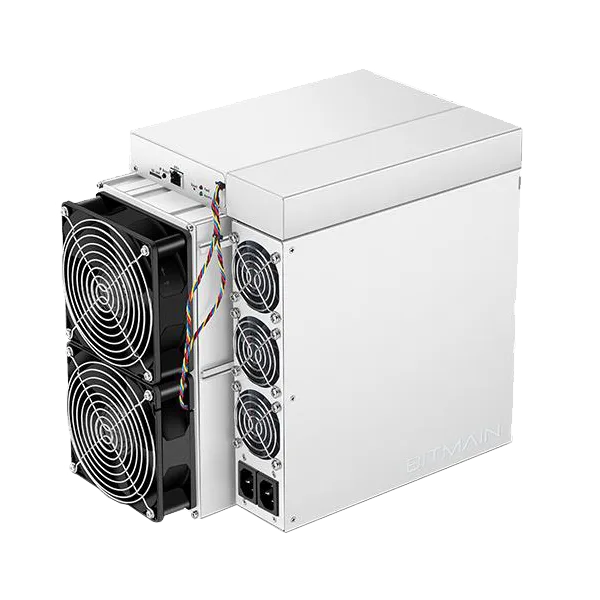
Antminer S19 XP
Best efficiency in the S19 series, flagship before S21 launch
Quick answer
The Antminer S19 XP is a Bitcoin miner rated about 140 TH/s at roughly 3,010 W (about 21.5 J/TH), built on 110× BM1366. An industrial-class unit — loud and power-hungry, best suited to a dedicated mining space, not living areas.
DCENT_OS Compatible
DCENT_OS is custom firmware developed by D-Central Technologies specifically for home miners. It transforms this miner with whisper-quiet fan profiles, 120V North American outlet support, auto-tuning for maximum efficiency, heater mode integration, and a clean web dashboard for monitoring.
Miners running DCENT_OS score higher on our Home Mining Assessment because the firmware is purpose-built to make industrial hardware livable in residential spaces.
Learn More About DCENT_OS →Professional-Grade Miner
This miner draws 3,010W and produces 75 dB of noise — it is designed for dedicated mining environments, not living spaces. Professional-grade miners deliver the highest hashrate and revenue per unit but require proper infrastructure: a 240V circuit, adequate ventilation or exhaust ducting, and a space where noise is not a concern (garage, basement, warehouse, or outdoor enclosure).
However, this miner is compatible with DCENT_OS — D-Central's custom firmware that adds whisper-quiet fan profiles and 120V North American outlet support. With DCENT_OS installed, this industrial miner can be transformed for home use.
Heater-Class Miner
At 3,010W, this miner outputs approximately 10270.1 BTU/hr of heat — equivalent to a standard electric space heater. Every watt consumed by an ASIC miner is converted to heat with 100% efficiency, making it a space heater that also mines Bitcoin.
During heating season, miner heat can offset part of the heat a room would otherwise need from another electric heater. The economics depend on your electricity rate, room heat demand, BTC price, network difficulty, and noise constraints.
Profitability Calculator
| Period | Revenue | Electricity Cost | Profit |
|---|---|---|---|
| Daily | $4.40 | $5.06 | $-0.66 |
| Weekly | $30.79 | $35.40 | $-4.61 |
| Monthly | $131.95 | $151.70 | $-19.76 |
| Yearly | $1,605.35 | $1,845.73 | $-240.38 |
Heating offset estimates the value of heat replacing an electric space heater during heating season (~6 months/year in Canada). Actual savings depend on your heating setup and climate.
Where to Buy the Antminer S19 XP
D-Central Technologies
CanadaBitcoin Mining Hackers since 2016. Ships from Laval, Quebec.
Shop all Bitcoin mining productsASIC Miner Market
United StatesWide selection of new and used ASIC miners. US-based shipping.
Shop NowFull Specifications
| Model | Antminer S19 XP |
|---|---|
| Model Number | S19 XP |
| Manufacturer | Bitmain |
| Algorithm | SHA-256 |
| Coins Mined | Bitcoin (BTC) |
| Hashrate | 140 TH/s |
| Power Consumption | 3,010 W |
| Efficiency | 21.5 J/TH |
| Noise Level | 75 dB |
| Chip Model | BM1366 |
| Chip Count | 110 |
| Cooling | Air |
| Voltage Range | 200-240V AC |
| Operating Temperature | 5-40°C |
| Dimensions | 400x195x290 |
| Weight | 14.4 |
| Interface | Ethernet |
| BTU Output | 10270.1 BTU/hr |
| Equivalent Heater | Equal to a 3,010W space heater |
| Daily Power Cost | $5.06/day |
| Monthly Power Cost | $151.70/mo |
| Circuit Requirement | 240V circuit required |
| Release Date | 2022-07-01 |
| MSRP | $4,500.00 |
| Status | Active |
Custom Power Profiles
With custom firmware like DCENT_OS, this miner can be tuned across a wide range of power levels. Lower wattage improves efficiency and reduces electricity costs; higher wattage increases hashrate at the expense of efficiency.
| Wattage | Hashrate | Efficiency |
|---|---|---|
| 1,950 W | 113 TH/s | 17.3 J/TH |
| 2,050 W | 119 TH/s | 17.2 J/TH |
| 2,160 W | 125 TH/s | 17.3 J/TH |
| 2,290 W | 131 TH/s | 17.5 J/TH |
| 2,350 W | 137 TH/s | 17.2 J/TH |
| 2,500 W | 144 TH/s | 17.4 J/TH |
| 2,600 W | 150 TH/s | 17.3 J/TH |
| 2,730 W | 156 TH/s | 17.5 J/TH |
| 2,830 W | 162 TH/s | 17.5 J/TH |
| 2,940 W | 169 TH/s | 17.4 J/TH |
| 3,040 W | 175 TH/s | 17.4 J/TH |
| 3,250 W | 181 TH/s | 18 J/TH |
| 3,400 W | 187 TH/s | 18.2 J/TH |
| 3,520 W | 193 TH/s | 18.2 J/TH |
| 3,700 W | 200 TH/s | 18.5 J/TH |
| 3,950 W | 206 TH/s | 19.2 J/TH |
| 4,100 W | 212 TH/s | 19.3 J/TH |
| 4,270 W | 218 TH/s | 19.6 J/TH |
| 4,520 W | 224 TH/s | 20.2 J/TH |
| 4,780 W | 231 TH/s | 20.7 J/TH |
| 5,000 W | 237 TH/s | 21.1 J/TH |
| 5,200 W | 243 TH/s | 21.4 J/TH |
| 5,400 W | 249 TH/s | 21.7 J/TH |
| 5,650 W | 255 TH/s | 22.2 J/TH |
| 5,800 W | 262 TH/s | 22.1 J/TH |
| 5,950 W | 268 TH/s | 22.2 J/TH |
| 6,100 W | 274 TH/s | 22.3 J/TH |
| 6,300 W | 280 TH/s | 22.5 J/TH |
Actual performance varies by individual unit silicon quality, ambient temperature, and cooling configuration. These operating points are achievable with custom tuning firmware such as DCENT_OS; values are calculated at runtime by the autotuner, not fixed presets.
Home Mining Assessment
Best efficiency in the S19 series, flagship before S21 launch
The Antminer S19 XP is Bitmain’s flagship air-cooled SHA-256 miner, rated at 140 TH/s for 3,010 W — about 21.5 J/TH. It runs 330 TSMC 5 nm BM1366 chips across three hashboards and was the most efficient air-cooled S19 ever shipped, sitting one step behind today’s S21 generation while remaining a dependable cheap-power and heat-recovery workhorse.
Chip and hashboard architecture
The S19 XP is built on Bitmain’s BM1366 ASIC, fabricated on a TSMC 5 nm process — the first 5 nm part Bitmain shipped in volume in an air-cooled S19. Each BM1366 packs roughly 894 small SHA-256 hashing cores. The same silicon later turned up at the heart of hobbyist solo-mining boards, so the chip running this 3 kW machine is the identical die you will find on a single-chip Bitaxe-class board.
A complete S19 XP carries three hashboards of 110 BM1366 chips each — 330 chips in total. On every board the chips are wired as a single daisy chain: a Command-In/Command-Out pair shifts work and results from chip 1 through chip 110, while a shared 25 MHz crystal oscillator clocks the whole string and a reset line gates computation. Break that chain at any single chip and the controller reports a dead or partial board.
Power is delivered through 11 voltage domains of 10 series-wired chips per board, each domain fed by its own DC-DC buck converter. This is the detail most spec sheets get wrong: voltage on the S19 XP is regulated per domain, never per individual chip. When firmware undervolts or autotunes the board, it is stepping the rail for a group of ten chips at a time, which is why a single weak chip can drag down an entire domain.
Unlike the older S19 and S19 Pro — which use a Xilinx Zynq control board with an FPGA — the S19 XP moved to an Amlogic A113D control board (the C76/C81/C83 family, a quad-core ARM Cortex-A53 SoC originally designed for audio). There is no FPGA: the Amlogic board bit-bangs UART directly to each hashboard over /dev/ttyS1 through /dev/ttyS3, boots from internal NAND (no SD slot), and recovers through a micro-USB OTG port. Each board still carries a PIC microcontroller (an I2C slave that manages the voltage regulators), a TMP75 temperature sensor, an I2C EEPROM that stores board identity, and 3.3 V→1.8 V level shifters between the controller and the ASIC chain. The PIC matters for repair: the S19 XP is not a “no-PIC” board like the S21, so its hashboards authenticate and heartbeat through that microcontroller.
Real-world power and efficiency
Bitmain’s nameplate is 140 TH/s at 3,010 W, or 21.5 J/TH, and like all Antminers that figure carries a roughly ±5% tolerance unit to unit. The S19 XP is a 200–240 V AC machine only — there is no 120 V mode — and at those voltages wall draw lands close to the nameplate because the PSU runs in the low-to-mid 90s for efficiency. Plan for real-world consumption in the neighborhood of 3,000–3,150 W depending on tuning and ambient temperature.
The BM1366 silicon spans roughly 17–26 J/TH across its tuning band. The air-cooled S19 XP lands in the middle of that window because heat, not the chip, is the limit: its liquid-cooled sibling, the S19 XP Hydro, reaches about 17.2 J/TH at the low end of its profile set precisely because cooling stops being the bottleneck. On the air unit you trade in the other direction — undervolting and underclocking can pull efficiency down toward roughly 20 J/TH (or below) at a reduced hashrate, while overclocking buys more TH/s at a worse J/TH ratio. None of those points are presets baked into the firmware; a proper autotuner calculates per-domain frequency and voltage at runtime against live chip temperature and feedback. Our ASIC power profiles database lists the watt/hashrate/efficiency points for the BM1366 family so you can size a target before you tune.
That 3,010 W also makes the S19 XP a serious heater: it dumps roughly 10,270 BTU/h of waste heat, enough to warm a workshop, garage, or small room. Ducted into a space you would otherwise pay to heat, the machine effectively converts heating dollars into hashrate.
| Model | ASIC | Process | Hashrate | Power | Efficiency |
|---|---|---|---|---|---|
| Antminer S19 Pro | BM1398 | 7 nm | ~110 TH/s | ~3,250 W | ~29.5 J/TH |
| Antminer S19k Pro | BM1366 | 5 nm | ~120 TH/s | ~2,760 W | ~23 J/TH |
| Antminer S19 XP | BM1366 | 5 nm | 140 TH/s | 3,010 W | 21.5 J/TH |
| Antminer S21 | BM1368 | 5 nm | ~200 TH/s | ~3,500 W | ~17.5 J/TH |
Firmware compatibility
Out of the box the S19 XP runs Bitmain’s stock firmware on the Amlogic NAND. One caveat worth knowing before you buy second-hand: units shipped after roughly March 2024 leave the factory firmware-locked, which restricts loading custom images without an unlocking step. Earlier units are open.
Because the BM1366 generation is well understood, aftermarket firmware exists that adds runtime autotuning, per-domain undervolting, and finer telemetry — on locked units it generally requires that unlock first. We keep the recommendation generic on purpose; the right firmware depends on your fleet, your pool, and your tolerance for closed binaries.
D-Central’s own answer is DCENT_OS, our open-source (GPL-3.0) Antminer firmware. The BM1366 platform is an active target for it, with support maturing through closed beta now and a public beta planned for summer 2026. The honest status today is “in development, not turnkey for every board revision” — we would rather tell you that than oversell it. If you are running the S19 XP for heat or for learning, it is one of the better machines to follow that work on, since its chip is so widely documented.
Common faults and troubleshooting
Most S19 XP failures trace back to the chain-and-domain architecture above. The patterns we see on the bench, in rough order of frequency:
- Dead or partial chain — one open chip in the Command-In/Command-Out daisy chain drops the whole board or its tail, showing up as “0 asic” or a low chip count on that board.
- Voltage-domain failure — one of the 11 domains going down knocks out roughly 10 chips, reducing hashrate and creating thermal imbalance across the board.
- PIC failure — corrupted or dead PIC means no 3.3 V rail and zero chips detected on the board.
- EEPROM corruption or mismatch — the controller stops recognizing the board, or boards from different units refuse to hash together.
- Temperature sensor fault — a failed TMP75 trips thermal protection falsely and stalls mining even when the board is cool.
- I2C bus stuck — a shorted SDA/SCL line takes down PIC, EEPROM, and sensors at once, so several subsystems appear to fail together.
If you are chasing a fault, start with our ASIC fault finder to triage by symptom, then drill into the matching error pages. Low hashrate, hardware-error spikes, and fan errors usually point back to one of the categories above rather than to a single bad chip.
Repair and longevity
The S19 XP is repairable down to the component level, and D-Central has done exactly that in-house in Laval, Quebec since 2016. A typical job runs board-level diagnostics first, then isolates the failing domain or chip; from there we handle BM1366 chip-level reball and replacement on dedicated BM1366 test fixtures, buck-converter and VRM repair, PIC reprogramming, and EEPROM repair or re-imaging. Because each board is an independent daisy chain, a single failed board can often be repaired or swapped while the other two keep earning.
For longevity, 5 nm BM1366 chips are durable when they are kept cool and clean: hold ambient under 40 °C, keep airflow unobstructed, and blow dust out of the heatsinks on a schedule. A well-maintained S19 XP — or a properly refurbished one — has years of useful life left at today’s difficulty, especially on cheap or self-generated power. Full repair options and turnaround live on our ASIC repair page.
Who the S19 XP is for
The S19 XP suits two buyers. The first is the cost-conscious operator with sub-retail power — hosted, industrial, or behind your own generation — who wants strong hashrate per dollar without paying S21 prices. The second is the home miner who values the ~10,270 BTU/h of recoverable heat as much as the coins, ducting the exhaust into a shop or living space through the colder months. Remember it needs a 200–240 V circuit; it will not run on a standard 120 V outlet.
If you are more tinkerer than operator and want to learn this exact chip on a small, safe scale first, the BM1366 also powers single-chip solo boards — see our DCENT_axe open-source board. To compare the S19 XP against other models head-to-head, use the ASIC miner database and the miner comparison tool; current availability is on the shop.
Generational context
The S19 XP was the high-water mark of Bitmain’s S19 family. The line started on the 7 nm BM1398 — the original S19 with 76 chips per board, then the S19 Pro at 114 chips per board, both around 29–34 J/TH — before the S19j Pro moved to the 5 nm BM1362. The XP pushed that 5 nm transition further with the BM1366, landing at 140 TH/s and 21.5 J/TH in 2022 and outclassing every air-cooled S19 before it. Bitmain later spun the same chip into the cheaper S19k Pro and the liquid-cooled S19 XP Hydro, and then superseded the whole family with the S21 (BM1368, ~17.5 J/TH) in 2023.
Credit where it is due: the S19 XP was a genuinely well-engineered machine and, in its day, the efficiency leader of the most successful ASIC line ever built. It is no longer the sharpest tool for a new high-power deployment, but as a repairable, heat-producing, cheap-to-acquire 5 nm workhorse it still earns its rack space — which is exactly why we keep fixing them.
Broken miner? Get a real quote.
Tell us the symptom and get an instant repair-tier estimate ($95 / $145 / $195 CAD). Mail-in from across Canada, bench in Laval, Quebec.
Send it to D-Central — start a repair →Antminer S19 XP specs, repair, and parts
Use the S19 XP cluster to confirm specs, maintenance steps, hashboard symptoms, and compatible power or board parts before buying.
Common Antminer S19 XP Error Codes
Known error codes and troubleshooting guides for the Antminer S19 XP. Click any error for step-by-step repair instructions.
Frequently Asked Questions
What are the current mining economics for the Antminer S19 XP?
At $0.07/kWh, the Antminer S19 XP currently shows an estimated daily net cost of $0.66 before pool fees and hardware cost. Lower electricity rates, network changes, BTC price changes, or useful heat recovery can change the result.
Can I mine Bitcoin at home with the Antminer S19 XP?
The Antminer S19 XP has a home mining score of 8/100. With 75 dB noise and 3,010W power draw, it may require a dedicated space like a garage, basement, or outdoor enclosure. Consider noise insulation and proper ventilation.
Can the Antminer S19 XP heat my home?
The Antminer S19 XP outputs approximately 10270.1 BTU/hr of heat. For reference, a typical space heater produces 5,000-5,500 BTU/hr. All electrical energy consumed by the miner is converted to heat, making it 100% efficient as a heater. D-Central offers Bitcoin Space Heater builds designed specifically for home heating integration.
Does D-Central repair the Antminer S19 XP?
Yes, D-Central provides professional repair services for the Antminer S19 XP. Services include hashboard repair, control board diagnostics, fan replacement, and full refurbishment. Ship your miner to our Laval, Quebec facility for diagnosis and repair.
What power supply does the Antminer S19 XP need?
The Antminer S19 XP draws 3,010W of power. You need a power supply rated for at least 3,311W with appropriate voltage (200-240V AC). D-Central stocks compatible power supplies in our shop. Always use a quality PSU from a reputable manufacturer to protect the miner and wiring.
