On August 15, 1971, President Richard Nixon stepped in front of television cameras and severed the last thread connecting the United States dollar to gold. In that single broadcast, the global monetary system shifted from an anchor of physical scarcity to one of political discretion. Every dollar, euro, yen, and peso on Earth became a government promise backed by nothing more than trust in the issuing institution.
More than five decades later, we are living inside the consequences of that decision. And Bitcoin — the first engineered monetary system with an absolute supply cap — represents the most credible technological response humanity has produced.
This is not investment advice. This is a technical examination of why sound money matters, what broke in 1971, and how Bitcoin’s protocol-level guarantees address the failures of the fiat experiment.
What Happened on August 15, 1971
Under the Bretton Woods agreement established in 1944, the US dollar was pegged to gold at $35 per ounce, and other currencies were pegged to the dollar. This created a semi-stable international monetary order. Foreign governments could exchange their dollar reserves for physical gold held at Fort Knox and the Federal Reserve Bank of New York.
By the late 1960s, the United States was running massive deficits to finance the Vietnam War and domestic spending programs. Foreign governments — particularly France under Charles de Gaulle — began redeeming their dollars for gold in earnest, recognizing that the US was printing far more dollars than it held gold to back them. The gold window was draining.
Nixon’s response was to “temporarily” suspend dollar-to-gold convertibility. That temporary measure has now lasted over 54 years. The Bretton Woods system collapsed entirely by 1973, and the world transitioned to a regime of free-floating fiat currencies with no commodity backing whatsoever.
The implications were immediate and structural:
- Governments gained unlimited monetary expansion capability. Without a gold constraint, central banks could create new currency units at will.
- Savings became subject to perpetual dilution. Every unit of currency held by citizens could be devalued by government printing decisions.
- Debt expansion replaced productivity growth as the primary economic engine. Cheap credit, enabled by monetary expansion, became the dominant force in economic activity.
- Financial complexity exploded. An entire industry of derivatives, hedging instruments, and financial engineering emerged specifically to manage risks that did not exist under a sound money system.
The Post-1971 Data: Charting the Divergence
The website wtfhappenedin1971.com has compiled dozens of charts illustrating the inflection points that occurred after the gold standard’s abandonment. The data tells a consistent story across nearly every economic metric.
| Metric | Pre-1971 Trend | Post-1971 Trend |
|---|---|---|
| Productivity vs. Wages | Tracked closely together | Productivity soared; wages stagnated |
| US National Debt | Gradual, constrained growth | Exponential — surpassed $36 trillion in 2025 |
| Income Inequality (Gini) | Narrowing | Widening consistently since mid-1970s |
| Home Price-to-Income Ratio | ~2-3x annual income | ~7-8x in major metro areas (2025) |
| Consumer Price Index | Relatively stable | Dollar has lost over 87% of its 1971 purchasing power |
| Gold Price | Fixed at $35/oz | Exceeded $2,900/oz in early 2026 |
| M2 Money Supply (USD) | Slow, measured growth | $21+ trillion by 2025, with 40% created since 2020 |
These are not coincidences. When money can be created without cost, the incentive structure of the entire economy changes. Those closest to the money printer — banks, large corporations, and government contractors — receive new money first, before prices adjust. By the time that new money reaches workers and savers, prices have already risen. Economists call this the Cantillon Effect, and it is arguably the single most important economic dynamic of the post-1971 era.
The Cantillon Effect: How Fiat Money Redistributes Wealth Upward
Richard Cantillon, an 18th-century economist, observed that new money entering an economy does not affect all prices simultaneously. Instead, it benefits those who receive it first — they can spend it at old prices — while penalizing those who receive it last, after prices have already adjusted upward.
In the modern fiat system, this mechanism operates on an industrial scale:
- Central banks create new reserves and make them available to commercial banks at near-zero interest rates.
- Banks lend these reserves to large corporations, real estate developers, and financial institutions — entities with collateral and existing credit relationships.
- Asset prices inflate first. Stocks, real estate, and bonds rise in value, enriching those who already hold them.
- Consumer prices adjust later. Groceries, rent, and energy costs rise, but wages lag behind, eroding the purchasing power of workers and savers.
This is not a conspiracy. It is the mechanical consequence of how fiat money creation works. The post-1971 explosion in wealth inequality, the hollowing out of the middle class, and the increasing difficulty of affording basic necessities on a median wage are all predictable outcomes of a monetary system where currency can be created at zero marginal cost.
What “Sound Money” Actually Means
Sound money is not a nostalgic concept. It is a technical specification. Money is “sound” when it possesses specific properties that make it resistant to manipulation:
| Property | Definition | Gold | Fiat (USD) | Bitcoin |
|---|---|---|---|---|
| Scarcity | Limited supply that cannot be easily increased | Moderate (mining adds ~1.5%/yr) | None (unlimited issuance) | Absolute (21M cap, enforced by code) |
| Durability | Does not degrade over time | Excellent | Physical notes degrade; digital is dependent on institutions | Perfect (data on a distributed ledger) |
| Divisibility | Can be split into small units | Poor (try splitting a gold bar) | Good (cents) | Excellent (1 sat = 0.00000001 BTC) |
| Portability | Easy to transport across distances | Poor (heavy, requires physical custody) | Good digitally; poor for large physical amounts | Perfect (send any amount globally in minutes) |
| Verifiability | Authenticity can be confirmed | Difficult (requires assay) | Moderate (counterfeiting exists) | Perfect (every node validates every transaction) |
| Censorship Resistance | Cannot be seized or frozen by third parties | Moderate (physical gold is seizable) | None (accounts can be frozen instantly) | Strong (self-custody, no intermediary) |
| Auditability | Supply can be independently verified | Poor (no public audit of Fort Knox since 1974) | Partial (Fed balance sheet published but opaque) | Perfect (anyone can run a node and verify total supply) |
Bitcoin does not merely match gold’s monetary properties — it surpasses them on nearly every axis relevant to the digital age. And critically, Bitcoin’s scarcity is not geological or political. It is mathematical. The 21 million cap is enforced by consensus rules running on tens of thousands of independent nodes around the world. No government, no corporation, and no developer team can change it without convincing the entire network to adopt the change.
Bitcoin’s Monetary Policy: Engineered Scarcity
Bitcoin’s emission schedule is one of the most elegant pieces of economic engineering ever deployed. New bitcoin are created through the mining process, where miners expend real-world energy to secure the network and validate transactions. The block reward — the number of new bitcoin created with each block — halves approximately every four years.
| Halving Event | Date | Block Reward | Annual Inflation Rate |
|---|---|---|---|
| Genesis | January 2009 | 50 BTC | ~100% (declining rapidly) |
| 1st Halving | November 2012 | 25 BTC | ~12% |
| 2nd Halving | July 2016 | 12.5 BTC | ~4.2% |
| 3rd Halving | May 2020 | 6.25 BTC | ~1.8% |
| 4th Halving | April 2024 | 3.125 BTC | ~0.85% |
| 5th Halving (est.) | ~2028 | 1.5625 BTC | ~0.4% |
As of early 2026, Bitcoin’s annual inflation rate is approximately 0.85% — already lower than gold’s estimated 1.5% annual supply increase from mining. After the next halving around 2028, Bitcoin’s inflation rate will drop below 0.5%, making it the hardest money in human history by stock-to-flow ratio.
This is not a feature that can be replicated by fiat systems. Central banks have tried “inflation targeting” for decades, consistently overshooting their own stated goals. Bitcoin does not target an inflation rate. It follows a deterministic, publicly auditable emission schedule that every participant can independently verify.
Mining: The Physical Bridge Between Energy and Money
Bitcoin mining is the process by which the network converts real-world energy into economic security. Miners compete to solve cryptographic puzzles, and the winner earns the right to add the next block of transactions to the blockchain and collect the block reward plus transaction fees.
This process is often criticized as “wasteful,” but that criticism reveals a misunderstanding of what mining accomplishes. Mining is the mechanism that:
- Secures the network against double-spending and tampering. The cost of attacking Bitcoin is proportional to the energy expended by honest miners — currently requiring an impractical amount of hash power to overwhelm.
- Distributes new coins fairly. Anyone with electricity and hardware can mine. There is no central authority deciding who receives new bitcoin.
- Anchors digital scarcity in physical reality. Unlike fiat money creation, which costs nothing, creating new bitcoin requires real energy expenditure. This is the thermodynamic proof-of-work that makes Bitcoin’s scarcity credible.
- Creates an energy buyer of last resort. Mining operations can absorb stranded, curtailed, or excess energy that would otherwise be wasted — including flared natural gas, excess hydroelectric, solar, and wind generation.
For home miners, this last point is particularly relevant. A Bitcoin miner is a heat-producing computer. Every watt of electricity consumed by a miner is converted to heat at nearly 100% efficiency. This means a Bitcoin space heater is not just mining bitcoin — it is heating your home at the same time. You are not paying for mining AND heating. You are paying for heating and receiving bitcoin as a byproduct. In a Canadian winter, that is a powerful economic proposition.
At D-Central Technologies, we have been building solutions for home miners since 2016. Our Bitcoin space heater line converts ASIC miners into dual-purpose heating units, turning what the mainstream media calls “energy waste” into productive home heating with a bitcoin dividend.
Why Home Mining Matters for Decentralization
The post-1971 monetary system is centralized by design. Decisions about money supply, interest rates, and credit allocation are made by small committees at central banks. Bitcoin was designed to be the opposite — a monetary system where no single entity controls issuance, validation, or transaction processing.
But decentralization is not automatic. It requires active participation. If all Bitcoin mining were concentrated in a handful of large industrial facilities, the network would be vulnerable to the same centralization pressures that plague fiat money. Governments could regulate, tax, or shut down a small number of large mining operations far more easily than they could target millions of individual home miners.
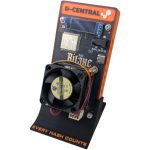
This is why home mining is not just an economic activity — it is an act of network defense. Every home miner running a Bitaxe solo miner or a space heater unit adds hash rate to the network from a unique geographic location, behind a residential internet connection, operated by an individual sovereign actor. This is the kind of distributed security that makes Bitcoin resilient against state-level attacks.
Solo mining with devices like the Bitaxe is particularly aligned with the cypherpunk ethos. You are not trusting a pool operator. You are pointing your hash rate directly at the Bitcoin network, rolling the dice on every hash for the chance to find a full block reward. The odds are long, but the principle is absolute: every hash counts.
The Fiat Endgame: Debt Spirals and Currency Debasement
The post-1971 monetary experiment has followed a predictable trajectory. Without a hard constraint on money creation, governments have consistently chosen short-term spending over long-term fiscal discipline. The result is a global debt load that is now mathematically unpayable through economic growth alone.
Consider the numbers as of early 2026:
- US National Debt: Over $36 trillion, with debt-to-GDP exceeding 120%.
- Global Sovereign Debt: Over $100 trillion according to IMF estimates.
- US Interest Payments: Federal interest expense surpassed $1 trillion annually in 2024, exceeding the defense budget for the first time in history.
- Unfunded Liabilities: US unfunded obligations for Social Security and Medicare estimated at over $200 trillion on a net present value basis.
When debt reaches levels that cannot be serviced through taxation or growth, governments historically turn to the only tool available: inflation. By devaluing the currency, the real burden of debt decreases. This is a stealth default — the government technically pays its obligations, but in currency units that buy less and less.
This is not a theoretical risk. It is happening now. The 40% increase in M2 money supply since 2020, the persistent inflation that followed, and the Federal Reserve’s difficulty in returning to its 2% inflation target are all symptoms of a system approaching its structural limits.
Bitcoin’s fixed supply and predictable emission schedule make it structurally immune to this dynamic. No committee can decide to print more bitcoin. No emergency can override the protocol. The rules are the rules, enforced by mathematics and global consensus.
Bitcoin as a Technological Discipline
At D-Central, we approach Bitcoin as a technology problem, not a financial one. We are not financial advisors, and we do not tell people what to do with their money. What we do is build, repair, and deploy the hardware infrastructure that makes Bitcoin mining accessible to individuals.
Since 2016, we have been repairing ASIC miners, developing custom mining solutions, and pioneering open-source mining hardware for the home mining community. We were among the first to manufacture the Bitaxe Mesh Stand, we developed custom heatsink solutions for the Bitaxe and Bitaxe Hex, and we stock every Bitaxe variant alongside the full Nerd open-source mining lineup — NerdAxe, NerdNOS, Nerdminer, and NerdQAxe.
Our mission is the decentralization of every layer of Bitcoin mining. That means making the technology accessible, affordable, and practical for home miners. It means taking industrial-grade mining equipment and hacking it into solutions that work in a spare bedroom, a garage, or a basement. It means building space heaters that mine bitcoin while keeping your house warm.
Understanding the post-1971 economic landscape is important context for why this work matters. Bitcoin is not just a technical curiosity. It is a response to a broken monetary system — an engineered alternative to the fiat experiment that has eroded purchasing power, expanded inequality, and concentrated monetary authority in the hands of unelected technocrats for over half a century.
The technology works. The protocol is sound. The supply is fixed. What remains is building out the physical infrastructure — the miners, the nodes, the home setups — that make this system resilient, decentralized, and sovereign.
That is what we do. That is what Bitcoin mining hackers do.
Frequently Asked Questions
What happened to the global economy after 1971?
In 1971, the United States abandoned the gold standard, ending the Bretton Woods system that had pegged the dollar to gold at $35 per ounce. This removed the hard constraint on government money creation. In the decades since, governments have expanded money supplies aggressively, leading to persistent inflation, exploding national debt, wage-productivity divergence, and widening wealth inequality driven by the Cantillon Effect — where those closest to new money creation benefit at the expense of ordinary savers and workers.
How does Bitcoin’s monetary policy differ from fiat currencies?
Bitcoin has a fixed supply cap of 21 million coins, enforced by consensus rules across tens of thousands of independent nodes. New bitcoin are issued on a deterministic schedule through mining, with the block reward halving approximately every four years. As of 2026, Bitcoin’s annual inflation rate is approximately 0.85%, already lower than gold’s. Fiat currencies, by contrast, have no supply cap — central banks can create unlimited new currency units at their discretion, and have consistently expanded money supplies far beyond stated targets.
What is the Cantillon Effect and why does it matter?
The Cantillon Effect describes how newly created money benefits those who receive it first (banks, large corporations, government contractors) because they can spend it before prices adjust upward. By the time new money reaches workers and consumers, prices have already risen. This is a primary mechanism driving wealth inequality in the post-1971 fiat system. Bitcoin eliminates this dynamic because new bitcoin are distributed through an open, competitive mining process that anyone can participate in, and the total supply is fixed.
Is Bitcoin mining a waste of energy?
No. Bitcoin mining converts electricity into network security and monetary issuance. Every watt consumed is transformed into heat at nearly 100% efficiency, meaning miners can serve as space heaters. Mining also acts as an energy buyer of last resort, absorbing stranded and curtailed energy — such as flared natural gas or excess renewable generation — that would otherwise be wasted. At D-Central, we build Bitcoin space heaters that let home miners heat their homes while earning bitcoin, turning the “energy waste” narrative completely on its head.
Why does home mining matter for Bitcoin’s decentralization?
If all mining were concentrated in large industrial facilities, governments could target a small number of operations to censor transactions or attack the network. Home miners distribute hash rate across thousands of unique geographic locations and residential connections, making the network far more resistant to state-level attacks. Every home miner running a Bitaxe, a NerdAxe, or a space heater unit strengthens Bitcoin’s censorship resistance and security model.
What is the Bitcoin halving and why does it matter?
The halving is a protocol-level event that cuts the Bitcoin block reward in half approximately every four years (every 210,000 blocks). The most recent halving occurred in April 2024, reducing the reward from 6.25 to 3.125 BTC per block. Halvings enforce Bitcoin’s disinflationary supply schedule, progressively reducing the rate of new supply until all 21 million bitcoin are mined around the year 2140. This predictable, decreasing supply rate is what gives Bitcoin its superior hardness as money.
Can Bitcoin work as a sound money standard alongside existing currencies?
Bitcoin already functions as a parallel monetary system. It is used for savings, remittances, commerce, and as a reserve asset by individuals, companies, and even some governments (El Salvador adopted Bitcoin as legal tender in 2021). It does not require replacing fiat currencies overnight. Individuals can begin allocating savings to bitcoin, running a node to verify the network, and mining at home to contribute hash rate — all while still using their local currency for daily expenses. The transition to sound money is a gradual, voluntary, bottom-up process.
How can I start participating in Bitcoin mining at home?
The easiest entry point is a solo miner like the Bitaxe — a compact, open-source device that plugs into a standard power outlet and mines bitcoin independently. For more productive setups, Bitcoin space heaters convert ASIC miners into dual-purpose heating units. D-Central Technologies has been serving home miners since 2016, offering everything from Bitaxe units and accessories to full ASIC repair services. Visit our Bitaxe Hub to explore your options.
{
“@context”: “https://schema.org”,
“@type”: “FAQPage”,
“mainEntity”: [
{
“@type”: “Question”,
“name”: “What happened to the global economy after 1971?”,
“acceptedAnswer”: {
“@type”: “Answer”,
“text”: “In 1971, the United States abandoned the gold standard, ending the Bretton Woods system that had pegged the dollar to gold at $35 per ounce. This removed the hard constraint on government money creation. In the decades since, governments have expanded money supplies aggressively, leading to persistent inflation, exploding national debt, wage-productivity divergence, and widening wealth inequality driven by the Cantillon Effect.”
}
},
{
“@type”: “Question”,
“name”: “How does Bitcoin’s monetary policy differ from fiat currencies?”,
“acceptedAnswer”: {
“@type”: “Answer”,
“text”: “Bitcoin has a fixed supply cap of 21 million coins, enforced by consensus rules across tens of thousands of independent nodes. New bitcoin are issued on a deterministic schedule through mining, with the block reward halving approximately every four years. As of 2026, Bitcoin’s annual inflation rate is approximately 0.85%, already lower than gold’s. Fiat currencies have no supply cap and central banks can create unlimited new currency units at their discretion.”
}
},
{
“@type”: “Question”,
“name”: “What is the Cantillon Effect and why does it matter?”,
“acceptedAnswer”: {
“@type”: “Answer”,
“text”: “The Cantillon Effect describes how newly created money benefits those who receive it first (banks, large corporations, government contractors) because they can spend it before prices adjust upward. By the time new money reaches workers and consumers, prices have already risen. Bitcoin eliminates this dynamic because new bitcoin are distributed through an open, competitive mining process that anyone can participate in, and the total supply is fixed.”
}
},
{
“@type”: “Question”,
“name”: “Is Bitcoin mining a waste of energy?”,
“acceptedAnswer”: {
“@type”: “Answer”,
“text”: “No. Bitcoin mining converts electricity into network security and monetary issuance. Every watt consumed is transformed into heat at nearly 100% efficiency, meaning miners can serve as space heaters. Mining also acts as an energy buyer of last resort, absorbing stranded and curtailed energy that would otherwise be wasted.”
}
},
{
“@type”: “Question”,
“name”: “Why does home mining matter for Bitcoin’s decentralization?”,
“acceptedAnswer”: {
“@type”: “Answer”,
“text”: “If all mining were concentrated in large industrial facilities, governments could target a small number of operations to censor transactions or attack the network. Home miners distribute hash rate across thousands of unique geographic locations, making the network far more resistant to state-level attacks.”
}
},
{
“@type”: “Question”,
“name”: “What is the Bitcoin halving and why does it matter?”,
“acceptedAnswer”: {
“@type”: “Answer”,
“text”: “The halving is a protocol-level event that cuts the Bitcoin block reward in half approximately every four years. The most recent halving occurred in April 2024, reducing the reward from 6.25 to 3.125 BTC per block. Halvings enforce Bitcoin’s disinflationary supply schedule, progressively reducing the rate of new supply until all 21 million bitcoin are mined around the year 2140.”
}
},
{
“@type”: “Question”,
“name”: “Can Bitcoin work as a sound money standard alongside existing currencies?”,
“acceptedAnswer”: {
“@type”: “Answer”,
“text”: “Bitcoin already functions as a parallel monetary system. It is used for savings, remittances, commerce, and as a reserve asset by individuals, companies, and even some governments. Individuals can begin allocating savings to bitcoin, running a node, and mining at home while still using local currency for daily expenses.”
}
},
{
“@type”: “Question”,
“name”: “How can I start participating in Bitcoin mining at home?”,
“acceptedAnswer”: {
“@type”: “Answer”,
“text”: “The easiest entry point is a solo miner like the Bitaxe, a compact open-source device that plugs into a standard power outlet. For more productive setups, Bitcoin space heaters convert ASIC miners into dual-purpose heating units. D-Central Technologies has been serving home miners since 2016, offering everything from Bitaxe units and accessories to full ASIC repair services.”
}
}
]
}