The comparison between Bitcoin and real estate is not a neutral portfolio optimization exercise. It is a question about the nature of property itself: what does it mean to truly own something, and which system better protects that ownership against the slow erosion of monetary debasement, bureaucratic seizure, and inflationary theft? For anyone who has studied both asset classes with clear eyes, the answer is becoming harder to ignore.
Real estate has been the default “safe” investment for generations. Governments encourage it through tax incentives, banks profit from it through mortgages, and an entire professional class of realtors, appraisers, and lawyers exists to facilitate transactions. But underneath this comfortable consensus, cracks are forming. The very properties that made real estate attractive in the 20th century — scarcity, appreciation, income generation — are increasingly being challenged by the properties of a protocol that launched in 2009 with zero marketing budget and no corporate backing.
Bitcoin was not designed as an investment vehicle. It was designed as sound money — a censorship-resistant, permissionless system for transferring value without trusted third parties. That it has outperformed every traditional asset class over its existence is a consequence of its monetary properties, not a marketing pitch. And for those of us who mine Bitcoin, who convert electricity into the hardest money ever created, the comparison with real estate is not abstract. It is the difference between two fundamentally different approaches to preserving wealth across time.
The Scarcity Question: Fixed Supply vs. Zoning Boards
Real estate advocates have long argued that “they are not making any more land.” This is technically true on a planetary scale, but practically misleading. What determines the value of real estate is not the total amount of land on Earth but the amount of usable, permitted, serviced land in a given jurisdiction. And that supply is entirely controlled by governments through zoning, permitting, and development policy.
A city council can rezone agricultural land for residential development overnight, flooding the market with new supply. Governments can change building codes to allow higher density, effectively multiplying the usable space on existing land. They can also restrict development, creating artificial scarcity that benefits existing owners at the expense of newcomers. In every case, the “scarcity” of real estate is a political decision, subject to the whims of elected officials, lobbying pressure, and shifting public sentiment.
Bitcoin’s scarcity is not political. It is mathematical. There will never be more than 21 million bitcoin, enforced by the protocol’s consensus rules across hundreds of thousands of nodes worldwide. No government, no central bank, no committee can alter this supply schedule. The halving mechanism reduces the block subsidy approximately every four years — as of 2024, the reward stands at 3.125 BTC per block. This programmatic scarcity is not a feature that can be voted away. It is the foundation of Bitcoin’s monetary policy.
Inflation Resistance in Practice
When central banks expand the money supply, both Bitcoin and real estate tend to appreciate in nominal terms. But they do so for fundamentally different reasons. Real estate rises because more dollars are chasing the same number of houses. Bitcoin rises because its fixed supply makes it an increasingly attractive alternative to the depreciating currency itself.
The distinction matters. Real estate appreciation driven by monetary inflation is largely illusory — your house is worth more dollars, but those dollars buy less. The purchasing power gains are modest once you subtract property taxes, maintenance costs, insurance, and the interest payments on the mortgage that most people need to acquire the property in the first place. Bitcoin, by contrast, has no carrying costs. No property tax. No maintenance. No insurance premiums. No HOA fees. It simply exists in the most secure monetary network ever constructed, appreciating against fiat currencies whose supply expands without limit.
Ownership and Sovereignty: Keys vs. Deeds
In Bitcoin, ownership is defined by possession of private keys. If you hold your own keys — and every serious Bitcoiner should — nobody can seize, freeze, or confiscate your bitcoin without your cooperation. This is not a theoretical advantage. Throughout history, governments have seized real estate through eminent domain, frozen property during political disputes, and imposed capital controls that prevent owners from selling or transferring their assets.
Real estate ownership, by contrast, is a legal fiction maintained by government registries. You do not “own” your property in any absolute sense. You hold a title that the state recognizes, contingent on your continued payment of property taxes, compliance with local regulations, and the absence of any government decision to take it from you. Stop paying property taxes and discover how quickly your “ownership” evaporates. In many jurisdictions, the government does not even need to compensate you at fair market value when exercising eminent domain.
The Portability Factor
A refugee fleeing political persecution cannot carry a house across a border. But they can carry 12 words in their memory — a seed phrase that unlocks access to their wealth from anywhere on Earth. This is not a hypothetical scenario. It has played out countless times in countries experiencing political instability, currency collapse, or authoritarian overreach.
Bitcoin’s portability is absolute. It can be transmitted across any border, at any time, to anyone, without permission from any institution. Real estate is, by definition, immovable. It is permanently subject to the jurisdiction in which it sits, and by extension, to whatever government controls that jurisdiction. For anyone concerned about sovereign risk — and the last decade of global politics suggests everyone should be — this difference is not trivial.
Liquidity and Divisibility: 24/7 vs. 90 Days
Bitcoin trades 24 hours a day, 7 days a week, 365 days a year, across every time zone on the planet. There is no closing bell, no settlement period, no waiting for banker’s hours. A bitcoin transaction can be confirmed in minutes and settled with mathematical finality in under an hour.
Selling a house takes, on average, 60 to 90 days from listing to closing. It requires real estate agents (taking 5-6% commission), lawyers, inspectors, appraisers, mortgage underwriters, and title insurance companies — an entire ecosystem of intermediaries, each taking their cut. The transaction costs alone can consume 8-10% of the sale price. In a down market, a property can sit unsold for months or even years.
Fractional Access
Bitcoin is divisible to 8 decimal places. The smallest unit, a satoshi (0.00000001 BTC), means anyone can participate in Bitcoin ownership regardless of their financial situation. You do not need a down payment. You do not need a credit check. You do not need a mortgage broker’s approval. You can acquire 10,000 satoshis for a few dollars and hold an asset with the same monetary properties as someone holding 100 BTC.
Real estate has no such divisibility. The minimum viable investment is typically tens or hundreds of thousands of dollars, plus closing costs, plus ongoing expenses. Yes, REITs (Real Estate Investment Trusts) offer fractional exposure, but REITs are securities, not property. You own shares in a company, not bricks and mortar. The counterparty risk, management fees, and regulatory overhead of REITs strip away the very qualities that make direct property ownership appealing.
The Cost of Holding: Zero vs. Perpetual
One of the most underappreciated advantages of Bitcoin is its zero carrying cost. Once you have acquired bitcoin and secured it in self-custody, the ongoing cost of holding it is effectively zero. No property taxes. No maintenance. No insurance. No management fees. No utility bills. No repairs after storms. No dealing with tenants who damage the property and disappear.
Real estate carries perpetual costs that never stop, regardless of whether the property generates income. Property taxes are an annual levy that you pay for the privilege of continuing to “own” what you have already purchased. Maintenance costs typically run 1-2% of the property’s value annually. Insurance is mandatory if you have a mortgage. Vacancy costs eat into rental income. Capital expenditures — new roof, new furnace, foundation repairs — arrive unpredictably and expensively.
The True Cost of Leverage
Real estate advocates love to tout leverage as an advantage: put down 20% and control 100% of the asset. This is presented as financial wizardry, but it cuts both ways. Leverage amplifies gains in rising markets and amplifies losses in falling ones. The 2008 financial crisis demonstrated this with devastating clarity, as millions of homeowners found themselves underwater on mortgages, owing more than their properties were worth.
Moreover, mortgage leverage is not free. Over the life of a 25-year mortgage at typical interest rates, you will pay nearly as much in interest as you paid for the house itself. The bank profits from your “investment” regardless of whether the property appreciates. You are paying rent to the bank for the privilege of appearing to own property. Bitcoin requires no leverage. You buy what you can afford, when you can afford it, and you own it outright from the moment of acquisition.
Energy, Mining, and the Dual-Purpose Advantage
Here is where the comparison becomes personal for us at D-Central. We do not just hold Bitcoin — we produce it. Bitcoin mining is the process of converting electricity into the most secure monetary network in human history, and for home miners, it offers something no real estate investment can match: dual-purpose utility.
A Bitcoin space heater does not just mine bitcoin. It heats your home. The “waste heat” from mining becomes productive energy that offsets your heating bill, effectively making your Bitcoin acquisition cost negative in cold climates. Try getting your house to generate an income stream while simultaneously keeping you warm. The closest real estate equivalent is renting out a spare room, and that comes with tenant headaches, insurance requirements, and regulatory compliance.
Mining as Active Accumulation
Real estate generates income through rent — a relationship that depends on tenants, market conditions, and ongoing management. Bitcoin mining generates income through the protocol itself. Every valid block your hardware helps produce earns a share of the block reward and transaction fees. No tenants. No vacancies. No late payments. No evictions. The network pays you for securing it, and it does so with mathematical precision.
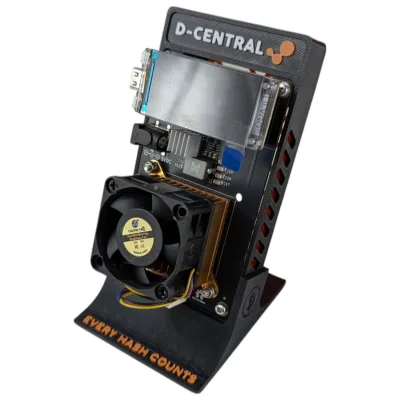
For home miners running open-source hardware like the Bitaxe or using ASIC-based space heaters, the cost of Bitcoin acquisition is the cost of electricity minus the value of the heat produced. In Canadian winters — and we know Canadian winters — this equation is remarkably favorable. The same energy that would be consumed by an electric heater producing nothing but warmth is instead converted into both heat and the hardest money on Earth.
Censorship Resistance and Seizure Risk
In February 2022, the Canadian government invoked the Emergencies Act and directed banks to freeze the accounts of individuals who donated to a political protest. Bank accounts were frozen. Payment processors were ordered to stop servicing certain individuals. This was not a hypothetical exercise in authoritarian overreach — it happened in a G7 democracy.
Real estate is trivially seizable. It cannot run. It cannot hide. It exists at a known address, registered in a government database, and subject to whatever directives the government issues. Liens can be placed on it. Property taxes can be raised on it. Eminent domain can take it entirely.
Bitcoin held in self-custody is resistant to all of these attacks. A government can declare Bitcoin illegal — as several have tried — but it cannot prevent someone from holding 12 words in their memory or broadcasting a transaction over a mesh network, satellite link, or even radio waves. The game theory of Bitcoin seizure is fundamentally different from the game theory of property seizure, and it strongly favors the holder.
The Jurisdictional Trap
Real estate permanently anchors your wealth to a single jurisdiction. If that jurisdiction increases taxes, changes regulations, or experiences political instability, your property is trapped. You cannot move it. You cannot quickly sell it. You can only watch as political decisions erode the value of an asset you worked years to acquire.
Bitcoin is jurisdiction-agnostic. It exists on a global network that no single government controls. This does not mean Bitcoin holders are above the law — responsible citizens comply with the tax regulations of their jurisdiction. But it does mean that your wealth is not permanently hostage to the decisions of a government you may not have voted for and whose future policies you cannot predict.
Performance: The Numbers Do Not Lie
Since its inception, Bitcoin has been the best-performing asset in human history. No real estate market, no stock index, no commodity has come close to matching its returns over any multi-year holding period since 2009. This is not speculation about future performance — it is a statement of historical fact.
Consider: someone who allocated even 1% of a traditional real estate portfolio to Bitcoin in 2015 would have seen that 1% allocation grow to become the dominant position in their portfolio. The asymmetric upside of Bitcoin — bounded downside (you can only lose what you invest) with unbounded upside (the total addressable market is global monetary value) — is unlike anything real estate can offer.
Volatility Is the Price of Admission
Yes, Bitcoin is volatile. A property does not drop 30% in a month. But a property also does not appreciate 10x in two years. Bitcoin’s volatility is the cost of accessing a new monetary technology that is still in its adoption phase. As adoption increases and the market matures, volatility has been decreasing on a secular basis, even as the long-term trend continues upward.
More importantly, volatility is not risk. Risk is the permanent loss of capital. A properly self-custodied bitcoin cannot go to zero as long as the network exists — and the Bitcoin network, with a hashrate exceeding 800 EH/s and growing, is the most resilient computing network on the planet. A house, on the other hand, can burn down, flood, be condemned, or lose value due to neighborhood decline, environmental contamination, or regulatory changes. These are real risks of permanent capital loss that real estate investors routinely underestimate.
The Regulatory and Tax Landscape
Both Bitcoin and real estate exist within regulatory frameworks that affect their attractiveness as investments. Real estate enjoys significant tax advantages in most jurisdictions: mortgage interest deductions, depreciation write-offs, 1031 exchanges (in the US), and capital gains exemptions on primary residences. These advantages are real and substantial.
However, they are also privileges granted by the state that can be revoked at any time. Tax laws change with every new government. Deductions get eliminated. Capital gains exemptions get reduced or removed. The tax advantages of real estate are features of current policy, not fundamental properties of the asset itself.
Bitcoin’s Tax Treatment
In most jurisdictions, Bitcoin is treated as property for tax purposes, subject to capital gains tax on disposal. In Canada, only 50% of capital gains are taxable (though this has been subject to recent policy discussions). While Bitcoin lacks the specific tax incentives of real estate, it also lacks the ongoing tax obligations. There is no annual property tax on bitcoin. There is no tax event until you sell. A long-term holder who simply accumulates and holds pays nothing until they choose to realize gains.
For miners, the tax situation has its own advantages. Mining expenses — electricity, hardware, maintenance — are deductible against mining income. The mining profitability calculation is straightforward: revenue minus expenses, taxed as business income. The operational costs of mining are transparent and predictable in a way that real estate expenses — with their surprise repairs and variable vacancy rates — never are.
The Philosophical Divide
At its core, the Bitcoin vs. real estate debate reflects a deeper philosophical divide about the nature of property and the role of the state. Real estate ownership depends entirely on state recognition and enforcement. Without a functioning government and court system, your deed is a piece of paper. Real estate is, in the most fundamental sense, a partnership with the state — one where the state can change the terms at will.
Bitcoin ownership depends on mathematics. The cryptographic principles that secure Bitcoin are not subject to political revision. They do not require state recognition. They do not depend on the competence or benevolence of any institution. In a world where trust in institutions is declining across every metric, the appeal of a trustless system is not ideological — it is practical.
This is not to say that real estate has no place in a portfolio. Shelter is a fundamental human need, and owning the roof over your head provides stability and security that no digital asset can replicate. But as an investment vehicle — as a way to preserve and grow wealth across time — real estate’s advantages are eroding in an era of sound digital money.
The Mining Hacker’s Perspective
At D-Central, we have spent since 2016 making institutional-grade Bitcoin mining technology accessible to individuals. Our mission — the decentralization of every layer of Bitcoin mining — is fundamentally about sovereignty. The sovereignty to produce your own money. The sovereignty to heat your home while securing the network. The sovereignty to hold wealth that no government can freeze, no bank can restrict, and no border can contain.
Real estate is a tool of the old financial system. It requires permission, leverage, intermediaries, and ongoing tribute to the state. Bitcoin is a tool of the emerging sovereign individual. It requires only electricity, hardware, and the conviction that sound money matters.
For those considering where to allocate their next dollar, the question is not whether Bitcoin or real estate will perform better over the next quarter. The question is which system you want to participate in: one where your wealth depends on the continued goodwill of institutions, or one where your wealth depends on the continued validity of mathematics.
We know where we stand. Every hash counts.
Frequently Asked Questions
Is Bitcoin really scarcer than real estate?
Yes. Bitcoin has a hard cap of 21 million coins enforced by protocol consensus rules across hundreds of thousands of nodes. Real estate supply is controlled by government zoning, permitting, and development policy — it can be expanded or contracted by political decisions at any time. Bitcoin’s scarcity is mathematical and immutable; real estate’s scarcity is political and changeable.
What about Bitcoin’s volatility compared to real estate?
Bitcoin is more volatile in the short term, but volatility is not the same as risk. Risk is the permanent loss of capital. Real estate can suffer permanent value loss from environmental damage, neighborhood decline, regulatory changes, or natural disasters. Bitcoin’s volatility has been decreasing on a secular basis as adoption grows, and over any 4+ year holding period, Bitcoin has historically delivered positive returns. The volatility is the price of admission to the best-performing asset in history.
Can Bitcoin generate income like rental real estate?
Yes, through mining. Bitcoin mining converts electricity into BTC, generating ongoing income without tenants, vacancies, or property management headaches. For home miners using Bitcoin space heaters, the waste heat offsets heating costs, making the effective cost of Bitcoin acquisition potentially negative in cold climates. The current block reward is 3.125 BTC per block, distributed to miners who secure the network.
Is real estate safer than Bitcoin?
Real estate carries risks that are often underestimated: property tax increases, eminent domain, natural disasters, environmental contamination, market crashes (as seen in 2008), tenant damage, maintenance costs, and regulatory changes. Real estate is also permanently subject to the jurisdiction where it sits, creating concentration risk. Bitcoin in self-custody is resistant to seizure, has zero carrying costs, and is secured by a network with over 800 EH/s of hashrate — the most powerful computing network on Earth.
What are the ongoing costs of Bitcoin vs. real estate?
Bitcoin in self-custody has effectively zero ongoing costs — no property tax, no maintenance, no insurance, no HOA fees, no utility bills. Real estate carries perpetual costs: property taxes (typically 0.5-2.5% of value annually), maintenance (1-2% annually), insurance, potential vacancy costs, and unpredictable capital expenditures like roof replacements or foundation repairs. Over a 25-year holding period, these costs can consume a significant portion of any appreciation gains.
How does Bitcoin mining relate to the Bitcoin vs. real estate comparison?
Bitcoin mining adds a dimension that real estate cannot match: active production of a scarce monetary asset using energy that would otherwise be consumed unproductively. Home miners can heat their homes while simultaneously producing Bitcoin, turning an expense (heating) into a revenue-generating activity. This dual-purpose utility — especially in cold climates like Canada — makes Bitcoin mining a uniquely efficient form of wealth generation compared to the passive appreciation model of real estate.
Should I sell my house and buy Bitcoin?
This article is not financial advice, and owning the roof over your head provides stability that no investment can replace. The comparison here is between Bitcoin and real estate as investment vehicles. Your primary residence serves a different purpose than an investment property. That said, the marginal dollar allocated to a second property, a rental unit, or a REIT could be evaluated against Bitcoin allocation with clear eyes. Many Bitcoiners maintain home ownership while directing investment capital toward Bitcoin accumulation — including through mining.