Bitcoin mining is not a spectator sport. It is one of the most direct, hands-on ways to participate in the most important monetary network ever built. But unlike buying Bitcoin on an exchange — where all you need is a credit card and a prayer — running your own mining operation demands real skill. You need to understand hardware, networking, thermodynamics, Linux, and Bitcoin itself at a level that most people never bother to reach.
That is exactly why it matters. The Bitcoin network’s security depends on miners who know what they are doing. Every hash produced by a competent operator strengthens decentralization. Every miner who gives up because they skipped the fundamentals is one less node defending the network against centralization.
At D-Central Technologies, we have been in the trenches since 2016 — repairing, building, modifying, and deploying mining hardware across Canada and beyond. We are Bitcoin Mining Hackers: we take institutional-grade technology and make it accessible for home miners, solo operators, and small-scale operations. This guide distills the essential skills you need to run a successful Bitcoin mining operation, whether you are setting up a single Bitaxe on your desk or filling a room with ASICs.
The Nine Essential Skills Every Bitcoin Miner Needs
Mining Bitcoin profitably — or even just contributing meaningfully to network decentralization — requires a stack of interdependent skills. Neglect any one of them and you will feel the consequences in downtime, wasted energy, or lost sats. Here is the full breakdown.
1. Hardware Selection and Procurement
Your mining operation is only as good as the hardware running it. Choosing the right ASIC miner is the single most consequential decision you will make, and getting it wrong can set you back thousands of dollars and months of time.
The key parameters to evaluate when selecting mining hardware:
| Parameter | Why It Matters |
|---|---|
| Hashrate (TH/s or GH/s) | Determines your share of block rewards relative to total network hashrate (~800+ EH/s) |
| Power Efficiency (J/TH) | Lower is better — directly impacts profitability at any electricity rate |
| Power Consumption (W) | Must match your available electrical infrastructure and cooling capacity |
| Noise Level (dB) | Critical for home mining — stock ASICs can exceed 75 dB |
| Form Factor | Dictates placement options — from desktop Bitaxe units to full-rack S21s |
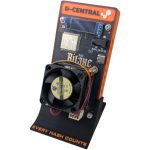
| Connector Type | Bitaxe Supra/Ultra/Gamma use 5V barrel jack (5.5×2.1mm); GT and Hex use 12V XT30 |
For home miners and solo mining enthusiasts, open-source miners like the Bitaxe lineup offer an accessible entry point. For those scaling up, the Antminer S19 and S21 series deliver industrial-grade hashrate. The key is matching your hardware to your electrical capacity, cooling infrastructure, and noise tolerance. Browse our full selection in the D-Central shop to compare options across every price point and power level.
Equally important: buy from a reputable source. The ASIC reseller market is riddled with scams, DOA units, and bait-and-switch operations. D-Central has been sourcing, testing, and shipping miners since 2016 — every unit we sell is verified and backed by our repair expertise.
2. Mining Environment Design
Where you put your miners matters as much as which miners you choose. A poorly designed mining environment leads to thermal throttling, premature hardware failure, and in worst cases, fire hazards. The three pillars of mining environment design are airflow, power density, and noise management.
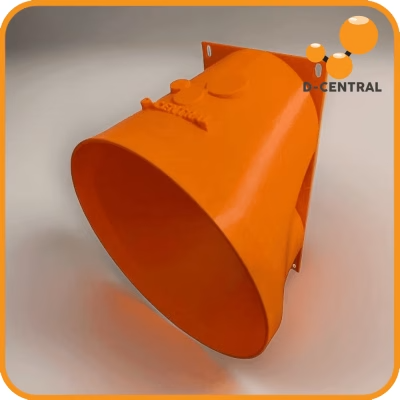
For home miners, this might mean converting a garage, basement, or spare room into a dedicated mining space with proper ventilation. Our Bitcoin Space Heaters solve this elegantly by turning ASIC heat exhaust into home heating — your miner becomes a dual-purpose appliance that mines Bitcoin while warming your living space. In a Canadian winter, that is not a gimmick; it is practical engineering.
For larger operations, the design considerations scale dramatically. You need to plan for hot-aisle/cold-aisle configurations, negative-pressure ventilation, and electrical panel capacity. Pre-built mining containers exist, but building your own enclosure is often more cost-effective and allows for customization that off-the-shelf solutions cannot match.
3. Hardware Installation
Getting miners out of the box and running at full hashrate requires methodical installation. This means proper ASIC racking with adequate spacing for airflow, organized cable management to prevent tripping hazards and electromagnetic interference, and correct network equipment placement.
Common installation mistakes that cost miners money:
- Insufficient clearance between units — hot air recirculation kills efficiency
- Daisy-chaining power strips — a fire hazard that voids insurance
- Ignoring grounding requirements — static discharge can destroy hashboards
- Wrong power supply for the hardware — Bitaxe units require a 5V/6A PSU with a 5.5×2.1mm barrel jack, NOT USB-C (USB-C is for firmware flashing only)
Time spent on proper installation planning is never wasted. Every shortcut taken during setup becomes a recurring problem during operation.
4. Networking and Security
Your miners are computers connected to the internet, mining Bitcoin. That makes them targets. A compromised miner can have its pool settings changed to mine for an attacker, or worse, be used as a pivot point into your home network.
Essential networking practices for mining operations:
- VLAN isolation — keep miners on a separate network segment from your personal devices
- Firewall rules — restrict miner traffic to pool connections only (Stratum ports)
- Change default credentials — every ASIC ships with admin/admin or similar defaults
- Disable unnecessary services — SSH, Telnet, and web interfaces should be locked down
- Monitor for anomalies — unexpected traffic patterns can indicate a compromised device
This is not paranoia — it is operational security. The cypherpunk ethos that gave us Bitcoin demands that we take network security seriously at every layer.
5. Monitoring Infrastructure
You cannot manage what you cannot measure. Every serious mining operation needs monitoring infrastructure that tracks power consumption, hashrate output, pool statistics, temperature readings, and network connectivity in real time.
For a single Bitaxe on your desk, the built-in web interface and AxeOS dashboard provide everything you need. For larger operations with multiple ASICs, dedicated monitoring solutions like Foreman, Awesome Miner, or custom Grafana dashboards become essential. These systems alert you to hardware failures, hashrate drops, and environmental issues before they become expensive problems.
Power monitoring deserves special attention. A device like an Eyedro or a smart PDU gives you real-time visibility into exactly how many watts each miner is pulling — and at what cost. In Canada, where electricity rates vary dramatically by province and season, this data is critical for profitability calculations.
6. Maintenance and Repair
ASIC miners are industrial machines running 24/7 in harsh thermal environments. They collect dust, their fans degrade, thermal paste dries out, and components fail. A proactive maintenance schedule is the difference between a miner that runs for five years and one that dies in six months.
| Maintenance Task | Frequency | Impact of Neglect |
|---|---|---|
| Compressed air cleaning | Monthly | Thermal throttling, reduced hashrate |
| Fan inspection and replacement | Quarterly | Overheating, chip damage, complete failure |
| Thermal paste replacement | Annually | Degraded efficiency, hot spots, chip death |
| Firmware updates | As released | Security vulnerabilities, missed optimizations |
| Electrical connection checks | Quarterly | Loose connections, arcing, fire risk |
| Hashboard diagnostics | On performance drop | Running at partial capacity without knowing it |
When hardware does fail — and it eventually will — having access to competent repair services is invaluable. D-Central operates Canada’s most comprehensive ASIC repair service, with 60+ model-specific repair capabilities covering Bitmain, MicroBT, Innosilicon, and Canaan hardware. We have repaired thousands of miners since 2016, and many of those repairs would have been unnecessary if proper maintenance had been followed.
7. System Administration
If you are running more than a couple of miners, you need sysadmin skills. Most ASIC firmware runs on Linux-based embedded systems, and advanced firmware options like Braiins OS+ or LuxOS expose even more Linux functionality. Comfort with the command line is not optional — it is a prerequisite.
Key sysadmin skills for miners:
- SSH access and remote management — configure miners without physical access
- Scripting — automate repetitive tasks like pool configuration updates across multiple units
- Log analysis — read kernel and miner logs to diagnose hardware issues
- Network diagnostics — use tools like ping, traceroute, and nmap to troubleshoot connectivity
- Firmware management — flash, update, and roll back firmware across your fleet
For open-source miners like the Bitaxe, system administration takes on an additional dimension. AxeOS is open-source, meaning you can inspect the code, compile custom builds, and contribute improvements back to the community. This is the Bitcoin Mining Hacker ethos in action — understanding your tools at the deepest level possible.
8. Electrical Knowledge
Bitcoin mining is fundamentally an energy arbitrage operation. You are converting electricity into Bitcoin, and every watt matters. Understanding electrical systems is not just a nice-to-have — it is critical for safety, profitability, and scaling.
At a minimum, every miner should understand:
- Amperage calculations — never exceed 80% of a circuit’s rated capacity for continuous loads
- Voltage requirements — North American 120V vs 240V, and why 240V is almost always better for ASICs
- Wire gauge and run length — voltage drop over long runs can cost you hashrate
- Panel capacity — know your service entrance capacity before adding miners
- Metering — track consumption to verify your electricity bill and calculate true cost-per-kWh
In Canada, our cold climate gives us a natural advantage — ambient air cooling is essentially free for much of the year, and waste heat from miners offsets heating costs. This is why the Bitcoin Space Heater concept is so powerful in our climate.
9. Bitcoin Operations and Self-Custody
You are mining Bitcoin. If you do not know how to properly handle, store, and manage your Bitcoin, you are building a castle on sand. This is arguably the most important skill on the list because it determines whether you actually keep the sats you mine.
Essential Bitcoin operations knowledge:
- Self-custody wallets — hardware wallets (cold storage) for long-term holdings, hot wallets for operational needs
- UTXO management — consolidating small mining payouts during low-fee periods to avoid dust accumulation
- Pool payout configuration — setting appropriate payout thresholds and addresses
- Transaction fee management — understanding mempool dynamics and fee estimation
- Backup and recovery — seed phrase security, multi-sig setups, inheritance planning
If you are solo mining with a Bitaxe, you also need to understand solo mining pools like Solo CKPool, the probability math behind finding a block (current block reward: 3.125 BTC), and how to configure your miner’s pool settings correctly. Every hash counts — and when that block is found, you need to be ready to receive it securely.
Why These Skills Matter More Than Ever
The Bitcoin network’s total hashrate now exceeds 800 EH/s. Mining difficulty adjusts every 2,016 blocks to maintain the 10-minute block target. In this environment, operational efficiency is not a luxury — it is survival. Miners who waste power through poor installation, lose uptime to preventable failures, or compromise security through negligence are the ones who get squeezed out when difficulty climbs.
But here is the thing that the institutional miners and Wall Street analysts consistently miss: home mining is not just about profit. It is about sovereignty. It is about running your own node, producing your own hashrate, and contributing to the decentralization of the most important monetary network in human history. When you mine at home, you are voting with your energy for a more distributed, more resilient, more censorship-resistant Bitcoin network.
That is the mission that drives D-Central. We are not here to sell you a get-rich-quick scheme. We are here to give you the tools, knowledge, and hardware to participate directly in Bitcoin mining — on your terms, in your home, with your energy.
How D-Central Helps You Build These Skills
Nobody is born knowing how to diagnose a failed hashboard or configure a VLAN for their mining network. These skills are built through experience, study, and — critically — having the right support when you need it.
Here is what D-Central brings to the table:
- Hardware — From Bitaxe solo miners to full-scale Antminer deployments, we stock tested and verified equipment for every scale of operation
- ASIC Repair — 60+ model-specific repair services, with years of diagnostic experience across Bitmain, MicroBT, Innosilicon, and Canaan hardware
- Mining Consulting — One-on-one guidance on site design, hardware selection, electrical planning, and operational optimization
- Mining Hosting — Rack space in our Quebec facility for miners who want professional infrastructure without building their own
- Space Heaters — Custom-built dual-purpose units that mine Bitcoin while heating your home
- Bitaxe Hub — The most comprehensive Bitaxe resource on the internet: guides, comparisons, accessories, and troubleshooting
We are the North. We are Bitcoin Mining Hackers. And we have been doing this since 2016 — longer than most of the companies you will find in this space. That experience matters when your hashboard starts throwing errors at 2 AM or when you need to design a mining setup that doubles as your home heating system.
FAQ
What are the most important skills for Bitcoin mining?
The nine essential skills are: hardware selection and procurement, mining environment design, hardware installation, networking and security, monitoring infrastructure, maintenance and repair, system administration, electrical knowledge, and Bitcoin operations with self-custody. Each skill reinforces the others — neglecting any single area creates vulnerabilities in your entire operation.
Do I need Linux skills to mine Bitcoin?
For basic home mining with a plug-and-play device like a Bitaxe, you can get started without Linux knowledge — AxeOS provides a web-based interface. However, as you scale beyond a single unit or start running advanced firmware like Braiins OS+, Linux command-line skills become essential for remote management, scripting, log analysis, and firmware management.
How much does it cost to start mining Bitcoin at home?
Entry-level solo mining with a Bitaxe starts under $200 including the power supply. A mid-range home mining setup with a single ASIC miner runs $2,000-$5,000 including the miner, PSU, ventilation modifications, and electrical work. The key cost factor is your electricity rate — mining profitability is primarily determined by your cost per kWh. Use our resources at the Bitaxe Hub to plan your setup.
Can I use Bitcoin miners to heat my home?
Yes. ASIC miners convert nearly 100% of their electrical input into heat. D-Central’s Bitcoin Space Heaters are purpose-built to channel this heat into your living space, replacing or supplementing traditional electric heaters. In Canada, where heating season runs 6-8 months, this dual-purpose approach dramatically improves mining economics because the heat is not wasted — it displaces heating costs you would pay anyway.
How often should I maintain my ASIC miners?
Compressed air cleaning should be done monthly. Fan inspection quarterly. Thermal paste replacement annually. Firmware updates as they are released. If you notice hashrate drops, run diagnostics immediately — a single failed ASIC chip can go unnoticed while costing you significant hashrate. D-Central’s ASIC repair service handles everything from routine maintenance to complex hashboard-level repairs.
What is the difference between pool mining and solo mining?
Pool mining combines your hashrate with other miners for more frequent, smaller payouts. Solo mining means you mine independently — you get nothing until you find a block, at which point you receive the entire 3.125 BTC block reward plus transaction fees. Solo mining with high-hashrate ASICs is a low-probability, high-reward strategy. With a Bitaxe, it is pure lottery mining — but every hash counts, and the reward is yours alone if you hit it.
Why should I choose D-Central for mining hardware and support?
D-Central has operated since 2016 as Canada’s leading Bitcoin mining company. We are pioneers in the Bitaxe ecosystem — we created the original Bitaxe Mesh Stand and developed leading accessories and solutions. We offer the full lifecycle: hardware sales, ASIC repair (every major ASIC platform), consulting, hosting in Quebec, and the most comprehensive Bitaxe resource hub online. We are Bitcoin Mining Hackers — we do not just sell hardware, we understand it at the component level.