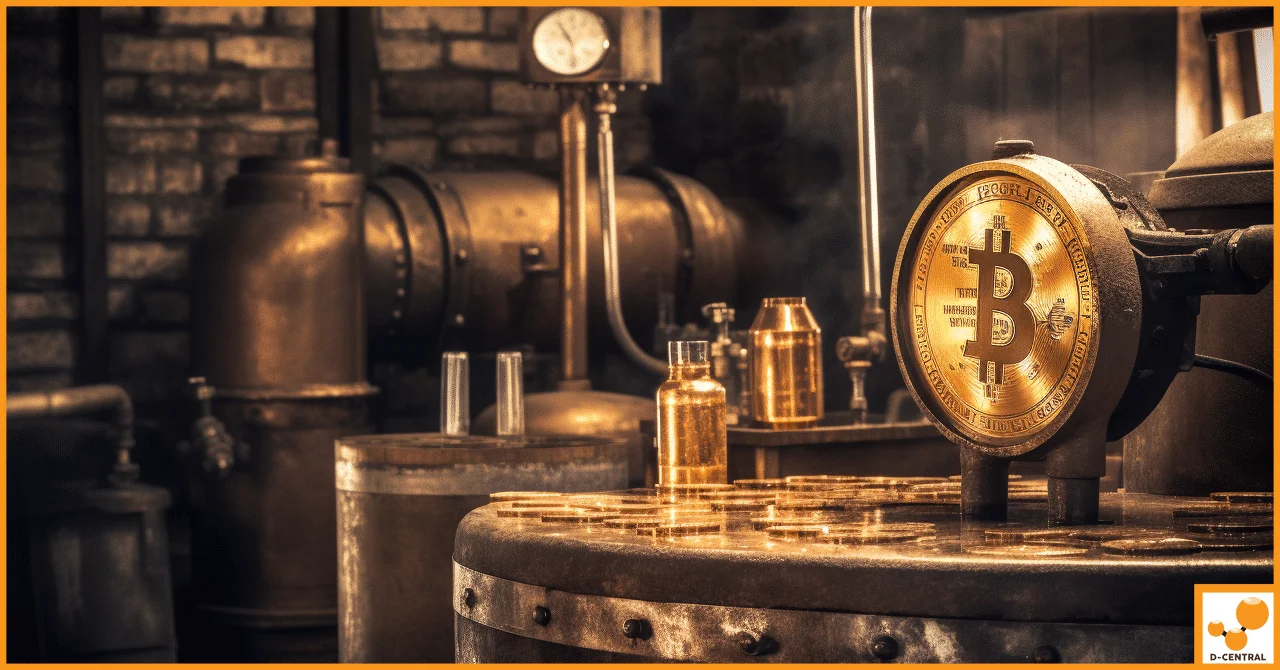
Every ASIC miner on the planet converts electricity into two things: SHA-256 hashes and heat. That heat is not waste — it is a 100% efficient byproduct that can be captured and deployed. Breweries and distilleries, with their enormous thermal demands for mashing, boiling, distillation, and sterilization, are among the most natural partners for Bitcoin mining heat recovery. The math is straightforward: if you are already burning fossil fuels to generate heat, you can instead run Bitcoin miners, capture the thermal output, and earn BTC while slashing your energy bills.
This is not theoretical. Real operations in Canada and around the world are already doing it. And as Bitcoin’s network hashrate pushes past 800 EH/s in 2026, more miners are looking for creative ways to monetize their thermal output — making brewery and distillery partnerships increasingly attractive for both sides.
Why Bitcoin Mining Heat Is Perfect for Breweries and Distilleries
Brewing and distilling are fundamentally thermal processes. From heating strike water to running a pot still, these operations demand consistent, controllable heat at specific temperature ranges. Here is the critical insight: a modern ASIC miner like the Antminer S19 or S21 exhausts air at 50-70°C (122-158°F) — a temperature range that aligns directly with many brewing and distilling process requirements.
| Process | Temperature Required | ASIC Heat Suitable? |
|---|---|---|
| Pre-heating water | 20-50°C (68-122°F) | Excellent — direct use |
| Mashing | 62-72°C (144-162°F) | Good — supplements primary heat |
| Hot liquor tank | 75-80°C (167-176°F) | Good — pre-heating reduces fuel use |
| Fermentation room heating | 18-22°C (64-72°F) | Excellent — direct space heating |
| Barrel room climate control | 15-20°C (59-68°F) | Excellent — direct space heating |
| Bottle washing / sterilization | 80-100°C (176-212°F) | Partial — pre-heating only |
| Distillation | 78-100°C (172-212°F) | Partial — pre-heating feedwater |
The key takeaway: ASIC heat excels at pre-heating and low-to-mid temperature applications. Even for higher-temperature processes like distillation, pre-heating feedwater from ambient to 50-60°C before it enters the boiler dramatically reduces fuel consumption. Every degree of pre-heating you get from Bitcoin miners is a degree you do not pay your gas company for.
The Economics: Mining BTC While Heating Your Operation
This is where the math gets compelling. A typical craft brewery spends $3,000-$15,000 per month on heating and hot water, depending on size, climate, and production volume. A small distillery can spend even more due to the continuous heat demands of the still.
Now consider a rack of 10 Antminer S19k Pro units:
| Metric | Value |
|---|---|
| Total hashrate | ~1,200 TH/s |
| Total power draw | ~27 kW |
| Thermal output | ~92,000 BTU/hr (27 kW = 27 kW of heat) |
| Monthly electricity cost (at $0.07/kWh) | ~$1,360 |
| Estimated monthly BTC revenue | Variable — depends on difficulty and BTC price |
| Block reward (2026) | 3.125 BTC per block |
| Heating value offset | $500-$1,500+/month in displaced fuel |
Here is the paradigm shift: the electricity cost is not purely a heating expense — it is simultaneously a Bitcoin mining investment. You are getting heat and BTC. Compare that to a natural gas boiler where your fuel expense produces only heat and nothing else. When you factor in the Bitcoin earned, the effective cost of heating drops dramatically — and in favorable conditions, it can become net profitable.
With the current block reward at 3.125 BTC following the April 2024 halving, and network hashrate exceeding 800 EH/s, efficiency matters more than ever. But that is exactly what makes heat recovery so powerful: it turns your thermal output from a cost center into a value stream.
Implementation: How to Set Up Bitcoin Mining Heat Recovery
Setting up a mining heat recovery system for a brewery or distillery is not a weekend project, but it is far from impossible. Here is the practical breakdown:
Step 1: Thermal Audit
Map your facility’s heat demands by process, temperature, and schedule. Identify which processes can accept 50-65°C input heat. This determines the size of your mining operation and the type of heat exchange system you need.
Step 2: Choose Your Hardware
For brewery and distillery applications, you want miners that produce high thermal output with good efficiency. D-Central’s Bitcoin Space Heaters are purpose-built for exactly this kind of heat recovery application — ASIC miners packaged in enclosures designed for thermal capture and distribution. For larger operations, standard rack-mounted ASICs with custom ducting work well.
Step 3: Heat Capture and Distribution
There are two primary approaches:
- Air-to-air: Duct the hot exhaust air from miners directly into the space or through a heat exchanger. Simple, low cost, effective for space heating (fermentation rooms, barrel storage, tasting rooms).
- Air-to-water: Run the miner exhaust through an air-to-water heat exchanger to heat process water. More complex but far more useful for brewing and distilling applications where you need hot water, not hot air.
Step 4: Integration with Existing Systems
The most practical approach is to use miner heat for pre-heating. Incoming cold water passes through the mining heat exchanger first, raising its temperature by 20-40°C before entering your existing boiler or HLT. Your boiler still fires — but it burns 30-50% less fuel because the water is already warm. This requires minimal changes to existing brewing systems.
Step 5: Electrical Infrastructure
ASICs require dedicated 240V circuits with appropriate amperage. A rack of 10 miners needs roughly 120A at 240V. Work with a licensed electrician to ensure your panel and wiring can handle the load. Many breweries already have substantial electrical infrastructure, making this easier than in residential settings.
Real-World Examples: It Is Already Happening
This is not speculative — multiple operations are already running Bitcoin mining heat recovery in the brewing and distilling space:
Shelter Point Distillery (Vancouver Island, Canada) partnered with a Bitcoin mining operation to capture waste heat for their whisky production. The excess thermal energy from ASIC miners supplements their distillation process, reducing natural gas consumption while the mining operation earns Bitcoin. A Canadian operation proving the concept works in our climate.
MintGreen (Vancouver, Canada) built a business model around selling Bitcoin mining heat to commercial customers, including breweries. Their “Digital Boiler” technology captures mining heat and delivers it through hydronic systems to commercial and industrial clients.
These Canadian examples are particularly relevant because Canada’s cold climate means breweries and distilleries face higher heating costs for more months of the year — making the economic case for mining heat recovery even stronger. As a Canadian Bitcoin mining company, D-Central understands this advantage intimately. Our mining consulting services can help you evaluate the feasibility for your specific operation.
The Canadian Advantage: Cold Climate + Cheap Power
Canada offers a unique combination of factors that make brewery mining heat recovery particularly attractive:
| Factor | Canadian Advantage |
|---|---|
| Climate | 6-8 months of heating season = longer useful heat capture period |
| Electricity rates | Quebec hydro at $0.04-0.07/kWh — among the cheapest in the world |
| Energy source | 95%+ hydroelectric in Quebec — genuinely clean energy |
| Craft beer/spirits market | Thriving industry with 1,200+ craft breweries nationally |
| Carbon pricing | Federal carbon tax makes fossil fuel displacement more valuable |
For a Quebec brewery running on Hydro-Quebec rates, the electricity cost of mining is already low. Combine that with 6-8 months where you genuinely need the heat, and the economic equation tilts heavily in favor of mining. You are mining Bitcoin with some of the cheapest, cleanest electricity on Earth, and capturing 100% of the thermal output for your production process.
Beyond Heat: Diversifying Revenue Streams
The Bitcoin mining heat recovery model does more than just reduce heating costs. It fundamentally changes the economics of a brewery or distillery:
- Bitcoin accumulation: Every hash contributes to block discovery. With a block reward of 3.125 BTC in 2026, even pool mining generates steady satoshi flow. Stack sats while you brew.
- Energy independence: Reduce dependence on volatile natural gas prices. Your heating costs become a function of electricity rates (which are more stable and predictable) plus Bitcoin earnings.
- Marketing differentiation: “Bitcoin-heated craft beer” is a story customers and media love. It is genuine, it is innovative, and it aligns with the growing demand for sustainable business practices.
- Network participation: By running miners, your brewery contributes to Bitcoin network security and decentralization. You are not just making beer — you are strengthening the most important decentralized network in human history.
D-Central’s mining hosting services can also support breweries and distilleries that want to start mining but are not ready to manage the hardware themselves. We handle the technical side while you capture the heat.
Getting Started: What You Need to Know
If you are a brewery or distillery owner considering Bitcoin mining heat recovery, here is your checklist:
- Assess your thermal load: How much heat do you use monthly? What temperature ranges? What is your current fuel cost?
- Check your electrical capacity: Do you have room on your panel for 30-120+ amps at 240V? Can your utility provide additional service if needed?
- Evaluate your space: Miners need a dedicated area with adequate ventilation (even though you are capturing the heat, you need airflow management). A 10-miner rack fits in roughly 4×8 feet.
- Consider noise: ASIC miners are loud (75-80 dB). They need to be in a space away from customer-facing areas, or use purpose-built enclosures that dampen sound while capturing heat.
- Talk to experts: D-Central has been building custom mining solutions since 2016. Our team can evaluate your facility, recommend the right hardware, and design a heat recovery system that integrates with your existing brewing infrastructure. Contact our consulting team to get started.
For breweries interested in starting smaller, open-source miners like the Bitaxe offer a low-cost entry point to understand mining operations before scaling up. While a single Bitaxe will not heat your mash tun, it is an excellent educational tool for understanding how mining works — and the heat it produces can warm a small office or server room.
The Bigger Picture: Decentralizing Everything
At D-Central, we see Bitcoin mining heat recovery in breweries and distilleries as part of a larger mission: decentralizing every layer of Bitcoin mining. When a craft brewery in Montreal or a distillery in British Columbia runs miners, they are not just saving on heating costs. They are distributing hashrate across the network, making Bitcoin more resilient, more censorship-resistant, and more decentralized.
The industrial mining farms will always exist. But a future where thousands of breweries, distilleries, farms, greenhouses, and homes are all running miners and capturing heat — that is a future where Bitcoin’s network is genuinely distributed and unstoppable. Every hash counts.
If your brewery or distillery needs ASIC repair services to keep your mining heat recovery system running at peak efficiency, D-Central’s repair team has serviced thousands of miners since 2016. We are Canada’s Bitcoin Mining Hackers — and we are here to help you mine, heat, and brew.
Ready to explore Bitcoin mining heat recovery for your brewery or distillery? Browse our hardware or book a consultation with our team.
What temperature does Bitcoin mining equipment produce?
Modern ASIC miners like the Antminer S19 and S21 series exhaust air at 50-70°C (122-158°F). This temperature range is ideal for pre-heating water, space heating fermentation rooms and barrel storage, and supplementing hot liquor tanks. For higher-temperature processes like boiling or distillation, miner heat serves as an effective pre-heating stage that reduces the fuel required by your primary heating system.
How much can a brewery save on heating with Bitcoin mining?
Savings depend on your current heating costs, electricity rates, and the scale of your mining operation. A rack of 10 ASIC miners produces approximately 92,000 BTU/hr of heat — equivalent to a medium-sized furnace. For a typical craft brewery spending $5,000-$10,000/month on heating, integrating mining heat can offset 30-50% of that cost. The Bitcoin earned on top of this makes the effective heating cost even lower, potentially reaching net-positive economics.
Is Bitcoin mining too noisy for a brewery or distillery?
Standard ASIC miners operate at 75-80 dB — comparable to a vacuum cleaner or loud conversation. They should be placed in a dedicated space away from customer-facing areas such as taprooms or tasting rooms. Purpose-built enclosures like D-Central’s Bitcoin Space Heaters include sound dampening while maintaining heat capture. Many breweries already have noisy mechanical rooms that are ideal for housing miners.
Do I need special electrical infrastructure?
Yes. ASIC miners require 240V power with dedicated circuits. A single miner draws 10-15 amps, so a rack of 10 needs 100-150 amps of dedicated capacity. Most commercial breweries and distilleries already have substantial electrical service, but you may need panel upgrades or additional circuits. Always work with a licensed electrician familiar with high-density electrical loads.
Can I start small before committing to a full setup?
Absolutely. You can begin with 1-3 miners to test the concept, measure actual heat output and capture rates, and evaluate the impact on your utility bills. Open-source devices like the Bitaxe are also an excellent way to learn about mining operations at minimal cost before scaling to commercial ASIC hardware. D-Central’s consulting team can help you design a phased rollout plan.
What happens to the mining revenue?
All Bitcoin mined belongs to you. With the current block reward at 3.125 BTC (post-April 2024 halving) and network hashrate above 800 EH/s, individual miners earn proportional rewards through mining pools. The BTC earned offsets your electricity cost, making the heat effectively cheaper than any fossil fuel alternative. Many operators choose to hold their Bitcoin long-term as a treasury asset.
Is this legal in Canada?
Yes. Bitcoin mining is fully legal in Canada. There are no special permits required for operating mining hardware in a commercial setting beyond standard electrical permits for the power installation. Mining income is taxable as business income or capital gains depending on your structure — consult your accountant for proper reporting. Canada’s regulatory environment is one of the most mining-friendly in the world.
Can D-Central help set up a mining heat recovery system for my brewery?
Yes. D-Central has been building custom Bitcoin mining solutions since 2016. We offer mining consulting to evaluate your facility, recommend hardware, and design heat recovery integration. We also provide ASIC repair services to keep your operation running at peak efficiency, and our shop carries the full range of mining hardware from open-source Bitaxe devices to industrial ASIC miners.
{
“@context”: “https://schema.org”,
“@type”: “FAQPage”,
“mainEntity”: [
{
“@type”: “Question”,
“name”: “What temperature does Bitcoin mining equipment produce?”,
“acceptedAnswer”: {
“@type”: “Answer”,
“text”: “Modern ASIC miners like the Antminer S19 and S21 series exhaust air at 50-70°C (122-158°F). This temperature range is ideal for pre-heating water, space heating fermentation rooms and barrel storage, and supplementing hot liquor tanks. For higher-temperature processes like boiling or distillation, miner heat serves as an effective pre-heating stage that reduces the fuel required by your primary heating system.”
}
},
{
“@type”: “Question”,
“name”: “How much can a brewery save on heating with Bitcoin mining?”,
“acceptedAnswer”: {
“@type”: “Answer”,
“text”: “Savings depend on your current heating costs, electricity rates, and the scale of your mining operation. A rack of 10 ASIC miners produces approximately 92,000 BTU/hr of heat — equivalent to a medium-sized furnace. For a typical craft brewery spending $5,000-$10,000/month on heating, integrating mining heat can offset 30-50% of that cost. The Bitcoin earned on top of this makes the effective heating cost even lower, potentially reaching net-positive economics.”
}
},
{
“@type”: “Question”,
“name”: “Is Bitcoin mining too noisy for a brewery or distillery?”,
“acceptedAnswer”: {
“@type”: “Answer”,
“text”: “Standard ASIC miners operate at 75-80 dB — comparable to a vacuum cleaner or loud conversation. They should be placed in a dedicated space away from customer-facing areas such as taprooms or tasting rooms. Purpose-built enclosures like D-Central’s Bitcoin Space Heaters include sound dampening while maintaining heat capture. Many breweries already have noisy mechanical rooms that are ideal for housing miners.”
}
},
{
“@type”: “Question”,
“name”: “Do I need special electrical infrastructure?”,
“acceptedAnswer”: {
“@type”: “Answer”,
“text”: “Yes. ASIC miners require 240V power with dedicated circuits. A single miner draws 10-15 amps, so a rack of 10 needs 100-150 amps of dedicated capacity. Most commercial breweries and distilleries already have substantial electrical service, but you may need panel upgrades or additional circuits. Always work with a licensed electrician familiar with high-density electrical loads.”
}
},
{
“@type”: “Question”,
“name”: “Can I start small before committing to a full setup?”,
“acceptedAnswer”: {
“@type”: “Answer”,
“text”: “Absolutely. You can begin with 1-3 miners to test the concept, measure actual heat output and capture rates, and evaluate the impact on your utility bills. Open-source devices like the Bitaxe are also an excellent way to learn about mining operations at minimal cost before scaling to commercial ASIC hardware. D-Central’s consulting team can help you design a phased rollout plan.”
}
},
{
“@type”: “Question”,
“name”: “What happens to the mining revenue?”,
“acceptedAnswer”: {
“@type”: “Answer”,
“text”: “All Bitcoin mined belongs to you. With the current block reward at 3.125 BTC (post-April 2024 halving) and network hashrate above 800 EH/s, individual miners earn proportional rewards through mining pools. The BTC earned offsets your electricity cost, making the heat effectively cheaper than any fossil fuel alternative. Many operators choose to hold their Bitcoin long-term as a treasury asset.”
}
},
{
“@type”: “Question”,
“name”: “Is this legal in Canada?”,
“acceptedAnswer”: {
“@type”: “Answer”,
“text”: “Yes. Bitcoin mining is fully legal in Canada. There are no special permits required for operating mining hardware in a commercial setting beyond standard electrical permits for the power installation. Mining income is taxable as business income or capital gains depending on your structure — consult your accountant for proper reporting. Canada’s regulatory environment is one of the most mining-friendly in the world.”
}
},
{
“@type”: “Question”,
“name”: “Can D-Central help set up a mining heat recovery system for my brewery?”,
“acceptedAnswer”: {
“@type”: “Answer”,
“text”: “Yes. D-Central has been building custom Bitcoin mining solutions since 2016. We offer mining consulting to evaluate your facility, recommend hardware, and design heat recovery integration. We also provide ASIC repair services to keep your operation running at peak efficiency, and our shop carries the full range of mining hardware from open-source Bitaxe devices to industrial ASIC miners.”
}
}
]
}
 Nerdaxe Gamma / Supra / Ultra — Silent Operation & Stable Overclocking" width="80" height="80" loading="lazy" style="width:80px;height:80px;object-fit:contain;border-radius:6px;background:#1A1A1A;flex-shrink:0;">
Shop Heatsinks
Nerdaxe Gamma / Supra / Ultra — Silent Operation & Stable Overclocking" width="80" height="80" loading="lazy" style="width:80px;height:80px;object-fit:contain;border-radius:6px;background:#1A1A1A;flex-shrink:0;">
Shop Heatsinks