The word “decentralization” gets thrown around a lot these days. Every venture-backed project and their dog claims to be decentralizing something — computing, storage, identity, your grandmother’s recipe book. But strip away the marketing gloss and you find that most of these projects miss the fundamental point: true decentralization is not a feature you bolt on. It is an architecture you build from the ground up, secured by thermodynamic reality rather than promises.
At D-Central Technologies, we have spent since 2016 living and breathing this principle. We are Bitcoin Mining Hackers — taking institutional-grade mining technology and hacking it into accessible solutions for home miners across Canada and worldwide. When we evaluate any “decentralized” project, we measure it against the only system that has actually delivered censorship-resistant decentralization at global scale: Bitcoin’s proof-of-work mining network.
This article examines the decentralized computing movement — platforms that create peer-to-peer marketplaces for GPU resources — and explains why Bitcoin’s ASIC-based proof-of-work remains the gold standard for meaningful decentralization. We will also explore how the principles driving decentralized computing directly parallel what we do every day: putting hash power into the hands of individuals.
The Decentralized Computing Thesis
The core idea behind decentralized GPU computing platforms is straightforward: instead of renting compute from Amazon, Google, or Microsoft — centralized entities that can censor, surveil, or price-gouge at will — you tap into a peer-to-peer mesh network of GPU owners. Individuals contribute idle GPU capacity, buyers rent it, and the middleman disappears.
On paper, this sounds compelling. The parallels to Bitcoin mining are obvious:
| Principle | Decentralized GPU Computing | Bitcoin Mining |
|---|---|---|
| Peer-to-peer network | GPU owners sell compute directly | Miners validate transactions without intermediaries |
| Permissionless participation | Anyone with a GPU can join | Anyone with an ASIC can mine |
| Resistance to censorship | No single entity controls access | No government can shut down the network |
| Economic incentive | Earn by renting idle hardware | Earn BTC block rewards (3.125 BTC per block) |
| Reduces corporate concentration | Breaks AWS/Azure monopoly | Distributes hash rate away from mega-farms |
The philosophical alignment is real. Both movements are born from the same cypherpunk instinct: do not trust centralized institutions with critical infrastructure. The difference is in execution, security model, and proven track record.
Why ASIC Proof-of-Work Is Superior Decentralization
Here is where we separate signal from noise. Decentralized GPU computing is an interesting experiment. Bitcoin mining is a battle-tested, thermodynamically secured, globally distributed monetary system processing hundreds of billions of dollars in value annually. The distinction matters.
1. Hardware Specialization Creates Skin in the Game
Bitcoin transitioned from CPU to GPU to ASIC mining for a reason. Application-Specific Integrated Circuits (ASICs) are purpose-built to do one thing: compute SHA-256 hashes as efficiently as possible. This specialization is a feature, not a bug.
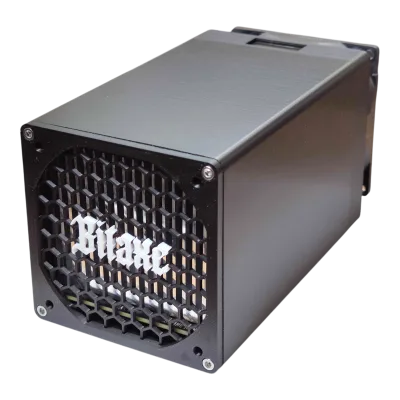
When a miner invests in an ASIC — whether it is a full-scale Antminer S21 or an open-source Bitaxe solo miner running off a 5V barrel jack on your desk — that hardware has no alternative use. It mines Bitcoin or it is a paperweight. This creates genuine economic commitment to the network’s security. GPU computing platforms lack this irreversible commitment; GPUs can pivot to gaming, rendering, AI training, or any other workload at a moment’s notice.
2. Energy-Backed Security vs. Token-Based Trust
Bitcoin’s proof-of-work converts real-world energy into network security. Every hash represents actual electricity consumed — a thermodynamic proof that work was performed. With the network now exceeding 800 EH/s globally, the cost to attack Bitcoin is measured in billions of dollars of energy expenditure. No committee vote, no token governance, no “slashing conditions” — just physics.
Most decentralized computing platforms rely on token-based incentive structures and reputation systems. These are social constructs, not physical ones. History shows that social consensus mechanisms are far more vulnerable to capture, manipulation, and regulatory pressure than energy-based ones.
3. Lindy Effect: 15+ Years of Uptime
Bitcoin has been running continuously since January 3, 2009, with 99.99%+ uptime. No other decentralized system comes close to this track record. Decentralized GPU computing platforms are interesting experiments measured in months or a few years, not decades. The Lindy Effect tells us that the longer a system survives, the longer it is likely to continue surviving. Bitcoin’s proof-of-work has earned that trust through time and adversarial conditions.
The Home Mining Revolution: Decentralization You Can Touch
This is where D-Central’s mission converges with the decentralization ethos. We believe the most important form of decentralization is not some abstract protocol running on rented cloud servers — it is physical hash rate in the hands of individuals.
Every Bitaxe humming on a desk, every Bitcoin Space Heater warming a Canadian home in January, every repaired Antminer getting a second life — these are acts of decentralization that matter. They distribute hash rate geographically, economically, and politically in ways that no token governance scheme can replicate.
The Open-Source Mining Stack
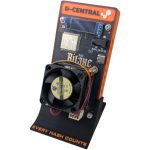
The Bitaxe ecosystem is the open-source computing movement done right. Fully open-source hardware designs, community-driven firmware development, and accessible price points mean that anyone can participate in securing the Bitcoin network. D-Central has been a pioneer in this ecosystem since the beginning — we created the original Bitaxe Mesh Stand, developed leading heatsink solutions for both the Bitaxe and Bitaxe Hex, and stock every variant from the Supra to the GT.
| Device | Power Input | Mining Type | Best For |
|---|---|---|---|
| Bitaxe Supra / Ultra / Gamma | 5V DC barrel jack (5.5×2.1mm) | Solo mining (SHA-256) | Desktop solo mining, education |
| Bitaxe GT | 12V DC XT30 connector | Solo mining (SHA-256) | Higher hashrate solo mining |
| Bitaxe Hex | 12V DC XT30 connector | Solo mining (SHA-256) | Multi-chip solo mining |
| NerdAxe / NerdQAxe | 5V DC barrel jack / 12V XT30 | Solo mining (SHA-256) | Open-source enthusiasts, education |
| Antminer S-Series (Space Heater) | APW PSU (220V recommended) | Pool or solo mining | Home heating + mining dual-purpose |
This is what decentralized hardware looks like in practice. Not a VC pitch deck — actual machines, running actual SHA-256 computations, secured by actual energy expenditure.
Dual-Purpose Mining: The Decentralization Multiplier
One of the most overlooked advantages of Bitcoin mining over generalized GPU computing is the thermal output story. An ASIC miner converts virtually 100% of its electrical input into heat. In a cold-climate country like Canada, this is not waste — it is a resource.
D-Central’s Bitcoin Space Heater lineup transforms decommissioned ASICs into home heating units. You are simultaneously warming your house and contributing hash rate to the Bitcoin network. Try doing that with a rented GPU instance on a decentralized computing platform.
This dual-purpose model is the ultimate decentralization play:
- Geographic distribution — Miners in homes across the country, not concentrated in data centers
- Economic resilience — Heat value offsets electricity costs, making mining viable even in challenging market conditions
- Censorship resistance — Thousands of residential miners are far harder to shut down than a handful of warehouse operations
- Energy efficiency — Zero wasted heat when you need the warmth anyway
Lessons from Decentralized Computing for the Bitcoin Miner
We are not dismissing the decentralized computing movement entirely. There are genuine lessons Bitcoin miners can take from the ethos driving these platforms:
1. Monetize idle resources. If you have mining hardware that sits idle during certain hours (perhaps during peak electricity pricing), consider how you might optimize uptime or repurpose heat output rather than simply shutting down.
2. Resist regulatory capture. The GPU computing space has seen firsthand how large corporations lobby for regulations that create barriers to entry. Bitcoin miners face similar threats — KYC requirements on mining pools, energy-use restrictions, hash rate reporting mandates. The response must be the same: build systems that are censorship-resistant by design, not by policy.
3. Peer-to-peer is the way. The instinct to bypass centralized intermediaries is correct. In Bitcoin mining, this means supporting pool decentralization efforts like Stratum V2, running your own node, and considering solo mining with devices like the Bitaxe — where you submit blocks directly to the network, no pool required.
4. Open-source hardware matters. Just as decentralized computing platforms aim to prevent vendor lock-in with cloud providers, open-source mining hardware (Bitaxe, NerdAxe, NerdQAxe) prevents dependency on a single ASIC manufacturer. This is structural decentralization of the supply chain itself.
ASIC Repair: Extending the Decentralized Mining Lifecycle
There is another dimension to decentralization that decentralized computing platforms rarely address: hardware longevity. When a GPU fails in a cloud data center, it gets replaced from a supply chain controlled by a handful of manufacturers. The end user has no ability to repair or extend the life of that hardware.
Bitcoin mining is different — or at least it can be. D-Central’s ASIC repair service has been extending the life of mining hardware since 2016, with expertise spanning 38+ ASIC models across Bitmain, MicroBT, Innosilicon, and Canaan lineups. Every repaired hashboard is hash rate that stays in the hands of an individual miner rather than ending up in an e-waste pile.
This right-to-repair ethos is decentralization applied to the physical layer. You own your hardware. You can fix your hardware. You are not dependent on a manufacturer’s willingness to support obsolete models.
The Bottom Line: Decentralize What Matters
Decentralized GPU computing platforms represent an interesting application of peer-to-peer principles to the compute market. The philosophical alignment with Bitcoin’s decentralization mission is real. But when it comes to securing a global monetary network — protecting the most important financial infrastructure humanity has ever built — there is no substitute for ASIC-based proof-of-work.
The energy expenditure is the point. The hardware specialization is the point. The thermodynamic irreversibility is the point. These are not inefficiencies to be optimized away; they are the security model.
At D-Central, we are committed to decentralizing every layer of Bitcoin mining — from the ASIC chips on the board to the heat coming out of the enclosure. Whether you are setting up your first Bitaxe, converting an old Antminer into a space heater, or shipping a hashboard to our repair facility in Quebec, you are participating in the most important decentralization project in history.
Every hash counts.
Frequently Asked Questions
Why is ASIC proof-of-work better than GPU-based decentralized computing for security?
ASIC miners are purpose-built for a single algorithm (SHA-256 for Bitcoin). This hardware specialization creates irreversible economic commitment to the network — the hardware cannot be repurposed. GPU computing platforms lack this commitment since GPUs can switch between gaming, AI, rendering, and mining. Bitcoin’s ASIC-based proof-of-work also converts real energy into security (over 800 EH/s globally), creating a thermodynamic barrier to attack that no token-based governance system can match.
Can I participate in Bitcoin’s decentralization from home?
Absolutely. Home mining is the most impactful form of decentralization because it distributes hash rate geographically and politically. Devices like the Bitaxe (starting with a simple 5V barrel jack power connection) let you solo mine Bitcoin from your desk. For more hash rate, Bitcoin Space Heaters convert ASIC miners into dual-purpose home heating units — you warm your house while securing the network. D-Central has been pioneering accessible home mining solutions since 2016.
What is the difference between solo mining and pool mining?
Pool mining combines your hash rate with other miners and shares block rewards proportionally. Solo mining means your device submits blocks directly to the Bitcoin network — if you find a block, you receive the entire 3.125 BTC reward. Solo mining with a Bitaxe is often called lottery mining due to the low probability, but it represents the purest form of permissionless participation in Bitcoin. Every hash is a chance.
How does Bitcoin mining as home heating work?
ASIC miners convert virtually 100% of their electrical input into heat. In cold climates like Canada, this heat is not wasted — it replaces conventional heating. D-Central’s Bitcoin Space Heater lineup encloses decommissioned ASICs (S9, S17, S19 models) in purpose-built enclosures that direct hot air into living spaces. You pay for electricity you would have spent on heating anyway, but you also earn Bitcoin in the process.
Why does D-Central focus exclusively on Bitcoin mining and not other cryptocurrencies?
Bitcoin is the only cryptocurrency with a truly decentralized, censorship-resistant network secured by over a decade of continuous proof-of-work. Its monetary policy is fixed, its network effect is unmatched, and its security model is grounded in thermodynamic reality rather than social consensus. D-Central’s mission is to decentralize every layer of Bitcoin mining specifically because Bitcoin is the only network where that decentralization meaningfully protects individual sovereignty.
What is a Bitaxe and how does it contribute to decentralization?
The Bitaxe is an open-source, ASIC-based solo Bitcoin miner. Available in multiple variants (Supra, Ultra, Gamma, GT, Hex), it allows anyone to mine Bitcoin independently without joining a pool. The hardware designs are fully open-source, meaning the supply chain itself is decentralized — anyone can manufacture one. D-Central is a pioneer in the Bitaxe ecosystem, having created the original Mesh Stand and developed leading heatsink and accessory solutions.