Every ASIC miner is a thermodynamic machine. It converts electricity into SHA-256 computations and heat — roughly 99.9% heat, in fact. The hashrate your miner delivers is directly governed by how well you manage that thermal output. Run too hot, and the firmware throttles your chips. Run way too hot, and you destroy hashboards worth hundreds of dollars. Run cool, and you unlock the full potential of silicon that was engineered to push boundaries.
At D-Central Technologies, we have been repairing, modifying, and deploying ASIC miners since 2016. We have torn down thousands of machines, diagnosed tens of thousands of hashboard failures, and built custom solutions — from Bitcoin Space Heaters to compact Slim Edition Antminers — that put institutional-grade mining hardware into the hands of home miners. Heat management is not an afterthought in our world. It is the foundation of every build, every repair, and every deployment we ship.
This guide covers everything a home miner or small-scale operator needs to know about keeping ASIC hardware cool, efficient, and profitable.
Why Heat Is the Enemy of Hashrate
ASIC chips are designed to operate within a specific thermal envelope. Bitmain’s Antminer S19 series, for example, specifies an operating range of 5 C to 40 C ambient. Exceed that ceiling, and several things happen in rapid succession:
- Thermal throttling. The control board reduces clock frequency to protect the chips. Your 100 TH/s machine might drop to 70 TH/s or lower.
- Chip degradation. Prolonged exposure to temperatures above 85-90 C at the chip junction accelerates electromigration — the physical movement of metal atoms within the chip. This is irreversible damage.
- Solder joint fatigue. The BGA (Ball Grid Array) connections between ASIC chips and the hashboard PCB expand and contract with thermal cycling. Excessive heat widens those cycles and cracks solder joints — the single most common failure mode we see in our ASIC repair lab.
- Fan failure. Fans running at 100% RPM continuously wear out bearings faster. A seized fan in a dual-fan machine means instant overtemp shutdown.
The math is straightforward: every degree you reduce chip junction temperature extends hardware lifespan and protects your hashrate. Cooling is not a cost — it is an investment in uptime.
Understanding ASIC Thermal Architecture
Before you can cool a miner effectively, you need to understand how it moves heat internally. Most air-cooled ASIC miners follow the same basic architecture:
| Component | Function | Thermal Role |
|---|---|---|
| ASIC chips | SHA-256 computation | Primary heat source (95%+ of total thermal output) |
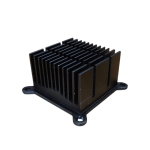
| Heatsinks | Thermal mass and surface area | Absorb chip heat and transfer to airflow |
| Thermal paste / pads | Interface material | Bridge gap between chip and heatsink |
| Intake fans | Pull cool ambient air in | Create negative pressure through heatsink fins |
| Exhaust fans | Push heated air out | Expel thermal energy from the chassis |
| Control board | Firmware and fan control | Monitors chip temps and adjusts fan RPM |
The airflow path is linear: cool air enters one side, passes over the heatsinks on each hashboard, and exits the opposite side as hot exhaust. This is fundamentally different from a PC with radial fans — ASIC miners are wind tunnels by design, and your room layout needs to respect that.
Airflow Management: The Foundation of Every Setup
The single most impactful thing you can do for miner cooling is manage airflow correctly. This applies whether you are running a single Antminer in a garage or a rack of machines in a dedicated space.
The Hot Side / Cold Side Principle
Every miner has an intake side (cold) and an exhaust side (hot). The exhaust air from an Antminer S19 can reach 60-70 C. If that hot exhaust recirculates back to the intake side, you are feeding your miner its own waste heat — a vicious cycle that drives temperatures up and hashrate down.
The fix: Physically separate hot and cold zones. In a home setup, this can be as simple as mounting the miner in a window, wall opening, or duct system so exhaust vents outside while intake draws from interior air. For dedicated rooms, use baffles, curtains, or drywall to create a hot aisle / cold aisle separation.
Ducting for Home Miners
For home miners running one to three machines, ducting is the most practical solution. Use 6-inch or 8-inch insulated flex duct connected to the exhaust side, routed to an exterior vent. An inline fan (like the AC Infinity Cloudline series) can boost airflow if the duct run exceeds 10 feet or includes bends.
Key rules for ducting:
- Keep duct runs as short and straight as possible — every 90-degree bend is equivalent to adding roughly 5 feet of straight duct in airflow resistance.
- Use insulated duct to prevent condensation in cold climates.
- Ensure the intake side has an unrestricted air supply — if you seal the exhaust perfectly but starve the intake, you create negative pressure and the miner’s fans fight the duct system instead of working with it.
- Install a backdraft damper on the exterior vent to prevent cold air from flowing back in when the miner is off.
Negative Pressure vs. Positive Pressure
In a dedicated mining room, you want slight negative pressure. This means your exhaust capacity slightly exceeds your intake capacity. The result: hot air is actively pulled out, and cool air naturally flows in through intake openings. If you run positive pressure instead, hot air has nowhere to go and pools around the machines.
Heat Recovery: Turn Your Mining “Problem” Into a Feature
Here is where the Bitcoin Mining Hacker mindset flips the script. That exhaust heat is not waste — it is 100% efficient electric heating. Every watt your miner consumes becomes a watt of heat output. A 3,000W Antminer S19 produces roughly 10,200 BTU/hour of heat. That is equivalent to a large portable space heater.
D-Central has been pioneering this concept for years with our Bitcoin Space Heater product line. We take ASIC miners — S9s, S17s, S19s — and build them into enclosures designed for home heating integration. You mine Bitcoin while heating your home. In Canada, where heating season runs six to eight months per year, this dual-purpose approach can dramatically change the economics of home mining.
| Miner | Power Draw | Heat Output (BTU/h) | Heating Equivalent |
|---|---|---|---|
| Antminer S9 (1,350W) | 1,350W | ~4,600 BTU/h | Small room heater |
| Antminer S17 (2,500W) | 2,500W | ~8,530 BTU/h | Medium room heater |
| Antminer S19 (3,250W) | 3,250W | ~11,090 BTU/h | Large room / basement heater |
| Antminer S21 (3,500W) | 3,500W | ~11,940 BTU/h | Large room / basement heater |
In summer, you duct the heat outside. In winter, you duct it into your living space. The miner runs year-round, and the “cooling problem” becomes a heating solution for half the year. That is what it means to hack mining.
Cooling Strategies by Scale
Not every setup is the same. Here is what works at each scale:
Single Miner at Home (1-2 machines)
- Location: Garage, basement, utility room, or dedicated closet with ventilation.
- Cooling: Exhaust ducting to exterior. Inline fan if duct run is long.
- Winter mode: Redirect exhaust into living space for heating.
- Noise: The real constraint for most home miners. Consider shrouds and low-RPM fan mods. D-Central’s custom editions are designed with noise reduction in mind.
- Budget: $50-200 for duct kit, inline fan, and exterior vent.
Small Farm (3-10 machines)
- Location: Dedicated room, insulated shed, or modified shipping container.
- Cooling: Hot aisle / cold aisle separation. Industrial exhaust fans. Consider evaporative cooling in dry climates.
- Monitoring: Temperature sensors on intake and exhaust. Automated alerts for overtemp conditions.
- Power: Dedicated electrical panel. At 3,000W+ per machine, 10 miners pull 30kW — this requires proper electrical infrastructure.
Medium Operation (10-50 machines)
- Location: Shipping container, warehouse space, or purpose-built structure.
- Cooling: Engineered airflow with calculated CFM requirements. Hot aisle containment with physical barriers. Redundant exhaust fans.
- Advanced options: Immersion cooling for density and noise elimination. Evaporative cooling walls for dry climates.
- Professional support: At this scale, mistakes are expensive. D-Central’s mining consulting service can help you design a thermal management plan before you deploy.
Advanced Cooling Technologies
Immersion Cooling
Immersion cooling submerges ASIC miners in a dielectric (non-conductive) fluid — typically a synthetic or mineral oil. The fluid absorbs heat directly from the chips and heatsinks, eliminating the need for fans entirely. Benefits include near-silent operation, elimination of dust contamination, and the ability to overclock safely due to superior thermal transfer. Drawbacks include higher upfront cost, increased complexity for maintenance and repairs, and the need for specialized plumbing and heat exchangers.
Immersion is gaining traction in industrial deployments, but it remains impractical for most home miners due to cost and complexity.
Evaporative Cooling
Evaporative cooling passes hot exhaust air over water-saturated media. As water evaporates, it absorbs heat energy, dropping the air temperature by 10-15 C in dry climates. This is highly effective in arid regions but performs poorly in humid environments where the air is already saturated. For Canadian miners, evaporative cooling can be useful during dry summer months but should not be relied upon as a sole cooling strategy.
Underclocking and Custom Firmware
Sometimes the best cooling strategy is reducing the heat at the source. Custom firmware like Braiins OS+ allows you to underclock ASIC miners, reducing power consumption (and heat output) while maintaining a favorable joules-per-terahash ratio. A miner running at 80% power might produce only 60% of the heat while retaining 85% of the hashrate — an excellent tradeoff for home environments where thermal capacity is limited.
Maintenance: The Overlooked Cooling Strategy
A clean miner is a cool miner. Dust accumulation on heatsink fins acts as insulation, trapping heat where you want it dissipated. Over time, this leads to higher chip temperatures, increased fan speeds, more noise, more power draw, and eventually, component failure.
Maintenance schedule for ASIC miners:
| Task | Frequency | Impact |
|---|---|---|
| Compressed air blowout of heatsinks and fans | Every 3-6 months | Restores airflow, lowers chip temps 5-10 C |
| Fan inspection (bearing noise, RPM drop) | Every 6 months | Prevents sudden overtemp shutdowns |
| Thermal paste replacement | Every 1-2 years | Restores chip-to-heatsink thermal transfer |
| Air filter replacement (if using filtered intake) | Every 1-3 months | Prevents airflow restriction from clogged filters |
| Duct inspection (flex duct, exterior vent) | Annually | Ensures no blockages, animal nests, or duct collapse |
If you are not comfortable performing maintenance yourself, or if your miner has developed a persistent overheating issue, our ASIC repair team handles everything from basic cleaning and thermal paste replacement to full hashboard diagnostics and BGA chip rework.
Heat Management for Open-Source Miners
Not all miners are 3,000W industrial machines. Open-source miners like the Bitaxe, NerdAxe, and NerdQAxe generate far less heat, but thermal management still matters for longevity and stable hashrate.
The Bitaxe Supra, Ultra, and Gamma models draw around 15-25W via a 5V barrel jack (5.5×2.1mm DC connector) — not USB-C, which is reserved for firmware flashing only. At these power levels, a quality heatsink and passive airflow are usually sufficient. D-Central manufactures purpose-built heatsinks for both the standard Bitaxe and the Bitaxe Hex, along with the original Bitaxe Mesh Stand that we pioneered — designed specifically to promote natural convection airflow around the board.
For higher-power open-source miners like the Bitaxe Hex and Bitaxe GT (which use a 12V XT30 connector), proper heatsinking becomes more critical. Our Bitaxe Hub has detailed setup guides and accessory recommendations for every model in the lineup.
The Canadian Advantage
Canada’s cold climate is not just tolerable for Bitcoin mining — it is a genuine competitive advantage. For roughly six to eight months of the year, ambient temperatures in most Canadian provinces provide free cooling that miners in Texas, Georgia, or the Middle East have to pay for mechanically.
D-Central operates out of Quebec, where hydroelectric power is abundant and electricity rates are among the lowest in North America. Our hosting facility in Laval, Quebec is purpose-built for ASIC deployment, with engineered airflow, redundant cooling, and 24/7 monitoring. For miners who want professional-grade thermal management without building out their own infrastructure, hosting eliminates the cooling problem entirely.
But even for home miners across Canada, the climate means that for most of the year, your cooling strategy is simply “open the intake to outside air.” The challenge shifts in summer — and that is when ducting, underclocking, and smart scheduling become essential.
Summer Survival Checklist
When ambient temperatures climb above 30 C, home mining operations face their toughest test. Here is a practical checklist:
- Clean your miners before summer hits — remove all dust from heatsinks and fans.
- Check duct connections — ensure exhaust ducting is clear, tight, and venting outside effectively.
- Underclock if necessary — dropping to 80% power reduces heat output significantly while maintaining most of your hashrate.
- Schedule mining around temperature — if your electricity rate is flat, consider mining at higher hashrate during cooler nighttime hours and underclocking during peak afternoon heat.
- Monitor chip temperatures — set up alerts for any chip exceeding 80 C. Most miner firmware (including Braiins OS+) supports SNMP or API-based monitoring.
- Add supplemental airflow — a box fan blowing across the intake side of your miner can drop intake temps by 3-5 C in a hot room.
- Consider heat recovery reversal — if you ducted miner heat into your home during winter, make sure you have switched the duct path to exhaust outside for summer.
FAQ
What temperature should my ASIC miner run at?
Most ASIC miners are designed to operate with chip junction temperatures between 60-85 C and ambient intake temperatures between 5-40 C. Aim to keep chip temps below 80 C for optimal longevity. If your miner’s dashboard shows chips consistently above 85 C, you have a cooling problem that needs immediate attention.
Can I run an ASIC miner without ducting in my home?
You can, but you should not. A 3,000W miner dumps over 10,000 BTU/h of heat into your room. Without ducting, the room temperature will climb rapidly, the miner will recirculate its own hot exhaust, and performance will degrade. Even a single machine needs basic exhaust ducting to an exterior vent for sustainable operation.
How does underclocking help with heat management?
Underclocking reduces the voltage and frequency at which ASIC chips operate. This reduces power consumption and heat output more than proportionally to the hashrate loss. For example, an Antminer S19j Pro underclocked to 80% power might drop from 100 TH/s to 85 TH/s but reduce power consumption (and heat) from 3,050W to 2,440W — a 20% heat reduction for only a 15% hashrate loss.
Is immersion cooling worth it for home miners?
For most home miners, no. Immersion cooling systems require a significant upfront investment (tanks, dielectric fluid, pumps, heat exchangers) and make routine maintenance more complex. The primary benefits — silence and density — are better justified at scale. For home miners, proper ducting, underclocking, and heat recovery are more cost-effective approaches.
Do Bitaxe miners need active cooling?
Standard Bitaxe models (Supra, Ultra, Gamma) draw only 15-25W and can typically run with passive heatsink cooling in a well-ventilated space. However, a quality heatsink is essential — the bare PCB without a heatsink will overheat. D-Central manufactures purpose-built heatsinks for Bitaxe and Bitaxe Hex models. The higher-power Bitaxe Hex and GT benefit from a small fan directed at the heatsink in warmer environments.
How much does it cost to set up proper cooling for a home mining operation?
Basic exhaust ducting for a single miner (flex duct, inline fan, exterior vent, backdraft damper) typically costs $50-200 depending on duct length and quality. A hot aisle / cold aisle setup for 3-10 miners in a dedicated room might run $200-500 for materials. Immersion cooling starts at $2,000+ per miner and scales from there.
Can D-Central help me design a cooling setup?
Yes. Our mining consulting service covers everything from single-miner home setups to multi-container deployments. We can help you calculate CFM requirements, design duct layouts, select appropriate fans, and plan for seasonal heat recovery. We have been building mining operations in Canada since 2016 — we know the climate, the hardware, and the tradeoffs.