CleanSpark has been on an acquisition spree, snapping up Bitcoin mining facilities across the United States and rapidly scaling their hashrate into the hundreds of exahashes. They are not alone. Marathon Digital, Riot Platforms, Core Scientific, and a growing list of publicly traded companies are all racing to consolidate as much hashrate as possible under corporate roofs.
For anyone who understands why Bitcoin exists, this trend should set off alarm bells. Not because industrial mining is inherently bad — someone has to secure the network — but because unchecked consolidation of hashrate into a handful of corporate entities is the antithesis of what Bitcoin was designed to achieve.
At D-Central Technologies, we have been building the alternative since 2016. We are the Bitcoin Mining Hackers — taking institutional-grade mining technology and making it accessible to individuals. Every hash that moves from a corporate data center to a home miner’s garage is a vote for decentralization. And right now, that vote matters more than ever.
The Industrial Mining Consolidation Playbook
The playbook for publicly traded Bitcoin miners is straightforward: raise capital, acquire facilities, deploy next-generation ASICs at scale, and report hashrate growth to shareholders. CleanSpark exemplifies this approach. From their base in Nevada, they have expanded into Georgia, Mississippi, Wyoming, and beyond, acquiring turnkey data centers and filling them with the latest Antminer and Whatsminer hardware.
The numbers are staggering. Companies like CleanSpark now operate at scales that would have been unimaginable just a few years ago — hundreds of megawatts of power capacity, thousands of mining machines running in purpose-built facilities, and corporate structures designed to optimize shareholder returns rather than network decentralization.
Here is what the industrial mining landscape looks like today:
| Factor | Industrial Mining | Home / Pleb Mining |
|---|---|---|
| Hashrate Control | Concentrated in 5-10 public companies | Distributed across thousands of individuals |
| Regulatory Exposure | High — subject to SEC, local government, energy regulators | Low — individual sovereignty, no reporting obligations |
| Censorship Resistance | Vulnerable — can be compelled to filter transactions | Strong — no corporate entity to subpoena |
| Geographic Diversity | Clustered in low-cost power regions | Globally distributed in homes worldwide |
| Energy Source | Grid-dependent, negotiated power contracts | Often renewable — solar, hydro, excess energy monetization |
| Network Shutdown Risk | Single point of failure — one facility shutdown = massive hashrate loss | Antifragile — shutting down one home miner is meaningless |
The trend is clear. A small number of companies are accumulating an outsized share of Bitcoin’s total hashrate. This is not a conspiracy — it is the natural outcome of economies of scale in a capital-intensive industry. But the consequences for Bitcoin’s censorship resistance and decentralization are real.
Why Hashrate Consolidation Is a Problem
Bitcoin’s security model depends on a fundamental assumption: no single entity or coordinated group controls a majority of hashrate. When mining is spread across millions of independent operators, the network is resilient against censorship, coercion, and political interference. When it is concentrated in a handful of publicly traded companies subject to SEC regulation, shareholder pressure, and government oversight, that resilience erodes.
Consider these scenarios that become possible as hashrate consolidation deepens:
- Transaction censorship: A government could compel the top 5 mining companies to exclude specific transactions or addresses from blocks. With enough hashrate concentration, this becomes a viable attack vector.
- Regulatory capture: Mining companies dependent on government permits, power contracts, and securities regulation have strong incentives to comply with directives that may conflict with Bitcoin’s ethos — like implementing KYC requirements at the protocol level.
- Coordinated shutdown: A hostile regulatory action targeting the top 10 mining companies could remove a significant percentage of network hashrate overnight, destabilizing block production and fee markets.
- Pool centralization compounding: Industrial miners tend to concentrate in a few large mining pools, further centralizing block template construction and transaction selection.
None of these are theoretical. We have already seen governments ban Bitcoin mining (China, 2021), seize mining equipment, and propose regulations targeting large-scale mining operations. The more hashrate lives in corporate data centers, the more susceptible the network becomes to these attacks.
The Home Mining Counterweight
This is where home mining becomes not just a hobby, but a civic duty for anyone who cares about Bitcoin’s long-term survival as censorship-resistant money. Every terahash running in a basement, garage, or spare bedroom is a terahash that cannot be regulated, censored, or shut down by any government or corporation.
The economics of home mining have fundamentally changed in recent years. With the current block reward at 3.125 BTC and the network hashrate exceeding 800 EH/s, solo mining with a single ASIC is unlikely to find a block on its own. But that is not the only way to mine at home.
The home mining ecosystem has matured dramatically:
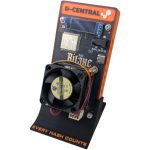
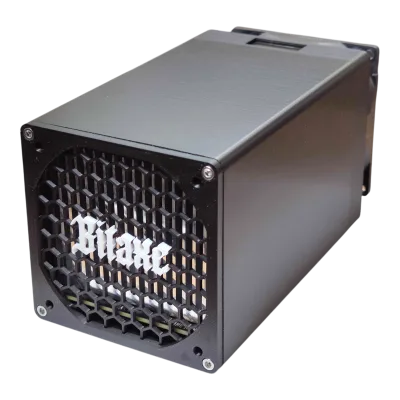
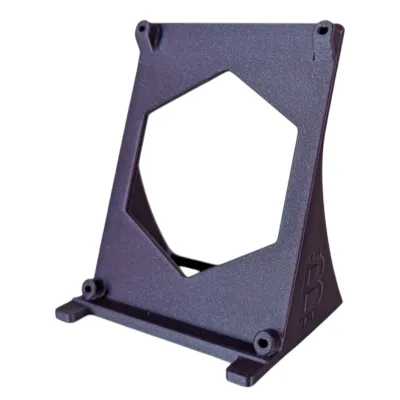
- Open-source solo miners like the Bitaxe let you participate in solo mining for the chance at a full 3.125 BTC block reward — lottery mining at its finest. D-Central is a pioneer in the Bitaxe ecosystem, having created the original Bitaxe Mesh Stand and developed leading heatsink solutions for every variant.
- Pool mining at home with full-size ASICs gives you consistent, proportional payouts while keeping the hashrate geographically distributed and under your control.
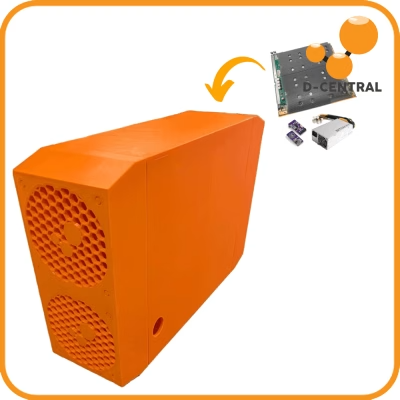
- Dual-purpose mining with Bitcoin Space Heaters turns your mining operation into a home heating system. In Canada, where heating is a necessity for most of the year, this means your mining operation is effectively subsidized by the heat you would have generated anyway.
- Small-scale open-source devices — NerdAxe, NerdQAxe, Nerdminer — provide entry points for builders and tinkerers who want to learn mining from the silicon up.
The D-Central Approach: Decentralize Every Layer
At D-Central Technologies, our mission has never changed: decentralization of every layer of Bitcoin mining. While CleanSpark and their peers build bigger data centers, we build the tools and knowledge base that empower individuals to mine at home.
Here is what that looks like in practice:
| D-Central Service | How It Fights Centralization |
|---|---|
| Open-Source Mining Hardware | Bitaxe, NerdAxe, NerdQAxe, and Nerdminer put hashrate directly in the hands of individuals — no corporate intermediary |
| Bitcoin Space Heaters | Dual-purpose mining makes home mining economically viable in cold climates by offsetting heating costs |
| ASIC Repair Services | Extends the lifespan of mining hardware, keeping older machines profitable and reducing e-waste |
| Mining Consulting | Helps individuals design and optimize home mining setups — electrical, ventilation, noise management |
| Canadian Mining Hosting | For those who cannot mine at home, our Quebec facility offers Canadian-operated hosting with transparent pricing |
We are not competing with CleanSpark. We are building the decentralized alternative to their entire model. Every Bitaxe we ship, every ASIC we repair, every space heater we build — it all contributes to a more distributed, more resilient Bitcoin network.
Canada’s Natural Advantage for Home Mining
Here in Canada, we have something that most of the world does not: a climate that makes home mining an obvious win. When temperatures drop below zero for five to six months of the year, every watt of power consumed by a Bitcoin miner is a watt that does not need to come from your furnace, baseboard heater, or heat pump.
Canadian home miners benefit from:
- Long heating season: From October through April in most of Canada, mining heat is not waste — it is utility. A single Antminer S19 produces roughly 3,000 watts of heat, equivalent to a large space heater.
- Competitive electricity rates: Quebec hydro rates remain among the lowest in North America, and many provinces offer time-of-use pricing that savvy miners can exploit.
- Abundant renewable energy: Canada generates over 80% of its electricity from non-emitting sources. Mining with Canadian hydro is among the cleanest in the world.
- Regulatory stability: Unlike some jurisdictions, Canada has not banned or heavily restricted Bitcoin mining at the federal level.
This is why D-Central is proudly Canadian. We are the North, and our climate is our competitive advantage. While industrial miners chase cheap power in Texas and Georgia, Canadian home miners are heating their homes and stacking sats simultaneously.
How to Start Mining at Home — the Practical Path
If the consolidation trend concerns you — and it should — the best response is action. Here is a practical framework for getting started with home mining:
Step 1: Assess your situation. How much excess electrical capacity do you have? What is your electricity rate? Do you need supplemental heating? These factors determine which approach makes sense for you.
Step 2: Choose your entry point. For solo mining enthusiasts, a Bitaxe is the perfect starting point — low power draw (5V barrel jack, not USB-C), silent operation, and the chance to hit a full 3.125 BTC block reward. For more serious hashrate, consider an Antminer configured as a space heater for dual-purpose mining. For builders and tinkerers, the NerdAxe and NerdQAxe offer hands-on open-source mining experience.
Step 3: Set up your infrastructure. This means dedicated electrical circuits, proper ventilation or heat ducting, and a mining pool or solo mining configuration. Our consulting service can help you design the optimal setup for your specific situation.
Step 4: Mine. Point your hardware at a pool (or solo mine with your Bitaxe), and start contributing to network decentralization. Every hash counts.
The Bottom Line: Decentralization Is Not Optional
CleanSpark and the other industrial miners will continue to grow. They will continue to acquire facilities, deploy hardware, and report impressive hashrate numbers to Wall Street. That is their business model, and it is effective.
But Bitcoin was not built for Wall Street. It was built for individuals. Satoshi’s whitepaper describes a “peer-to-peer electronic cash system” — not a “corporate-operated electronic cash system.” The security assumptions underlying Bitcoin’s consensus mechanism require decentralization. Without it, Bitcoin is just a slow, expensive database.
Home mining is how we preserve what makes Bitcoin valuable. It is how we ensure that no government, no corporation, and no boardroom can dictate which transactions get confirmed. It is how we keep the network censorship-resistant, permissionless, and sovereign.
At D-Central Technologies, we have been fighting this fight since 2016. We are the Bitcoin Mining Hackers, and we are here to make sure that the tools, knowledge, and hardware for decentralized mining remain accessible to everyone.
Ready to decentralize your hashrate? Browse our shop for open-source miners, space heaters, ASICs, and accessories. Need help designing your home mining setup? Our consulting team has been helping home miners since 2016. Got a broken ASIC collecting dust? Our repair service can bring it back online. Every hash counts.
What is hashrate consolidation and why does it matter for Bitcoin?
Hashrate consolidation refers to the concentration of Bitcoin mining power in a small number of large, often publicly traded companies. It matters because Bitcoin’s security and censorship resistance depend on mining being distributed across many independent operators. When a handful of companies control a significant share of hashrate, the network becomes vulnerable to regulatory pressure, transaction censorship, and coordinated shutdown.
Can home mining actually make a difference against industrial-scale operations?
Yes. While a single home miner contributes a tiny fraction of total hashrate, the collective effect of thousands of distributed miners creates a resilient base layer that cannot be easily targeted. Home miners also contribute to geographic diversity, pool decentralization, and censorship resistance. The goal is not to outcompete industrial miners on hashrate — it is to ensure that a meaningful portion of mining remains outside corporate and governmental control.
Is home mining profitable in 2026?
Profitability depends on your electricity rate, hardware efficiency, and whether you can utilize the waste heat. In cold climates like Canada, dual-purpose mining with Bitcoin Space Heaters can be highly effective because the heat offsets conventional heating costs. Solo mining with a Bitaxe is more about the lottery chance at a full 3.125 BTC block reward than consistent profitability, but even pool mining at home can be economically viable at electricity rates below $0.10/kWh.
What is a Bitaxe and how does it help decentralization?
The Bitaxe is an open-source, single-chip Bitcoin solo miner. It draws minimal power via a 5V barrel jack (not USB-C — the USB-C port is for firmware flashing only), runs silently, and gives you a shot at mining a full block reward of 3.125 BTC. Because it is open-source hardware, anyone can manufacture one, ensuring no single company controls the supply chain. D-Central is a pioneer in the Bitaxe ecosystem, having created the original Mesh Stand and developed heatsink solutions for all variants.
What is dual-purpose mining with Bitcoin Space Heaters?
Dual-purpose mining repurposes the heat generated by Bitcoin mining ASICs to warm your home. D-Central’s Bitcoin Space Heaters are purpose-built enclosures that direct ASIC heat output into living spaces, effectively turning your mining operation into a heating system. In Canadian winters, this means your electricity cost for mining is offset by the heating value you receive — making the economics significantly more favorable than mining in a ventilated data center environment.
How does D-Central Technologies support home miners?
D-Central provides the complete ecosystem for home mining: open-source miners (Bitaxe, NerdAxe, NerdQAxe, Nerdminer), full-size ASICs, Bitcoin Space Heaters for dual-purpose mining, replacement parts, ASIC repair services for 38+ ASIC models, mining consulting for setup optimization, and hosting in Quebec for those who cannot mine at home. Based in Canada and operating since 2016, D-Central is committed to the decentralization of every layer of Bitcoin mining.
Why does D-Central call themselves “Bitcoin Mining Hackers”?
D-Central takes institutional-grade mining technology — the same ASICs and firmware designed for massive corporate data centers — and hacks it into accessible solutions for home miners. Custom firmware, modified enclosures, space heater conversions, open-source hardware, and repair expertise are all part of the Mining Hacker ethos. The goal is to democratize technology that was never designed for individuals, making it work in homes, garages, and basements around the world.