The Bitcoin mining world rewards resourcefulness. If you have Scrypt-based Litecoin mining hardware sitting idle or underperforming, there is a practical path to redirect that hashpower toward accumulating Bitcoin — the only cryptocurrency that matters in the long run.
This is not about abandoning your hardware investment. It is about hacking your way from a Scrypt ASIC to a Bitcoin stacking machine using multi-algorithm mining pools, strategic payout routing, and the dual-purpose mining approach that D-Central Technologies has pioneered since 2016. Below is the complete playbook, updated for the current mining landscape in early 2026.
Why Bitcoiners End Up with Litecoin Hardware
Litecoin launched in 2011 using the Scrypt hashing algorithm, marketed as a more accessible alternative to Bitcoin’s SHA-256. The Scrypt algorithm was originally designed to be ASIC-resistant, allowing anyone with a GPU to participate. That promise attracted thousands of hobbyist miners.
The irony wrote itself quickly. By 2014, Scrypt ASICs arrived anyway — first the Gridseed devices, then the Innosilicon A2, and eventually the Bitmain Antminer L3+ in 2017. The “ASIC-resistant” barrier crumbled, and small-scale GPU miners were pushed out. The same centralization pressures that Scrypt was supposed to prevent replicated exactly.
The Current State of Scrypt Mining (2026)
Today, the Scrypt mining landscape is dominated by a handful of ASIC models:
| Model | Hashrate | Power Draw | Efficiency | Status |
|---|---|---|---|---|
| Antminer L3+ | 504 MH/s | 800 W | 1.59 W/MH | Legacy — best as a space heater |
| Antminer L7 | 9,050 MH/s | 3,425 W | 0.38 W/MH | Current flagship |
| Antminer L9 | 16,000 MH/s | 3,200 W | 0.20 W/MH | Latest generation |
| Elphapex DG1+ | 14,000 MH/s | 3,920 W | 0.28 W/MH | Competitor option |
If you own an L3+ today, its raw Litecoin mining profitability is marginal at best. But that does not make it worthless. It makes it a candidate for repurposing — and for Bitcoiners, repurposing means stacking sats.
The Core Strategy: Mine Scrypt, Get Paid in Bitcoin
Here is the fundamental concept. You cannot mine Bitcoin directly with Scrypt hardware — Bitcoin uses SHA-256. But you can mine Scrypt-based coins and automatically convert those rewards into Bitcoin through mining pools that support multi-coin payout routing.
The strategy works in three steps:
- Point your Scrypt ASIC at a multi-algorithm mining pool that supports Scrypt and automatic coin-switching.
- The pool mines whichever Scrypt coin is most profitable at any given moment (Litecoin, Dogecoin via merged mining, or other Scrypt coins).
- Set your payout to Bitcoin — the pool handles the conversion, and you receive sats directly to your wallet.
The result: your Litecoin hardware becomes a Bitcoin accumulation machine without ever touching SHA-256.
Multi-Algorithm Mining Pools That Support BTC Payouts
Several mining pools facilitate this Scrypt-to-Bitcoin conversion:
| Pool | BTC Payout | Auto-Switching | Notes |
|---|---|---|---|
| Prohashing | Yes | Yes | Automatic profit-switching across Scrypt coins, payout in BTC |
| NiceHash | Yes (native) | Marketplace | Sell Scrypt hashpower to buyers, get paid in BTC |
| Mining Dutch | Yes | Yes | Multi-algo pool with BTC conversion |
| Zpool | Yes | Yes | Auto-exchange to BTC, no registration required |
How Litecoin-Dogecoin Merged Mining Helps You Stack More Sats
Since 2014, Litecoin and Dogecoin have shared merged mining — you mine both simultaneously with the same Scrypt hashpower at zero additional cost. Most Scrypt mining pools today mine both LTC and DOGE by default.
From a Bitcoin-stacking perspective, this is useful because it increases the total fiat-denominated value of your mining output, which means more Bitcoin when the pool converts your earnings. You are not “investing” in Dogecoin or Litecoin — you are extracting maximum value from every watt your Scrypt hardware consumes and routing it all into Bitcoin.
Step-by-Step: Setting Up Your Scrypt Hardware for BTC Accumulation
Step 1 — Assess Your Hardware
Before connecting to any pool, evaluate what you have:
- Antminer L3+ (504 MH/s, 800W) — Viable for dual-purpose mining/heating. Marginal as a pure mining play unless your electricity is very cheap (under $0.05/kWh). Excellent as a space heater conversion.
- Antminer L7 (9,050 MH/s, 3,425W) — Currently profitable in most regions. The workhorse of Scrypt mining. D-Central carries the L7 Heater Pivotal Edition for dual-purpose heating and mining.
- Antminer L9 (16,000 MH/s, 3,200W) — Latest-gen, best efficiency. If you have one, Scrypt mining is solidly profitable and the BTC conversion strategy works well.
- Innosilicon A6+ (2.2 GH/s, 2,100W) — Mid-tier efficiency. Evaluate whether electricity costs make this viable.
Check your hardware for physical issues — dusty heatsinks, worn thermal paste, failing fans. A machine running at 80% of its rated hashrate due to maintenance neglect is leaving sats on the table. D-Central’s ASIC repair service can restore degraded miners to full performance.
Step 2 — Choose Your Pool and Create an Account
We will use Prohashing as the primary example, but the concept applies to any multi-coin pool with BTC conversion:
- Create an account at prohashing.com.
- Navigate to the payout settings page.
- Add your Bitcoin wallet address as the payout destination.
- Set your payout allocation to 100% Bitcoin (or whatever split you prefer — 100% BTC is the Bitcoiner’s choice).
- Enable profit-switching if available — this tells the pool to automatically mine whichever Scrypt coin is most profitable at any given moment.
Step 3 — Configure Your ASIC Miner
Access your miner’s web interface (typically at its local IP address on your network):
- Navigate to Miner Configuration or Pool Settings.
- Enter the pool’s Stratum URL. For Prohashing Scrypt:
stratum+tcp://prohashing.com:3333 - Set your Worker name to your Prohashing username (e.g.,
yourusername.worker1). - Set the password field according to the pool’s documentation (Prohashing uses the password field for algorithm and coin selection parameters, such as
a=scrypt). - Add a backup pool in Pool 2 and Pool 3 slots for failover.
- Save and apply. Your miner will restart and begin hashing.
Step 4 — Optimize for Efficiency
Raw hashrate is not the only variable that matters. Efficiency — the ratio of hashrate to power consumption — determines your actual profitability:
- Firmware tuning: Custom firmware like Vnish (the firmware that publishes L7/L9 builds; Braiins OS+ is SHA-256 only) can allow you to undervolt or underclock your miner. Running an L7 at 80% power might only reduce hashrate by 10-15% while cutting electricity costs by 20%. Check the complete Antminer undervolting guide for details.
- Temperature management: Keep intake air below 35°C. Every degree above that reduces chip lifespan and can trigger thermal throttling, lowering your hashrate.
- Power supply quality: A failing or undersized PSU causes hash drops and restarts. If your Antminer L7 PSU is showing signs of wear, replacement units are available.
Step 5 — Monitor and Adjust
Check your pool dashboard daily for the first week, then weekly once stable:
- Verify your actual hashrate matches the expected rate (within 5% variance).
- Confirm BTC payouts are arriving at your wallet address.
- Track your electricity costs against BTC earned to ensure you are in the green.
- Watch for hardware alerts — overheating, chip failures, or connectivity drops.
The Dual-Purpose Mining Hack: Heat Your Home, Stack Sats
Here is where the Mining Hacker mentality turns a marginal Scrypt ASIC into a genuinely valuable piece of home infrastructure.
An Antminer L3+ running at 800W produces approximately 2,730 BTU/hr of heat. An L7 at 3,425W produces roughly 11,685 BTU/hr. That is real thermal energy that you are already paying for with your electricity bill.
The mining hack: instead of running a traditional electric space heater that produces zero economic output, run your Scrypt miner as the heater. Point it at a multi-coin pool with BTC payouts. Your heat is now subsidized (or fully paid for) by the Bitcoin you accumulate.
D-Central builds purpose-designed hardware for exactly this use case:
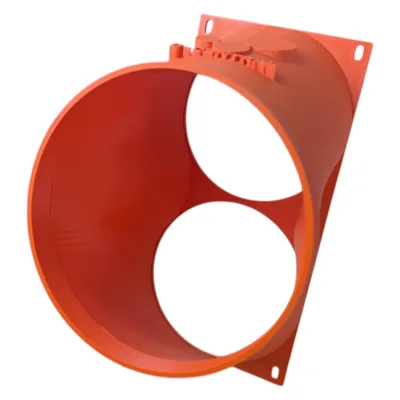
- The Antminer L3+ Space Heater Edition encloses the L3+ in an acoustically dampened case with quiet 140mm fans, turning an industrial mining machine into a living-room-appropriate heater that stacks sats.
- The L7 Heater Pivotal Edition delivers 3.5 GH/s at 1,300W with dual-voltage support — serious heating power and serious hashrate in a quiet package.
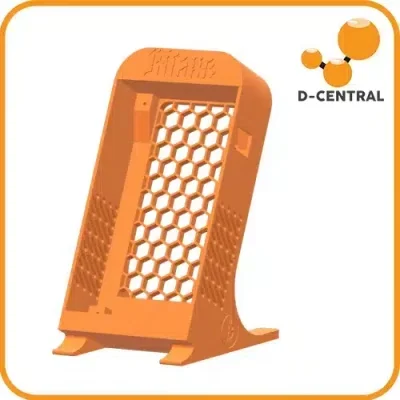
- The S9/L3 Space Heater DIY Box lets you build your own dual-purpose mining heater.
This approach is especially effective in Canada, where heating season runs 6 to 8 months per year. During those months, every watt your miner consumes is a watt you would have spent on heating anyway — making your effective electricity cost for mining close to zero. That changes the profitability equation dramatically, even for older hardware like the L3+.
For the full rundown on dual-purpose mining, see our Bitcoin Space Heaters collection.
Realistic Profitability: What to Expect
Let us be honest about the numbers. Mining economics shift daily based on network difficulty, coin prices, electricity rates, and hardware efficiency. Here is a realistic snapshot as of early 2026:
Antminer L3+ (504 MH/s, 800W)
- Daily Scrypt mining revenue (LTC + DOGE merged): Approximately $0.50-$1.00 USD equivalent
- Daily electricity cost at $0.10/kWh: $1.92
- Verdict: Unprofitable as a pure mining play at most electricity rates. However, if used as a space heater during winter, the electricity cost is already budgeted for heating — making the BTC earnings pure profit on top of heat you were going to buy anyway.
Antminer L7 (9,050 MH/s, 3,425W)
- Daily Scrypt mining revenue (LTC + DOGE merged): Approximately $8-$14 USD equivalent
- Daily electricity cost at $0.10/kWh: $8.22
- Verdict: Profitable at rates below $0.08-0.10/kWh depending on market conditions. Solidly profitable in dual-purpose heating mode. The L7 is the sweet spot for Scrypt-to-BTC conversion in 2026.
Antminer L9 (16,000 MH/s, 3,200W)
- Daily Scrypt mining revenue (LTC + DOGE merged): Approximately $15-$25 USD equivalent
- Daily electricity cost at $0.10/kWh: $7.68
- Verdict: Profitable at most residential electricity rates. Best efficiency in the Scrypt lineup.
Key insight: These revenue figures fluctuate with LTC and DOGE prices, Scrypt network difficulty, and BTC exchange rates. The numbers above are approximations to illustrate the economics — always run current calculations before making hardware decisions. What does not fluctuate is the heat output. If you need heat, the mining revenue is a bonus regardless of market conditions.
When to Move On: SHA-256 Hardware for Direct Bitcoin Mining
The Scrypt-to-BTC conversion strategy is a solid approach for repurposing existing hardware. But if you are buying new equipment specifically to stack sats, there is no substitute for mining Bitcoin directly with SHA-256 ASICs.
The math is straightforward: every conversion step (mine Scrypt coin, convert to BTC) introduces slippage, fees, and exchange rate risk. Direct SHA-256 mining eliminates all of that.
For home miners looking at direct Bitcoin mining, D-Central carries the full range:
- Entry-level solo mining: The Bitaxe lineup offers open-source solo miners starting from a single ASIC chip — perfect for lottery mining and supporting network decentralization.
- Dual-purpose SHA-256 heaters: The Antminer S19 Space Heater Edition and Antminer Slim Edition mine Bitcoin directly while heating your space.
- Full-scale ASICs: Antminer S21 Pro, Whatsminer M60 series, and other current-gen SHA-256 machines for serious home mining operations.
The ideal setup for a dedicated Bitcoiner? Run your existing Scrypt hardware as a heater stacking sats through pool conversion, and run SHA-256 hardware alongside it for direct Bitcoin mining. Maximum hashrate diversity, maximum heat utilization, maximum sovereignty.
Maintenance and Longevity
Scrypt ASICs are durable machines, but they need maintenance to keep performing:
- Clean heatsinks quarterly — compressed air to clear dust buildup. A clogged heatsink can reduce hashrate by 10-20%.
- Replace thermal paste annually on older units (L3+, A4+). Fresh thermal interface material can recover lost hashrate.
- Monitor fan RPM — failing fans cause thermal throttling. Replacement fans are inexpensive insurance.
- Check PSU capacitors — aging power supplies develop capacitor bulging. A failing PSU can damage the hashboards.
- Keep firmware updated — firmware updates often include efficiency improvements and bug fixes.
If your miner has degraded significantly, D-Central’s ASIC repair team can diagnose and restore it. We have been repairing Antminer hardware since 2016 — L3+ hashboard repair, chip replacement, and PSU servicing are all routine work for our technicians.
Frequently Asked Questions
Can I mine Bitcoin directly with an Antminer L3+ or L7?
No. The L3+ and L7 use the Scrypt algorithm, while Bitcoin uses SHA-256. These are fundamentally different hashing algorithms and the hardware is not interchangeable. However, you can mine Scrypt-based coins (Litecoin, Dogecoin) and receive your payouts in Bitcoin through multi-algorithm mining pools like Prohashing, NiceHash, or Zpool.
How much Bitcoin can an Antminer L3+ earn per day?
As of early 2026, an L3+ mining Scrypt coins with BTC conversion earns roughly $0.50-$1.00 USD equivalent in Bitcoin per day. At most electricity rates, this is not profitable as a standalone mining operation. However, when used as a space heater during heating season, the heat offsets your heating bill and the BTC earned is effectively free — making the L3+ a productive piece of home infrastructure rather than a pure mining investment.
Is it worth buying Scrypt mining hardware specifically to mine Bitcoin?
Generally no. If your primary goal is to accumulate Bitcoin through mining, SHA-256 hardware (Antminer S21 series, Whatsminer M60 series, or open-source Bitaxe devices) is the direct and efficient path. The Scrypt-to-BTC conversion strategy is best suited for miners who already own Scrypt hardware and want to maximize its value rather than let it sit idle.
What is merged mining and why does it matter for this strategy?
Merged mining allows you to mine two or more coins simultaneously using the same hashpower. Since 2014, Litecoin and Dogecoin share merged mining — your Scrypt ASIC mines both at zero additional cost. This increases your total mining revenue, which means more Bitcoin when the pool converts your earnings. You do not need to configure anything special; most Scrypt pools enable merged mining by default.
Which pool is best for converting Scrypt mining to Bitcoin payouts?
Prohashing is the most established option with automatic profit-switching across Scrypt coins and direct BTC payouts. NiceHash works differently — it sells your hashpower on a marketplace and pays you in Bitcoin. Zpool offers no-registration auto-exchange to BTC. Each has trade-offs in fees, payout thresholds, and reliability. For most users, Prohashing or NiceHash are the most straightforward choices.
Can I use my Scrypt miner as a space heater?
Absolutely — this is one of the best use cases for older Scrypt hardware. An Antminer L3+ produces about 2,730 BTU/hr, comparable to a small electric space heater. D-Central builds purpose-designed Bitcoin Space Heater enclosures that dampen noise and direct airflow, making miners suitable for living spaces. During heating season, your effective electricity cost for mining drops to near zero since you would have spent that energy on heating regardless.
My L3+ is not reaching its rated 504 MH/s. What should I do?
Degraded hashrate usually indicates a maintenance or hardware issue. Start with basic maintenance: clean dust from heatsinks, check that all fans are spinning at rated RPM, and verify your PSU is delivering stable voltage. If hashrate remains low after cleaning, you likely have failing ASIC chips or a hashboard issue. D-Central’s repair service can diagnose and repair L3+ hashboards, including individual chip replacement.
What happens to my Scrypt mining profitability when Litecoin halves?
Litecoin’s block reward halves approximately every four years (the most recent halving was August 2023, cutting the reward to 6.25 LTC). Each halving reduces direct LTC revenue, but the impact on your BTC conversion depends on how LTC price responds. Historically, some hash rate drops off the network after halvings, which can partially offset the reward reduction through lower difficulty. Regardless, the dual-purpose heating strategy remains valid since the heat output is independent of block rewards.