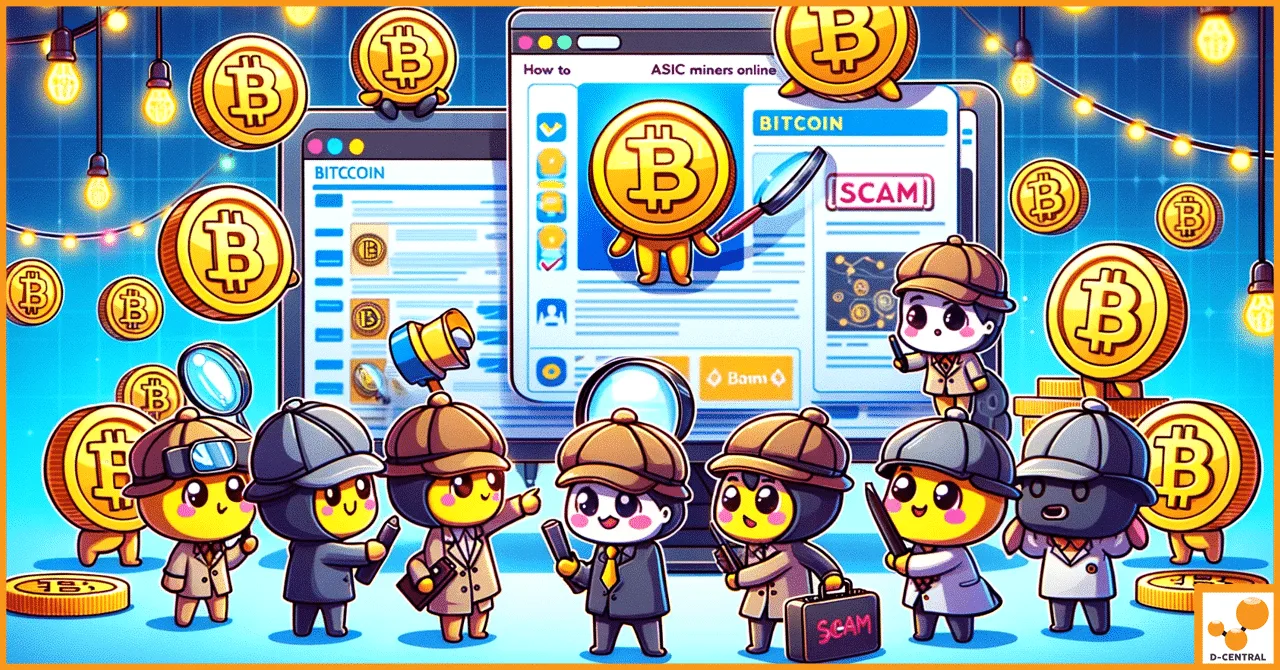
The Bitcoin network in 2026 is a beast: over 800 EH/s of hashrate, difficulty north of 110 trillion, and a block reward of 3.125 BTC after the April 2024 halving. The hardware powering this network is some of the most advanced silicon on Earth. And where advanced technology meets high demand, scammers show up in droves.
We have been in the ASIC mining business since 2016. In that time, we have seen every flavour of fraud imaginable: ghost sellers on Telegram who vanish after receiving a wire transfer, counterfeit hashboards stuffed into genuine enclosures, “refurbished” units that were actually flood-damaged, and cloned websites designed to steal your Bitcoin. The sheer scale of ASIC miner scams has grown alongside the market itself, and in the era of sub-20 J/TH machines selling for thousands of dollars, the stakes have never been higher.
This guide is our contribution to fighting back. We are going to break down exactly how these scams work, teach you the red flags that should send you running, and give you a concrete due-diligence playbook. If you walk away from this article knowing how to evaluate a seller, verify hardware, and protect your funds, then we have done our job.
Why ASIC Miner Scams Are Thriving in 2026
The conditions for fraud in the mining hardware market are nearly perfect:
- High unit prices: Current-generation machines like the Antminer S21 series and Whatsminer M60 series command significant prices. A single unit purchase represents serious money, and scammers know it.
- Supply constraints: Manufacturer lead times and allocation-based sales create artificial scarcity. When legitimate sellers are out of stock, buyers turn to less-vetted sources.
- Global marketplace: ASIC miners are manufactured in Asia, sold worldwide, and often shipped through intermediaries. This geographic sprawl creates information gaps that scammers exploit.
- Crypto-native payments: Many transactions happen in Bitcoin or other cryptocurrencies, which are irreversible. Once you send sats to a scammer’s wallet, they are gone.
- Technical complexity: Not every buyer can tell the difference between a genuine Antminer hashboard and a counterfeit clone. Scammers exploit this knowledge gap ruthlessly.
The bottom line: if you are buying mining hardware online, you need to assume that someone is trying to separate you from your money until proven otherwise.
The Six Most Common ASIC Miner Scams
Understanding how scams work is the first step to not falling for them. Here are the patterns we see repeatedly.
1. Non-Delivery Scams (Ghost Sellers)
The simplest and most common scam. A seller advertises ASIC miners at competitive prices, collects payment via wire transfer or cryptocurrency, provides a fake tracking number, and then disappears. These operations often run through Telegram groups, Facebook Marketplace, or purpose-built websites that look professional but have zero real inventory.
How they hook you: Urgency and scarcity. “Only 5 units left at this price.” “Wire transfer required for this batch — ships tomorrow.” They pressure you into moving fast so you do not have time to think.
2. Counterfeit and Cloned Hardware
More sophisticated scammers actually ship you something, but what arrives is not what you paid for. Common tactics include:
- Genuine enclosures loaded with counterfeit or damaged hashboards
- Older-generation chips re-labeled as current-gen (e.g., BM1362 labels on BM1366 boards)
- Units that hash at the advertised rate briefly, then fail because internal components are substandard
- Refurbished miners sold as new, sometimes with water damage or corroded components hidden inside
Without proper diagnostic capabilities, many buyers do not discover the problem until the hardware fails weeks or months later, well past any dispute window.
3. Bait-and-Switch Pricing
The seller advertises a miner at a competitive price. After you express interest, the price changes. Maybe “import duties” get added, or the “batch allocation” has shifted to a higher-cost tier, or the original model is “sold out” but they can get you a lesser model at the same price. By the time you have invested emotional energy and time in the transaction, you feel committed.
4. Phishing and Website Cloning
Scammers create pixel-perfect clones of legitimate mining hardware retailers. They register domain names that are one character off from the real thing, copy product listings and images wholesale, and set up checkout pages designed to capture your payment information. Some even clone customer support chat widgets. We have seen clones of our own website used in phishing attempts.
Tell-tale signs: Slightly misspelled URLs, recently registered domains (check WHOIS), missing or broken HTTPS certificates, and contact forms that do not actually reach anyone.
5. Cloud Mining and Hosted Mining Fraud
“Buy hashrate, not hardware.” The pitch sounds appealing, but the vast majority of cloud mining operations are outright scams or financially unviable. They promise guaranteed returns (impossible in mining), show fake dashboards displaying fabricated earnings, and pay early investors with money from new investors — a classic Ponzi structure.
If someone guarantees mining returns, they are either lying or do not understand how mining works. Real mining revenue depends on difficulty, price, energy costs, and hardware efficiency — none of which can be guaranteed.
6. Social Engineering and Impersonation
Scammers impersonate sales representatives from legitimate companies via email, Telegram, WhatsApp, or Discord. They use company logos, copy communication styles, and even reference real products and prices. The only difference is that payments go to the scammer’s accounts, not the real company.
We have had instances where scammers used D-Central’s name and branding in Telegram groups to solicit payments from unsuspecting buyers. If you are ever in doubt, verify directly through our official contact channels.
The Red Flag Checklist
Use this table as a quick reference before any ASIC miner purchase:
| Red Flag | What It Looks Like | Risk Level |
|---|---|---|
| Price 20%+ below market | S21 Hydro for $3,000 when market is $5,000+ | Critical |
| Wire transfer only | “We only accept bank wire or crypto — no credit cards” | Critical |
| No physical address | P.O. box or no address listed; no verifiable location | Critical |
| Pressure to pay now | “This price expires in 2 hours” / “Last 3 units” | High |
| No warranty offered | “All sales final” with no return or warranty policy | High |
| Domain registered recently | WHOIS shows domain is less than 6 months old | High |
| No phone support | Contact only through Telegram, WhatsApp, or email | Medium |
| Stock photos only | Product images are manufacturer renders, never real photos | Medium |
| Vague specs | No hashrate, wattage, chip type, or firmware version listed | Medium |
| Too-perfect reviews | All 5-star reviews with generic praise, no specifics | Medium |
If you spot even one critical red flag, walk away. Two or more medium-level flags in combination should also trigger serious caution.
The Due Diligence Playbook: 10 Steps Before You Buy
Here is the exact process we recommend to any miner looking to purchase hardware online, whether from us or from anyone else.
Step 1: Verify the Company’s Physical Existence
A legitimate mining hardware company has a real physical address, a verifiable business registration, and employees who show up to work. Check corporate registries in their jurisdiction. For Canadian companies, search the CBCA or provincial corporate registries. For US companies, check the Secretary of State’s database. If the company claims to be in one country but their domain is registered in another and their payment goes to a third, that is a problem.
Step 2: Check Domain Age and History
Use WHOIS lookup tools to check when the seller’s domain was registered. Established companies have domains that are years old. Scam operations typically register domains days or weeks before running their scheme. Also check the Wayback Machine to see if the site has a consistent history or suddenly appeared.
Step 3: Search for Independent Reviews
Look beyond the seller’s own website. Search for their company name on Reddit (r/BitcoinMining, r/Bitcoin), Bitcointalk, Trustpilot, and Google Reviews. Pay attention to the pattern of reviews — a company with only 5-star reviews and no detailed feedback is suspect. Real companies have a mix of reviews, including some criticism.
Step 4: Verify Product Specifications Against Manufacturer Data
Cross-reference every specification the seller claims against the manufacturer’s official documentation. Hashrate, power consumption, chip count, firmware version — all of it. If a seller cannot tell you what ASIC chip their machine uses or what firmware version it ships with, they either do not have the product or do not know what they are selling.
Step 5: Request Real Photos and Videos
Ask for timestamped photos of the actual units in their warehouse — not stock images from Bitmain’s website. Ask for a video of the unit running with the miner’s dashboard visible showing hashrate, temperature, and fan speed. Legitimate sellers are happy to provide this. Scammers make excuses.
Step 6: Test Customer Support Before Buying
Contact the seller with technical questions before placing an order. Ask specific questions: “What PSU do you recommend for this unit?” “What is the power consumption at the wall?” “Do you flash custom firmware?” The quality and speed of their response tells you a lot. If they cannot answer basic technical questions about the hardware they claim to sell, find another seller.
Step 7: Insist on Payment Protection
Use payment methods that offer buyer protection. Credit cards allow chargebacks. PayPal offers dispute resolution. If you are paying in Bitcoin, use an escrow service. Never send large sums via wire transfer or direct crypto payment to an unverified seller. Any seller who insists on wire-only or crypto-only payments to an address you cannot verify is a high-risk proposition.
Step 8: Confirm Warranty and Return Policy
A real seller stands behind their products. Read the warranty terms carefully. What is covered? For how long? What is the process for filing a claim? What about returns? “All sales final” from a seller you have never dealt with is a red flag. Established companies like D-Central provide clear warranty terms because we know our hardware works and we have the repair capabilities to back it up.
Step 9: Start Small
If you are buying from a new seller for the first time, start with a single unit. Test the entire process: ordering, communication, shipping, product quality, and support. Only scale up after you have verified that the seller delivers on their promises.
Step 10: Trust Your Gut
If something feels off, it probably is. The mining community is full of legitimate sellers who make the buying process straightforward and transparent. You do not need to take risks with questionable operators when trustworthy options exist.
Platform-Specific Risks
Different sales channels carry different risk profiles. Here is what to watch for on each.
Telegram and WhatsApp Groups
By far the highest-risk channel. Telegram groups dedicated to mining hardware sales are absolutely crawling with scammers. There is no identity verification, no dispute resolution, and no recourse if you get burned. Admins of these groups are often in on the scam or take cuts from fraudulent sellers. Unless you are dealing with someone you know personally and have verified independently, avoid buying miners through Telegram.
Facebook Marketplace and Groups
Slightly better than Telegram because Facebook profiles provide some identity verification, but still risky. Scammers create fake profiles with stolen photos and fabricated histories. Local pickup is the only relatively safe way to buy on Facebook — you can inspect the hardware in person and pay on the spot.
eBay and Amazon
These platforms offer buyer protection, which is a significant advantage. However, the downside is that sellers often lack mining expertise. You might receive a legitimate product that has been improperly stored, shipped without adequate packaging, or is a different revision than advertised. Check seller ratings carefully and read negative reviews specifically.
Dedicated Mining Hardware Retailers
This is where the safest transactions happen. Established retailers with physical addresses, verifiable histories, customer reviews across multiple platforms, and technical support capabilities are by far the lowest-risk option. Yes, prices may be slightly higher than a random Telegram deal, but the peace of mind and post-sale support are worth every satoshi.
How to Verify Hardware After Purchase
Even after buying from a reputable seller, it is good practice to verify your hardware upon arrival.
Physical Inspection
- Check the enclosure for signs of water damage, corrosion, or physical impact
- Inspect hashboard connectors for bent pins or signs of re-soldering
- Look at fan bearings for wear — excessive noise on startup indicates worn fans
- Check that serial numbers on the control board match the manufacturer’s database
- Verify that ASIC chip labels match the expected model
Operational Testing
- Run the miner for at least 24-48 hours before considering the purchase complete
- Monitor hashrate stability — a genuine unit maintains consistent hashrate within 5% of spec
- Check all temperature sensors across hashboards — large variances between boards indicate problems
- Verify firmware version and check for any unauthorized modifications
- Test on a known-good pool to confirm shares are being accepted
If you find issues during inspection, having a relationship with a company that offers professional ASIC repair services can save you from a total loss. A counterfeit hashboard might be worthless, but a genuine unit with a fixable problem can often be restored to full operation.
What to Do If You Have Been Scammed
If the worst happens, act immediately:
- Document everything: Screenshots of all communications, transaction records, wallet addresses, tracking numbers, website archives — preserve every piece of evidence before the scammer deletes their traces.
- Report to your financial institution: If you paid by credit card, initiate a chargeback immediately. If you used a bank wire, contact your bank — recovery is unlikely but not impossible if acted upon quickly.
- File a police report: Even if local police may not pursue the case, a filed report creates a record and may contribute to a larger pattern that eventually leads to action.
- Report to cybercrime agencies: In Canada, report to the Canadian Anti-Fraud Centre (CAFC). In the US, report to the FBI’s Internet Crime Complaint Center (IC3).
- Warn the community: Post about your experience on Reddit, Bitcointalk, and any relevant forums. Include evidence. Your report could save someone else from the same scam.
- Report the domain: If the scam operated through a website, report it to the domain registrar and hosting provider for takedown.
Why Buying from an Established Canadian Company Matters
We are obviously biased here, but the bias is backed by nearly a decade of history. D-Central Technologies has been operating from our facilities in Montreal, Quebec since 2016. We have a verifiable physical address (1325 Rue Bergar, Laval, QC), a real phone number (1-855-753-9997), and a team of technicians who repair, test, and ship every unit that goes out our door.
Here is what buying from an established, accountable vendor gives you:
| Factor | Random Online Seller | Established Retailer (D-Central) |
|---|---|---|
| Accountability | Anonymous or unverifiable | Registered Canadian company, physical address |
| Hardware testing | Unknown — may ship untested | Every unit tested before shipping |
| Post-sale support | None after payment clears | Technical support, repair services, parts |
| Repair capability | None | In-house ASIC repair with deep expertise across every major ASIC platform |
| Product range | Whatever they claim to have | Hundreds of SKUs: ASICs, Bitaxe, Space Heaters, parts |
| Payment protection | Wire or crypto only | Multiple secure payment options |
| Warranty | None or fabricated | Clear warranty terms backed by repair infrastructure |
| Track record | Unknown or fabricated | Operating since 2016, thousands of units sold |
The mining hardware market does not have to be a minefield. When you buy from companies that have skin in the game — real addresses, real employees, real repair benches, and real reputations to protect — the risk drops dramatically.
The Decentralization Angle: Why This Matters for Bitcoin
Here is the bigger picture that most “avoid scams” articles miss. Every successful ASIC miner scam does not just hurt the individual buyer — it hurts Bitcoin’s decentralization.
When a home miner gets scammed and gives up on mining, that is one less independent hashrate contributor. The network becomes slightly more centralized in the hands of large operations who buy directly from manufacturers. The pleb miner, the solo miner, the person running a Bitaxe in their living room or a Space Heater in their basement — these are the people who make Bitcoin’s hashrate distribution resilient.
Every hash counts. And every miner who gets scammed out of their hardware is hashrate that never makes it to the network.
This is why we take this problem personally. D-Central exists to make mining accessible, to hack institutional technology into solutions that work for the home miner, and to grow Bitcoin’s decentralized security. Scammers are the enemy of that mission.
Frequently Asked Questions
What is the most common ASIC miner scam in 2026?
Non-delivery scams remain the most prevalent. Sellers collect payment via wire transfer or cryptocurrency through Telegram, WhatsApp, or purpose-built websites, then disappear. The second most common is counterfeit hardware — units that look genuine but contain inferior or damaged internal components. With current-gen miners commanding high prices and the network hashrate exceeding 800 EH/s, scammers are targeting buyers who are eager to deploy hashrate quickly.
How can I verify if a mining hardware seller is legitimate?
Check their domain age via WHOIS (should be years old, not months). Verify their physical business address through government corporate registries. Search for independent reviews on Reddit, Bitcointalk, Trustpilot, and Google Reviews. Test their customer support with technical questions before buying. Confirm they offer warranty terms and a clear return policy. A legitimate seller like D-Central has a verifiable Canadian business address, a phone number you can call, and nearly a decade of operating history.
Is it safe to buy ASIC miners with Bitcoin?
Bitcoin transactions are irreversible, which makes them higher risk for purchases from unverified sellers. If you pay in Bitcoin and get scammed, there is no chargeback mechanism. For purchases from established, trusted retailers, paying in Bitcoin is perfectly fine — many miners prefer it. For first-time purchases from any seller, consider using a payment method with buyer protection (credit card, PayPal) or a reputable escrow service until you have verified their legitimacy.
What should I do if I receive a miner that does not match what was advertised?
Document everything immediately — photograph the unit, record unboxing video, take screenshots of hashrate dashboards, and note any discrepancies between advertised and actual specifications. Contact the seller with your evidence and request a resolution. If they are unresponsive, initiate a chargeback with your payment provider, file complaints with consumer protection agencies, and report the seller on community forums. For hardware that is functional but underperforming, professional ASIC repair and diagnostic services can sometimes identify and fix the issue.
Are open-source miners like Bitaxe safer to buy than traditional ASICs?
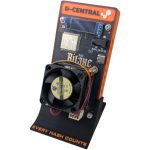
Open-source miners like the Bitaxe have a transparency advantage — the hardware designs are publicly available, so you can verify exactly what you should be receiving. However, because anyone can manufacture open-source designs, quality varies dramatically between manufacturers. Buy from established companies with a track record in the open-source mining ecosystem. D-Central has been a pioneer in the Bitaxe ecosystem since its inception, manufacturing accessories like the original Bitaxe Mesh Stand and stocking every Bitaxe variant with quality-controlled assembly.