To start Bitcoin mining in 2026, you need three things: a mining device (from a $100 Bitaxe to a $5,000+ ASIC), a Bitcoin wallet, and an internet connection. Choose between solo mining for the lottery-style thrill, pool mining for steady returns, or space heater mining to heat your home while stacking sats.
That is the short answer. But if you are reading this, you probably want to understand how to start bitcoin mining the right way — without wasting money on the wrong hardware, overpaying for electricity, or falling for cloud mining scams. This guide will walk you through everything, step by step, from the fundamentals of how Bitcoin mining works to plugging in your first miner and watching those hashes roll.
We have been doing this since 2016. D-Central Technologies has repaired thousands of ASICs, shipped miners across the globe, and helped countless home miners set up their first rigs. We are not a faceless e-commerce store. We are mining hackers — we take institutional-grade technology and make it accessible for the home miner. Everything in this guide comes from hands-on experience, not theory.
Let us get you mining.
What Is Bitcoin Mining?
Bitcoin mining is the process that keeps the Bitcoin network alive and secure. Think of it like this: every ten minutes, the Bitcoin network needs someone to bundle up all the recent transactions, verify they are legitimate, and permanently record them into a “block” on the blockchain. Miners compete for the right to do this — and the winner earns freshly minted bitcoin as a reward.
Here is an analogy that actually works: imagine a massive global lottery where tickets are not bought with money, but with computational work. Your mining hardware generates billions of random guesses per second (called hashes), trying to find one specific number that satisfies the network’s difficulty target. The first miner on Earth to find a valid hash wins the block and earns the block reward — currently 3.125 BTC (approximately $214,000 USD at today’s prices) plus transaction fees.
This system is called proof-of-work, and it is what makes Bitcoin the most secure monetary network ever created. No central authority decides who can mine. No permission is needed. You can participate from your bedroom in Montreal or your garage in Texas. That is the beauty of it.
Key Terms You Need to Know
| Term | What It Means |
|---|---|
| Hash Rate | How many guesses your miner makes per second. Measured in TH/s (terahashes per second). More = better chances. |
| Difficulty | How hard it is to find a valid hash. Adjusts every ~2 weeks to keep block times at ~10 minutes. Currently ~126 trillion. |
| Block Reward | The bitcoin earned for mining a block. Currently 3.125 BTC after the April 2024 halving. Halves again around 2028. |
| J/TH (Joules per Terahash) | Energy efficiency of a miner. Lower = more efficient. Modern ASICs are 13-20 J/TH. |
| ASIC | Application-Specific Integrated Circuit. A chip designed solely for Bitcoin mining. The only hardware that works in 2026. |
| Mining Pool | A group of miners who combine hash power and split rewards proportionally. Provides steady, smaller payouts. |
| Solo Mining | Mining alone. Extremely unlikely to find a block, but if you do, you keep the full reward. The Bitcoin lottery. |
The Bitcoin network currently operates at over 1 Zettahash per second (1,000,000,000,000,000,000,000 hashes per second). That is an incomprehensible number. But here is what matters: every single hash that comes from a home miner strengthens the network’s decentralization. And yes, small miners do find blocks — we will get to that.
Is Bitcoin Mining Still Profitable in 2026?
The honest answer: it depends on what you mean by “profitable” and what you are optimizing for.
If you are asking whether you can plug in an ASIC and print money with zero effort, the answer is no. Those days ended years ago. But if you are willing to be strategic about your electricity costs, hardware selection, and approach, Bitcoin mining can absolutely be profitable in 2026 — and there are ways to mine that make economic sense even when the pure electricity math does not.
The Four Factors That Determine Mining Profitability
1. Electricity Cost — This is the single most important variable. Electricity accounts for 70-80% of your operating costs. At $0.05/kWh, most modern ASICs are comfortably profitable. At $0.10/kWh, margins are thin but workable with efficient hardware. Above $0.14/kWh, you are likely mining at a loss from a pure electricity perspective.
2. Hardware Efficiency — Measured in J/TH (joules per terahash). The Antminer S21 XP runs at 13.5 J/TH. An old S9 runs at 98 J/TH. That 7x difference in efficiency is the difference between profit and loss.
3. Bitcoin Price — Bitcoin traded as high as $126,198 in October 2025 and is currently hovering around $68,600 in February 2026 after a market correction. A higher Bitcoin price makes every hash more valuable.
4. Network Difficulty — Currently at approximately 126 trillion, with the next adjustment expected around February 19, 2026. As more miners join the network, difficulty increases, and each miner’s share of rewards decreases.
A Real-World Profitability Example
Let us run real numbers for pool mining with an Antminer S21 (200 TH/s, 3,500W, 17.5 J/TH):
| Metric | Value |
|---|---|
| Hash Rate | 200 TH/s |
| Power Consumption | 3,500W |
| Monthly Electricity (at $0.07/kWh) | $176 |
| Estimated Monthly BTC Earned | ~0.0058 BTC (~$398) |
| Monthly Profit | ~$222 |
| Hardware Cost | ~$2,800 |
| Payback Period | ~12.6 months |
At $0.12/kWh, that same miner’s electricity cost jumps to $302/month, shrinking profit to ~$96/month and extending payback to over 29 months. See how electricity cost changes everything?
Run your own numbers with our Bitcoin Mining Profitability Calculator to see exactly where you stand based on your local electricity rate.
When Mining Makes Sense Even Without “Profit”
Here is where it gets interesting. Pure electricity-to-Bitcoin math is not the only way to evaluate mining:
- Space heater mining: If you are already paying to heat your home, a Bitcoin space heater replaces that cost while earning BTC. Your electricity is not “wasted” — it produces heat you need AND bitcoin. In Canada, where heating season runs 6-8 months, this flips the profitability equation entirely.
- Non-KYC Bitcoin: Mined bitcoin has no purchase history, no exchange KYC, no paper trail. For privacy-focused Bitcoiners, this has value beyond the electricity cost.
- Dollar-cost averaging: Mining is a form of continuous Bitcoin accumulation. Instead of timing the market, you are constantly converting electricity into bitcoin.
- Network participation: Every home miner adds decentralization to the Bitcoin network. If you believe decentralization matters (we do), there is an argument that mining is worth it even at a slight loss.
- Excess energy monetization: Solar panels, hydroelectric, or any excess renewable energy can be converted to bitcoin 24/7/365 with zero marginal cost.
Types of Bitcoin Mining in 2026
Not all mining is created equal. In 2026, there are four distinct approaches, each suited to different goals, budgets, and living situations. Understanding the differences is critical before you spend a single dollar on hardware.
1. Solo Mining (Lottery Mining) with a Bitaxe
Solo mining with a Bitaxe is the purest expression of what Bitcoin mining was meant to be. You are running your own open-source ASIC miner, pointed at the Bitcoin network, independently hashing. No pool. No middleman. Just you and the blockchain.
The odds of finding a block with a single Bitaxe (1.2 TH/s) are astronomically low — like winning the lottery. But it is not impossible. In 2025, a solo miner running a stock Bitaxe Gamma at 1.2 TH/s found block #889,975 and earned 3.149 BTC (over $200,000). Several more Bitaxe blocks have been found since. As of late 2025, open-source home mining hardware has mined at least five confirmed Bitcoin blocks, with combined payouts exceeding $1 million.
Best for: Bitcoiners who value decentralization, want a fun and educational hobby, and understand the lottery odds. Costs $100-$700 to start, uses 15-90W of power (less than a light bulb to a laptop), and is silent enough for a desk or bookshelf.
2. Pool Mining with a Full ASIC
This is the serious approach. You buy a full-scale ASIC miner (like an Antminer S21 at 200 TH/s) and point it at a mining pool. The pool combines hash power from thousands of miners, and when the pool finds a block, rewards are distributed proportionally based on your contributed hash rate.
Pool mining provides consistent, predictable income rather than the all-or-nothing gamble of solo mining. You earn small daily payouts instead of waiting for a block that may never come.
Best for: Miners with access to cheap electricity ($0.05-$0.10/kWh), a dedicated space (garage, basement, shed), and the ability to handle 240V power (though new LuxOS firmware now enables 120V operation for some models). Investment: $1,500-$5,000+ for hardware.
3. Space Heater Mining (Dual-Purpose)
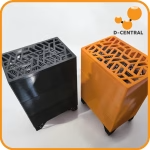
This is D-Central’s specialty, and it is the smartest way for many home miners to enter the game. A Bitcoin space heater is an ASIC miner built into a quiet, residential-friendly enclosure that channels the heat output into your living space. Every watt of electricity consumed by a Bitcoin miner is converted to heat — that is physics, not marketing. So why not use that heat?
Our space heater editions run between 750-1,000W on a standard 120V outlet, operate at whisper-quiet noise levels, and mine bitcoin while replacing your electric space heater. During Canadian winters (or anywhere cold), your heating cost becomes your mining cost. The bitcoin you earn is essentially free — you were going to pay for heat anyway.
Best for: Anyone who pays for electric heating, lives in a cold climate (hello, Canada), wants a plug-and-play solution, and values the dual-purpose economics. Starting from $235 for DIY, up to $2,350+ for premium editions.
4. Cloud Mining (Proceed With Extreme Caution)
Cloud mining services promise to let you “rent” hash power without owning any hardware. You pay upfront, they mine on your behalf, and you receive payouts.
Our honest assessment: The vast majority of cloud mining services are scams or terrible deals. The ones that are legitimate typically charge enough in fees (5-10%+) and contracts that you would earn more simply buying bitcoin directly. You have no control over the hardware, no way to verify it exists, and no recourse if the company disappears. In 2026, with hardware more accessible and affordable than ever, there is almost no reason to cloud mine. Buy your own hardware. Own your hash rate. That is the whole point of decentralization.
Mining Approach Comparison
| Approach | Startup Cost | Monthly Power | Noise Level | Earning Style | Best For |
|---|---|---|---|---|---|
| Solo Mining (Bitaxe) | $100 – $700 | $1 – $8 | Silent (30-48 dB) | Lottery (all or nothing) | Hobbyists, cypherpunks, decentralists |
| Pool Mining (Full ASIC) | $1,500 – $5,000+ | $100 – $300+ | Loud (70-80 dB) | Consistent daily payouts | Serious miners with cheap power |
| Space Heater Mining | $235 – $2,350 | $50 – $75 | Quiet (35-45 dB) | Steady + heat offset | Cold climates, apartment miners |
| Cloud Mining | $100 – $1,000+ | $0 (included in fees) | N/A | Usually negative | Nobody (seriously) |
What Equipment Do You Need to Start Bitcoin Mining?
The equipment you need depends entirely on your chosen mining approach. Let us break it down for each path.
For Solo / Lottery Mining (Bitaxe)
- Bitaxe Miner — The world’s first fully open-source Bitcoin ASIC miner. D-Central has been a pioneer in the Bitaxe ecosystem since the beginning, creating the original Mesh Stand and developing leading heatsink solutions. Models range from the Bitaxe Gamma 601 (1.2 TH/s, ~$190) to the Bitaxe Hex (3-4.2 TH/s, ~$500-600) for those wanting better solo odds.
- Power Supply — A 5V USB-C or barrel jack power supply (often included with the Bitaxe or available as an add-on for ~$15). Standard wall outlet.
- WiFi Connection — Bitaxe connects via WiFi. No ethernet needed. Standard home internet is more than sufficient.
- Bitcoin Wallet — You need a wallet address to receive rewards. We strongly recommend a self-custody hardware wallet like a Blockstream Jade or Coldcard.
Total cost: $100 – $700 depending on model and accessories. Setup time: 5-10 minutes.
For Pool Mining (Full ASIC)
- ASIC Miner — Current-generation machines like the Antminer S21 (200 TH/s, ~$2,800), S21 Pro (234 TH/s), or S21 XP (270 TH/s). Older models like the S19 series are available cheaper but less efficient. Browse our full mining hardware selection.
- Power Supply (PSU) — Most full ASICs require a dedicated PSU (often sold separately). APW12 or APW17 for Antminer models. Budget $100-$200.
- 240V Power Outlet — Full ASICs draw 3,000-3,500W and require a 240V outlet (like a dryer outlet) in most cases. However, the new LuxOS PSU Bypass Mode (released February 2026 by Luxor Technology) now allows some Antminer models to run on standard 120V at reduced hash rate — a game-changer for home miners.
- Ethernet Connection — Unlike Bitaxe, full ASICs typically use wired ethernet for reliable connectivity.
- Ventilation / Cooling — ASICs are loud (70-80 dB, like a vacuum cleaner) and generate significant heat. You need a dedicated space — garage, basement, shed, or purpose-built enclosure. Shrouds and duct adapters can route exhaust air outside.
- Bitcoin Wallet — Self-custody hardware wallet recommended.
- Mining Pool Account — Create a free account with your chosen pool (Braiins, OCEAN, etc.).
Total cost: $1,500 – $5,000+ depending on machine and electrical setup. May require an electrician for the 240V outlet ($200-$500).
For Space Heater Mining
- Bitcoin Space Heater Edition — A complete, ready-to-mine unit. D-Central offers multiple editions: S9 Space Heater ($235-$560), S17 editions, and the premium S19 Space Heater series. Operates at 750-1,000W on a standard 120V outlet.
- Standard Wall Outlet — Just a regular 120V/15A household outlet. Plug and mine.
- Internet Connection — Ethernet preferred for reliability.
- Bitcoin Wallet — Self-custody hardware wallet recommended.
- Mining Pool Account — Pool mining for consistent payouts.
Total cost: $235 – $2,350+ depending on the model. Zero additional electrical work. Setup time: 15-30 minutes.
Hardware Comparison Table
| Hardware | Hash Rate | Power | Efficiency | Noise | Approx. Price | Best For |
|---|---|---|---|---|---|---|
| Bitaxe Gamma 601 | 1.2 TH/s | 17W | 14 J/TH | ~30 dB | $190 | Solo mining, desk miner |
| Bitaxe Gamma Touch | 1.6 TH/s | 22W | 13.75 J/TH | ~35 dB | $250 | Solo mining, touchscreen UI |
| Bitaxe Hex (Supra 702) | 3.5-4.2 TH/s | 75-90W | ~21 J/TH | ~48 dB | $500-$600 | Serious solo mining |
| NerdQAxe++ | ~1.5 TH/s | ~20W | ~13 J/TH | ~30 dB | $380-$420 | Open-source enthusiasts |
| S9 Space Heater Edition | ~12-14 TH/s | 750-1,000W | ~80 J/TH | ~40 dB | $235-$560 | Space heating + mining |
| Antminer S21 | 200 TH/s | 3,500W | 17.5 J/TH | ~75 dB | $2,800 | Serious pool mining |
| Antminer S21 Pro | 234 TH/s | 3,510W | 15 J/TH | ~75 dB | $3,500 | High-efficiency pool mining |
| Antminer S21 XP | 270 TH/s | 3,645W | 13.5 J/TH | ~75 dB | $4,500+ | Maximum efficiency |
How to Start Bitcoin Mining: Step-by-Step Setup Guide
You have done your research. You understand the approaches. Now let us get you set up. Follow these seven steps and you will be mining bitcoin today.
Step 1: Choose Your Mining Approach
Use this decision matrix to find the approach that matches your situation:
| Your Situation | Recommended Approach | Why |
|---|---|---|
| Budget under $200, just want to learn | Solo mining with Bitaxe Gamma | Cheapest entry, educational, silent, low power |
| Live in a cold climate, pay for electric heating | Space heater mining | Your heating cost becomes your mining cost |
| Have cheap electricity (< $0.08/kWh) and a garage/shed | Pool mining with a full ASIC | Consistent returns, meaningful hash rate |
| Want maximum solo mining odds | Bitaxe Hex or multiple Bitaxes | 3-4x the hash rate of a single Bitaxe |
| Apartment dweller, want to mine quietly | Bitaxe or Space Heater Edition | Silent operation, standard outlet, no ventilation needed |
| Have solar panels or excess renewable energy | Pool mining with ASIC | Near-zero marginal electricity cost = pure profit |
| Bitcoin maximalist who wants non-KYC sats | Any approach | Mined bitcoin = no exchange KYC |
Still not sure? Check out our Getting Started guide or explore the Bitaxe collection for the easiest entry point.
Step 2: Select and Purchase Your Hardware
Once you have chosen your approach, it is time to pick your specific hardware. Here is what we recommend for each category in 2026:
For solo mining beginners: Start with the Bitaxe Gamma 601. At 1.2 TH/s and 17W, it is the sweet spot of hash rate, efficiency, and price. It uses a BM1370 chip (the same chip family found in the Antminer S21 Pro), delivers class-leading 14 J/TH efficiency, and sets up in minutes via WiFi. If you want a premium experience, the Bitaxe Gamma Touch adds a built-in touchscreen display for real-time monitoring.
For better solo odds: The Bitaxe Hex packs six ASIC chips into one unit for 3.5-4.2 TH/s. That is roughly 3-4x the hash rate of a single Bitaxe, which means 3-4x better odds at finding a solo block. Still a lottery, but a significantly better one.
For space heater mining: Our S9 Space Heater Edition is the most popular entry point. It is a proven Antminer S9 reimagined for residential use — quiet fans, clean enclosure, standard plug. For more hash power and better efficiency, look at our S19 Space Heater series.
For pool mining: The Antminer S21 at 200 TH/s and 17.5 J/TH is the current workhorse of the industry. If you can find an S21 XP (270 TH/s, 13.5 J/TH), that is even better. Check our shop for current availability and pricing.
Pro tip: Buy from a reputable dealer with warranty support and repair expertise. D-Central tests, assembles, and ships from Canada with in-house repair support. If something breaks, we fix it — we have been repairing ASICs since 2016. Buying the cheapest unit from an unknown vendor often costs more in the long run.
Step 3: Prepare Your Space
Your preparation needs vary dramatically by mining approach:
Bitaxe / Solo Mining: Find a flat surface. Anywhere. Your desk, a bookshelf, a windowsill. Plug it in. You are done. A Bitaxe uses less power than a phone charger and produces negligible heat and noise.
Space Heater Mining: Place it wherever you would put a normal space heater. A bedroom, office, or living room. Ensure the outlet is a dedicated 15A circuit (most standard outlets are). Keep 12 inches of clearance around the unit for airflow.
Full ASIC Mining: This requires more planning:
- Electrical: You need a 240V outlet rated for 20A minimum. If you do not already have one, hire a licensed electrician. In North America, this is typically a NEMA 6-20 or L6-20 outlet. Cost: $200-$500 for installation. New in 2026: LuxOS PSU Bypass Mode allows some Antminer models to run at reduced power on standard 120V outlets, eliminating this requirement for some setups.
- Ventilation: A full ASIC produces 3,000-3,500W of heat (equivalent to a large space heater). In summer, you must exhaust this heat outdoors. In winter, it can heat a garage or workshop. Shroud kits and duct adapters let you route exhaust through a window or wall.
- Noise: Full ASICs run at 70-80 dB — similar to a vacuum cleaner running 24/7. This is not suitable for a bedroom or shared living space. Garages, basements, sheds, or purpose-built enclosures are your best bet. Some miners use immersion cooling to reduce noise, but that adds complexity and cost.
- Safety: Check the load-bearing capacity of your in-wall wiring. Do not daisy-chain power strips or extension cords. Use a dedicated circuit. ASIC fires from improper electrical setups do happen — do not become a statistic.
Step 4: Get a Bitcoin Wallet
You need a Bitcoin wallet address to receive your mining rewards. This is non-negotiable — the pool or solo mining service sends your earnings to this address.
We strongly recommend self-custody. This means a wallet where you control the private keys, not an exchange. Why? Because if you do not hold your keys, you do not hold your bitcoin. Exchanges can freeze accounts, get hacked, or go bankrupt (remember FTX?).
Hardware wallet options (best security):
- Blockstream Jade — Open-source, air-gapped, affordable (~$65). Our recommendation for miners.
- Coldcard — Bitcoin-only, maximum security, more advanced (~$150).
- Trezor — User-friendly, well-established (~$70-$180).
Software wallet options (good for getting started):
- Sparrow Wallet (desktop) — Privacy-focused, feature-rich, open-source.
- Blue Wallet (mobile) — Simple, clean, supports both on-chain and Lightning.
- Electrum (desktop) — Lightweight, long-standing, trusted by miners.
Write down your seed phrase (12 or 24 words) on paper and store it in a secure location. Never store it digitally. Never share it with anyone. This is your Bitcoin. Treat it accordingly.
Step 5: Choose a Mining Pool
Unless you are solo mining with a Bitaxe (in which case you will use Solo CKPool or a similar solo mining service), you need to join a mining pool.
Here are the top pools we recommend in 2026:
| Pool | Fee | Payout Model | Why Consider It |
|---|---|---|---|
| OCEAN | 0% (beta) / 2% | TIDES | Non-custodial, miners build their own block templates with DATUM. Maximum sovereignty. |
| Braiins Pool | 2% | Score-based | Longest-running pool, transparent, supports Stratum V2 for better decentralization. |
| Solo CKPool | 2% | Solo (full block reward) | Not a pool — it is a solo mining proxy. You keep the entire block reward if you hit one. For Bitaxe and ASIC solo miners. |
| F2Pool | 2.5% | PPS+ | Large pool, reliable payouts. Less focus on decentralization. |
| ViaBTC | 2-4% | PPS+ / PPLNS | Multiple payout options. Large pool. |
Our recommendation: If you care about decentralization (and if you are reading this on D-Central, you probably do), OCEAN and Braiins Pool are the top choices. OCEAN is the only fully non-custodial pool, meaning you get paid directly by the Bitcoin network — the pool never holds your funds. Braiins supports Stratum V2, which gives miners more control over transaction selection.
Avoid pools that are too large. When a single pool controls more than 30-40% of the network hash rate, it becomes a centralization risk. Distribute your hash power responsibly.
Step 6: Set Up Your Miner
Setup varies by hardware type. Here are the essentials for each:
Bitaxe Setup (5-10 minutes):
- Connect the power supply to your Bitaxe and plug it in.
- The Bitaxe creates a WiFi hotspot. Connect to it from your phone or laptop.
- Open the web interface (typically 192.168.4.1) in your browser.
- Enter your home WiFi credentials.
- Enter your mining pool URL (e.g.,
stratum+tcp://public-pool.io:21496for solo mining or your pool’s stratum address for pool mining). - Enter your Bitcoin wallet address as the worker username.
- Save and reboot. Your Bitaxe is now mining.
For detailed Bitaxe setup instructions, see our Bitaxe Hub with model-specific guides for every variant.
Full ASIC Setup (30-60 minutes):
- Connect the PSU to the miner (hashboard cables and control board cable).
- Connect an ethernet cable from the miner to your router.
- Plug the PSU into your 240V outlet (or 120V if using LuxOS PSU Bypass Mode).
- Power on. The miner will boot and obtain an IP address via DHCP.
- Find the miner’s IP on your router’s admin page (or use an IP scanner tool).
- Access the web interface by typing the IP address in your browser.
- Navigate to the mining pool configuration page.
- Enter the pool’s stratum URL (e.g.,
stratum+tcp://stratum.braiins.com:3333). - Enter your wallet address or pool username as the worker name.
- Save settings. The miner will begin hashing within minutes.
Space Heater Setup (15-30 minutes):
- Unbox and place the unit where you want heat output.
- Connect ethernet cable to your router.
- Plug into a standard 120V wall outlet.
- Access the web interface (find IP via router admin page).
- Configure pool and wallet information (same as full ASIC setup above).
- Adjust fan speed and hash rate settings to your comfort level.
- Mine and stay warm.
Step 7: Monitor and Optimize
Once your miner is running, your job is not done. Smart miners monitor and optimize continuously:
- Check your pool dashboard — Verify your miner is reporting the expected hash rate. Pool dashboards show your active hash rate, shares submitted, and estimated earnings.
- Monitor temperatures — ASIC chips should run between 60-85C. Above 90C, you risk thermal throttling or hardware damage. Bitaxe miners have built-in temperature monitoring via their OLED display or web interface.
- Track electricity consumption — Use a smart plug with energy monitoring (like a TP-Link Kasa or Shelly Plug) to measure actual power consumption and calculate real costs.
- Keep firmware updated — Firmware updates can improve efficiency, stability, and add new features. The open-source Bitaxe firmware (esp-miner) receives regular updates from the community with auto-tuning algorithms and real-time power reporting.
- Evaluate profitability monthly — Use our Profitability Calculator to re-evaluate as Bitcoin price and difficulty change.
- Consider overclocking — Bitaxe miners can be overclocked for higher hash rates. Our Bitaxe Overclocking Guide covers every model and setting. For full ASICs, third-party firmware like Braiins OS+ and LuxOS offer advanced tuning, auto-scaling, and efficiency optimization.
Bitcoin Mining Cost Breakdown: What Will You Actually Spend?
Here is a transparent look at the total costs for each mining approach, assuming average North American electricity rates and current Bitcoin prices (~$68,600):
| Solo Mining (Bitaxe Gamma) | Serious Solo (Bitaxe Hex) | Space Heater (S9 Edition) | Pool Mining (Antminer S21) | |
|---|---|---|---|---|
| Hardware | $190 | $550 | $400 | $2,800 |
| Power Supply | $15 (if not included) | Included | Included | $150 |
| Electrical Setup | $0 | $0 | $0 | $0-$500 (240V install) |
| Accessories | $0-$30 (stand, heatsink) | $0-$40 | $0 | $50-$200 (shroud, cables) |
| Total Startup | $190-$235 | $550-$590 | $400 | $3,000-$3,650 |
| Monthly Electricity | ~$1.50 | ~$7 | ~$55 | ~$176 (@$0.07/kWh) |
| Monthly BTC Earned (est.) | ~0.000002 BTC (pool equiv.) | ~0.000007 BTC (pool equiv.) | ~0.00025 BTC | ~0.0058 BTC |
| Monthly Revenue | ~$0.14 | ~$0.48 | ~$17 | ~$398 |
| Monthly Profit (pure electricity) | -$1.36 | -$6.52 | -$38 (but see note*) | ~$222 |
| Payback Period | Lottery (if block found: instant) | Lottery (if block found: instant) | *Immediate if replacing electric heat | ~12-15 months |
*Note on space heater economics: The -$38/month “loss” shown above assumes mining is the only purpose. But if you are replacing a $55/month electric space heater, your net cost is actually $0 — plus you earn ~$17/month in bitcoin. Over a 6-month Canadian winter, that is ~$100 in bitcoin earned on heating costs you were going to pay anyway. This is why space heater mining is our most popular product category for Canadian customers.
Note on solo mining economics: Solo mining with a Bitaxe is not about monthly revenue. It is about the lottery ticket. If your Bitaxe finds a block, you earn the full 3.125 BTC reward (~$214,000) plus transaction fees. That is an instant, life-changing return on a $190 investment. Check your odds with our Solo Mining Calculator.
7 Common Bitcoin Mining Mistakes to Avoid
We have seen these mistakes hundreds of times. Learn from others instead of making them yourself.
1. Ignoring Electricity Costs
The number one killer of mining profitability. Many new miners buy hardware without checking their electricity rate first. At $0.15/kWh, even the most efficient ASICs struggle to break even. Check your electricity bill before buying any mining hardware. Know your cost per kWh. Run the numbers in a profitability calculator. Then decide.
2. Buying Outdated Hardware
An Antminer S9 for pool mining in 2026 is a money pit. At 98 J/TH, it uses 7x more electricity per hash than a modern S21. Old hardware can make sense for space heater mining (where efficiency matters less because the “waste” heat has value), but for pool mining, always buy the most efficient hardware you can afford.
3. Underestimating Noise and Heat
Full ASICs sound like vacuum cleaners and produce enough heat to warm a room. We have heard stories of miners setting up an S19 in their bedroom “just for a few days” and losing sleep (and relationships). Plan your space before your hardware arrives.
4. Using Extension Cords and Power Strips
A full ASIC draws 3,000-3,500W continuously. Most power strips and extension cords are rated for far less. Overloaded circuits cause fires. Always use a dedicated wall outlet and a properly rated circuit. If you need a 240V outlet, hire an electrician. This is not where you cut corners.
5. Falling for Cloud Mining and “Mining Apps”
If an app claims you can mine bitcoin on your phone, it is a scam. If a website promises guaranteed mining returns, it is a scam. If the deal seems too good to be true, it is a scam. Real Bitcoin mining requires real ASIC hardware. No exceptions in 2026.
6. Leaving Bitcoin on an Exchange
Some miners point their pool payouts to an exchange wallet. This defeats the entire purpose of mining for sovereignty. Use a self-custody wallet. You mine the coins, you hold the keys, you own the bitcoin. Not your keys, not your coins — this is not a slogan, it is a survival lesson the industry has learned the hard way.
7. Not Tracking for Tax Purposes
In both the United States and Canada, mined bitcoin is treated as income at fair market value the moment it hits your wallet. You may also owe capital gains tax when you eventually sell. Keep records of: when you mined each payout, the value at time of receipt, and your electricity costs (which may be deductible as a business expense). Consult a crypto-savvy accountant.
Bitcoin Mining FAQ: Your Questions Answered
How much does it cost to start Bitcoin mining?
You can start mining bitcoin for as little as $100-$190 with a Bitaxe Gamma solo miner. For pool mining with a full ASIC, expect to invest $1,500-$5,000+ for hardware plus potential electrical installation costs. Space heater mining starts at $235 for a DIY edition.
Can I mine Bitcoin on my phone?
No. Any app that claims to mine Bitcoin on your phone is either a scam or not actually mining Bitcoin. The Bitcoin network runs at over 1 Zettahash per second, powered almost entirely by ASIC hardware. A smartphone’s processor could not compete in a billion years. Real mining requires purpose-built ASIC hardware.
How much Bitcoin can I mine in a day?
With a full ASIC like the Antminer S21 (200 TH/s) in a mining pool, you can expect approximately 0.00019 BTC per day (~$13) at current difficulty. With a Bitaxe (1.2 TH/s), pool-equivalent earnings would be about $0.005/day — but solo miners play for the full 3.125 BTC block reward. Use our profitability calculator for exact estimates based on your hardware.
Is Bitcoin mining legal in Canada and the US?
Yes. Bitcoin mining is legal in both Canada and the United States. In 2026, most regions remain neutral or even permissive toward individuals conducting small-scale mining in legal residences using legal electricity. However, mined bitcoin is treated as taxable income in both countries. Check local municipal bylaws for any noise ordinances that might apply to loud ASIC miners.
Do I need special internet for Bitcoin mining?
No. Bitcoin mining uses very little bandwidth — typically under 1 MB per day. Standard home internet (even basic broadband) is more than sufficient. What matters is uptime, not speed. A stable connection is more important than a fast one. If your internet drops frequently, consider a wired ethernet connection instead of WiFi for full ASICs.
Can I mine Bitcoin in an apartment?
Yes, but your options are limited to quiet hardware. A Bitaxe (30-48 dB) or a Bitcoin Space Heater edition (35-45 dB) are perfect for apartments — they run on standard outlets, produce minimal noise, and need no special ventilation. A full ASIC (70-80 dB) is not apartment-friendly unless you enjoy complaints from neighbors and potential eviction.
What is the cheapest way to start mining Bitcoin?
The cheapest entry into Bitcoin mining in 2026 is a Bitaxe Gamma 601 at approximately $190, which includes everything you need to start solo mining. Some older Bitaxe models and NerdMiner devices are available for under $100, though with lower hash rates. For the absolute lowest cost, a Bitaxe DIY Kit lets you assemble your own miner.
How much electricity does Bitcoin mining use?
It depends entirely on your hardware. A Bitaxe Gamma uses just 17 watts — less than a light bulb, costing about $1.50/month. A Bitcoin space heater uses 750-1,000 watts, similar to a conventional space heater ($55-$75/month). A full Antminer S21 uses 3,500 watts and costs $150-$300/month depending on your electricity rate.
Is solo mining worth it?
It depends on your definition of “worth it.” Financially, the expected value of solo mining with a Bitaxe is lower than the electricity cost. But multiple solo miners have found full Bitcoin blocks with Bitaxe devices, earning 3.125+ BTC ($200,000+) on hardware that costs $190. If you view it as a low-cost lottery ticket that also supports Bitcoin decentralization and teaches you how the network works, many Bitcoiners consider it absolutely worth it. Check your odds with our Solo Mining Calculator.
How long does it take to mine 1 Bitcoin?
With a single Antminer S21 (200 TH/s) in a mining pool at current difficulty, it would take approximately 5.5 months to mine 1 BTC. With a Bitaxe Gamma (1.2 TH/s), the pool-equivalent math says roughly 76 years — but a solo miner could theoretically hit a block today and earn 3.125 BTC in an instant. The timeline depends on your hash rate relative to the total network hash rate (~1.16 Zettahash/s).
Start Mining Bitcoin Today
You now know more about how to start Bitcoin mining than 99% of people who Google that question. You understand the different approaches, the real costs, the equipment options, and the steps to get running. The question is no longer “how” — it is “when.”
But let us leave you with something bigger than a setup guide.
Bitcoin mining is not just about profit. It is not just about stacking sats (though that is nice). It is about participation. Every miner — from a Bitaxe on a desk in Trois-Rivieres to a warehouse full of S21s in Texas — strengthens the Bitcoin network. Every hash adds decentralization. Every home miner makes it harder for any single entity to control the network.
That matters. That matters more than most people realize.
When you mine bitcoin, you are not a passive investor watching charts. You are an active participant in the most important monetary revolution since the invention of money itself. You are validating transactions. You are securing the network. You are casting a vote for financial sovereignty with every watt of electricity you spend.
We started D-Central in 2016 because we believe decentralization of EVERY layer of Bitcoin mining is essential. Not just the protocol layer — the hardware layer, the repair layer, the knowledge layer. Institutional miners have their place, but the network is strongest when millions of individuals mine from home. That is the world we are building, one miner at a time.
Whether you start with a $190 Bitaxe or a Bitcoin Space Heater that keeps your toes warm while stacking sats, the most important step is the first one. Plug in. Start hashing. Join the network.
We are here if you need help. We have repaired thousands of miners, written hundreds of guides, and helped beginners become experts. Reach out anytime — we are real people in Canada who eat, sleep, and breathe Bitcoin mining.
Welcome to the revolution. Mine on.
Ready to start? Browse our complete mining hardware collection or visit the Bitaxe Hub for everything Bitaxe.