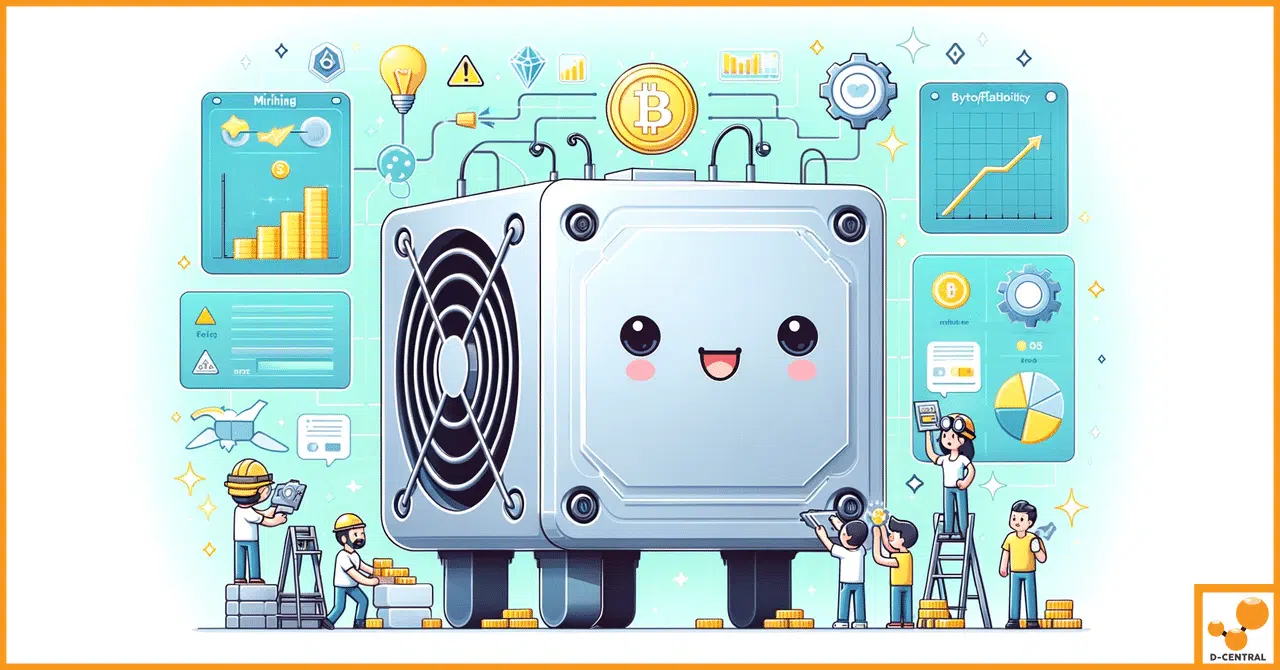
Canaan Creative shipped the first commercially available ASIC miner in January 2013. That single act cracked open the era of purpose-built Bitcoin mining hardware and rendered GPU mining obsolete practically overnight. More than a decade later, with the Bitcoin network hashrate surging past 800 EH/s and difficulty exceeding 110 trillion, the Avalon lineage remains one of three ASIC families that serious miners still deploy.
This is the Canaan and Avalon story — not the sanitized corporate version, but the one that matters to home miners, repair technicians, and anyone who believes that decentralizing hashrate is a moral imperative.
Why Canaan Matters to the Decentralization of Bitcoin Mining
Bitcoin’s security model depends on one thing above all else: distributed hashrate. When a single manufacturer dominates the ASIC market, that manufacturer becomes a central point of failure — and a central point of control. For years, Bitmain held near-monopoly power over Bitcoin mining hardware. Canaan Creative, by shipping the Avalon 1 before Bitmain even existed as a company, proved that competition in ASIC manufacturing was possible.
That matters. It matters because every additional ASIC manufacturer dilutes the concentration risk. It matters because miners deserve options. And it matters because the cypherpunk ethos that gave birth to Bitcoin demands that no single entity — not a government, not an exchange, not a hardware vendor — should hold disproportionate power over the network.
At D-Central Technologies, we have repaired, deployed, and supported Avalon miners since our earliest days. We stock Canaan hardware, we know its internals, and we are not afraid to tell you exactly where it shines and where it falls short.
The Avalon 1: The ASIC That Started Everything
Before Canaan, Bitcoin mining was a GPU arms race. Hobbyists strung together rigs of AMD Radeon cards, tweaking clock speeds and voltage mods to squeeze out a few more megahashes. It worked — until it did not.
N.G. Zhang and the Canaan team recognized that a chip designed to do one thing — compute SHA-256 hashes — would annihilate any general-purpose processor. The Avalon 1 launched in January 2013 with a hashrate of roughly 66 GH/s. By today’s standards, that is laughable. At the time, it was a revelation. A single Avalon 1 outperformed entire GPU farms while pulling a fraction of the power.
The Avalon 1 was not pretty. It was loud, ran hot, and required technical skill to operate. But it was real, it was shipping, and it proved the ASIC thesis. Within months, competitors emerged — including Bitmain, which would go on to dominate the market with the Antminer line. But Canaan drew first blood.
For the home mining community, the lesson is clear: the pleb miners of 2013 were running ASICs before anyone else. The spirit of accessible, individual mining is encoded in the DNA of this industry.
Avalon Generations: A Hardware Timeline
Canaan has shipped over a dozen Avalon generations. Here is the lineage that matters:
First Generation (2013-2015): Proving the Concept
The Avalon 1 through Avalon 4 established ASIC mining as viable. Each generation improved efficiency and reliability, but the real contribution was market validation. Canaan proved that ASIC mining hardware could be manufactured, shipped globally, and operated by individuals — not just data centers.
Mid-Generation (2016-2019): The Efficiency War
The Avalon 6 through Avalon 9 series marked Canaan’s transition from startup to industrial manufacturer. The Avalon 741 and Avalon 841 became workhorses for mid-scale operations. Power efficiency improved steadily, cooling systems matured, and Canaan introduced controller boards that could manage multiple miners from a single interface.
This era coincided with the 2017 bull run, which flooded the market with new miners — and new hardware. Canaan’s IPO on the Nasdaq in November 2019 (ticker: CAN) made it the first publicly listed Bitcoin mining hardware company. That listing was more than a business milestone; it forced Wall Street to acknowledge that Bitcoin mining was a legitimate, publicly accountable industry.
Current Generation (2020-Present): Competing at the Top
The Avalon A1246, A1346, and A1466 series brought Canaan into direct competition with Bitmain’s Antminer S19 and S21 families and MicroBT’s Whatsminer M50 and M60 lines. The A1466, for example, delivers over 150 TH/s with competitive joules-per-terahash figures.
Canaan’s latest chips are fabricated on advanced semiconductor nodes, and the company continues to invest in immersion cooling compatibility and AI chip development — though for Bitcoin maximalists, the AI pivot is a distraction from what matters: building better SHA-256 miners.
Canaan vs. the Competition: An Honest Assessment
Let us be direct. In 2026, Bitmain still holds the largest market share in ASIC manufacturing. MicroBT is the scrappy number two. Canaan sits third. That positioning matters, and pretending otherwise does miners a disservice.
Where Canaan Excels
Availability and pricing. Canaan hardware is often available when Bitmain units are backordered or allocated to large buyers first. For home miners and small operations, that accessibility matters more than spec-sheet bragging rights.
Firmware openness. Canaan has historically been more permissive with firmware modifications than Bitmain, which has increasingly locked down its Antminer firmware. For the Mining Hacker community — for people who want to tune, overclock, and customize their machines — this matters enormously.
Repairability. Avalon miners tend to use standardized component layouts that make board-level repair more straightforward. At D-Central, our repair technicians appreciate the relatively clean PCB designs on many Avalon hashboards compared to some competing manufacturers.
Where Canaan Lags
Raw efficiency. At any given moment, Canaan’s flagship model typically trails Bitmain’s top unit by 5-15% in joules-per-terahash. When electricity is your largest operating cost, that gap compounds.
Market perception. Bitmain has better brand recognition, more resellers, and a larger aftermarket parts ecosystem. Finding replacement hashboards for an Avalon can be harder than sourcing Antminer parts.
Software ecosystem. Bitmain’s ASIC ecosystem benefits from third-party firmware like Braiins OS and VNish. Canaan’s firmware options are more limited, though custom firmware projects exist.
Avalon Miners for Home Mining and Dual-Purpose Heating
Here is where the Canaan story intersects with the D-Central mission. An ASIC miner is a heater that also mines Bitcoin. Every watt of electricity consumed by an ASIC is converted to heat. The question is not whether your miner produces heat — it is whether you are capturing that heat and putting it to work.
Our Bitcoin Space Heater program takes ASIC miners — including Avalon units — and integrates them into home heating solutions. A miner running in your basement or garage during a Canadian winter is not wasting energy. It is heating your home while stacking sats. That is the dual-purpose mining thesis, and it transforms the economics of home mining entirely.
Older Avalon models like the 741 and 841, which are no longer competitive in a pure hashrate-per-dollar calculation, become perfectly viable when their heat output offsets your natural gas or electric heating bill. This is mining economics that Wall Street analysts never model because they do not understand how Canadian winters work.
Repairing and Maintaining Avalon Miners
ASICs are not disposable. A hashboard failure does not mean your miner is dead — it means your miner needs a technician who knows how to diagnose and repair at the component level.
D-Central has been repairing ASIC miners since 2016. Our technicians work on Avalon hashboards regularly, replacing failed BM chips, reflowing solder joints, and diagnosing controller board issues. The Avalon architecture, particularly on the A1246 and newer models, uses a modular hashboard design that lends itself well to repair.
Common Avalon failure modes include:
Temperature sensor failures. Avalon miners use onboard temperature sensors to regulate fan speed. When these sensors fail or report incorrect readings, the miner may throttle performance or shut down entirely.
Hashboard communication errors. The controller board communicates with each hashboard via a data bus. Damaged connectors, corroded pins, or failed communication chips can cause one or more hashboards to drop offline.
Power delivery issues. Voltage regulator failures on hashboards can cause individual ASIC chips to underhash or stop working entirely. These are repairable at the component level with proper equipment.
If you have an Avalon miner that is underperforming or offline, contact our repair team. We diagnose the issue, provide a repair estimate, and get your hashrate back online.
The Open-Source Alternative: Bitaxe and the Solo Mining Revolution
While Canaan and other manufacturers build industrial-grade ASICs, a parallel revolution is happening in the open-source mining space. The Bitaxe family of solo miners represents a fundamentally different philosophy: build your own miner, run your own node, point your hashrate at a solo mining pool, and take your shot at a full 3.125 BTC block reward.
D-Central is a pioneer in the Bitaxe ecosystem. We created the original Bitaxe Mesh Stand, developed leading heatsink solutions for the Bitaxe and Bitaxe Hex, and stock every variant from the Supra to the Gamma to the GT.
Canaan’s Avalon miners and open-source Bitaxe miners serve different purposes, but they share a common goal: putting hashrate in the hands of individuals, not corporations. Whether you are running an Avalon A1466 in a Canadian hosting facility or a Bitaxe Supra on your desk, you are contributing to the decentralization of the Bitcoin network. Every hash counts.
Canaan’s Position in 2026: Challenges and Opportunities
The Bitcoin mining industry in 2026 operates in a post-halving environment. The block reward dropped to 3.125 BTC in April 2024, compressing miner margins and forcing operators to optimize every variable: electricity cost, cooling efficiency, hardware selection, and uptime.
For Canaan, this environment presents both challenges and opportunities:
The efficiency race is existential. With the network hashrate above 800 EH/s and difficulty past 110 trillion, only the most efficient hardware survives in high-electricity-cost environments. Canaan must continue closing the efficiency gap with Bitmain’s latest models, or risk being relegated to a niche player.
Home mining is growing. The rise of the home mining movement — driven by dual-purpose heating, solo mining enthusiasm, and sovereignty-minded Bitcoiners — creates demand for a range of hardware, from flagship ASICs to older, cheaper models repurposed as heaters. Canaan’s broader product line, including older-generation units available at lower price points, positions them well for this market.
Repair and refurbishment extend hardware life. As new hardware becomes more expensive and harder to source, the repair and refurbishment market grows. Canaan’s relatively repairable designs give their hardware longer useful lifespans, which benefits both the environment and the miner’s bottom line.
Frequently Asked Questions
What was the first ASIC miner ever made?
The Canaan Avalon 1, shipped in January 2013, was the first commercially available Bitcoin ASIC miner. It delivered approximately 66 GH/s and proved that purpose-built mining hardware could outperform GPU rigs by orders of magnitude.
Are Avalon miners good for home mining?
Yes, particularly older-generation models like the Avalon 741 or 841 that can be repurposed as Bitcoin space heaters. Their heat output offsets home heating costs, changing the profitability equation entirely. Newer models like the A1466 are competitive for dedicated home mining setups as well. D-Central offers both new Avalon hardware and space heater conversions.
How does Canaan compare to Bitmain in 2026?
Bitmain leads in raw efficiency (joules-per-terahash) and market share. Canaan competes on availability, pricing, and firmware openness. For home miners who value repairability and customization, Canaan hardware offers advantages that pure spec-sheet comparisons miss. The Bitcoin network benefits from having multiple ASIC manufacturers — manufacturer diversity is hashrate decentralization.
Can D-Central repair Avalon miners?
Absolutely. D-Central has been repairing ASIC miners since 2016, including Avalon hashboards, controller boards, and power delivery systems. Common repairs include temperature sensor replacement, communication chip fixes, and voltage regulator swaps. Visit our ASIC Repair page to submit a repair request.
What is the current Bitcoin block reward?
As of 2026, the Bitcoin block reward is 3.125 BTC per block, following the April 2024 halving. The next halving will reduce the reward to 1.5625 BTC, expected around 2028. This decreasing reward schedule makes mining efficiency and low electricity costs more important than ever.
Should I buy an Avalon miner or a Bitaxe for solo mining?
They serve different purposes. An Avalon ASIC miner (like the A1466 at 150+ TH/s) gives you serious hashrate and realistic chances of contributing to pool-mined blocks. A Bitaxe solo miner is a low-power device for lottery-style solo mining where you take a shot at a full 3.125 BTC block reward. Many serious miners run both — an ASIC for consistent pool rewards and a Bitaxe for the solo mining dream. Check out our Bitaxe Hub for the full lineup.
Is Canaan Creative a publicly traded company?
Yes. Canaan Creative went public on the Nasdaq in November 2019 under the ticker symbol CAN. It was the first major Bitcoin mining hardware manufacturer to achieve a public listing, bringing transparency and accountability to the ASIC manufacturing industry.