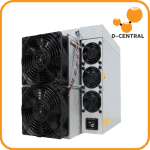
Yes, Bitcoin mining can be profitable in 2026 — but profitability hinges on three factors: your electricity cost, your hardware efficiency, and Bitcoin’s price. At $0.07/kWh with a current-gen Antminer S21 Pro (15 J/TH), you can expect roughly $77/month in profit. At $0.04/kWh, that climbs to over $150/month. At $0.12/kWh, you are mining at a loss. The numbers do not lie, and in this guide we break down every single one of them.
The State of Bitcoin Mining Profitability in 2026
Let us cut through the noise. Bitcoin mining in February 2026 is operating under some of the tightest margins the industry has ever seen. Hashprice — the metric that measures daily mining revenue per unit of hashrate — dropped below $32/PH/s in early February, an all-time record low. Bitcoin’s price slid under $70,000 during a broad market selloff, and network difficulty sat at 125.86 trillion before a historic 11.16% downward adjustment — the largest drop since China’s 2021 mining ban.
That sounds grim. But here is the thing: the miners who survive tight margins are the miners who were never gambling in the first place. They built their operations on cheap power, efficient hardware, and a clear-eyed understanding of the math. This article gives you that math.
We are D-Central Technologies. We have been building, repairing, and operating Bitcoin miners in Canada since 2016. We are not selling you hopium. We are giving you a spreadsheet and letting the numbers speak.
The Bitcoin Mining Profitability Equation
Before we dive into specific hardware and scenarios, you need to understand the fundamental equation that governs every mining operation on Earth:
Daily Revenue = (Your Hashrate ÷ Network Hashrate) × 144 blocks × 3.125 BTC × BTC Price

Daily Cost = Power Consumption (kW) × 24 hours × Electricity Rate ($/kWh)

Daily Profit = Daily Revenue − Daily Cost
That is it. Every mining profitability calculator on the internet is just a fancy wrapper around this formula. Let us walk through a real example with current numbers.
Worked Example: Antminer S21 Pro (234 TH/s)
Current network conditions (February 16, 2026):
- Bitcoin price: ~$68,000 USD
- Network hashrate: ~1,166 EH/s (1.166 ZH/s)
- Network difficulty: 125.86 T
- Block reward: 3.125 BTC (post-April 2024 halving)
- Blocks per day: 144
Step 1: Calculate daily BTC revenue
Daily BTC = (234 TH/s ÷ 1,166,000,000 TH/s) × 144 × 3.125
Daily BTC = 0.0000002007 × 450
Daily BTC = 0.00009031 BTC
Step 2: Convert to USD
Daily Revenue = 0.00009031 BTC × $68,000 = ~$6.14 - $8.50/day(Revenue varies with pool fees, luck variance, and intra-day difficulty shifts. Real-world data from mining pools currently shows ~$8.47/day for an S21 Pro at current difficulty.)
Step 3: Calculate daily electricity cost (at $0.07/kWh)
Daily Electricity = 3.51 kW × 24 hours × $0.07/kWh = $5.90/dayStep 4: Profit
Daily Profit = $8.47 − $5.90 = $2.57/day
Monthly Profit = ~$77
Annual Profit = ~$937
That is the reality of mining with top-tier hardware at a reasonable electricity rate in February 2026. Profitable? Yes. Life-changing? Not from a single unit. But stack a few together, add heat recovery, or secure cheaper power, and the picture changes fast.
The Three Factors That Determine Your Mining Profit
Factor #1: Electricity Cost — The Make-or-Break Variable
Electricity is the single most important variable in mining profitability. Everything else is secondary. A miner profitable at $0.05/kWh becomes a money-burning liability at $0.12/kWh. Here is how electricity rate affects the Antminer S21 Pro’s monthly profit:
| Electricity Rate | Monthly Electricity Cost | Monthly Revenue | Monthly Profit | Verdict |
|---|---|---|---|---|
| $0.04/kWh | $101 | $254 | +$153 | Highly profitable |
| $0.05/kWh | $126 | $254 | +$128 | Solidly profitable |
| $0.06/kWh | $152 | $254 | +$102 | Profitable |
| $0.07/kWh | $177 | $254 | +$77 | Profitable — standard benchmark |
| $0.08/kWh | $202 | $254 | +$52 | Marginally profitable |
| $0.10/kWh | $253 | $254 | +$1 | Break-even |
| $0.12/kWh | $303 | $254 | −$49 | Unprofitable |
| $0.15/kWh | $379 | $254 | −$125 | Significantly unprofitable |
The break-even electricity rate for the S21 Pro at current BTC prices is roughly $0.10/kWh. For older, less efficient hardware, that break-even drops dramatically — an S19 XP (21.5 J/TH) breaks even around $0.065/kWh, and an Antminer S9 (98 J/TH) cannot turn a profit at any reasonable rate.
The takeaway: If your all-in electricity rate (including delivery charges, demand charges, and taxes) is above $0.10/kWh, you need current-generation hardware or a heat-recovery strategy to make mining work. If it is above $0.12/kWh, even the latest ASICs will struggle unless BTC price rises significantly.
Factor #2: Hardware Efficiency — Joules per Terahash
Hardware efficiency is measured in J/TH (Joules per Terahash). Lower is better. A miner that does more work per watt of electricity earns more per dollar spent on power. Here is how the current ASIC landscape stacks up:
| Miner | Hashrate | Power | Efficiency (J/TH) | Generation | Approx. Price (Feb 2026) |
|---|---|---|---|---|---|
| Antminer S21 XP | 270 TH/s | 3,645W | 13.5 J/TH | Current-gen flagship | ~$3,900 |
| Antminer S21 Pro | 234 TH/s | 3,510W | 15 J/TH | Current-gen | ~$2,500–$3,100 |
| Antminer S21 | 200 TH/s | 3,500W | 17.5 J/TH | Current-gen | ~$1,500 |
| Antminer S19 XP | 140 TH/s | 3,010W | 21.5 J/TH | Previous-gen | ~$700–$850 |
| Antminer S19 Pro | 110 TH/s | 3,245W | 29.5 J/TH | Aging | ~$200–$400 |
| Antminer S9 | 14 TH/s | 1,372W | 98 J/TH | Legacy (2017) | ~$50–$100 |
The efficiency leap from one generation to the next is dramatic. The S21 XP at 13.5 J/TH is over 7x more efficient than the S9 at 98 J/TH. That means it earns 7x more revenue per dollar of electricity consumed. In tight-margin environments like February 2026, that efficiency difference is the difference between profit and loss.
This is why we always tell home miners: buy the most efficient hardware you can afford, not the cheapest hardware available. A “deal” on an S19 Pro is not a deal if it costs you more in electricity than it earns in Bitcoin.
Factor #3: Bitcoin Price — The Variable You Cannot Control
Bitcoin’s price directly multiplies your mining revenue. When BTC was above $100,000 in late 2024 and early 2025, even mediocre hardware was printing money. At $68,000 in February 2026, margins are tight. Here is how different BTC price levels affect S21 Pro profitability at $0.07/kWh:
| BTC Price | Est. Monthly Revenue | Monthly Electricity ($0.07) | Monthly Profit | Annual Profit | Payback Period |
|---|---|---|---|---|---|
| $50,000 | $187 | $177 | +$10 | $120 | 20+ years |
| $68,000 (current) | $254 | $177 | +$77 | $937 | ~2.7 years |
| $80,000 | $299 | $177 | +$122 | $1,464 | ~1.7 years |
| $100,000 | $374 | $177 | +$197 | $2,364 | ~1.1 years |
| $150,000 | $560 | $177 | +$383 | $4,596 | ~6.5 months |
Critical caveat: These projections assume current difficulty. In reality, when BTC price rises, more miners come online, difficulty increases, and per-miner revenue drops. The table above represents best-case scenarios at each price level. Plan conservatively.
That said, if you are a Bitcoin maximalist (and if you are reading this on D-Central, you probably are), then mining is not just about today’s profit. It is about accumulating BTC before the price moves higher. Every satoshi mined at $68,000 is a satoshi you did not have to buy at $150,000.
Profitability by Mining Approach (February 2026)
Not all mining looks the same. Here is a side-by-side comparison of the most common approaches, with realistic numbers based on current conditions. All calculations use $0.07/kWh electricity and BTC at ~$68,000.
| Mining Approach | Hardware Cost | Hashrate | Monthly Revenue | Monthly Electricity | Monthly Profit | Payback Period |
|---|---|---|---|---|---|---|
| Antminer S21 XP (pool) | ~$3,900 | 270 TH/s | $290 | $184 | +$106 | ~3.1 years |
| Antminer S21 Pro (pool) | ~$2,500 | 234 TH/s | $254 | $177 | +$77 | ~2.7 years |
| Antminer S21 (pool) | ~$1,500 | 200 TH/s | $215 | $176 | +$39 | ~3.2 years |
| S19 XP used (pool) | ~$800 | 140 TH/s | $145 | $152 | −$7 | Unprofitable at $0.07 |
| Space Heater Edition | $235–$2,350 | 10–56 TH/s | $11–$60 | Offset by heating | Net positive* | See analysis below |
| Bitaxe Gamma (solo) | ~$105–$200 | 1.2 TH/s | Lottery | ~$1/mo | Educational | N/A (sovereignty) |
| Bitaxe Hex (solo) | ~$295–$700 | ~3 TH/s | Lottery | ~$2.50/mo | Educational | N/A (sovereignty) |
A few observations from this table:
- The S21 XP is the profit king — its 13.5 J/TH efficiency generates the highest monthly profit, but its ~$3,900 price tag means the payback period is longer than the cheaper S21 Pro.
- The S21 Pro offers the best value — at ~$2,500, it balances efficiency (15 J/TH) with acquisition cost for the shortest payback relative to profit.
- The S19 XP is now unprofitable at $0.07/kWh. It needs sub-$0.065 power to break even. If you already own one, it might still make sense at very cheap rates. Do not buy one to mine with at standard residential electricity.
- Space Heaters change the math entirely — more on this below.
- Bitaxe mining is not about profit — it is about sovereignty, education, and the lottery ticket of solo-mining a block worth ~$212,500. The odds are astronomical, but the cost is negligible.
The Hidden Benefits of Bitcoin Mining (Beyond Pure Profit)
If you only evaluate mining through the lens of “monthly cash profit,” you are missing most of the picture. Here are the benefits that do not show up on a simple profitability calculator:
1. Heat Recovery: Turn a Cost Center Into Revenue
Every watt a miner consumes becomes heat. That is not a bug — it is a feature. In Canada, where heating season runs 6 to 8 months depending on the province, a Bitcoin miner replaces an electric space heater watt-for-watt. A 3,500W Antminer S21 Pro produces the same heat as a 3,500W electric heater — except it also mines Bitcoin.
When you factor in heat recovery, the effective electricity cost of mining drops to zero during heating season, because you were going to pay for that electricity anyway. Every satoshi mined becomes pure profit.
2. Non-KYC Bitcoin Accumulation
Mining gives you Bitcoin without going through an exchange. No KYC, no identity verification, no third-party custodian between you and your sats. For privacy-conscious Bitcoiners, this alone justifies the cost of mining — you are buying Bitcoin with electricity instead of with your personal data.
3. Supporting Network Decentralization
Every home miner running hashrate is a vote for decentralization. The more hashrate distributed across homes, garages, and basements worldwide, the harder it is for any government or corporation to attack the Bitcoin network. Mining is not just an investment — it is an act of sovereignty.
4. Dollar-Cost Averaging Without Exchange Risk
Mining functions as an automated DCA (dollar-cost averaging) strategy. Your electricity bill goes out every month, and Bitcoin comes in every day. You are constantly accumulating at whatever the current price is, without timing the market, without exchange fees, and without counterparty risk.
5. Potential Tax Advantages
In many jurisdictions, mining can be structured as a business, allowing deductions for hardware, electricity, cooling, maintenance, and depreciation. Consult a tax professional familiar with cryptocurrency mining in your country, but the deduction potential is real and can significantly improve after-tax returns. This is particularly relevant in Canada, where the CRA allows business expense deductions for mining operations.
Canada vs. USA: Where Is Bitcoin Mining More Profitable?
As a Canadian mining company, we get this question constantly. The answer is nuanced, and it depends heavily on where in each country you are located.
Canadian Provincial Electricity Rates (2026)
| Province | Rate (CAD ¢/kWh) | Rate (USD ¢/kWh)* | Mining Viable? |
|---|---|---|---|
| Quebec | 7.8¢ | ~5.5¢ | Excellent — among the cheapest power in North America |
| Manitoba | 10.2¢ | ~7.1¢ | Very good — profitable with current-gen hardware |
| British Columbia | 11.4¢ | ~8.0¢ | Good — profitable with efficient hardware |
| New Brunswick | 13.9¢ | ~9.7¢ | Marginal — need S21-class or better |
| Ontario | 14.1¢ | ~9.9¢ | Marginal — time-of-use rates help |
| Newfoundland | 14.8¢ | ~10.4¢ | Break-even with latest hardware |
| Nova Scotia | 18.3¢ | ~12.8¢ | Unprofitable for pure mining |
| Saskatchewan | 19.9¢ | ~13.9¢ | Unprofitable for pure mining |
| Alberta | 25.8¢ | ~18.1¢ | Unprofitable — consider space heater approach |
US State Electricity Rates (2026 Highlights)
The US national average residential electricity rate is 18.05¢/kWh as of February 2026 — significantly higher than Canada’s cheapest provinces. However, a few states stand out for miners:
- Louisiana: ~12.4¢/kWh — cheapest in the US
- Idaho, Utah, Wyoming: ~10–11¢/kWh — viable with efficient hardware
- Texas: Variable rates, can be very cheap off-peak (~5–8¢/kWh with the right plan)
- Washington State: ~10¢/kWh — hydroelectric power
- Hawaii: ~40¢/kWh — do not even think about it
Canada’s Structural Advantages for Home Mining
- Cold climate = free cooling. Bitcoin miners generate enormous heat. In warmer climates, you need air conditioning to remove that heat, adding 20–40% to your effective power cost. In Canada, you get 6+ months of free cooling. In winter, the heat is a benefit, not a cost.
- Quebec’s hydroelectric power is among the cheapest and cleanest in North America. At 7.8¢ CAD (~5.5¢ USD), it undercuts most US residential rates.
- USD/CAD exchange rate advantage. You mine Bitcoin priced in USD but pay electricity in CAD. At the current ~0.70 USD/CAD rate, your Canadian electricity is effectively 30% cheaper when measured against USD-denominated mining revenue.
- Favorable regulatory environment. No state-level mining bans, no hostile legislation targeting home miners (as of 2026).
Bottom line: If you live in Quebec, Manitoba, or BC, you have a structural advantage over most American home miners. If you are in Alberta or Saskatchewan, the space heater approach is your play.
When Bitcoin Mining Is NOT Profitable (Be Honest With Yourself)
We sell mining hardware. It would be easy to tell you mining is always worth it. But that would be a lie, and lies erode trust. Here is when mining does not make financial sense:
1. Your Electricity Costs More Than $0.12/kWh (USD)
At rates above $0.12/kWh, even the most efficient air-cooled ASIC miners (S21 XP at 13.5 J/TH) struggle to break even at current BTC prices. If your all-in electricity rate exceeds this threshold and you do not have a heat-recovery use case, mining will cost you more than simply buying Bitcoin on an exchange.
2. You Have No Cooling or Ventilation Plan
ASIC miners are loud (70–80 dB) and hot (3,500W+ of continuous heat). Without proper ventilation, they will overheat, throttle, and eventually die. If you cannot duct the heat outside in summer or into your living space in winter, do not buy a full-size ASIC. Consider a Bitaxe instead — silent, low-power, and no ventilation needed.
3. You Are Buying Old-Gen Hardware to “Save Money”
A “cheap” S19 Pro at $300 sounds tempting until you realize its 29.5 J/TH efficiency means it consumes almost twice as much power per terahash as an S21 Pro. At $0.07/kWh, the S19 Pro loses money every single day it runs. The cheapest miner is often the most expensive miner — it just takes the electricity bill to prove it.
4. Cloud Mining (Almost Always a Bad Deal)
Cloud mining services promise hassle-free mining profits. The reality: they charge you a premium for hashrate, keep maintenance fees opaque, and many are outright scams. If the economics worked, they would mine for themselves instead of selling hashrate to you. We have seen too many people burned by cloud mining contracts. Buy your own hardware, control your own keys, mine your own Bitcoin. That is the way.
5. You Are Planning to Mine Altcoins “Because They Are More Profitable”
This article is about Bitcoin mining. We are Bitcoin maximalists, and we will not pretend otherwise. Altcoin mining introduces additional risks: uncertain emission schedules, centralized development teams that can change the rules, low liquidity that evaporates during downturns, and ASIC resistance that means your hardware can become worthless overnight if the algorithm changes. Bitcoin is the only Proof of Work network worth dedicating hardware to long-term.
How to Calculate YOUR Mining Profitability
The tables above give you general guidance, but your profitability depends on your specific situation. Here is how to calculate it for your exact setup:
Step 1: Find Your True Electricity Rate
Do not just look at the “energy charge” on your bill. Add up:
- Energy charge (per kWh)
- Delivery/distribution charge (per kWh)
- Regulatory charges
- Taxes
- Any demand charges (common in some Canadian provinces)
Divide your total bill by total kWh consumed. That is your true all-in rate. Most people are shocked to find their real rate is 20–40% higher than the advertised “energy charge.”
Step 2: Pick Your Hardware
For home mining in 2026, we recommend:
- Best efficiency (highest profit per watt): Antminer S21 XP (13.5 J/TH) or S21 Pro (15 J/TH)
- Best value (lowest acquisition cost for positive ROI): Antminer S21 (17.5 J/TH) — ~$1,500
- Best for heating: D-Central Space Heater Editions — purpose-built for home integration
- Best for sovereignty/education: Bitaxe — open-source, silent, runs on USB power
Step 3: Run the Numbers
Use our tools to calculate your exact profitability:
- D-Central Mining Profitability Calculator — Enter your hashrate, power consumption, and electricity rate to see daily, monthly, and annual profit projections.
- Mining Power Cost Calculator — Calculate your true all-in electricity cost per kWh, including delivery and regulatory charges.
Bookmark these and check monthly. Mining profitability is a moving target — difficulty adjusts every ~2 weeks, and BTC price changes daily. What is unprofitable today may be highly profitable next month, and vice versa.
The Space Heater Hack: When Mining Is ALWAYS Profitable
This is the approach that fundamentally changes the mining profitability equation, and it is D-Central’s specialty.
Here is the logic:
- In Canada (and much of the northern US), you need to heat your home for 6–8 months of the year.
- Electric space heaters convert 100% of electricity into heat. A 1,500W heater produces 1,500W of heat.
- Bitcoin miners also convert 100% of electricity into heat. A 1,500W miner produces 1,500W of heat — plus Bitcoin.
- If you were going to spend that electricity on heating anyway, the electricity cost is a sunk cost. It is already in your heating budget.
- Therefore, every satoshi mined is pure profit — you are not paying extra for electricity, you are repurposing electricity you were already going to spend.
This is not theoretical. D-Central’s Bitcoin Space Heater Editions are purpose-built for this exact use case. We take proven mining hardware (Antminer S9, S17, and 19 series), repackage it in acoustically dampened enclosures with quiet 140mm fans, and ship it ready to heat your room and mine Bitcoin simultaneously.
Space Heater Economics: A Real Example
Consider a homeowner in Ontario who spends $200/month on electric heating during winter (about 1,400 kWh at $0.14/kWh). They replace one or two electric heaters with D-Central Space Heater Editions:
- Electricity cost: $0 incremental (already in the heating budget)
- Bitcoin mined: Depends on the model, but even a modest 10 TH/s S9 Space Heater mines ~0.00037 BTC/month (~$25)
- Over a 6-month heating season: ~$150 in BTC earned, at zero incremental electricity cost
- Hardware cost: Starting at $235 for an S9 Space Heater Edition
- Payback: Less than 2 heating seasons
The higher-powered Space Heater Editions (S17, 19 series) produce more heat, mine more Bitcoin, and pay for themselves faster. And during summer? Turn them off and use regular cooling. Or if you have a workshop, garage, or basement that could use year-round dehumidification/heating, keep them running.
This is the Mining Hacker approach. You are not trying to compete with industrial mining farms. You are hacking existing household energy consumption to stack sats. That is the real unlock for home mining profitability in 2026.
Solo Mining and the Bitaxe: A Different Kind of Profitability
If you are evaluating a Bitaxe on a pure ROI basis, stop right there. That is not the point.
A Bitaxe Gamma produces ~1.2 TH/s. The total network hashrate is ~1,166,000,000 TH/s. Your odds of solo-mining a block are roughly 1 in 970 million per block, or about 1 in 6.7 million per day. At the current block reward of 3.125 BTC (~$212,500), this is the ultimate lottery ticket — except it costs you about $1/month in electricity instead of $20/week on scratch cards.
But Bitaxe mining is about something deeper than profit:
- Sovereignty: You are running your own miner, contributing to network decentralization, without relying on a pool or a third party.
- Education: There is no better way to understand Bitcoin’s Proof of Work than to watch your own ASIC chip grinding through hashes in real time.
- Open source: The Bitaxe is fully open-source hardware. You can inspect, modify, and build it yourself. D-Central was a pioneer in the Bitaxe ecosystem — we created the original Bitaxe Mesh Stand and developed many of the leading accessories.
- The lottery: Solo miners have hit blocks. It is rare, but it happens. And when it does, a $200 device produces $212,500 in BTC. The expected value is near zero, but the stories are legendary.
The Bitaxe Hex and the emerging Bitaxe GT (2.4 TH/s) improve your solo odds meaningfully while remaining silent, low-power devices you can run on a desk. If sovereignty matters to you — and it should — this is your entry point.
What About the Next Halving? (April 2028)
The next Bitcoin halving will occur around April 2028, reducing the block reward from 3.125 BTC to 1.5625 BTC. If all else stays equal, this cuts mining revenue in half overnight.
But all else never stays equal. Here is what has happened after every previous halving:
- Short-term pain: Less efficient miners shut down, hashrate dips, difficulty adjusts downward.
- Medium-term recovery: Reduced new supply puts upward pressure on BTC price. Historically, Bitcoin has reached new all-time highs within 12–18 months of each halving.
- Long-term efficiency gains: New-generation hardware (we will likely see sub-10 J/TH machines by 2028) improves margins for miners who upgrade.
If you buy efficient hardware today (S21-class or better), you are positioned to survive the 2028 halving — especially if BTC price appreciates as historical patterns suggest. If you are buying an S19 XP today, you will almost certainly be unprofitable post-halving unless BTC price more than doubles.
The strategic play: Buy efficient hardware now, accumulate BTC during this cycle, and upgrade before the 2028 halving. Hardware that pays for itself before April 2028 is a winning trade regardless of what happens after.
Frequently Asked Questions
How much can you make mining Bitcoin in 2026?
With an Antminer S21 Pro (234 TH/s) at $0.07/kWh, you can expect approximately $77/month ($937/year) in profit at current BTC prices (~$68,000) and difficulty. With cheaper electricity ($0.04/kWh), that rises to ~$153/month. With the most efficient hardware available (S21 XP at 270 TH/s), monthly profit at $0.07/kWh is around $106. These figures fluctuate daily with BTC price and network difficulty adjustments.
Is Bitcoin mining profitable at home?
Yes, but only under the right conditions. You need: (1) electricity under $0.10/kWh, (2) current-generation hardware (S21-class or better), and (3) proper ventilation or a heat-recovery setup. If you can use the miner’s heat to warm your home, profitability improves dramatically because the electricity cost is offset by reduced heating bills. Home mining is most profitable in cold climates with cheap hydroelectric power — which is why Canada, and Quebec in particular, is ideal.
What is the most profitable Bitcoin miner in 2026?
The Antminer S21 XP (270 TH/s, 13.5 J/TH) is currently the most profitable air-cooled Bitcoin miner by monthly profit. However, the Antminer S21 Pro (234 TH/s, 15 J/TH) offers a better return on investment due to its lower purchase price (~$2,500 vs. ~$3,900) and only slightly lower efficiency. For pure profit-per-dollar-invested, the S21 Pro is the sweet spot in February 2026.
How long does it take to mine 1 Bitcoin?
With a single Antminer S21 Pro (234 TH/s) pool mining, you would earn approximately 0.0027 BTC per month at current difficulty. At that rate, it would take roughly 30+ years to accumulate 1 full Bitcoin from a single unit. This is why most miners think in terms of satoshis, not whole coins. With a single miner you stack sats daily. To mine a whole Bitcoin in a reasonable timeframe, you need a farm, not a single unit. That said, a solo miner like the Bitaxe could theoretically mine 3.125 BTC in a single lucky block — but the odds are astronomically low.
Is Bitcoin mining worth it with high electricity costs?
If your electricity exceeds $0.12/kWh (USD), pure-play mining is generally not worth it with current hardware and BTC prices. However, two strategies can still make it work: (1) the space heater approach, where mining heat replaces your existing heating system and the electricity cost becomes a sunk household expense, and (2) time-of-use rate arbitrage, where you mine only during off-peak hours when electricity is cheapest (common in Ontario and certain US states).
Is solo mining profitable?
In terms of expected value, solo mining with a small device like a Bitaxe is not profitable in any traditional sense. The electricity cost is negligible (~$1/month), but the probability of finding a block is extremely low. Solo mining is better understood as a Bitcoin lottery with a very cheap ticket. It is about sovereignty, education, and supporting decentralization — not monthly income. If you want consistent, predictable mining revenue, pool mining with an efficient ASIC is the way.
How much does Bitcoin mining cost per month?
The monthly operating cost depends entirely on your hardware and electricity rate. An Antminer S21 Pro (3,510W) running 24/7 at $0.07/kWh costs $177/month in electricity. At $0.10/kWh, that rises to $253/month. At $0.05/kWh, it drops to $126/month. Add ~$10–20/month for pool fees (typically 1–2% of revenue), internet, and minor maintenance. Hardware cost is a one-time upfront expense, not a monthly cost — though you should budget for it amortized over the expected lifespan (3–5 years for quality hardware).
Will Bitcoin mining be profitable after the 2028 halving?
Historically, yes — but only for miners with efficient hardware. After the 2024 halving (3.125 BTC reward), many S9-era and early S19 miners became unprofitable and shut down. After the 2028 halving (1.5625 BTC reward), the same will happen to today’s less efficient machines. If you are mining with S21-class hardware (sub-17.5 J/TH) and BTC price is at or above current levels, you should remain profitable post-halving. If BTC price rises significantly (as it has after every previous halving), profitability could actually improve. The key is to have efficient hardware and cheap power.
Is it better to mine Bitcoin or buy Bitcoin?
It depends on your goals and circumstances. Buy Bitcoin if: you want immediate exposure, your electricity is expensive, or you do not want to deal with hardware. Mine Bitcoin if: you have cheap electricity (under $0.08/kWh), you want non-KYC Bitcoin, you can use the heat, you want to support decentralization, or you want to treat it as a business for tax purposes. For many Canadians with cheap hydro power and cold winters, mining is effectively buying Bitcoin at a discount — especially with the space heater approach.
What hashrate do I need to be profitable?
The question is not “what hashrate” but “what efficiency.” A 140 TH/s miner at 21.5 J/TH (S19 XP) is less profitable than a 100 TH/s miner at 15 J/TH (hypothetical), because the more efficient machine earns more per watt consumed. Focus on J/TH, not TH/s. In 2026, you want hardware at or below 17.5 J/TH to have comfortable margins at typical North American residential electricity rates.
The Bottom Line: Is Bitcoin Mining Profitable in 2026?
Yes — with conditions.
February 2026 is one of the tightest-margin environments in Bitcoin mining history. Hashprice hit record lows, BTC dipped below $70,000, and network difficulty — despite a historic 11% drop — remains above 125 trillion. This is not an environment for tourists.
But it is an excellent environment for prepared, disciplined home miners. Here is the playbook:
- If your electricity is under $0.08/kWh: Buy an S21 Pro or S21 XP, set it up with proper ventilation, and mine. You will be profitable. Stack sats. Do not watch the price daily.
- If your electricity is $0.08–$0.12/kWh: Mining is marginal as a pure financial play. Consider the space heater approach to offset electricity costs with heating value, or wait for BTC price to recover above $80,000.
- If your electricity is above $0.12/kWh: Do not mine for profit. Instead, consider a Bitaxe for sovereignty and education at ~$1/month in electricity, or a Space Heater Edition for dual-purpose heating and mining.
- If you are in Quebec, Manitoba, or BC: You have some of the best mining economics in the world. Take advantage of it.
- If you believe in Bitcoin long-term: Mining at tight margins today means accumulating BTC before the next major price cycle. Every cycle, the miners who mined through the hard times came out ahead.
Mining is not for everyone. But for those with cheap electricity, cold climates, or a heating bill they are already paying — it is a no-brainer. You are converting watts into sats, heat into hashrate, and household energy into sound money.
That is the Mining Hacker way. That is what we do at D-Central. And if you need help getting started — whether it is choosing the right hardware, setting up your first miner, or getting a broken ASIC repaired — we are here.
This article reflects market conditions as of February 16, 2026. Bitcoin mining profitability changes daily. We recommend rechecking your numbers monthly using our mining profitability calculator.
Ready to Start Mining?
Browse our complete selection of mining hardware, from the latest ASICs to open-source Bitaxe solo miners and purpose-built Space Heater Editions:
- Browse All Mining Hardware
- Bitaxe Solo Miners — Open-source, silent, sovereignty-first
- Bitcoin Space Heaters — Heat your home, stack sats
- ASIC Repair Services — Get your broken miner back online
- Mining Profitability Calculator — Run your own numbers
How much can you make mining Bitcoin in 2026?
With an Antminer S21 Pro (234 TH/s) at $0.07/kWh, you can expect approximately $77/month ($937/year) in profit at current BTC prices (~$68,000) and difficulty. With cheaper electricity ($0.04/kWh), that rises to ~$153/month. With the most efficient hardware available (S21 XP at 270 TH/s), monthly profit at $0.07/kWh is around $106. These figures fluctuate daily with BTC price and network difficulty adjustments.
Is Bitcoin mining profitable at home?
Yes, but only under the right conditions. You need: (1) electricity under $0.10/kWh, (2) current-generation hardware (S21-class or better), and (3) proper ventilation or a heat-recovery setup. If you can use the miner’s heat to warm your home, profitability improves dramatically because the electricity cost is offset by reduced heating bills. Home mining is most profitable in cold climates with cheap hydroelectric power — which is why Canada, and Quebec in particular, is ideal.
What is the most profitable Bitcoin miner in 2026?
The Antminer S21 XP (270 TH/s, 13.5 J/TH) is currently the most profitable air-cooled Bitcoin miner by monthly profit. However, the Antminer S21 Pro (234 TH/s, 15 J/TH) offers a better return on investment due to its lower purchase price (~$2,500 vs. ~$3,900) and only slightly lower efficiency. For pure profit-per-dollar-invested, the S21 Pro is the sweet spot in February 2026.
How long does it take to mine 1 Bitcoin?
With a single Antminer S21 Pro (234 TH/s) pool mining, you would earn approximately 0.0027 BTC per month at current difficulty. At that rate, it would take roughly 30+ years to accumulate 1 full Bitcoin from a single unit. This is why most miners think in terms of satoshis, not whole coins. With a single miner you stack sats daily. To mine a whole Bitcoin in a reasonable timeframe, you need a farm, not a single unit. That said, a solo miner like the Bitaxe could theoretically mine 3.125 BTC…
Is Bitcoin mining worth it with high electricity costs?
If your electricity exceeds $0.12/kWh (USD), pure-play mining is generally not worth it with current hardware and BTC prices. However, two strategies can still make it work: (1) the space heater approach, where mining heat replaces your existing heating system and the electricity cost becomes a sunk household expense, and (2) time-of-use rate arbitrage, where you mine only during off-peak hours when electricity is cheapest (common in Ontario and certain US states).
Is solo mining profitable?
In terms of expected value, solo mining with a small device like a Bitaxe is not profitable in any traditional sense. The electricity cost is negligible (~$1/month), but the probability of finding a block is extremely low. Solo mining is better understood as a Bitcoin lottery with a very cheap ticket. It is about sovereignty, education, and supporting decentralization — not monthly income. If you want consistent, predictable mining revenue, pool mining with an efficient ASIC is the way.
How much does Bitcoin mining cost per month?
The monthly operating cost depends entirely on your hardware and electricity rate. An Antminer S21 Pro (3,510W) running 24/7 at $0.07/kWh costs $177/month in electricity. At $0.10/kWh, that rises to $253/month. At $0.05/kWh, it drops to $126/month. Add ~$10–20/month for pool fees (typically 1–2% of revenue), internet, and minor maintenance. Hardware cost is a one-time upfront expense, not a monthly cost — though you should budget for it amortized over the expected lifespan (3–5 years…
Will Bitcoin mining be profitable after the 2028 halving?
Historically, yes — but only for miners with efficient hardware. After the 2024 halving (3.125 BTC reward), many S9-era and early S19 miners became unprofitable and shut down. After the 2028 halving (1.5625 BTC reward), the same will happen to today’s less efficient machines. If you are mining with S21-class hardware (sub-17.5 J/TH) and BTC price is at or above current levels, you should remain profitable post-halving. If BTC price rises significantly (as it has after every previous…
Is it better to mine Bitcoin or buy Bitcoin?
It depends on your goals and circumstances. Buy Bitcoin if: you want immediate exposure, your electricity is expensive, or you do not want to deal with hardware. Mine Bitcoin if: you have cheap electricity (under $0.08/kWh), you want non-KYC Bitcoin, you can use the heat, you want to support decentralization, or you want to treat it as a business for tax purposes. For many Canadians with cheap hydro power and cold winters, mining is effectively buying Bitcoin at a discount — especially…
What hashrate do I need to be profitable?
The question is not “what hashrate” but “what efficiency.” A 140 TH/s miner at 21.5 J/TH (S19 XP) is less profitable than a 100 TH/s miner at 15 J/TH (hypothetical), because the more efficient machine earns more per watt consumed. Focus on J/TH, not TH/s. In 2026, you want hardware at or below 17.5 J/TH to have comfortable margins at typical North American residential electricity rates.