What Is the Bitcoin Halving?
The Bitcoin halving is a hard-coded event in the Bitcoin protocol that reduces the block subsidy — the number of new BTC awarded to miners per block — by exactly 50%. Satoshi Nakamoto designed this mechanism to enforce digital scarcity: only 21 million bitcoin will ever exist, and the rate of new issuance decreases on a predictable schedule until the subsidy reaches zero under current consensus rules, expected around the year 2140. Every 210,000 blocks (roughly every four years), the subsidy halves:- 2009 (Genesis): 50 BTC per block
- 2012 (1st Halving): 25 BTC per block
- 2016 (2nd Halving): 12.5 BTC per block
- 2020 (3rd Halving): 6.25 BTC per block
- 2024 (4th Halving): 3.125 BTC per block
- 2028 (5th Halving): 1.5625 BTC per block
Protocol source: Bitcoin Core calculates a block’s total reward as transaction fees plus GetBlockSubsidy(...). See the Bitcoin Core block-assembly calculation.
2028 Halving Timeline: When, Where, and What Block
The 2028 halving will occur at block height 1,050,000. Bitcoin targets one block every 10 minutes on average, but the calendar date cannot be known in advance because actual block intervals vary; current estimates place it around 2028. Key numbers to remember:- Current block subsidy: 3.125 BTC (~450 BTC issued per day, excluding transaction fees)
- Post-halving block subsidy: 1.5625 BTC (~225 BTC issued per day, excluding transaction fees)
- Block height trigger: 1,050,000
- Estimated date: April 2028 (exact date depends on hashrate fluctuations)
- Blocks remaining (as of February 2026): ~114,500
- Days remaining: ~795 days
History of Previous Halvings: Lessons From the Battlefield
Every halving in Bitcoin history has followed a similar pattern: initial miner pain, followed by adaptation, followed by price appreciation that ultimately rewards those who survived. But the details matter, because each cycle has been different.The 2012 Halving: The Pioneer Era
Block subsidy: 50 to 25 BTC | Date: November 28, 2012 | Block: 210,000 The first halving was a relatively quiet event. Bitcoin was trading around $12 at the time, and mining was still accessible to hobbyists running GPUs and early ASICs. The hashrate dipped briefly but recovered within weeks. Within a year, Bitcoin surged past $1,000 — a gain of over 7,000%. This halving proved the thesis: reduced supply with growing demand drives price appreciation.The 2016 Halving: ASICs Take Over
Block subsidy: 25 to 12.5 BTC | Date: July 9, 2016 | Block: 420,000 By the second halving, professional ASIC mining was the standard. Bitcoin was around $650, and the mining industry had grown into a competitive landscape. Post-halving, inefficient miners were squeezed out, but within 18 months Bitcoin reached nearly $20,000 — a 291% gain from the halving price. The lesson: those who held through the initial margin compression were generously rewarded.The 2020 Halving: COVID Meets Digital Gold
Block subsidy: 12.5 to 6.25 BTC | Date: May 11, 2020 | Block: 630,000 This halving occurred during the COVID-19 pandemic, with Bitcoin around $8,700. The hashrate dropped approximately 20% in the weeks following as older S9-class machines went offline. But the subsequent bull run took Bitcoin to an all-time high of $69,000 by November 2021 — a 541% gain. The 2020 halving demonstrated that even in a macro crisis, the supply shock dynamics held.The 2024 Halving: The Institutional Era
Block subsidy: 6.25 to 3.125 BTC | Date: April 20, 2024 | Block: 840,000 The most recent halving was different in character. Spot Bitcoin ETFs had just launched in January 2024, bringing massive institutional demand. Bitcoin was around $63,700 at halving time. Daily miner revenue dropped from approximately $79 million to $29 million. The hashrate slumped 7.7% as inefficient rigs powered down. By October 2025, Bitcoin peaked near $126,000, but the subsequent correction brought prices back below $90,000 by early 2026. This cycle showed diminishing percentage returns but also that institutional adoption changes the demand dynamics fundamentally.What the 2024 Halving Taught Us
The 2024 halving provided critical data for miners planning ahead to 2028. Here are the key takeaways:Efficiency Was the Survival Line
After April 2024, miners running hardware above approximately 25 J/TH found themselves underwater unless they had access to electricity below $0.04/kWh. The industry quickly consolidated around sub-20 J/TH machines. Only miners with efficient rigs (under 20 J/TH), cheap electricity ($0.06/kWh or less), and strong financial reserves survived the squeeze period before price appreciation kicked in.Transaction Fees Became More Important
With the block subsidy halved, transaction fees represented a larger percentage of total miner revenue. The Runes protocol launch on halving day briefly spiked fees to extraordinary levels, reminding miners that fee revenue is increasingly critical to the business model. By 2028, transaction fees will be an even larger component of the revenue equation.Consolidation Accelerated
Smaller operations that could not achieve economies of scale either shut down or were acquired. Public mining companies used the downturn to acquire distressed assets at discounts. For home miners, this means the competitive landscape is getting tougher with each halving — making efficiency and energy strategy more important than ever.Hashrate Recovered Faster Than Expected
Despite the initial drop, Bitcoin’s network hashrate surged by over 104% in 2024, driven by next-generation ASIC deployments from well-capitalized miners. The difficulty adjustment algorithm worked as designed, but the speed of recovery showed that institutional-scale miners are now deploying hardware at unprecedented rates.Model the 2028 Halving, Do Not Memorize a Threshold
No efficiency band, electricity tariff, or Bitcoin-price forecast can guarantee post-halving profitability. Model measured wall power and hashrate alongside your full tariff, pool terms, uptime, acquisition cost, live difficulty, transaction-fee conditions, and several price scenarios. Recalculate as those inputs change.
Use the live mining profitability calculator for a timestamped estimate, then stress-test both higher difficulty and lower fee/price cases.
Hardware Strategy: What to Buy Now vs. What to Wait For
Hardware selection affects resilience, but it cannot determine the outcome by itself. Evaluate exact variants with measured performance and scenario analysis:Current-Generation Efficiency Candidates
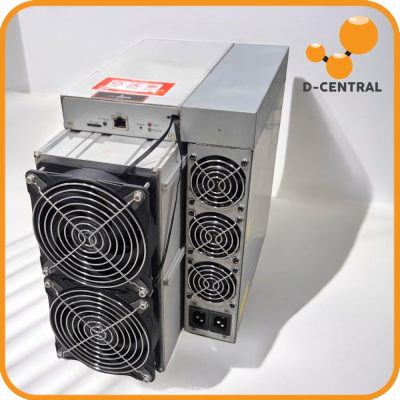
Machines in the 12–15 J/TH range are engineered to be halving-resilient:- Antminer S21 XP: ~270 TH/s at ~13.5 J/TH — flagship air-cooled efficiency
- Antminer S21 Pro: ~234 TH/s at ~15 J/TH — strong balance of cost and efficiency
- Antminer S21 XP+ Hyd: ~500 TH/s at ~11 J/TH — top-tier efficiency (hydro-cooled)
- Avalon A16XP: ~300 TH/s at ~12.8 J/TH — competitive Canaan offering
Previous-Generation Machines (Caution — Limited Lifespan)
Miners above 20 J/TH are on borrowed time:- Antminer S19 XP (21.5 J/TH): May struggle post-halving unless electricity is very cheap
- Antminer S19j Pro (29.5 J/TH): Unlikely to survive the 2028 halving
- Antminer S19 (34.5 J/TH): Almost certainly unprofitable post-2028
- Antminer S9 (98 J/TH): Only viable as a space heater with zero profit expectation from mining
Open-Source Miners: A Different Calculus
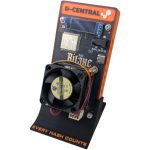
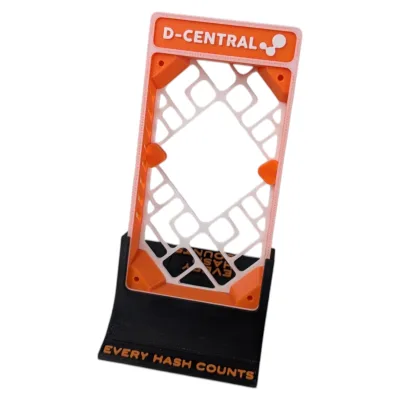
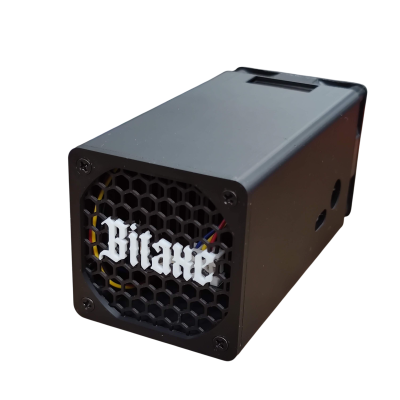
Bitaxe and other open-source solo miners operate on a fundamentally different economic model. Solo miners are not competing on efficiency metrics the same way pool miners are — they are playing the lottery for a full block reward. A single Bitaxe finding a block at any point pays out the entire block subsidy plus transaction fees. After the 2028 halving, solo mining rewards drop from 3.125 BTC to 1.5625 BTC per block — but 1.5625 BTC (plus fees) is still a life-changing sum for a home miner running a sub-$100 device. The probability-per-hash remains the same; only the payout size changes. For the Bitaxe community, halvings are less about survival and more about the philosophical commitment to decentralized mining. D-Central is a pioneer in the Bitaxe ecosystem — we created the original Bitaxe Mesh Stand, developed leading Bitaxe heatsinks and accessories, and stock every variant from the Supra to the Hex to the Gamma. If solo mining appeals to you, we have the complete ecosystem ready.Dual-Purpose Mining: Why Space Heaters Become MORE Important After Halvings
Here is one of the most underappreciated strategies for surviving halvings: dual-purpose mining. A Bitcoin space heater is an ASIC miner repurposed to heat your home. The heat generated is not waste — it replaces the electricity you would have spent on conventional heating. When you factor in the heating value of your miner, the break-even calculation changes dramatically. The math is simple: If your miner consumes 1,500 watts and you would otherwise run a 1,500-watt electric heater, the mining is effectively free in heating terms. Any Bitcoin earned is pure bonus. After the 2028 halving, when pure mining margins get squeezed, this dual-purpose value becomes the difference between profitability and capitulation for many home miners. Why this matters more after each halving:- Each halving reduces direct mining revenue, making the heat offset relatively more valuable
- A miner that would be “unprofitable” in a data center can be highly profitable as a space heater
- Older-generation hardware (S9, S17, even S19) gets a second life as heating appliances
- In Canada and northern climates, heating season provides 6–8 months of dual-purpose value
Energy Strategy: Securing Your Power Advantage
After each halving, electricity cost becomes the single most important variable in mining profitability. Here is how to build your energy moat before 2028:Secure Low Rates Now
If you can lock in a long-term electricity contract below $0.06/kWh, you will have a structural advantage through the 2028 halving and beyond. In Canada, provinces like Quebec and British Columbia offer some of the most competitive rates in North America — a key reason why Bitcoin mining in Canada continues to be attractive.Renewable Energy Integration
Solar, wind, and micro-hydro installations can reduce or eliminate your electricity cost variable. A solar array sized to power your mining operation effectively gives you $0.00/kWh mining during peak production hours. The capital outlay is significant, but the 2+ year runway before the halving gives you time to build out infrastructure and recover costs.Time-of-Use Optimization
Many utilities offer time-of-use (TOU) pricing with dramatically lower rates during off-peak hours (nights, weekends). Smart miners can schedule operations to maximize hashing during cheap-rate periods and curtail during expensive peak hours. Some modern ASIC firmware supports automated power scheduling.Stranded and Curtailed Energy
The most profitable miners in the world are those capturing energy that would otherwise be wasted — flared natural gas, curtailed wind or solar, excess hydroelectric capacity. If you have access to any form of stranded energy, you have a natural halving-resistant business model.Financial Planning: Managing Your Treasury Through the Halving
Hardware and energy are half the equation. The other half is financial strategy. Here is how smart miners manage their treasury heading into a halving:Accumulate Before the Halving
The period before block height 1,050,000 has a known subsidy schedule but an unknown calendar duration and market outcome. Until that height, the scheduled subsidy remains 3.125 BTC per block. After that height it becomes 1.5625 BTC; transaction fees remain variable, so total block rewards are not in a fixed two-to-one ratio.HODL vs. DCA: The Treasury Debate
HODL strategy: Hold 100% of mined Bitcoin, pay expenses from fiat reserves. This maximizes BTC exposure but requires strong cash reserves. DCA-out strategy: Sell a fixed percentage of mined BTC regularly to cover operating expenses, hold the rest. This provides cash flow stability while maintaining BTC exposure. Hybrid approach (recommended): Sell enough to cover electricity and maintenance costs, HODL the remainder. Adjust the ratio based on market conditions — sell less during accumulation phases, sell more if you need to fund hardware upgrades.Build a War Chest
Enter the halving with 6–12 months of operating expenses saved in fiat. This buffer lets you continue mining through the initial post-halving squeeze without being forced to sell BTC at potentially depressed prices.Tax Planning
In Canada and most jurisdictions, mined Bitcoin is taxed as income at the fair market value when received, and subsequent gains or losses are taxed as capital gains when sold. Strategic tax planning before the halving — including timing of equipment purchases for depreciation and structuring your mining as a business — can significantly impact your net returns. Consult a crypto-savvy accountant well before April 2028.The D-Central Perspective: How Mining Hackers Approach Halvings
At D-Central, we have been through this before. Every halving since 2016, the same headlines appear: “Bitcoin mining is dead.” And every time, the miners who adapted, optimized, and kept hashing came out stronger on the other side. Our approach is built on three pillars:1. Relentless Efficiency
We do not just sell mining hardware — we optimize it. Custom firmware, undervolting, airflow modifications, immersion cooling adaptations. When the subsidy drops, every joule per terahash matters. Our ASIC repair services keep machines running at peak efficiency rather than replacing them prematurely.2. Radical Adaptability
The Mining Hacker ethos means we find value where institutional miners see waste. Repurposing ASICs as space heaters. Building custom Slim and Loki edition miners for home deployment. Creating the Bitaxe accessory ecosystem. We hack institutional-grade technology into solutions for the home miner.3. Decentralization Above All
Every halving concentrates mining power into fewer, larger operations. Our mission is to push back against that centralization. By making mining accessible, efficient, and profitable for the individual, we strengthen the Bitcoin network at its most fundamental level. The 2028 halving will be another stress test. The miners who prepare — who invest in efficient hardware, secure cheap energy, manage their treasury wisely, and think creatively about dual-purpose mining — will not just survive. They will accumulate more Bitcoin at a time when the supply issuance has never been lower. That is the opportunity. If you are just getting started on your mining journey, our guide on how to start Bitcoin mining will walk you through everything from equipment selection to your first hash.Frequently Asked Questions
When is the next Bitcoin halving?
What will the block subsidy be after the 2028 halving?
Will Bitcoin mining still be profitable after the 2028 halving?
Should I buy mining hardware now or wait until after the halving?
How does the halving affect Bitaxe and solo miners?
What efficiency (J/TH) do I need to survive the 2028 halving?
How can I make older miners profitable through the halving?
What happens to Bitcoin price after the halving?
How many more Bitcoin halvings are there?
Is the 2028 halving already priced into Bitcoin?
The Bottom Line: Prepare Against Measured Scenarios
The 2028 halving is scheduled by block height. Operators can prepare by measuring their actual costs and performance, maintaining liquidity, and testing multiple difficulty, fee, and price scenarios; none of those steps guarantees future profitability. Your halving preparation checklist:- Audit your hardware — is it under 15 J/TH?
- Calculate your full electricity tariff and demand charges, then test several network and price scenarios
- Explore dual-purpose mining — can your miners heat your home?
- Build a financial buffer — can you operate for 6+ months post-halving?
- Consider renewable energy — can you reduce your electricity variable?
- Plan around the known subsidy change while treating transaction fees, difficulty, uptime and price as variable
- Stay informed — follow D-Central for hardware updates, efficiency tips, and market analysis
When is the next Bitcoin halving?
The next Bitcoin halving occurs at block height 1,050,000. Its calendar date cannot be known in advance because actual block intervals vary; current estimates place it around 2028.
What will the block subsidy be after the 2028 halving?
The block subsidy will fall from 3.125 BTC to 1.5625 BTC per block at height 1,050,000. A miner’s total block reward is that subsidy plus the block’s transaction fees. Scheduled daily issuance therefore falls from about 450 BTC to about 225 BTC before fees and normal block-timing variance.
Will Bitcoin mining still be profitable after the 2028 halving?
No fixed efficiency or electricity threshold can answer this in advance. Profitability will depend on measured hashrate and power, the full tariff, difficulty, transaction fees, pool terms, uptime, acquisition cost, and Bitcoin price. Use the live calculator and stress-test downside scenarios; heat reuse can offset only the heating cost actually displaced.
Should I buy mining hardware now or wait until after the halving?
There is no universally correct purchase date. Compare the exact delivered hardware cost, measured performance, tariff, fees, uptime, warranty and repair risk against current network inputs and multiple post-halving scenarios. The subsidy remains 3.125 BTC until height 1,050,000, but neither pre-halving revenue nor hardware resale value guarantees payback.
How does the halving affect Bitaxe and solo miners?
Solo miners using devices like the Bitaxe are playing a probability game for a full block reward. After the 2028 halving, if a solo miner finds a block, the payout will be 1.5625 BTC (plus transaction fees) instead of 3.125 BTC. The probability of finding a block does not change — only the reward size. For most Bitaxe users, solo mining is about supporting decentralization and the thrill of the lottery, not margin calculations.
What efficiency (J/TH) do I need to survive the 2028 halving?
Lower measured J/TH generally improves resilience, but there is no universal survival threshold. Compare the exact machine’s wall power and hashrate with your full tariff, fees, uptime, current network inputs, and acquisition cost, then rerun the calculation as difficulty and fee conditions change.
How can I make older miners profitable through the halving?
The best strategy for older, less efficient miners is dual-purpose deployment as Bitcoin space heaters. By using the waste heat to warm your home, office, or workshop, you offset your heating costs — which can make even older S9 or S17 machines economically viable. D-Central specializes in building custom space heater editions of popular ASIC models for exactly this purpose.
What happens to Bitcoin price after the halving?
Past halving cycles coincided with different market outcomes, but those observations do not establish a guaranteed causal path or future price. The 2028 subsidy schedule is known; demand, liquidity, regulation and market price are not. Model mining economics without assuming that price appreciation will restore margins.
How many more Bitcoin halvings are there?
After the 2028 halving, 28 further scheduled subsidy reductions remain. Under current consensus rules the block subsidy becomes zero at height 6,930,000, expected around 2140; miners can then receive transaction fees but no new subsidy. Each preceding reduction removes a smaller absolute amount of scheduled issuance.
Is the 2028 halving already priced into Bitcoin?
There is no verifiable way to determine how much of a future event is already reflected in market price. The subsidy schedule is public, but future demand, liquidity, regulation and price are unknown. Do not base a mining budget on an assumed post-halving appreciation path.