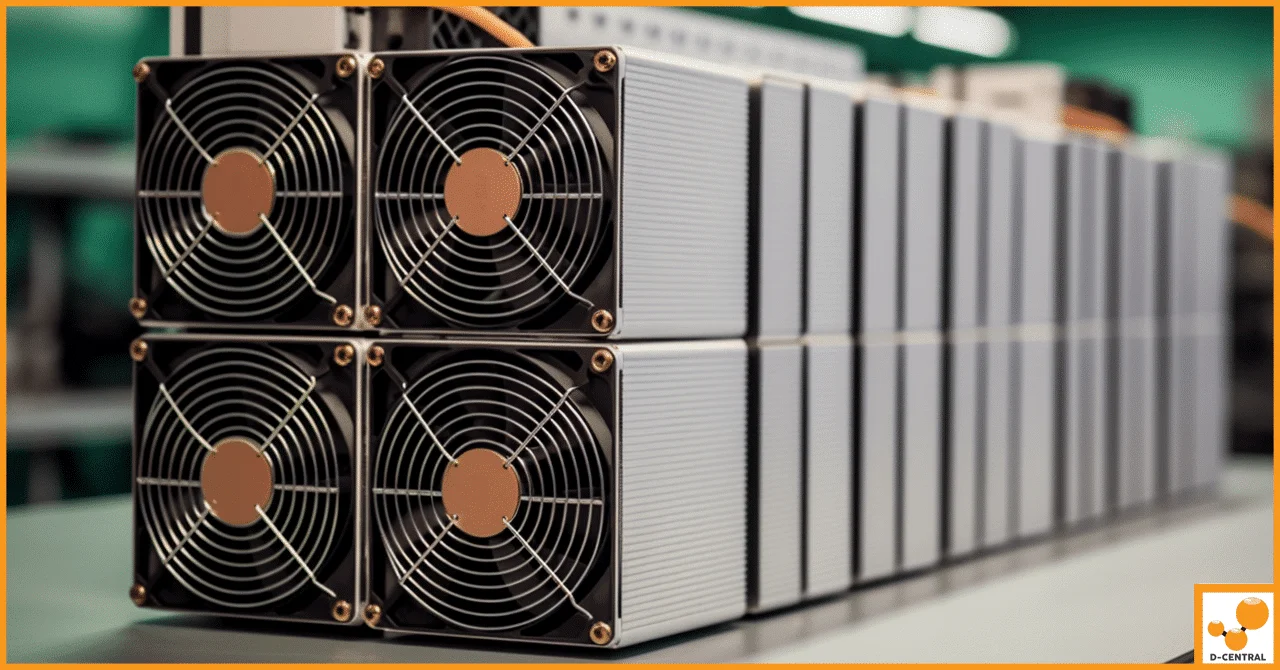
The Bitmain Antminer S17 series was a landmark generation of SHA-256 ASIC miners — and one of the most problematic. Released in 2019 with impressive specs on paper, the S17 line earned a reputation in the mining community for chronic reliability issues rooted in manufacturing shortcuts. For home miners and small-scale operators who bought these machines at a premium, those defects translated directly into lost hashrate, wasted electricity, and frustrating downtime.
At D-Central Technologies, we have repaired thousands of Antminer S17 units since they first started failing. Our technicians have mapped every known manufacturing defect, developed proven repair protocols, and built a refurbishment pipeline that brings these miners back to full operational capacity. This guide shares what we have learned — and what you need to know if you are running, buying, or repairing an S17.
Why the Antminer S17 Had So Many Problems
The S17 series was Bitmain’s first generation to use 7nm ASIC chips (BM1397 for the S17/S17 Pro, BM1397 for the S17+/S17e). The hardware was capable, but the manufacturing execution was rushed. Multiple issues compounded across the production run, and the result was a failure rate that far exceeded previous Antminer generations.
The root causes fall into three categories: solder quality, thermal management, and component sourcing.
Solder Joint Failures
The most widespread defect. Bitmain used lead-free solder paste on the BM1397 chips, but the reflow profiles were inconsistent across production batches. The result: cold solder joints, insufficient wetting, and solder bridges — sometimes visible under magnification, sometimes only detectable through thermal imaging or chain testing.
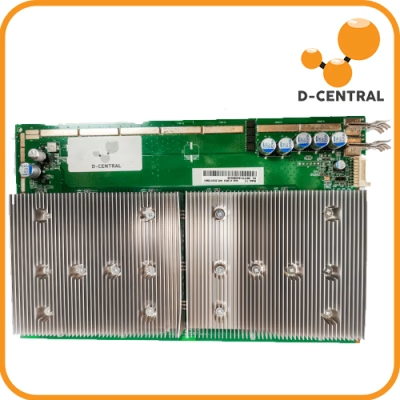
When a single chip loses its solder connection, the entire hashboard chain breaks. One bad joint can take 30+ TH/s offline. We have seen S17 hashboards arrive at our Montreal workshop with 3 to 8 failed joints per board — and some units shipped from the factory with joints that were never properly reflowed in the first place.
Thermal Management Design Flaws
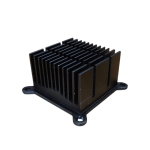
The S17 heatsink mounting system used a combination of thermal paste and spring-loaded screws to maintain chip contact. In practice, the spring tension was inconsistent, leading to uneven pressure across the chip array. Chips at the edges of the hashboard frequently ran 10-15 degrees Celsius hotter than centre chips.
This thermal gradient accelerated joint fatigue through repeated thermal cycling. Miners running 24/7 in environments with daily temperature swings saw accelerated failure rates — the joints expand and contract with each cycle until they crack.
Component Quality Variance
Multiple S17 production batches shipped with voltage regulator modules (VRMs) that were underspec for sustained load. The buck converters feeding power to the chip domains would overheat and either throttle or fail outright. Some batches also had capacitors with lower-than-rated ESR tolerance, leading to voltage ripple that destabilized chip operation.
Antminer S17 Series: Technical Specifications
| Specification | S17 | S17 Pro | S17+ | S17e |
|---|---|---|---|---|
| Algorithm | SHA-256 | SHA-256 | SHA-256 | SHA-256 |
| ASIC Chip | BM1397 | BM1397 | BM1397 | BM1397 |
| Hashrate (Normal) | 56 TH/s | 53 TH/s | 73 TH/s | 64 TH/s |
| Power (Normal) | 2520 W | 2094 W | 2920 W | 2880 W |
| Efficiency | 45 J/TH | 39.5 J/TH | 40 J/TH | 45 J/TH |
| Hashboards | 3 | 3 | 3 | 3 |
| Chips per Board | 54 (BM1397) | 54 (BM1397) | 54 (BM1397) | 54 (BM1397) |
| PSU Connector | 6-pin PCIe | 6-pin PCIe | 6-pin PCIe | 6-pin PCIe |
| Known Defect Rate | High | High | Moderate-High | Moderate |
Identifying S17 Failures: Diagnostic Symptoms
Before you can fix an S17, you need to know what failure looks like. Here are the most common symptoms we diagnose at our ASIC repair facility:
| Symptom | Likely Cause | Severity |
|---|---|---|
| One or more hashboards not detected | Broken chip chain (solder failure) | Critical |
| Hashrate fluctuating wildly (20-50%+ swings) | Intermittent solder joints or VRM instability | High |
| Frequent reboots or “chip X not found” errors | Cold solder joint on specific chip | High |
| Overtemperature shutdown (ASIC temp >100C) | Heatsink contact failure or fan issue | Moderate |
| Low hashrate on all boards (uniform reduction) | Control board firmware or PSU voltage sag | Moderate |
| Burning smell or visible discolouration | VRM failure or capacitor blowout | Critical — power off immediately |
If your S17 shows any of these symptoms, continued operation without repair risks compounding the damage. A single failed chip left unaddressed can cascade into multiple chip failures as the remaining chips compensate with higher current draw.
D-Central’s S17 Refurbishment Process
We do not just “fix” S17 miners — we reverse-engineer the manufacturing shortcuts and rebuild them properly. Our refurbishment process has been refined across thousands of units and addresses every known S17 weakness.
Phase 1: Full Diagnostic Intake
Every S17 that arrives at our facility gets a complete diagnostic workup before any repair begins. This includes:
- Visual inspection — checking for burnt components, corrosion, physical damage, and dust/debris contamination
- Chain test — mapping every chip on every hashboard to identify exact failure points
- Thermal imaging — scanning for hotspots that indicate failing joints or VRM stress
- Voltage domain testing — measuring each power domain to identify VRM degradation
- Control board verification — ensuring the controller, Ethernet, and fan headers are functional
Phase 2: Board-Level Repair
Based on diagnostics, we perform targeted repairs:
- BGA/QFN rework — failed BM1397 chips are reballed and reflowed using proper thermal profiles, or replaced entirely with tested chips from our inventory
- VRM replacement — underspec buck converters are replaced with components rated for sustained load at operating temperature
- Capacitor upgrade — we replace questionable capacitors with higher-quality components that maintain stable ESR under thermal stress
- Connector repair — hashboard-to-control-board connectors that show wear or corrosion are replaced
Phase 3: Thermal Optimization
We address the heatsink mounting issues that plague factory S17 units:
- Clean and reapply thermal interface material with high-performance compound
- Verify heatsink mounting pressure is uniform across all chip positions
- Replace any degraded thermal pads on VRM components
- Ensure fan headers deliver correct PWM signals for proper cooling curves
Phase 4: Firmware and Burn-In Testing
After physical repairs are complete:
- Flash latest stable firmware (or custom firmware optimized for reliability)
- 72-hour burn-in test at normal mode power levels
- Monitor chip temperatures, hashrate stability, and power consumption throughout
- Units that maintain target hashrate within 2% variance across 72 hours pass QC
Why S17 Refurbishment Makes Sense in 2026
With Bitcoin’s block reward at 3.125 BTC and network hashrate exceeding 800 EH/s, older-generation miners need every advantage. The S17’s efficiency (39.5-45 J/TH) means it is not competitive for mining-only operations at most electricity rates. But that is not the full picture.
The Dual-Purpose Argument
An S17 Pro consuming 2,094 watts produces roughly 7,150 BTU/hr of heat. For Canadian home miners, that is a meaningful heat source during 6+ months of cold weather. When your miner doubles as a heater, the electricity is not “wasted” — it is doing double duty. Your effective mining cost drops to near zero during heating season because you were going to burn that energy anyway.
D-Central’s Bitcoin Space Heater program was built on exactly this insight. We have been converting ASIC miners into heating solutions since before it was trendy. An S17 that has been properly refurbished and integrated into your home heating system can generate sats while keeping your space warm — true dual-purpose hardware.
The Sovereignty Argument
Running your own miner — even an older-generation unit — is a direct contribution to Bitcoin’s decentralization. Every hash counts. Your S17 is a node in the decentralized security network, processing transactions and validating blocks independent of any corporate entity. That has value beyond satoshis per kilowatt-hour.
Refurbished vs. New: Making the Right Call
| Factor | Refurbished S17 | New-Gen Miner (e.g., S21) |
|---|---|---|
| Upfront Cost | Low ($200-600 CAD) | High ($3,000-8,000+ CAD) |
| Efficiency | 39.5-45 J/TH | 15-17.5 J/TH |
| Dual-Purpose Heating | Excellent (high heat output) | Less heat per TH (more efficient) |
| Risk Profile | Lower capital at risk | Higher capital at risk |
| Home Mining Suitability | Good (with noise management) | Good (with noise management) |
| Repairability | Well-documented, parts available | Newer, fewer repair resources |
For home miners focused on dual-purpose heating, sovereignty, and low capital risk, a properly refurbished S17 remains a compelling option. For those prioritizing pure hashrate efficiency and profitability, newer-generation hardware is the better path. Either way, D-Central carries both.
Preventive Maintenance for S17 Owners
If you are currently running an S17, here is how to extend its life and catch problems early:
- Monitor chip temperatures daily. Any chip consistently running 10C+ above its neighbours indicates a thermal contact issue. Address it before the joint fails.
- Clean fans and heatsinks quarterly. Dust accumulation reduces cooling efficiency and accelerates thermal cycling damage.
- Check hashrate trends weekly. A gradual decline (not just daily variance) signals developing solder fatigue.
- Keep ambient temperature stable. The thermal cycling from large temperature swings is the primary accelerant for solder joint failure. If your mining environment swings 20C+ between day and night, insulate or climate-control the space.
- Use a quality PSU. Voltage instability from cheap power supplies adds electrical stress to already marginal components. Bitmain’s APW9+ or equivalent quality is the minimum standard.
- Run stable firmware. Avoid overclocking an S17 unless the hashboards have been inspected and confirmed healthy. Pushing more current through marginal solder joints accelerates failure.
When to Repair vs. When to Replace
Not every S17 is worth repairing. Here is our honest assessment:
Repair makes sense when:
- Only 1-2 hashboards are affected and the control board is healthy
- You plan to use the unit for dual-purpose heating
- Repair cost is under 50% of a comparable refurbished unit
- You value sovereignty mining and want to keep hardware running
Replacement makes sense when:
- All 3 hashboards show failures
- The control board is damaged
- Repair estimate exceeds the cost of a tested refurbished unit
- You are mining purely for profit and need better efficiency
Our mining consulting service can help you make this call with real numbers based on your electricity cost and setup.
Ship Your S17 to D-Central
We accept S17 repair jobs from across Canada and the United States. Our process is straightforward:
- Contact us with your unit’s symptoms and model variant
- Receive a shipping label or drop off at our facility in Montreal, Quebec
- Free diagnostic assessment — we identify all issues and provide a repair quote
- Approve the repair — you only pay if you approve the quoted work
- 72-hour burn-in test — your repaired unit is validated before return shipping
With over 8 years of ASIC repair experience and model-specific expertise across 38+ Antminer, Whatsminer, and Avalon models, D-Central is the trusted name in Bitcoin mining hardware service. We are the Bitcoin Mining Hackers — and we built our reputation one repaired hashboard at a time.
Frequently Asked Questions
What makes the Antminer S17 more prone to failure than other Antminer models?
The S17 was Bitmain’s first generation using 7nm BM1397 chips. The transition to a smaller process node introduced manufacturing challenges — particularly in solder reflow consistency and thermal management — that resulted in significantly higher failure rates compared to earlier models like the S9 or later models like the S19 series.
How much does S17 repair typically cost?
Repair costs vary depending on the specific failures found. Single-board solder rework can be relatively affordable, while multi-board repairs with chip replacements cost more. We provide a free diagnostic and detailed quote before any work begins, so you know exactly what you are paying for. Visit our ASIC Repair page for more details on our process.
Is it worth repairing an S17 in 2026 given its lower efficiency?
For pure mining profitability at standard electricity rates, newer-generation miners are more efficient. However, for dual-purpose applications (mining + heating), sovereignty mining, and low-capital-risk setups, a properly refurbished S17 remains a solid choice. The key question is your use case and electricity cost — our consulting team can help you run the numbers.
Can I convert my repaired S17 into a Bitcoin Space Heater?
Yes. D-Central builds custom Bitcoin Space Heaters using ASIC miners including the S17 series. Once your unit is repaired and validated, it can be integrated into a space heater enclosure that directs the heat output into your living space while mining Bitcoin. This is the ultimate dual-purpose setup for Canadian winters.
How long does the refurbishment process take?
Typical turnaround is 1-3 weeks depending on parts availability and repair complexity. The 72-hour burn-in test alone accounts for 3 days. We prioritize doing it right over doing it fast — rushing repairs on already-compromised hardware leads to repeat failures.
Do you repair S17 units from outside Canada?
Yes. We service miners from across North America. US-based miners can ship their units to our facility in Montreal, Quebec. Contact us for shipping details and any customs considerations for cross-border repair shipments.
What warranty do you provide on refurbished S17 units?
All refurbished units that pass our 72-hour burn-in test ship with a warranty covering defects in our repair work. The specific terms depend on the scope of refurbishment performed. We stand behind our work because our reputation as Bitcoin Mining Hackers depends on it.