The GPU mining era is over. It has been over for years. And yet, every few months, a new wave of breathless articles appears telling former GPU miners they can “maximize returns” by renting their hardware to AI companies. Let us be direct: if you are a Bitcoin miner, this is a distraction. Your focus belongs on SHA-256 ASIC mining — the most efficient, most proven, and most sovereignty-preserving way to secure the Bitcoin network.
At D-Central Technologies, we have been in the trenches of Bitcoin mining since 2016. We watched GPUs become irrelevant for Bitcoin. We watched Ethereum’s Merge kill GPU mining’s last profitable stronghold. And now we are watching the AI hype cycle try to resurrect dead hardware. Here is the truth the AI rental platforms will not tell you — and what Bitcoin miners actually need to know.
A Brief History: How ASICs Killed GPU Mining for Bitcoin
Bitcoin mining started on CPUs in 2009. By 2010, miners discovered that GPUs could compute SHA-256 hashes orders of magnitude faster. For a brief golden window, GPU mining was king. Then in 2013, the first ASICs (Application-Specific Integrated Circuits) arrived, and the game changed permanently.
ASICs are purpose-built silicon. Every transistor on the chip is dedicated to one task: computing SHA-256 hashes. No wasted die area on video output, no general-purpose compute units, no memory controllers designed for gaming workloads. The result is brutal efficiency that GPUs cannot match — and never will.
| Metric | GPU (RTX 4090) | ASIC (Antminer S21 XP) |
|---|---|---|
| SHA-256 Hashrate | ~1.5 GH/s | ~270 TH/s |
| Power Consumption | ~450W | ~3,615W |
| Efficiency (J/TH) | ~300,000 J/TH | ~13.5 J/TH |
| Hash Advantage | 1x | ~180,000x |
| Network Relevance | Zero | Competitive |
That table tells the whole story. A top-of-the-line consumer GPU produces roughly 1.5 GH/s on SHA-256. A modern ASIC produces 270 TH/s — that is 180,000 times more hashing power. Even accounting for the ASIC’s higher wattage, the efficiency gap is over 22,000x. You simply cannot mine Bitcoin with a GPU in 2026. The network hashrate sits above 800 EH/s, and every hash comes from specialized ASIC silicon.
The Ethereum Merge: The Final Nail in GPU Mining’s Coffin
For years, GPU miners had a fallback: Ethereum. ETH’s Ethash algorithm was designed to be ASIC-resistant, keeping GPUs competitive. Miners could point their rigs at Ethereum and earn meaningful rewards. Then on September 15, 2022, Ethereum completed “The Merge” — switching from Proof of Work to Proof of Stake. Overnight, the second-largest cryptocurrency eliminated mining entirely.
The aftermath was predictable. Millions of GPUs flooded the secondary market. Mining farms that had invested in warehouses full of RTX 3090s and RTX 3080s were suddenly sitting on depreciating assets with no profitable chain to mine. Some pivoted to Ravencoin, Ergo, or other altcoins, but the math never worked — these chains have tiny market caps and even tinier mining rewards.
This is where the AI GPU rental narrative entered the picture. Platforms like Vast.ai, io.net, and others emerged, promising that former GPU miners could rent out their hardware for AI and machine learning workloads. The pitch sounds compelling on paper. But let us examine the reality.
The AI GPU Rental Reality Check
The AI compute market is real. Companies training large language models and running inference workloads genuinely need GPU power. But here is what the hype conveniently leaves out:
1. Enterprise AI needs enterprise hardware. The GPUs driving the AI revolution are not consumer gaming cards. They are NVIDIA A100s, H100s, H200s, and now Blackwell B200s — data center GPUs with features like NVLink interconnects, HBM3 memory, and ECC protection. A consumer RTX 4090 with 24GB of GDDR6X is not comparable to an H100 with 80GB of HBM3. Serious AI workloads require serious hardware.
2. The economics are thin. Consumer GPU rental rates on decentralized platforms typically range from $0.10 to $0.50 per hour. After electricity costs (a GPU rig drawing 300-450W at $0.10/kWh costs $0.72-$1.08/day just in power), wear and tear, internet bandwidth, and the time you spend managing the setup, margins can be razor-thin or negative.
3. Reliability expectations are high. AI training jobs can run for days or weeks. If your consumer hardware crashes, overheats, or drops offline, you lose reputation on the platform and potentially get penalized. Data center GPUs in proper facilities with redundant power and cooling are what real AI customers want.
4. It is a race to the bottom. As more former miners flood these platforms with consumer GPUs, rental prices drop. Supply is increasing faster than demand for consumer-grade compute.
| Factor | AI GPU Rentals | Bitcoin ASIC Mining |
|---|---|---|
| Revenue Predictability | Sporadic, demand-dependent | Consistent block rewards (3.125 BTC) |
| Hardware Lifespan | Consumer GPUs degrade under 24/7 AI loads | ASICs built for continuous operation |
| Network You Secure | Corporate AI models | The Bitcoin network |
| Sovereignty | Platform-dependent, KYC often required | Permissionless, self-sovereign |
| Asset Earned | Fiat or platform tokens | Bitcoin (BTC) |
| Dual-Purpose Use | None (GPU sits in a rack) | Heat your home while mining |
The Sovereignty Argument: Why This Matters Beyond Profit
Here is the argument that no AI rental article will ever make, because they are not Bitcoiners: mining Bitcoin is an act of sovereignty.
Every ASIC you run contributes to the decentralization and security of the Bitcoin network. You are not renting compute to a corporation — you are participating in the most important monetary network humanity has ever built. You are validating transactions, enforcing consensus rules, and distributing hashrate away from centralized pools and nation-state actors.
Renting your GPU to an AI company does none of this. You are selling commodity compute to train models you have no control over, earning fiat currency that depreciates, and contributing nothing to the decentralization of money. For a Bitcoiner, the choice is not even close.
This is why D-Central’s mission is the decentralization of every layer of Bitcoin mining. From solo mining with a Bitaxe at home — each one powered by a 5V barrel jack, quietly hashing away on your desk — to running full-scale ASIC operations in our Quebec hosting facility, every hash strengthens the network.
What Bitcoin Miners Should Actually Do in 2026
Instead of chasing the AI rental mirage, here is where your time and capital are better spent:
1. Run Purpose-Built ASIC Hardware
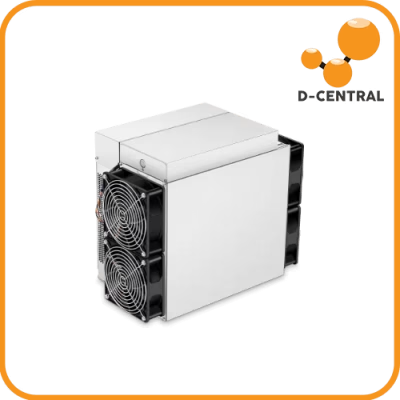
Modern ASICs like the Antminer S21 series deliver over 200 TH/s at under 15 J/TH. That is the cutting edge of SHA-256 efficiency. If you are still thinking about GPUs, it is time to sell them and invest in proper mining hardware. Check our shop for current-generation miners and open-source alternatives.
2. Solo Mine with Open-Source Hardware
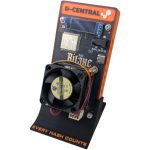
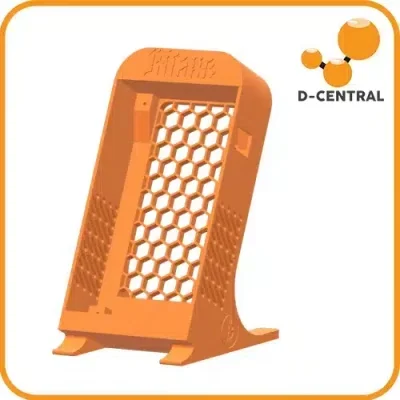
If you believe in decentralization — and you should — solo mining is the purest expression of it. The Bitaxe family of open-source solo miners lets you take a shot at the full 3.125 BTC block reward. Every hash counts. D-Central is a pioneer in the Bitaxe ecosystem, having created the original Bitaxe Mesh Stand and developed leading accessories including heatsinks for both the standard Bitaxe and the Bitaxe Hex. Visit the Bitaxe Hub for setup guides, model comparisons, and everything you need to get started.
3. Use Your Miners as Heaters
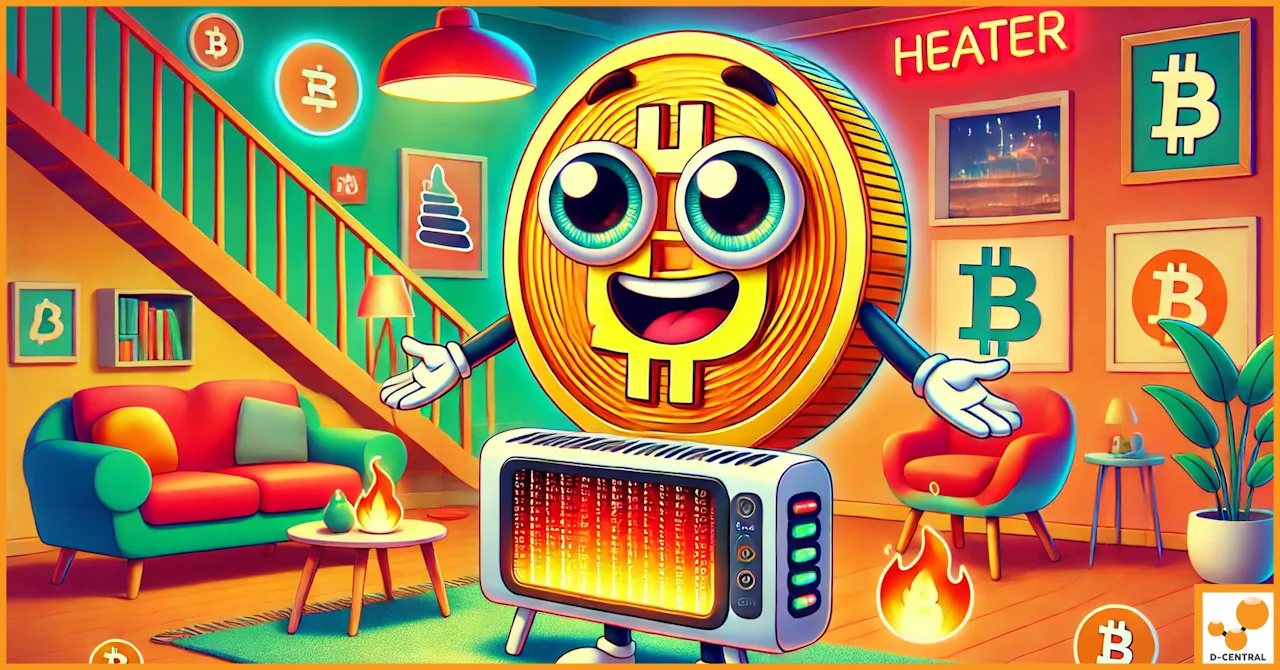
This is the dual-purpose mining advantage that GPU-to-AI articles never mention. A Bitcoin ASIC converts electricity to heat at nearly 100% efficiency — the same as an electric heater, except you also earn Bitcoin. Our Bitcoin Space Heaters turn this principle into plug-and-play products. In Canada, where heating season lasts six months or more, this is not a novelty — it is a genuine economic optimization.
4. Keep Your ASICs Running with Professional Repair
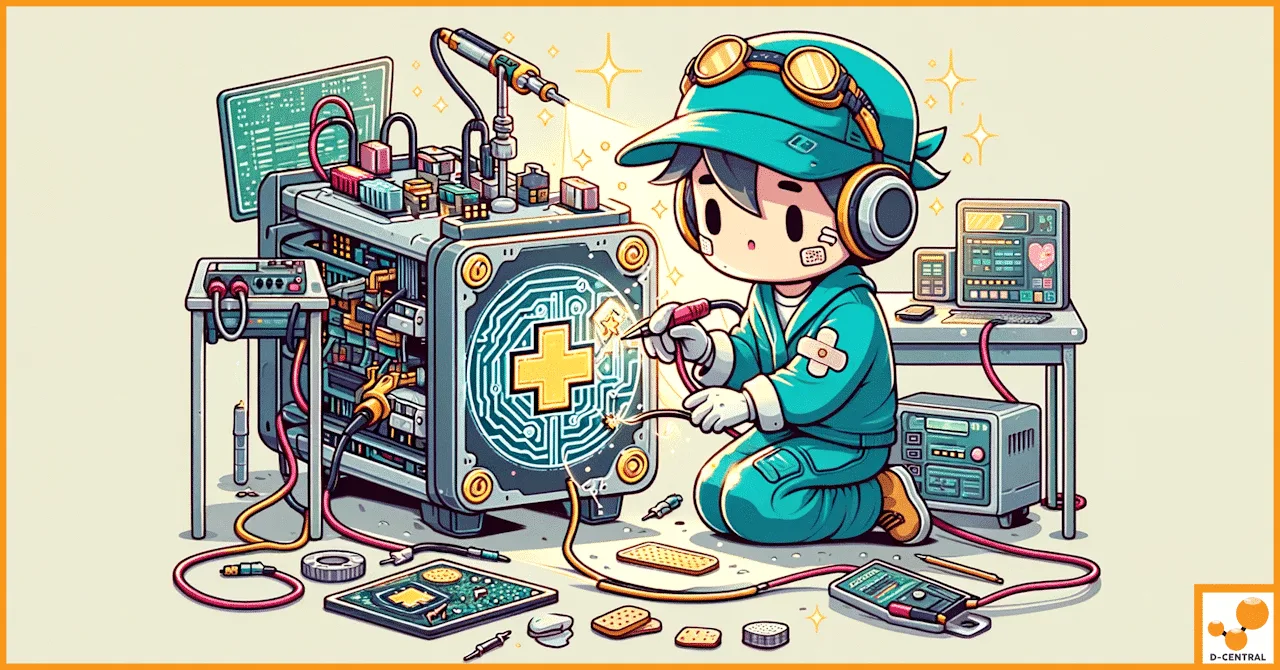
ASICs are built for continuous operation, but they do need maintenance. Hashboards fail, fans degrade, and control boards develop issues over time. D-Central operates Canada’s premier ASIC repair center with over 38 model-specific repair capabilities. Extending the lifespan of your mining hardware is one of the highest-ROI decisions you can make. A repaired S19j Pro is infinitely more productive than a GPU sitting idle waiting for an AI rental job.
5. Optimize Your Electricity Strategy
The single biggest variable in mining profitability is your electricity cost. Canadian miners have a structural advantage here — Quebec hydroelectric power, Alberta wind and gas, and long cold winters that turn waste heat into value. If you need help evaluating your setup, D-Central offers mining consulting to help you optimize power costs, site selection, and hardware configuration.
The Only Exception: You Already Own GPUs and Have Nothing Else to Do with Them
We are not absolutists about this. If you already own GPUs from the mining era and they are literally collecting dust, exploring an AI rental platform is marginally better than letting them depreciate in a closet. But go in with realistic expectations:
- Consumer GPUs earn fractions of what data center GPUs earn on AI platforms
- Your electricity costs may exceed your rental income
- The management overhead is not trivial — you are running a mini hosting operation
- The income is in fiat, not Bitcoin
- You are not contributing to Bitcoin’s security or decentralization
If that is the best use of your existing hardware, fine. But do not invest new capital in GPUs for AI rentals when you could be investing in ASIC mining hardware that earns Bitcoin and secures the network.
Frequently Asked Questions
Can you still mine Bitcoin with a GPU in 2026?
No. Bitcoin mining requires ASIC hardware. The network hashrate exceeds 800 EH/s, all produced by specialized SHA-256 ASICs. A top consumer GPU produces roughly 1.5 GH/s — about 180,000 times less than a single modern ASIC. GPU mining for Bitcoin has been economically non-viable since approximately 2014.
Is renting GPUs for AI profitable for former crypto miners?
Marginally, if at all. Consumer GPUs on decentralized AI rental platforms typically earn $0.10-$0.50/hour, but after electricity costs (often $0.72-$1.08/day for a single GPU rig), wear on hardware, bandwidth costs, and management time, net returns are slim. Enterprise AI customers prefer data center GPUs (H100, A100) over consumer cards.
What happened to GPU mining after the Ethereum Merge?
When Ethereum switched from Proof of Work to Proof of Stake on September 15, 2022, GPU mining lost its most profitable chain. Millions of GPUs flooded the secondary market. Alternative altcoins like Ravencoin and Ergo have tiny market caps and insufficient mining rewards to sustain large GPU operations.
Why is ASIC mining better than GPU mining for Bitcoin?
ASICs are purpose-built for SHA-256 hashing. They deliver over 22,000 times better energy efficiency than GPUs (measured in joules per terahash). ASICs are designed for 24/7 continuous operation, produce competitive hashrates, and earn Bitcoin — the hardest money ever created. GPUs are general-purpose processors that cannot compete on any mining-relevant metric.
What is the cheapest way to start mining Bitcoin at home?
Open-source solo miners like the Bitaxe offer the lowest barrier to entry. Powered by a standard 5V barrel jack (5.5×2.1mm DC — not USB-C), they run quietly on your desk and take a shot at the full 3.125 BTC block reward. For pool mining, refurbished Antminer S9-based Bitcoin Space Heaters offer dual-purpose mining and heating starting at accessible price points.
Can Bitcoin miners use their ASICs to heat their home?
Yes. ASICs convert electricity to heat at nearly 100% efficiency — the same as an electric space heater, but you also earn Bitcoin. D-Central’s Bitcoin Space Heater line integrates ASIC miners into heater enclosures, providing real warmth while securing the Bitcoin network. This is especially effective in Canada where heating season spans six months or more.
The Bottom Line
GPU mining is dead for Bitcoin, and AI GPU rentals are not the resurrection story people want them to be. They are a low-margin, platform-dependent side hustle that earns fiat currency and contributes nothing to the decentralization of money.
Bitcoin ASIC mining, on the other hand, earns the hardest asset on the planet, secures a permissionless monetary network, and — when done right — heats your home in the process. Whether you are solo mining with a Bitaxe on your desk or running S21s in a Canadian hosting facility, you are participating in something that actually matters.
At D-Central Technologies, we have been building the infrastructure for sovereign Bitcoin mining since 2016. From open-source miners and custom Space Heaters to professional ASIC repair and hosting in Quebec — we exist so that every pleb can participate in securing the Bitcoin network.
Stop chasing trends. Start stacking sats. Every hash counts.