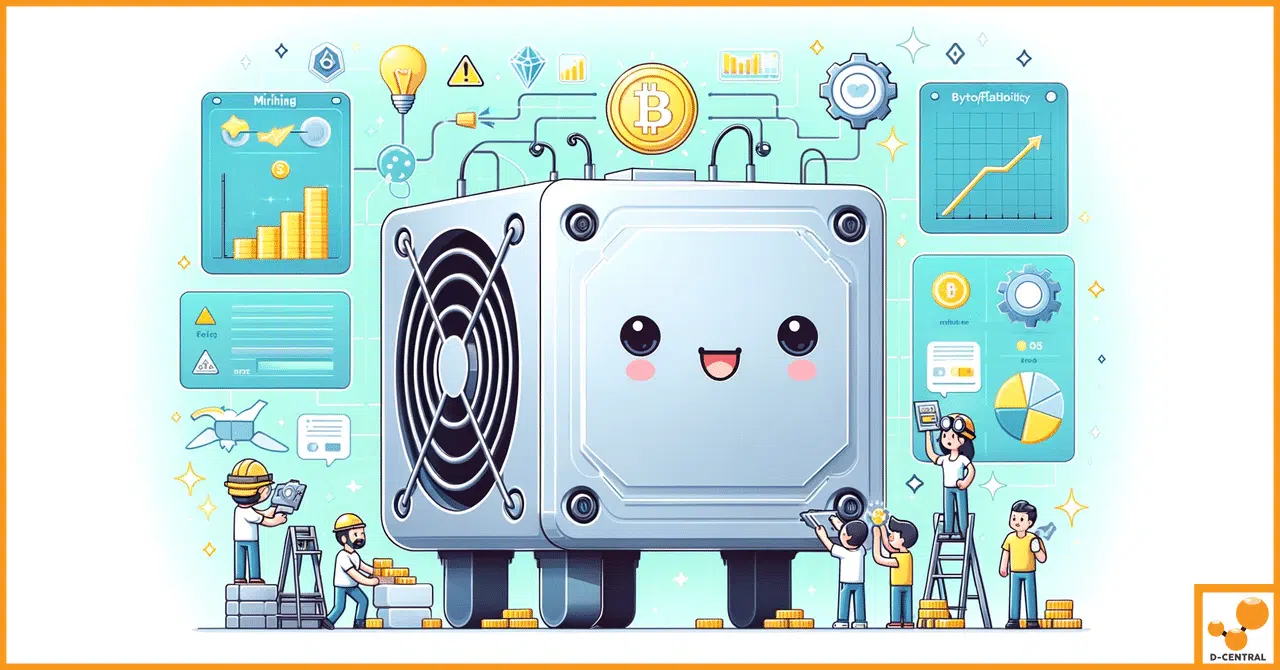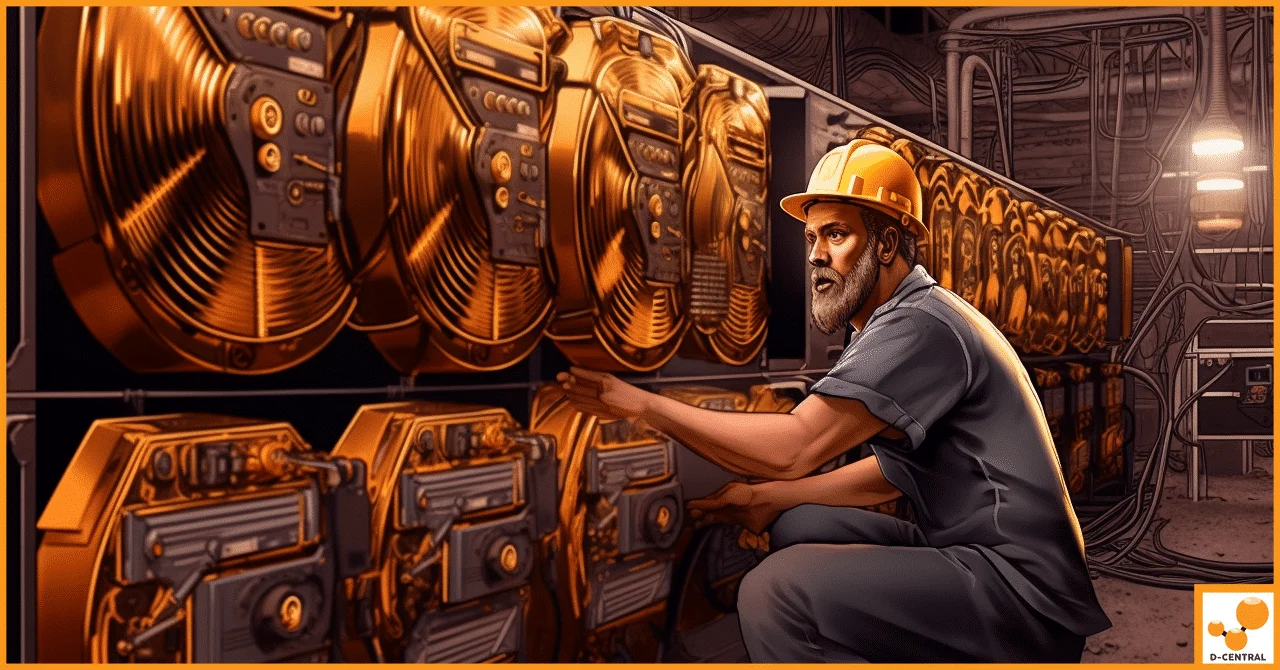
Your ASIC miner is a precision machine. Hundreds of custom silicon chips, synchronized across multiple hashboards, hammering away at SHA-256 computations around the clock. These machines were engineered for institutional data centres with dedicated cooling infrastructure, filtered air, and on-site technicians. You are running yours in a garage, a basement, or a spare bedroom. And that is exactly how it should be.
The decentralization of Bitcoin mining depends on operators like you pushing hash rate out of corporate facilities and into homes, workshops, and small operations across the world. But there is a trade-off: when something breaks — and it will break — you need a repair partner who actually understands the hardware at the board level, not just someone who swaps parts and hopes for the best.
This guide breaks down everything you need to know about keeping your mining equipment running at peak efficiency, identifying real repair expertise versus pretenders, and why the right repair partnership is one of the highest-leverage decisions you will make as a miner.
Why Mining Equipment Breaks Down
ASIC miners are not consumer electronics. They are industrial machines running at thermal and electrical extremes 24/7. Understanding the failure modes helps you prevent them — and recognize when professional intervention is necessary.
| Failure Category | Root Cause | Symptoms | Severity |
|---|---|---|---|
| Thermal Degradation | Sustained operation above 80°C, degraded thermal paste, blocked heatsinks | Declining hashrate, increased error rates, chip failures | High |
| Dust & Particulate Buildup | Unfiltered intake air, pet hair, construction debris, high-humidity environments | Fan speed increase, overheating alerts, reduced airflow | Medium-High |
| Power Supply Failure | Voltage sags, brownouts, overloaded circuits, aging capacitors in PSU | Random reboots, hashboard detection failures, complete shutdown | Critical |
| Hashboard Component Failure | Failed ASIC chips, blown voltage regulators, cracked solder joints from thermal cycling | Missing hashboards, zero chips detected, partial hashrate loss | Critical |
| Control Board Issues | Corrupted firmware, failed NAND flash, Ethernet controller failure | No network connection, boot loops, unresponsive web interface | High |
| Fan Failure | Bearing wear, dust accumulation, electrical failure in fan driver | Excessive noise, thermal throttling, automatic shutdown | Medium |
Home miners face these issues at higher rates than data centres because of environmental variability. Your basement humidity, your garage temperature swings between seasons, the sawdust from your workshop — all of it accelerates wear. This is not a design flaw; it is the reality of decentralized mining. The solution is not to stop — it is to maintain and repair intelligently.
The Real Cost of Downtime
Every hour your miner sits idle is hash rate you are not contributing to the network — and sats you are not earning. With the current block reward at 3.125 BTC and network hashrate exceeding 800 EH/s, competition for blocks is fierce. Downtime compounds quickly.
Consider a typical home mining setup running an Antminer S19j Pro at approximately 100 TH/s. At average network difficulty, that machine earns a modest but consistent stream of satoshis daily through pool mining. A week of downtime waiting for parts or a repair slot is a week of zero income while your electricity contract, if applicable, keeps billing.
For Bitaxe and other open-source solo miners, the calculus is different but the principle holds. Solo mining is a probability game — every hash is a lottery ticket for the full 3.125 BTC block reward. A machine that is powered off buys zero tickets. Whether you are pool mining with an S19 or solo mining with a Bitaxe, uptime is everything.
What Separates Real Repair Expertise from Parts Swappers
The ASIC repair industry has a dirty secret: most “repair services” are just parts swappers. They replace an entire hashboard when one chip failed. They swap a PSU without diagnosing whether the fault was actually on the control board. This approach is expensive for you and wasteful — the opposite of the resourceful, hacker ethos that home mining demands.
Genuine board-level repair means a technician with a thermal camera, an oscilloscope, and deep knowledge of the specific ASIC architecture can isolate a failed BM1397 chip on an S19 hashboard, desolder it, replace it, and return the board to full operation. That is the difference between a $50 chip-level repair and a $300+ hashboard replacement.
| Capability | Parts Swapper | Board-Level Repair Shop |
|---|---|---|
| Diagnosis Method | Visual inspection, trial-and-error replacement | Thermal imaging, oscilloscope, domain analysis software |
| Single Chip Replacement | No — replaces entire hashboard | Yes — desolders and replaces individual ASIC chips |
| Voltage Domain Testing | Rarely | Standard procedure on every hashboard |
| Firmware Diagnostics | Factory reset only | Log analysis, custom firmware, kernel-level debugging |
| Turnaround Time | Ships out for third-party work, weeks of delay | In-house repair, days not weeks |
| Cost to Customer | Higher — pays for entire replacement components | Lower — pays only for the failed component and labour |
| Model Coverage | Limited to common models | Broad — Bitmain, MicroBT, Innosilicon, Canaan, and more |
When evaluating a repair partner, ask these questions directly:
1. Do you perform chip-level repairs, or do you replace entire hashboards? If they cannot answer this clearly, walk away.
2. What diagnostic equipment do you use? A legitimate shop will reference thermal cameras, oscilloscopes, bench power supplies, and domain testers — not just “we plug it in and see what happens.”
3. How many different ASIC models have you serviced? The mining hardware landscape spans Bitmain’s Antminer series (S9 through S21), MicroBT’s Whatsminer line, Canaan’s Avalon machines, and Innosilicon units. A shop that only knows one manufacturer is limited.
4. What is your warranty on repairs? Board-level repair shops that stand behind their work offer meaningful warranty periods because they are confident in the repair quality.
5. Are you located in the same country as me? Shipping a miner internationally for repair adds weeks of transit time, customs risk, and shipping cost. For Canadian miners, a Canadian repair shop eliminates border headaches entirely.
Preventive Maintenance: The Home Miner’s Checklist
The best repair is the one you never need. A disciplined maintenance routine extends hardware life dramatically and keeps you hashing when others are waiting in repair queues.
| Task | Frequency | Tools Required | Impact |
|---|---|---|---|
| Compressed air blowout of heatsinks and fans | Monthly | Electric duster or canned air | Prevents thermal throttling |
| Fan inspection and replacement | Every 6 months | Replacement fans, Phillips screwdriver | Prevents overheating shutdowns |
| Thermal paste reapplication | Annually | Quality thermal paste, isopropyl alcohol | Restores heat transfer efficiency |
| PSU capacitor visual inspection | Every 6 months | Flashlight, visual inspection only | Catches bulging or leaking capacitors early |
| Firmware updates | As released | SD card or web interface | Bug fixes, efficiency improvements, security patches |
| Hashrate and temperature logging | Continuous | Monitoring software or pool dashboard | Early warning system for degradation |
| Electrical connection check | Quarterly | Visual inspection, multimeter | Prevents loose connections and arcing |
If you are running a Bitcoin space heater — an ASIC miner repurposed for home heating — maintenance becomes even more important. These units live in living spaces where dust, pet hair, and cooking particulates are constant. The trade-off is worth it: you heat your home and mine Bitcoin simultaneously. Just keep the maintenance schedule tight.
Repair Economics: When to Fix, When to Replace
Not every repair makes financial sense. The decision tree is straightforward:
Repair when: The cost of repair is less than 50% of the replacement cost, AND the repaired machine will remain competitive for at least 12 more months of operation. A hashboard repair on an S19 series machine, for example, almost always makes sense — these machines have years of useful life ahead.
Replace when: The machine is multiple generations behind, the repair cost approaches replacement value, or the efficiency gap between your current hardware and new-generation machines is so large that the electricity savings pay for the upgrade.
Repurpose when: The machine still hashes but is no longer profitable as a pure miner. This is where the space heater conversion strategy shines. An older Antminer S9 or S17 may not be competitive for pure mining profitability, but as a space heater that also mines, the equation changes entirely. Every sat earned is a bonus on top of the heating value you were going to pay for anyway.
The Canadian Advantage in ASIC Repair
Canada has specific advantages for miners seeking repair services. Cold ambient temperatures mean mining equipment runs cooler on average, extending component life. Abundant hydroelectric power in Quebec provides some of the cheapest electricity on the continent. And Canadian repair shops operate under consumer protection regulations that provide meaningful recourse if something goes wrong.
For Canadian miners, shipping hardware to a US or overseas repair facility means customs declarations, potential duties, weeks of transit time, and the risk of damage in international shipping. A domestic repair partner eliminates all of that. Your miner stays in-country, transit times are measured in days, and you deal with a company under the same legal jurisdiction.
D-Central Technologies has operated from Laval, Quebec since 2016, providing ASIC repair services across 38+ specific miner models spanning Bitmain, MicroBT, Innosilicon, and Canaan hardware. That is board-level repair — individual chip replacement, voltage domain diagnosis, and control board recovery — not parts swapping.
Building a Long-Term Repair Partnership
The best time to find a repair partner is before you need one. When a hashboard drops offline at 2 AM, you do not want to be cold-calling repair shops and comparing reviews under pressure.
Establish your relationship early. Send a unit in for preventive maintenance or a diagnostic check before anything fails. This lets you evaluate turnaround time, communication quality, and repair documentation firsthand. A good repair shop provides detailed diagnostic reports — what they found, what they fixed, what they recommend monitoring. A bad one returns your machine with “fixed” written on the invoice and nothing else.
Look for a repair partner who also supplies replacement parts and mining hardware. A shop that stocks hashboards, control boards, fans, PSUs, and ASIC chips can turn repairs around faster because they are not waiting on third-party part shipments. They also understand the full hardware ecosystem, which translates to better diagnostic capability.
Consider whether your repair partner offers consulting services beyond just fixing broken hardware. The difference between a repair shop and a mining partner is that the partner helps you optimize your operation — advising on firmware choices, cooling configurations, power infrastructure, and fleet management. If you are serious about mining, this kind of guidance compounds over time.
The Decentralization Imperative
Every miner that sits broken and offline is hash rate that has left the network. When home miners give up on repair and discard hardware, that hash rate concentrates further into the hands of large institutional operators. The repair ecosystem is, in a very real sense, critical infrastructure for Bitcoin’s decentralization.
By maintaining your hardware, repairing what breaks, and repurposing what becomes less efficient, you are doing more than maximizing your own returns. You are participating in the most important distributed computing network in human history. Every hash counts — and every miner kept online is a vote for a more decentralized, censorship-resistant monetary network.
Do not let a failed fan or a dead chip take you offline permanently. Get it fixed. Get back to hashing. The network needs you.
FAQ
What are the most common ASIC miner failures that require professional repair?
The most frequent failures are hashboard issues — specifically failed ASIC chips, blown voltage regulators, and cracked solder joints from thermal cycling. Power supply capacitor degradation is the second most common, followed by control board failures (corrupted NAND flash, failed Ethernet controllers). Fan bearing failure is common but usually a DIY fix. Hashboard and control board repairs require specialized equipment like thermal cameras, oscilloscopes, and precision soldering stations, which is why they need professional attention.
How do I know if my repair shop does real board-level repair versus just swapping parts?
Ask directly: “Do you replace individual ASIC chips, or do you replace entire hashboards?” A board-level shop will describe their diagnostic process — thermal imaging to locate hot chips, oscilloscope testing of voltage domains, individual chip desoldering and replacement. They should be able to name the specific ASIC chips used in your miner model (BM1397 for S19, BM1366 for S19 XP, etc.). If they cannot articulate this level of detail, they are likely a parts swapper charging board-level prices.
Is it worth repairing an older miner like the Antminer S9?
It depends on your use case. For pure mining profitability at current difficulty levels, the S9’s efficiency (approximately 85 J/TH) makes it marginal in most electricity markets. However, as a Bitcoin space heater — where the heat output replaces conventional heating costs — the S9 becomes economically viable again because every satoshi earned is a bonus on top of the heating value. A low-cost repair on an S9 destined for space heater duty almost always makes sense.
How often should I perform preventive maintenance on my ASIC miner?
At minimum: monthly compressed air blowouts, six-month fan inspections, annual thermal paste reapplication, and continuous hashrate monitoring through your pool dashboard. If your miner operates in a dusty environment (garage, workshop, basement near a furnace), increase the air cleaning frequency to biweekly. Hashrate trending downward over weeks — even by 5-10% — is often the first sign of thermal degradation that maintenance can reverse before it becomes a repair issue.
What should I look for when choosing an ASIC repair service in Canada?
Prioritize: board-level repair capability (not just parts swapping), multi-manufacturer experience (Bitmain, MicroBT, Canaan, Innosilicon), transparent pricing with diagnostic fees applied to repair costs, meaningful warranty on completed repairs, and domestic location to avoid customs and international shipping delays. A repair shop that also sells mining hardware and parts is a strong signal — they understand the full ecosystem and stock components for faster turnaround. D-Central Technologies in Laval, Quebec checks all these boxes with 38+ model-specific repair capabilities since 2016.
Can I do basic ASIC miner repairs myself?
Some maintenance is absolutely DIY-friendly: fan replacement, compressed air cleaning, firmware updates, thermal paste reapplication, and cable/connector inspection. These require basic tools and reasonable care. However, hashboard repairs (chip replacement, voltage regulator work, trace repair) require specialized equipment — a hot air rework station, precision soldering iron, thermal camera, and oscilloscope — plus deep knowledge of the specific board layout. Attempting board-level repair without proper equipment risks destroying the hashboard entirely. Know your limits and send board-level issues to a professional.
How does the choice of repair partner affect Bitcoin network decentralization?
Every miner kept operational contributes hash rate to the Bitcoin network. When home miners cannot get affordable, timely repairs, they go offline — and that hash rate either disappears or concentrates into large institutional operations. A good repair ecosystem that serves individual miners and small operators directly supports network decentralization by keeping distributed hash rate online. Choosing a repair partner aligned with the home mining community — rather than one focused exclusively on institutional clients — reinforces this dynamic.
 Nerdaxe Gamma / Supra / Ultra — Silent Operation & Stable Overclocking" width="80" height="80" loading="lazy" style="width:80px;height:80px;object-fit:contain;border-radius:6px;background:#1A1A1A;flex-shrink:0;">
Shop Heatsinks
Nerdaxe Gamma / Supra / Ultra — Silent Operation & Stable Overclocking" width="80" height="80" loading="lazy" style="width:80px;height:80px;object-fit:contain;border-radius:6px;background:#1A1A1A;flex-shrink:0;">
Shop Heatsinks