
What This Error Means
The “Temp Too High” error — also shown as “Over Temperature Protection,” “DANGER: Overheating,” “PCB temp too high,” or “Chip temperature exceeds threshold” — means your Antminer has detected temperatures above its safe operating limit and has either throttled performance or shut down entirely to prevent permanent hardware damage. This is a protective mechanism built into every Antminer model.
Bitmain ASIC miners have two temperature sensors: the PCB (board) temperature and the chip (junction) temperature. The chip temperature is always higher than the board temperature, typically by 15-30 degrees Celsius. When either reading exceeds the model-specific threshold — usually 80-85C for the board or 100-115C for the chips — the firmware triggers the over-temperature protection and halts mining.
Common Causes
- Insufficient airflow or blocked exhaust — The miner is placed in a confined space, too close to a wall, or the exhaust is recirculating hot air back into the intake. This is the number one cause of overheating in home mining setups.
- Failed or degraded fan — One or both fans have failed, are running at reduced RPM, or have accumulated dust that reduces airflow. Even a 20% reduction in fan speed can push temperatures over the threshold.
- High ambient temperature — The room or environment where the miner operates is too warm. ASIC miners are typically rated for ambient temperatures up to 35-40C (95-104F). Summer heat without adequate cooling will trigger this error.
- Dust and debris buildup — Dust accumulation on heatsinks, hashboards, and fans acts as insulation, trapping heat and reducing cooling efficiency. Miners in dusty environments can overheat within weeks without cleaning.
- Thermal paste degradation — The thermal interface material between ASIC chips and heatsinks has dried out, cracked, or lost conductivity over time. This is common on miners older than 18-24 months.
- Overclocked settings — The miner has been configured to run at a higher frequency or voltage than stock, generating more heat than the cooling system can dissipate.
Step-by-Step Fix
Safety first: If your miner has shut down due to overheating, let it cool for at least 15-20 minutes before handling. Heatsinks and hashboards can retain temperatures high enough to cause burns.
Step 1: Check the Environment
Measure the ambient temperature where the miner operates. Use a thermometer at intake height — not across the room. If ambient exceeds 35C (95F), you need to either improve room cooling, add exhaust ducting, or relocate the miner. Ensure at least 12 inches of clearance on intake and exhaust sides, with no obstructions.
Step 2: Inspect the Fans
With the miner powered on (if it will run), check that both fans are spinning at full speed. You should feel strong airflow from the exhaust side. In the web interface, check fan RPM readings — both fans should show similar RPM values within the expected range for your model (typically 4,000-6,000 RPM). If one fan reads 0 or significantly lower than the other, that fan needs replacement.
Step 3: Clean the Miner
Power off and unplug the miner. Use compressed air (60-100 PSI from an air compressor, or canned air for light dust) to blow out all heatsinks, fan blades, and board surfaces. Work from intake to exhaust to push dust out rather than deeper in. Pay special attention to the heatsink fins on each hashboard — even a thin layer of dust significantly impacts cooling.
Step 4: Verify Airflow Path
Ensure no internal components are blocking airflow. On some models, a shifted hashboard, loose cable, or displaced shroud can obstruct the air channel. The air path should be clear from intake fan through all three hashboard heatsinks to the exhaust fan.
Step 5: Check Temperature Readings
Power the miner back on and monitor temperatures in the web interface. Watch the temperature climb over 10-15 minutes. Healthy operating temperatures vary by model, but generally: PCB temperature should stay below 75C and chip temperature below 105C. If one specific chain runs significantly hotter than the others (10C+ difference), that board may have a thermal paste or heatsink contact issue.
Step 6: Reduce Clock Frequency (If Overclocked)
If you have applied any overclocking profiles or custom frequency settings, revert to stock settings. In the Antminer web interface, go to Miner Configuration and set the frequency back to the factory default for your model. This immediately reduces heat generation.
Step 7: Reapply Thermal Paste (Advanced)
If the miner continues to overheat after cleaning and airflow optimization, the thermal interface material may need replacement. This is a more involved procedure that requires removing the heatsink from the hashboard, cleaning off old thermal paste or pads, and applying fresh thermal compound. Use a high-quality thermal paste rated for at least 8 W/mK. This is particularly effective on miners older than 2 years.
Advanced Diagnosis
For deeper diagnostics via SSH:
ssh root@[miner-ip]
# Check real-time temperature of all chains
cat /tmp/freq_config  # Shows temperature per chain on some models
cat /var/log/messages | grep -i "temp"
cat /var/log/messages | grep -i "overheat"
Thermal imaging: If you have access to a thermal camera (even a phone attachment like FLIR), scan the hashboards while running. Hot spots that are significantly hotter than surrounding areas indicate failed thermal paste contact, dead chips generating excess heat, or blocked heatsink sections.
Fan curve testing: Some third-party firmware (like Braiins OS+) allows custom fan curves. If you are running custom firmware, verify that the fan speed scales appropriately with temperature. A misconfigured fan curve can keep fans at low RPM even as temperatures rise.
When to Get Professional Help
Seek professional ASIC repair if:
- One specific hashboard consistently runs 15C+ hotter than the others after cleaning and thermal paste replacement — this suggests a chip-level fault generating excess heat
- The miner overheats even at reduced frequency with clean heatsinks and good airflow — internal component failure
- You see physical damage to heatsinks, warped boards, or discoloration on components
- Thermal paste reapplication is beyond your comfort level — improper application can make things worse
D-Central Technologies diagnoses and resolves thermal issues on all Antminer models. We perform full thermal paste reapplication, heatsink resurfacing, fan replacement, and chip-level diagnosis of heat-generating faults. Submit a repair request here
Affected Models
All Antminer models can trigger over-temperature protection. Models particularly prone to thermal issues include: S17 and S17 Pro (known thermal paste degradation), T17 series, S19 and S19 Pro (high power density), S19 XP, and any model operating in warm environments. The S9 series is generally more thermally robust due to lower power density but will still overheat in poor conditions.
Related Error Codes
- Fan Speed Error / Fan Lost — Fan failure is a primary cause of overheating
- Low Hashrate / Hashrate Drop — Thermal throttling reduces hashrate before triggering a full shutdown
- Chain X Only / Missing Hashboard — Overheating can cause a hashboard to shut down and disappear from chain detection
- ASIC Chip Error — A chip running excessively hot may indicate chip-level failure
- Whatsminer Over Temperature — The equivalent thermal protection on MicroBT hardware
Frequently Asked Questions
What is the maximum safe temperature for my Antminer?
Most Antminer models have a PCB temperature limit of 80-85C and a chip temperature limit of 100-115C. The exact thresholds vary by model and firmware version. For optimal longevity, aim to keep PCB temps below 70C and chip temps below 95C. Running consistently near the limit shortens component lifespan even if the protection does not trigger.
Can overheating permanently damage my miner?
Yes. Sustained high temperatures degrade solder joints, accelerate thermal paste breakdown, and can permanently damage ASIC chips. The over-temperature protection exists to prevent catastrophic failure, but repeated thermal cycling and operation near thermal limits causes cumulative damage. A miner that frequently triggers thermal protection will likely develop chip failures sooner.
Is it safe to increase the temperature threshold in the firmware?
No. Raising the over-temperature threshold in configuration files or custom firmware is strongly discouraged. The manufacturer-set limits are based on the thermal design of the heatsinks and the maximum rated junction temperature of the ASIC chips. Exceeding these limits will cause accelerated wear and eventual permanent failure. Fix the root cause of overheating instead.
Will adding more fans help?
Adding external fans to push more air through the miner or improve room circulation can help, but it depends on the root cause. If the issue is ambient temperature, better room ventilation or exhaust ducting is more effective. If the internal fans are working properly and the heatsinks are clean, the issue may be thermal paste rather than airflow. Adding fans is a complement to proper maintenance, not a substitute.
What is the maximum safe temperature for my Antminer?
Most Antminer models have a PCB temperature limit of 80-85C and a chip temperature limit of 100-115C. The exact thresholds vary by model and firmware version. For optimal longevity, aim to keep PCB temps below 70C and chip temps below 95C. Running consistently near the limit shortens component lifespan even if the protection does not trigger.
Can overheating permanently damage my miner?
Yes. Sustained high temperatures degrade solder joints, accelerate thermal paste breakdown, and can permanently damage ASIC chips. The over-temperature protection exists to prevent catastrophic failure, but repeated thermal cycling and operation near thermal limits causes cumulative damage. A miner that frequently triggers thermal protection will likely develop chip failures sooner.
Is it safe to increase the temperature threshold in the firmware?
No. Raising the over-temperature threshold in configuration files or custom firmware is strongly discouraged. The manufacturer-set limits are based on the thermal design of the heatsinks and the maximum rated junction temperature of the ASIC chips. Exceeding these limits will cause accelerated wear and eventual permanent failure. Fix the root cause of overheating instead.
Will adding more fans help?
Adding external fans to push more air through the miner or improve room circulation can help, but it depends on the root cause. If the issue is ambient temperature, better room ventilation or exhaust ducting is more effective. If the internal fans are working properly and the heatsinks are clean, the issue may be thermal paste rather than airflow. Adding fans is a complement to proper maintenance, not a substitute.
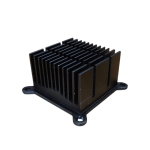 Bitaxe Heatsink — High-Performance Aluminum Cooler for Bitaxe & Nerdaxe Gamma / Supra / Ultra — Silent Operation & Stable Overclocking" width="80" height="80" loading="lazy" style="width:80px;height:80px;object-fit:contain;border-radius:6px;background:#1A1A1A;flex-shrink:0;">
Shop Heatsinks
Bitaxe Heatsink — High-Performance Aluminum Cooler for Bitaxe & Nerdaxe Gamma / Supra / Ultra — Silent Operation & Stable Overclocking" width="80" height="80" loading="lazy" style="width:80px;height:80px;object-fit:contain;border-radius:6px;background:#1A1A1A;flex-shrink:0;">
Shop Heatsinks
