The narrative around Bitcoin mining and artificial intelligence has become insufferably shallow. Mainstream media paints a picture of two power-hungry technologies competing for the same electrons, missing entirely what is actually happening at the infrastructure level. The reality is far more interesting — and far more consequential for individual sovereignty.
At D-Central Technologies, we have been building Bitcoin mining infrastructure since 2016. We are not here to speculate on AI hype cycles. We are here to cut through the noise and lay out what the convergence of Bitcoin mining and AI actually means for home miners, for decentralization, and for the future of computational sovereignty. No hand-waving, no buzzwords — just the technical reality.
The Infrastructure Overlap Is Real — But Context Matters
Bitcoin mining and AI training share a common ancestor: the demand for massive, sustained computational throughput. Both workloads reward dense deployments of specialized hardware, cheap electricity, and effective thermal management. That is where the similarity ends, and where the interesting divergence begins.
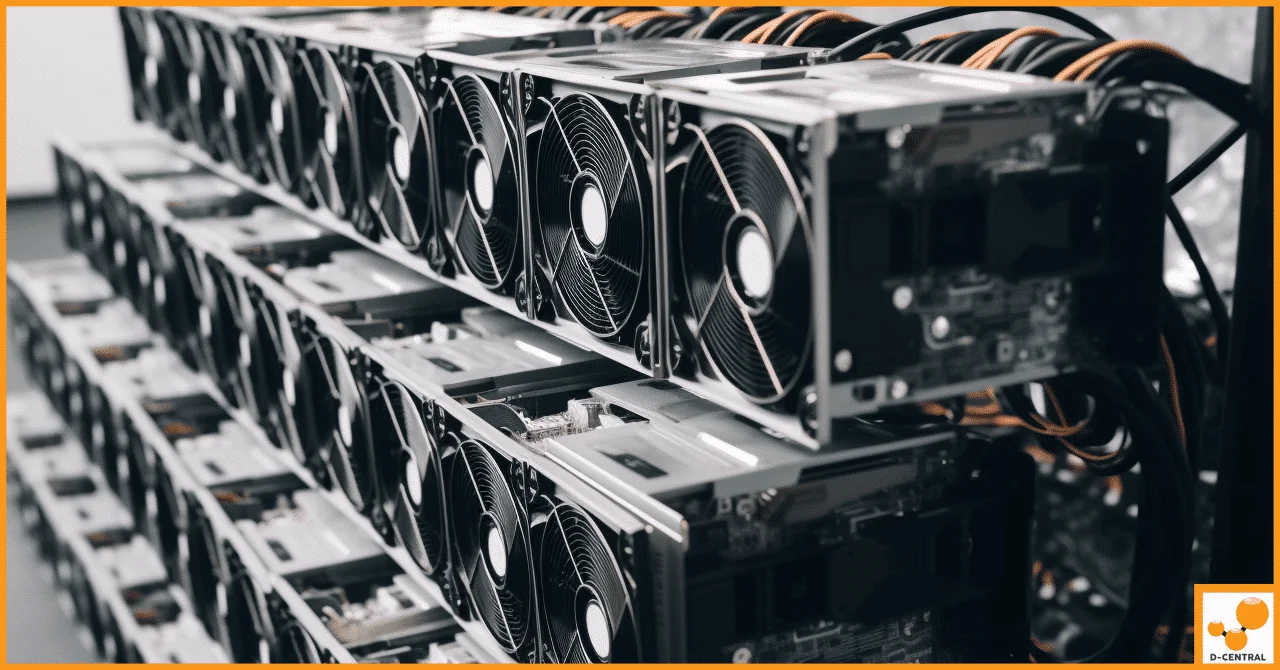
Bitcoin mining uses ASICs — application-specific integrated circuits designed to do exactly one thing: compute SHA-256 hashes at extraordinary speed. An Antminer S21, for example, pushes roughly 200 TH/s while drawing around 3,500W. It does not think. It does not learn. It grinds through trillions of hash computations per second, securing the most robust monetary network humanity has ever built.
AI training, by contrast, relies on GPUs and increasingly on custom AI accelerators (TPUs, Trainium, etc.) that excel at matrix multiplication and parallel floating-point operations. These are fundamentally different workloads with fundamentally different hardware requirements.
| Characteristic | Bitcoin Mining (ASICs) | AI Training (GPUs/TPUs) |
|---|---|---|
| Primary Operation | SHA-256 hashing | Matrix multiplication, backpropagation |
| Hardware | Custom ASICs (Bitmain, MicroBT) | NVIDIA H100/B200, Google TPUs |
| Workload Flexibility | None — SHA-256 only | High — retrainable for different models |
| Revenue Model | Block rewards (3.125 BTC) + fees | Service contracts, inference APIs |
| Decentralization Potential | High — home mining viable | Low — requires massive capital |
| Energy Profile | Constant, predictable load | Variable, burst-heavy |
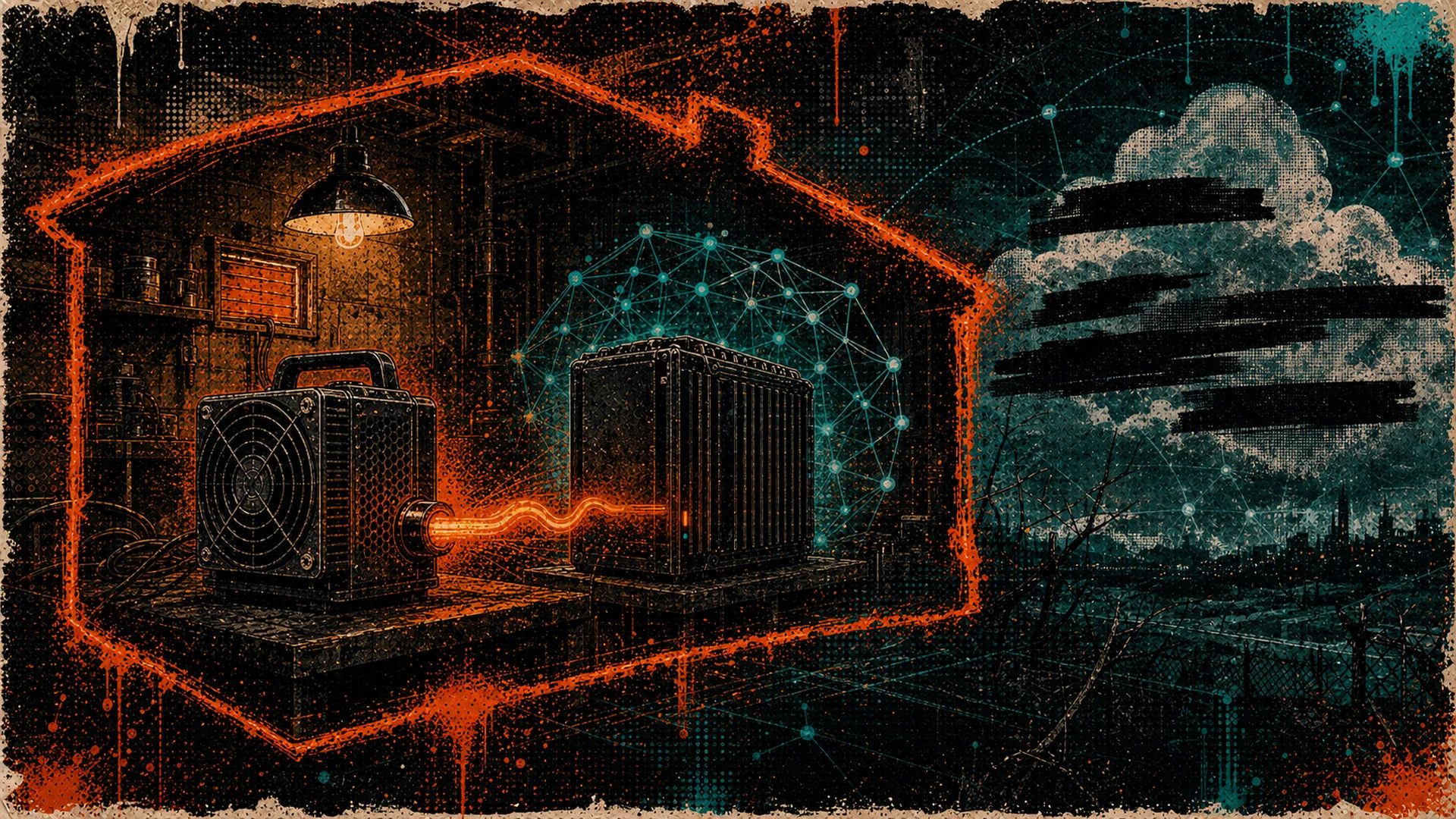
The real convergence is not about running AI on your ASIC miner — that is technically impossible. The convergence is at the infrastructure layer: power procurement, cooling systems, site selection, and grid relationships. Companies that have built out mining facilities already possess the hardest part of any compute deployment — permitted, grid-connected sites with serious power capacity.
Why Bitcoin Miners Hold the Keys to AI Infrastructure
Building a data centre from scratch takes years. Environmental assessments, grid interconnection agreements, transformer procurement, permitting — the queue is brutal. Meanwhile, Bitcoin mining operations already have all of this in place.
This is why publicly traded mining companies have been pivoting portions of their infrastructure toward AI/HPC (high-performance computing) hosting. They are not abandoning Bitcoin mining. They are monetizing existing infrastructure advantages that no AI startup can replicate quickly.
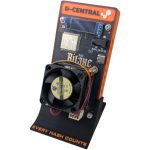
But here is the critical nuance that most coverage misses: this pivot is primarily relevant to industrial-scale operations. The home miner running a Bitaxe in their basement or an Antminer S19 converted into a Bitcoin space heater is not competing in the AI infrastructure game — and does not need to be.
Home mining serves a completely different purpose. It is about decentralizing hashrate, heating your home with productive computation, participating in the most important monetary network in human history, and doing it all on your own terms. That mission does not change because some hedge fund wants to train a chatbot.
The Decentralization Imperative: Why Home Mining Matters More Than Ever
Here is what should concern every Bitcoiner about the AI-mining convergence narrative: it provides economic incentive for large miners to redirect hashrate away from Bitcoin. If an industrial miner can earn more per megawatt hosting AI workloads than mining Bitcoin, rational economics says they will pivot.
This is not hypothetical. It is already happening. Multiple publicly traded miners have announced partial or full pivots to AI hosting. Every terahash that leaves Bitcoin for AI hosting is a terahash that concentrates the remaining hashrate among fewer participants.
The antidote to this centralization pressure is exactly what D-Central has been building toward since day one: decentralized, home-based Bitcoin mining. When thousands of individual miners run hardware in their homes, garages, and workshops, the network becomes resilient against any single operator’s economic decisions.
Consider the numbers. The Bitcoin network currently operates at over 800 EH/s. If a major industrial miner redirects 50 EH/s to AI hosting, the network barely flinches — as long as decentralized hashrate fills the gap. Every home miner running a Bitaxe solo miner or a space heater edition contributes to that resilience. Every hash counts.
The Canadian Advantage: Cold Climate, Clean Energy, Computational Power
Canada occupies a unique position in both the Bitcoin mining and AI landscapes. Our cold climate provides natural cooling that dramatically reduces operational costs. Our abundant hydroelectric power — particularly in Quebec — offers some of the cleanest and cheapest electricity on the continent.
| Factor | Canada | United States (Average) |
|---|---|---|
| Average Electricity Cost | $0.07–0.12 CAD/kWh | $0.10–0.18 USD/kWh |
| Renewable Energy Share | ~67% (hydro-dominant) | ~21% |
| Natural Cooling Months | 6–8 months/year | Varies widely |
| Regulatory Environment | Stable, mining-aware | State-by-state patchwork |
| Dual-Purpose Mining Viability | Excellent (long heating season) | Regional (northern states only) |
For home miners in Canada, the value proposition is particularly compelling. During our long winters, every watt consumed by an ASIC miner converts to heat at 100% efficiency — the same as any electric heater, but with the bonus of earning bitcoin. A Bitcoin space heater running through a Canadian winter is not consuming energy for mining — it is monetizing your heating bill.
D-Central’s mining hosting facility in Quebec leverages these exact advantages for miners who need industrial-scale deployment, while our product line — from Bitaxe solo miners to full ASIC space heater conversions — puts decentralized mining into the hands of individuals.
AI Does Not Threaten Home Mining — It Validates It
The rise of AI compute demand actually strengthens the case for home Bitcoin mining in several important ways.
First, it proves that computation has intrinsic value. For years, Bitcoin critics claimed that mining was “wasted” computation. AI’s insatiable demand for compute power has permanently retired that argument. If computation is valuable enough that corporations will spend billions on data centres, then computation securing the hardest money ever created is certainly not wasted.
Second, AI demand raises electricity prices at the grid level. As hyperscalers build massive AI compute centres, they consume available grid capacity and push wholesale power prices higher. Home miners who have already optimized their energy setup — solar panels, off-peak rates, heat recovery — are insulated from this pressure in ways that industrial operations are not.
Third, the AI pivot concentrates industrial mining. As mentioned earlier, every industrial miner that pivots to AI hosting reduces the corporate share of Bitcoin hashrate. This creates space for decentralized miners to represent a larger percentage of total network hashrate — exactly the outcome that a healthy Bitcoin network requires.
Fourth, open-source mining hardware is immune to AI economics. A Bitaxe solo miner running in your living room does not care about AI compute centre ROI calculations. It mines bitcoin, it heats your room, and it contributes to network decentralization. The AI gold rush does not change its purpose or its value.
What D-Central Is Actually Building
While others chase the AI narrative, D-Central remains focused on what matters: putting Bitcoin mining hardware into the hands of individuals and keeping it running.
Our approach is comprehensive and practical:
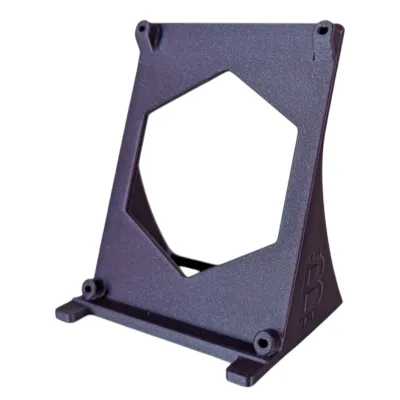
Open-Source Solo Mining: We stock the full lineup of Bitaxe variants — Supra, Ultra, Hex, Gamma, and GT — along with NerdAxe, NerdQAxe, NerdNOS, and Nerdminer devices. These open-source miners let anyone participate in solo mining, contributing to network decentralization while taking a shot at a full 3.125 BTC block reward.
Dual-Purpose Mining: Our Bitcoin space heater editions convert ASIC miners into functional home heating units. Models include S9, S17, and S19 editions — each one turning waste heat into productive home heating while mining bitcoin.
ASIC Repair: With 60+ model-specific repair pages and years of hands-on experience, D-Central is the leading ASIC repair service in Canada. We fix hashboards, replace ASIC chips, diagnose control board failures, and keep aging hardware productive instead of sending it to landfill.
Mining Hosting: For miners who need serious scale, our Quebec hosting facility offers competitive hydro-powered hosting with Canadian reliability.
Education and Support: From setup guides to overclocking tutorials, we equip home miners with the knowledge to run their operations independently. Visit our shop to explore the full hardware lineup.
The Bottom Line: Stay Focused, Stay Sovereign
The convergence of Bitcoin mining and AI is a real infrastructure trend. Industrial miners will exploit it. VCs will fund it. Media will hype it. None of that changes the fundamental mission.
Bitcoin mining exists to secure a decentralized monetary network. It is the mechanism that converts energy into incorruptible truth. AI does not replace that function. AI cannot replicate that function. The SHA-256 ASIC in your basement is doing something that no GPU farm, no matter how large, will ever do — it is participating in the consensus mechanism of sound money.
As Bitcoin Mining Hackers, our job is to take institutional-grade technology and make it accessible to the individual. To hack the mining industry open so that anyone — not just corporations — can participate. The AI hype does not distract from that mission. If anything, it makes the mission more urgent.
The network needs you. Every hash counts. And we are here to make sure you have the hardware, the knowledge, and the support to keep mining on your own terms.
Frequently Asked Questions
Can I use my Bitcoin ASIC miner for AI workloads?
No. Bitcoin ASICs are purpose-built for SHA-256 hashing and cannot perform the matrix multiplication and floating-point operations required by AI training. They are fundamentally different hardware architectures. Your ASIC miner is designed to do one thing — mine bitcoin — and it does that job extremely well.
Will AI compute centres make Bitcoin mining unprofitable for home miners?
Not directly. AI compute centres may increase wholesale electricity demand, but home miners who have optimized their energy costs — through off-peak rates, solar power, or heat recovery — are well-positioned regardless. In fact, as industrial miners pivot to AI hosting, there is less corporate competition for Bitcoin block rewards, which benefits remaining miners including home operators.
Why does D-Central focus on home mining instead of pivoting to AI?
Because home mining is the backbone of Bitcoin decentralization. D-Central’s mission since 2016 has been to decentralize every layer of Bitcoin mining. Industrial AI hosting is a centralized, capital-intensive business — the opposite of our mission. We believe individual sovereignty comes from individuals running their own mining hardware, not from corporate data centres.
Is Bitcoin mining actually sustainable compared to AI training?
Bitcoin mining has a significant sustainability advantage in several areas. A large percentage of Bitcoin mining globally is powered by renewable energy sources, particularly hydroelectric power in Canada and Scandinavia. Additionally, home mining with dual-purpose hardware — like Bitcoin space heaters — achieves near-zero waste by converting 100% of consumed electricity into useful heat plus bitcoin earnings.
What is the best way to start mining Bitcoin at home in Canada?
For beginners, a Bitaxe solo miner (Supra, Ultra, or Gamma, powered via 5V barrel jack — not USB-C) is the easiest entry point. For those wanting to offset heating costs, a Bitcoin space heater edition converts a full ASIC miner into a productive home heater. Visit D-Central’s Bitaxe Hub for detailed setup guides and hardware options, or browse the full shop for all available mining hardware.
How does cold climate benefit Bitcoin mining operations?
Cold climate dramatically reduces cooling costs, which can represent 30–40% of operational expenses in warm regions. In Canada, natural ambient cooling is available 6–8 months per year, and during winter, miner exhaust heat directly offsets home heating bills. This makes Canadian home mining one of the most cost-effective setups globally.