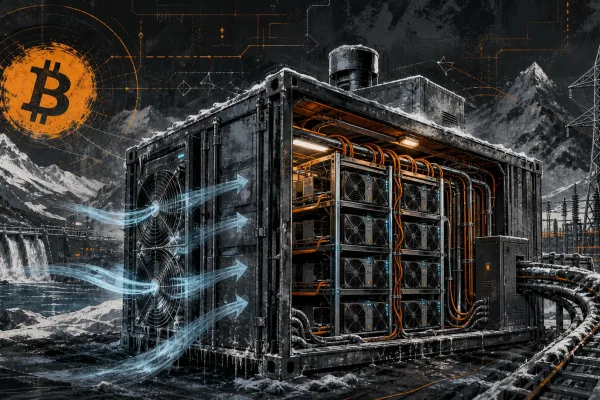
Bitcoin mining started on laptops. Then GPUs. Then ASICs. Then warehouses full of ASICs, burning megawatts in remote industrial parks, controlled by a handful of publicly traded companies answering to shareholders who have never touched a hash.
That is not what Satoshi built.
The original design was simple: one CPU, one vote. Every node an equal participant in a trustless, censorship-resistant monetary network. Somewhere between 2013 and now, mining became an institutional sport — and individual sovereignty got priced out.
Until now.
Micro-miners like the Bitaxe are dragging mining back to where it belongs: your desk, your home, your rules. And the psychology driving this movement has something in common with the most successful consumer behavior pattern on Earth — lottery participation.
But unlike the lottery, every hash you submit strengthens the most important monetary network in human history.
Every hash counts.
The Centralization Problem Is Real — and Getting Worse
In early 2026, Bitcoin’s network hashrate exceeds 800 EH/s. Difficulty has blown past 110 trillion. The top four mining pools control a staggering share of total hashpower, and the hardware supply chain is dominated by a single manufacturer.
This is a systemic risk to Bitcoin’s censorship resistance. Pool operators can theoretically censor transactions. Governments can pressure a handful of corporate miners. Geographic concentration means a single regulatory action could knock out significant hashrate overnight.
| Era | Hardware | Block Reward | Network Hashrate | Who Could Mine |
|---|---|---|---|---|
| 2009-2010 | CPUs | 50 BTC | < 10 MH/s | Anyone with a laptop |
| 2010-2013 | GPUs | 50 / 25 BTC | ~1 TH/s | Enthusiasts with gaming rigs |
| 2013-2020 | ASICs | 25 / 12.5 BTC | ~100 EH/s | Well-funded operations |
| 2020-2024 | Industrial ASICs | 6.25 / 3.125 BTC | ~600 EH/s | Corporations and institutions |
| 2024-Now | ASICs + Micro-miners | 3.125 BTC | 1,000+ EH/s (1 ZH/s) | Anyone, again |
The last row matters. Open-source micro-miners have reopened the door to individual participation. Not to compete on hashrate with industrial farms — but to participate in the network as sovereign validators, casting your own vote for which transactions get confirmed.
Micro-Miners: The Open-Source Hardware Revolution
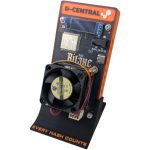
The Bitaxe changed everything. Fully open-source — schematics, firmware, BOM, everything published for anyone to audit, modify, or manufacture. No proprietary black boxes. No vendor lock-in. Just raw, auditable SHA-256 hashing in a device smaller than your hand.
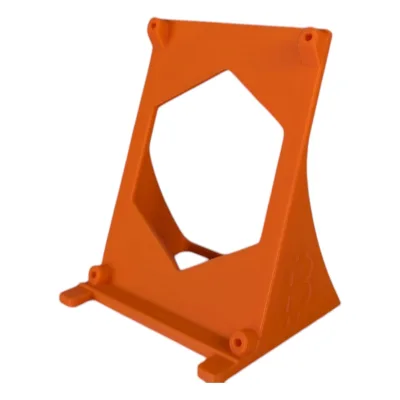
D-Central Technologies has been a pioneer in the Bitaxe ecosystem since the beginning. We created the original Bitaxe Mesh Stand — the first company to manufacture it. We developed leading heatsink solutions for both the standard Bitaxe and the Bitaxe Hex. We stock every variant: Supra, Ultra, Hex, Gamma, GT, plus the full Nerd lineup — NerdAxe, NerdNOS, Nerdminer, NerdQAxe, and more arriving constantly.
Here is what the current micro-miner landscape looks like:
| Device | Hashrate | Power | Chip | Open-Source |
|---|---|---|---|---|
| Bitaxe Supra | ~600 GH/s | ~15W | BM1368 | Yes |
| Bitaxe Ultra | ~500 GH/s | ~15W | BM1366 | Yes |
| Bitaxe Gamma | ~1.2 TH/s | ~20W | BM1370 | Yes |
| Bitaxe Hex | ~3+ TH/s | ~90W | 6x BM1366 | Yes |
| NerdAxe | ~500 GH/s | ~15W | BM1366 | Yes |
| NerdQAxe | ~2 TH/s | ~60W | 4x BM1366 | Yes |
| Nerdminer | ~50 KH/s | <1W | ESP32 | Yes |
Every single one of these devices is open-source. You can verify the firmware. You can audit the hardware design. You can build one yourself if you want. This is the opposite of the sealed-box, trust-us-bro approach of industrial ASIC manufacturers.
The Lottery Parallel — and Why Solo Mining Is Better
Globally, lottery ticket sales exceed $300 billion annually. In the United States alone, adults spend over $80 billion per year on lottery tickets — more than they spend on movies, music, books, and video games combined. Some states see average per-adult annual lottery spending north of $1,000.
The psychology is simple: pay a small amount, dream of a life-changing outcome, participate regularly.
Solo Bitcoin mining taps into exactly the same psychology. A Bitaxe running solo against the network is buying tickets in a continuous, never-ending lottery. But the comparison breaks down in one critical way: solo mining is objectively superior.
| Factor | Traditional Lottery | Solo Bitcoin Mining |
|---|---|---|
| Entry cost | $2-20 per ticket | ~$0.05-0.50/day electricity |
| Participation window | Until the draw | 24/7/365, every 10 minutes |
| Prize | Fiat currency (inflating) | 3.125 BTC (hardcapped, deflationary) |
| Odds transparency | Published but opaque drawings | Mathematically verifiable on-chain |
| Residual value | Losing ticket is trash | Hardware retains resale value |
| Secondary benefits | None | Heat, education, network security |
| Counterparty risk | Trust the lottery commission | Trustless, enforced by math |
A lottery ticket is a pure expense. A Bitaxe is a piece of open-source hardware that heats your room, teaches you about proof-of-work, secures the Bitcoin network, and — yes — gives you a shot at 3.125 BTC every ten minutes. Even if you never hit a solo block, you own the hardware and you contributed to decentralization. The ticket was never wasted.
Dual-Purpose Mining: Your Miner Is Also Your Heater
Here in Canada, we know cold. And we know energy costs. That is exactly why dual-purpose mining makes so much sense for Canadian home miners — and for anyone who heats their home during winter months.
Every watt your miner consumes becomes heat. A 15-watt Bitaxe is a small space heater that also mines Bitcoin. A full Bitcoin Space Heater built from a repurposed Antminer S9 or S19 replaces an electric baseboard heater while simultaneously hashing.
The economics are simple: if you are already paying for electric heat, diverting that electricity through a miner first costs you nothing extra. You get the same BTUs of heat plus whatever Bitcoin you mine. In Quebec, where residential electricity runs around $0.07 CAD/kWh, dual-purpose mining is an economically rational decision, not a hobby.
D-Central’s Bitcoin Space Heater line takes repurposed ASICs and packages them into home-ready heating units. Mining while staying warm — that is the Canadian way.
Solo Block Wins: It Happens More Than You Think
The solo mining community tracks block wins meticulously. Individual Bitaxe units have found solo blocks. Let that sink in: a device consuming 15 watts of power, hashing at a fraction of a terahash, found a valid block on the most powerful computational network ever built.
Improbable? Absolutely. Impossible? The blockchain says otherwise.
Every hash has the same probability of being the winning hash. It does not matter whether that hash came from a warehouse full of S21s or a single Bitaxe sitting on someone’s bookshelf. The math does not care about your scale. This is the fundamental fairness of proof-of-work — and it is why solo mining captures the imagination of Bitcoiners worldwide.
The community celebrates every solo block win as a victory for decentralization. When a micro-miner finds a block, it proves that the network remains accessible to individuals. It proves that no amount of institutional hashpower can fully monopolize block production. It proves the system works.
Beyond Lottery: The Strategic Case for Home Mining
Solo mining captures headlines, but the strategic case for home mining goes far deeper than block-win lottery tickets:
Network Security. Every independent miner running their own node is a vote for transaction inclusion. Geographic distribution of hashrate makes the network more resilient against regulatory attacks, natural disasters, and infrastructure failures.
Censorship Resistance. When mining is concentrated in a few pools and a few jurisdictions, the attack surface for transaction censorship shrinks to a handful of targets. Thousands of home miners running solo or on diverse pools make censorship practically impossible.
Education. Running a miner teaches you more about Bitcoin in a week than reading about it for a year. You learn about difficulty adjustments, block propagation, mempool dynamics, fee markets, and energy economics — not from a textbook, but from watching it happen in real time on your own hardware.
Sovereignty. Your miner, your node, your rules. No KYC. No custodian. No counterparty. Non-custodial Bitcoin acquisition at the protocol level. This is what financial sovereignty actually looks like.
Getting Started: The Home Mining Playbook
If you are ready to join the movement, here is the practical breakdown:
Step 1: Choose Your Hardware. Browse the full D-Central shop for micro-miners, full ASICs, and everything in between. For pure solo mining with minimal footprint, start with a Bitaxe. For serious hashrate with heating utility, look at our Space Heater builds.
Step 2: Pick Your Strategy. Solo mining is the purest form — you point your miner at a solo mining pool like Solo CKPool and hope for the block. Pool mining is the pragmatic approach — steady sats in exchange for shared rewards. Many miners run both: a full ASIC on a pool for consistent yield and a Bitaxe on solo for the dream.
Step 3: Optimize Your Setup. Good thermal management, stable power (5V barrel jack for standard Bitaxe models, 12V XT30 for the Hex and GT — never USB-C for power), and a reliable internet connection. Check our Bitaxe Hub for setup guides, overclocking tips, and troubleshooting.
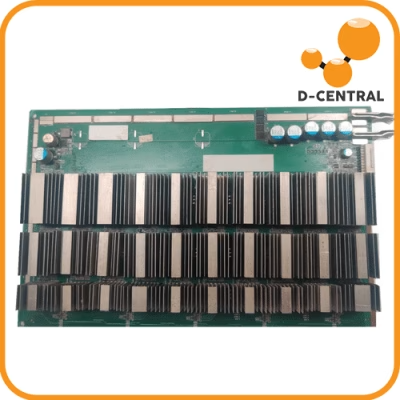
Step 4: Maintain Your Equipment. ASICs are industrial hardware running 24/7. Dust buildup, thermal paste degradation, and fan failures are real. D-Central offers professional ASIC repair services for when your hardware needs expert attention — we have repaired thousands of miners since 2016.
Step 5: Join the Community. The open-source mining community is one of the most active and welcoming in Bitcoin. Share your setup, celebrate your uptime, and when someone in the community hits a solo block, celebrate like it is your own — because in a very real sense, it is a win for everyone running their own miner.
Why D-Central Exists
D-Central Technologies was founded in 2016 with a single mission: decentralize every layer of Bitcoin mining. We are Bitcoin Mining Hackers. We take institutional-grade mining technology and hack it into solutions accessible to home miners, plebs, and cypherpunks.
We are based in Canada. We host miners in Quebec, where clean hydroelectric power runs some of the cheapest electricity on the continent. We repair ASICs with model-specific expertise across Bitmain, MicroBT, Innosilicon, and Canaan hardware. We consult with home miners on setup, power, noise management, and scaling.
We are not here to sell you a dream about number-go-up. We are here because Bitcoin mining is a technology that matters — for censorship resistance, for energy sovereignty, for individual freedom. And we believe everyone should have access to it.
Every hash counts. Yours included.
Frequently Asked Questions
What is a micro-miner and how is it different from a regular ASIC?
A micro-miner is a compact, low-power Bitcoin mining device — typically consuming 1-90 watts compared to 3,000+ watts for a full industrial ASIC. Devices like the Bitaxe and NerdAxe use the same SHA-256 ASIC chips found in larger miners but in a single-chip or few-chip configuration. They are designed for home use: quiet, small, energy-efficient, and often fully open-source. They will not match industrial hashrate, but they allow individuals to participate directly in Bitcoin mining and network security.
Can a Bitaxe actually find a solo block?
Yes. Multiple Bitaxe units have found solo blocks on the Bitcoin mainnet. The probability for any individual unit is extremely low — a single Bitaxe at 500 GH/s against an 800+ EH/s network faces astronomical odds per block interval. But Bitcoin mining is probabilistic, not deterministic. Every valid hash has the same chance of being the winning hash. Over time, with continuous operation, solo block wins do occur. The community tracks and celebrates these events as milestones for decentralization.
How much electricity does a Bitaxe use and what does it cost to run?
A standard single-chip Bitaxe (Supra, Ultra, Gamma) consumes approximately 12-20 watts. At typical North American residential electricity rates of $0.10-0.15 USD/kWh, that works out to roughly $0.03-0.07 per day, or about $10-25 per year. In Quebec, where rates are closer to $0.07 CAD/kWh, costs are even lower. The Bitaxe Hex with six chips uses around 90W, and models like the NerdQAxe sit in the 60W range.
Is solo mining or pool mining better for micro-miners?
It depends on your goals. Solo mining gives you a shot at the full 3.125 BTC block reward but payouts are extremely rare and unpredictable. Pool mining provides small, steady payouts proportional to your hashrate contribution. Many home miners run a hybrid approach: primary ASICs on a pool for consistent sats, and a Bitaxe on solo for the lottery-style block hunt. Both approaches contribute to network decentralization.
What power supply does a Bitaxe need?
Standard Bitaxe models (Supra, Ultra, Gamma) use a 5V barrel jack (5.5×2.1mm DC) and require a 5V/6A power supply. The Bitaxe Hex and Bitaxe GT use a 12V DC XT30 connector. The USB-C port on these devices is for firmware flashing and serial communication only — never use it for power. D-Central stocks compatible power supplies for all models.
Can I use my miner to heat my home?
Absolutely. Every watt consumed by a miner is converted to heat with near-100% efficiency (all electricity becomes thermal energy). A 15W Bitaxe provides modest supplemental heat. Full ASIC-based Bitcoin Space Heaters built from repurposed S9 or S19 units can replace electric baseboard heaters entirely while mining Bitcoin simultaneously. If you already pay for electric heating, routing that electricity through a miner first is essentially free mining.
Why does home mining matter for Bitcoin’s security?
Bitcoin’s censorship resistance depends on mining being geographically distributed and operated by many independent parties. When mining concentrates in a few large pools and jurisdictions, it becomes vulnerable to regulatory pressure, infrastructure failures, and transaction censorship. Every independent home miner running their own node adds geographic diversity and makes the network harder to attack or censor. Decentralized mining is not a philosophical ideal — it is a security requirement.