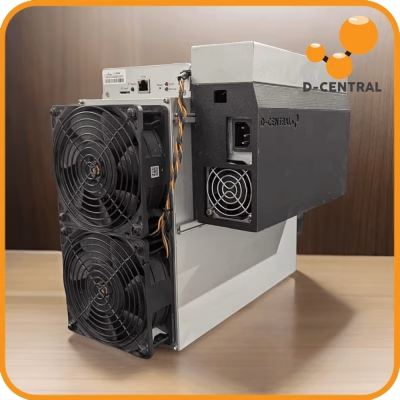
Every ASIC miner is a space heater that happens to produce Bitcoin. That is not a bug — it is a thermodynamic feature. The first law of thermodynamics guarantees that every watt consumed by a mining chip converts to heat with near-perfect efficiency. A single Antminer S19 XP draws around 3,010 watts and dumps roughly 10,270 BTU/h of thermal energy into whatever room it occupies. Scale that across a rack of machines and you are looking at a commercial-grade heating plant that also earns sats.
For years, Bitcoin miners in cold climates have quietly exploited this reality. Home miners duct their S9s into forced-air furnace returns. Greenhouse operators immerse hashboards in dielectric fluid and pump the heated coolant through radiant floor loops. But the next frontier is bigger than basements and grow rooms — it is commercial and event venues: convention halls, breweries, hotels, restaurants, sports complexes, and community centers. These buildings burn enormous amounts of natural gas or electricity on heating, and every one of those BTUs could be produced by mining hardware instead.
This is not a thought experiment. The physics is settled, the hardware exists, and the economics get more favorable every time energy prices tick upward. In this guide, we break down the engineering, the math, and the practical deployment models for turning Bitcoin miner waste heat into venue-grade heating infrastructure.
The Thermodynamic Case: Why Miners Are the Most Efficient Electric Heaters
A conventional electric resistance heater converts electricity to heat at a coefficient of performance (COP) of 1.0. A Bitcoin miner does exactly the same thing — every watt of electrical input becomes a watt of thermal output — but it also produces Bitcoin as a byproduct. The effective COP, when you factor in mining revenue, can exceed 1.0 by a wide margin, depending on your electricity rate, the network difficulty, and the price of Bitcoin.
Consider the math for a venue running ten Antminer S19 XPs:
| Parameter | Value |
|---|---|
| Machines | 10 x Antminer S19 XP (140 TH/s each) |
| Total power draw | ~30.1 kW |
| Heat output | ~102,700 BTU/h |
| Equivalent furnace | Mid-size commercial gas furnace |
| Combined hashrate | 1.4 PH/s |
| Network hashrate (2025) | ~800+ EH/s |
| Block reward | 3.125 BTC |
That 102,700 BTU/h is enough to heat a 5,000–7,000 sq ft venue space, depending on insulation, climate zone, and ventilation. And every satoshi mined offsets the electricity bill, driving the net cost of heating below what any gas furnace or heat pump can deliver.
Method 1: HVAC Integration — Ducting Miner Exhaust Into Forced Air Systems
The most practical approach for large venues is integrating miners directly into the building’s existing HVAC ductwork. This is the method that home miners have refined over the past several years, and it scales cleanly into commercial buildings.
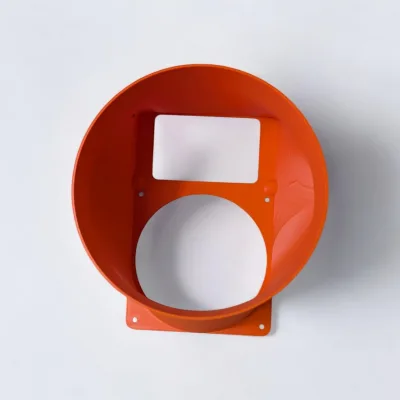
How it works: Mining machines are housed in a dedicated mechanical room — ideally near the existing furnace or air handler. The stock fans on the miners push hot exhaust air at 50-65 degrees C into a plenum that feeds the building’s supply ducts or return air path. A thermostat-controlled damper system regulates how much miner heat enters the HVAC loop versus how much is vented outside.
Key engineering considerations:
- Noise isolation: ASIC miners produce 70-80 dB. The mechanical room needs acoustic treatment — mass-loaded vinyl, double-stud walls, vibration-damped mounts. Ductwork should include inline silencers.
- Electrical capacity: Ten S19 XPs require ~140A at 240V. Most commercial venues already have 400A+ service panels, but dedicated circuits and proper load calculations are mandatory.
- Air filtration: Venue environments carry dust, grease (kitchens), and particulates that will destroy hashboards. Industrial-grade intake filtration (MERV 13+) is non-negotiable.
- Failover: The existing furnace stays in place as backup. If miners go offline for maintenance or during network difficulty spikes that make operation uneconomical, the conventional system takes over seamlessly.
- Summer bypass: In warmer months, a motorized damper redirects miner exhaust outside or to a heat recovery ventilator (HRV) for domestic hot water preheating.
Best venue types for HVAC integration: Convention centers, conference facilities, hotels, large restaurants, community centers, and sports arenas — any building with central forced-air distribution and a dedicated mechanical room.
Method 2: Immersion Cooling With Hydronic Heat Distribution
For venues that need hot water — pools, spas, breweries, commercial kitchens, laundries — immersion cooling is the superior approach. Miners are submerged in a tank of dielectric coolant (engineered mineral oil or synthetic fluid). The coolant absorbs heat from the ASIC chips and is pumped through a heat exchanger that transfers thermal energy to the building’s hydronic loop.
The technical setup:
| Component | Function |
|---|---|
| Immersion tank | Holds 4-12 miners submerged in dielectric fluid |
| Circulation pump | Moves heated coolant to heat exchanger |
| Plate heat exchanger | Transfers heat from coolant to water loop (no fluid mixing) |
| Buffer tank | Stores heated water (60-80 degrees C) for on-demand use |
| Control system | Thermostat + flow valves manage temperature setpoints |
| Dry cooler (summer) | Rejects excess heat outdoors when heating demand drops |
Immersion cooling eliminates fan noise entirely — the miners run silently because there are no fans. This makes it ideal for noise-sensitive venues like restaurants, tasting rooms, and hotel lobbies. It also extends hardware lifespan dramatically by eliminating dust ingestion and reducing thermal cycling.
Best venue types for immersion: Breweries, wineries, hotels with pools or spas, sports facilities, commercial laundries, and any venue with significant hot water consumption.
Method 3: Direct Radiant Heating With Space Heater Builds
Not every venue needs a full mechanical integration. For smaller spaces — a restaurant dining room, a gallery, a taproom, a workshop — purpose-built Bitcoin space heaters are the most accessible entry point.
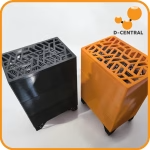
D-Central manufactures Bitcoin Space Heater editions based on proven ASIC platforms (S9, S17, S19 series). These units replace the stock industrial fans with quiet, low-RPM blowers and acoustic enclosures, producing a machine that outputs 1,300-3,400W of heat at noise levels comparable to a household appliance. They plug into standard 240V outlets and connect to a mining pool — or solo mine — over WiFi or Ethernet.
For a venue operator, this is the zero-infrastructure approach:
- No ductwork modifications
- No plumbing
- No mechanical room
- No HVAC contractor
- Deploy in hours, not weeks
- Relocate units as venue layout changes
A mid-size restaurant might deploy three Bitcoin Space Heaters across the dining area, replacing three conventional electric baseboard heaters. The electricity consumption is identical — heat is heat — but the mining revenue offsets 30-60% of the power cost, depending on current Bitcoin economics.
Comparing the Three Methods
| Factor | HVAC Integration | Immersion Cooling | Space Heater Units |
|---|---|---|---|
| Setup complexity | High — HVAC contractor required | Medium — plumbing + electrical | Low — plug and mine |
| Upfront cost | $15,000-50,000+ | $10,000-30,000+ | $500-3,000 per unit |
| Noise level | Low (isolated mechanical room) | Very low (no fans) | Low-moderate (acoustic enclosure) |
| Heat distribution | Whole-building via ductwork | Hydronic loops, hot water | Zone-based, room-level |
| Best for | Large venues (5,000+ sq ft) | Venues with hot water needs | Small-medium spaces |
| Summer strategy | Damper bypass to outdoors | Dry cooler heat rejection | Relocate or power down |
| Scalability | Excellent | Good | Moderate |
The Canadian Advantage: Cold Climate = Maximum Heat Recapture
Canada’s heating season runs 6-8 months in most provinces. In Quebec and Ontario, where electricity rates are among the lowest in North America (CAD $0.06-0.09/kWh for commercial), the economics of miner-heated venues are exceptionally strong. A venue in Montreal or Montreal that heats with Bitcoin miners during the October-to-April heating season captures 70-80% of the annual heating load through mining hardware.
D-Central operates from Montreal, Quebec — right in the heart of this cold-climate, cheap-power sweet spot. We have been helping Canadian businesses integrate mining hardware into their heating infrastructure since 2016. The combination of long winters, low electricity costs, and high heating demand makes Canada the single best jurisdiction on Earth for dual-purpose mining.
Electrical and Regulatory Considerations
Before deploying miners in a commercial venue, operators need to address several practical requirements:
- Electrical inspection: Commercial electrical work requires permits and inspection by the local authority having jurisdiction (AHJ). Dedicated circuits, proper breaker sizing, and code-compliant wiring are mandatory.
- Fire safety: Mining hardware generates significant heat. Proper clearance from combustibles, fire-rated mechanical rooms, and integrated smoke detection are essential.
- Insurance: Notify your commercial insurance carrier. Most policies cover electrical equipment, but mining hardware may require a rider or endorsement.
- Noise bylaws: If miners are not properly attenuated, fan noise can violate municipal noise ordinances. Acoustic enclosures and mechanical room isolation solve this.
- Internet connectivity: Miners need stable, low-latency internet to communicate with mining pools. A wired Ethernet connection is strongly recommended over WiFi for commercial deployments.
Getting Started: From Concept to Warm Venue
The path from “this sounds interesting” to “my venue is heated by Bitcoin miners” is shorter than most people think:
- Calculate your heating load: How many BTUs does your venue need? Your HVAC contractor or energy audit will tell you. Divide by the BTU output of your chosen miner model to determine how many machines you need.
- Choose your integration method: HVAC ducting for large buildings, immersion for hot water needs, space heaters for quick deployment in smaller spaces.
- Source your hardware: D-Central stocks the full range of ASIC miners and Bitcoin Space Heater editions built for dual-purpose heating applications. Every unit ships from Canada, tested and ready to deploy.
- Handle electrical and permitting: Engage a licensed electrician for dedicated circuit installation. Pull permits as required by your municipality.
- Connect and configure: Point your miners at a pool (or go solo), verify hash rates, and configure your thermostat or damper controls.
- Monitor and maintain: Mining hardware needs periodic maintenance — filter cleaning, firmware updates, hashboard inspection. D-Central’s ASIC repair service handles everything from routine maintenance to full hashboard rebuilds if something goes sideways.
The Bigger Picture: Decentralizing Heat and Hashrate
Every venue that heats with Bitcoin miners adds hashrate to the network. That hashrate does not sit in a single mega-facility controlled by one entity — it is distributed across thousands of independent operators, each making their own economic decisions. This is decentralization in its purest form: useful work (heating) that simultaneously secures the most important monetary network ever built.
When a brewery in Montreal heats its fermentation room with immersion-cooled S19s, it is not just saving on gas bills. It is adding to the geographic and jurisdictional diversity of the Bitcoin network’s hash power. When a hotel in Calgary ducts miner exhaust into its guest room heating system, it is making the network harder to attack, harder to censor, harder to shut down.
This is what we mean when we say we are Bitcoin Mining Hackers. We take institutional-grade mining technology and hack it into real-world heating infrastructure that serves pleb miners, small businesses, and sovereign individuals. Every hash counts — and every BTU produced by a miner is a BTU that did double duty.
What types of venues benefit most from Bitcoin miner heating?
Large venues with extended heating seasons benefit the most: convention centers, hotels, breweries, sports facilities, restaurants, and community centers. Any building that currently spends significant money on natural gas or electric heating is a candidate. Cold-climate locations (Canada, northern US, Scandinavia) see the strongest economics because the heating season is longer and displaces more conventional fuel.
How loud are Bitcoin miners in a venue setting?
Stock ASIC miners produce 70-80 dB — far too loud for guest-facing spaces. However, with proper acoustic enclosures, mechanical room isolation, or immersion cooling (which eliminates fans entirely), noise can be reduced to levels comparable to a household refrigerator (40-50 dB). D-Central’s Bitcoin Space Heater editions are specifically engineered with quiet fans and acoustic dampening for occupied spaces.
What happens to the miners during summer when heating is not needed?
Three options: (1) Redirect exhaust heat outdoors via motorized dampers while continuing to mine. (2) Use immersion systems to preheat domestic hot water year-round. (3) Power down units during peak summer and redeploy capital elsewhere. Many Canadian operators choose option 1, since cheap hydroelectric power makes mining profitable even when rejecting heat.
How much can a venue save on heating costs with Bitcoin miners?
The electricity cost of heating with miners is identical to electric resistance heating — a watt is a watt. The savings come from mining revenue that offsets that electricity cost. Depending on Bitcoin price, network difficulty, and local electricity rates, venues typically offset 30-60% of heating electricity costs through mining income. In low-cost power regions like Quebec (CAD $0.06-0.09/kWh), the economics are especially compelling.
Do I need special permits to install Bitcoin miners in a commercial venue?
Yes. Commercial electrical installations require permits and inspection by your local authority having jurisdiction. You will need dedicated circuits sized for the mining load, code-compliant wiring, and potentially fire safety upgrades for the mechanical room. Consult a licensed electrician and your municipal building department before installation. Your commercial insurance carrier should also be notified.
Can I use smaller open-source miners like the Bitaxe for venue heating?
Open-source miners like the Bitaxe are excellent for education, demonstration, and solo mining for the lottery chance at a full 3.125 BTC block reward, but their heat output (5-25W) is too low for meaningful venue heating. For actual space heating, you need ASIC miners drawing 1,300W or more — such as D-Central’s Bitcoin Space Heater editions or full-scale Antminer units. That said, a Bitaxe on display in your venue lobby makes a fantastic conversation piece and educational tool. Note: the Bitaxe uses a 5V barrel jack (5.5×2.1mm) for power, not USB-C.