Bitcoin mining stocks have become one of the most talked-about corners of the public markets. Publicly traded mining companies now command billions in market capitalization, their share prices swinging wildly with every Bitcoin price movement and difficulty adjustment. But what actually are these stocks? What do the companies behind them do? And more importantly, what does the rise of institutional mining giants mean for the decentralization that makes Bitcoin worth mining in the first place?
This guide breaks down Bitcoin mining stocks from a miner’s perspective — not a Wall Street analyst’s. We will cover how these companies operate, what drives their stock prices, who the major players are in 2026, and why understanding the institutional mining landscape matters even if you never plan to buy a single share. Because at D-Central Technologies, we believe the most important investment you can make in Bitcoin mining is not a stock ticker — it is your own hash rate.
Bitcoin Mining: The Foundation
Before diving into stocks, let us ground ourselves in what Bitcoin mining actually is. Mining is the process that secures the Bitcoin network, validates transactions, and mints new coins according to a fixed, predictable schedule. Miners compete to solve a cryptographic puzzle (proof of work) by computing trillions of SHA-256 hashes per second. The miner who finds a valid hash below the network’s difficulty target earns the right to add the next block to the blockchain and collect the block reward plus transaction fees.
As of 2026, the block reward stands at 3.125 BTC following the April 2024 halving. The next halving, expected around 2028, will reduce this to 1.5625 BTC. Network hash rate has surged past 800 EH/s, with difficulty hovering above 110 trillion. These numbers reflect an industry that has matured dramatically — and one where the economics of mining are tighter than ever.
Mining hardware has evolved through distinct eras: CPU mining (2009-2010), GPU mining (2010-2013), FPGA mining (2012-2013), and the ASIC era (2013-present). Today, Application-Specific Integrated Circuits (ASICs) dominate entirely. Modern machines like the Antminer S21 series deliver hash rates above 200 TH/s while consuming under 20 J/TH. If you are new to ASIC mining hardware, D-Central’s shop carries everything from entry-level open-source miners to full-scale industrial ASICs.
What Exactly Is a Bitcoin Mining Stock?
A Bitcoin mining stock is a publicly traded equity share in a company whose primary business is mining Bitcoin. When you buy shares of a mining company on a stock exchange like NASDAQ or the TSX, you are buying partial ownership of that company’s mining infrastructure — its ASICs, its facilities, its power contracts, and its operational team.
Mining companies go public for one primary reason: capital. Building and operating a large-scale mining facility requires massive upfront investment. A single modern ASIC miner costs thousands of dollars. A facility running thousands of machines needs megawatts of power infrastructure, cooling systems, security, and staff. By selling shares to the public, mining companies raise the capital they need to acquire hardware, secure power purchase agreements, and build out their operations at scale.
The main ways mining companies enter public markets include:
- Initial Public Offering (IPO) — The traditional route where a company offers shares to the public for the first time through an underwritten process.
- Direct Listing — The company lists existing shares on an exchange without raising new capital, allowing early investors to sell.
- SPAC Merger — Merging with a Special Purpose Acquisition Company, a shell entity already listed on an exchange, as a faster path to public markets.
- Reverse Takeover (RTO) — Common in Canadian markets, where a private mining company merges with an existing public shell company.
What Drives Mining Stock Prices
Mining stocks are volatile — often more volatile than Bitcoin itself. This is because they act as a leveraged bet on Bitcoin’s price, amplified by operational costs and debt. Here are the key factors:
Bitcoin Price
This is the dominant variable. When Bitcoin rises, mining revenue increases while costs (power, labor, depreciation) stay roughly fixed, meaning profits expand dramatically. The reverse is equally true. A 20% drop in Bitcoin price can cut a mining company’s margins in half or push them into unprofitability. This leverage effect is why mining stocks often move 2-3x the magnitude of Bitcoin’s price swings.
Hash Rate and Network Difficulty
With global hash rate now exceeding 800 EH/s, competition for block rewards is fiercer than ever. When difficulty rises, each terahash of computing power earns fewer sats. Companies must constantly evaluate whether to deploy more machines, upgrade to more efficient hardware, or curtail operations during unfavorable periods. A company’s percentage of total network hash rate directly determines its expected share of block rewards.
Energy Costs and Power Strategy
Electricity is the single largest operating expense for any mining company. The difference between paying $0.03/kWh and $0.06/kWh can mean the difference between profitability and bankruptcy after a halving. Companies that secure long-term power purchase agreements (PPAs) at favorable rates, especially from stranded or renewable energy sources, have a structural advantage. This is one reason why Canada, with its abundant hydroelectric power, has become an attractive jurisdiction for mining operations.
Fleet Efficiency
A company running older-generation machines at 30+ J/TH is in a fundamentally different position than one running sub-20 J/TH hardware. Fleet efficiency determines the break-even Bitcoin price — the threshold below which mining becomes unprofitable. Post-halving, many operators with inefficient fleets were forced to shut down or upgrade. Companies that proactively maintain and upgrade their hardware, including through professional ASIC repair services, can extend the productive life of their machines and maintain competitive efficiency.
Balance Sheet and Treasury Strategy
Some mining companies sell their mined Bitcoin immediately to cover operating costs. Others adopt a “HODL” strategy, accumulating Bitcoin on their balance sheet. This treasury strategy significantly impacts how the market values them. A company holding thousands of Bitcoin acts partially as a Bitcoin holding company, adding another layer of Bitcoin price exposure. Several public miners now hold substantial BTC reserves, effectively turning their stock into a hybrid mining-operation-plus-Bitcoin-treasury instrument.
Regulatory and Geopolitical Environment
Mining regulation varies wildly by jurisdiction. China’s 2021 mining ban reshuffled the entire industry, sending hash rate to North America, Central Asia, and the Middle East. Energy regulations, carbon policies, noise ordinances, and tax treatment all impact where and how profitably a company can operate. Jurisdictional diversification has become a key strategic concern.
Major Public Mining Companies in 2026
The public mining landscape has consolidated significantly. Here are the major players:
| Company | Ticker | Exchange | Notable Characteristics |
|---|---|---|---|
| Marathon Digital Holdings | MARA | NASDAQ | One of the largest public miners by hash rate and BTC holdings. Aggressive expansion and HODL treasury strategy. |
| Riot Platforms | RIOT | NASDAQ | Operates massive facility in Rockdale, Texas. Known for power curtailment strategy and demand response revenue. |
| CleanSpark | CLSK | NASDAQ | Focus on low-cost energy and operational efficiency. Rapid growth through acquisitions of undervalued mining sites. |
| Bitfarms | BITF | NASDAQ / TSX | Canadian-founded with operations in Quebec hydroelectric regions. One of the earliest public miners. |
| Hut 8 Corp | HUT | NASDAQ / TSX | Canadian miner. Merged with US Bitcoin Corp. Diversified into HPC/AI compute center operations. |
| IREN (formerly Iris Energy) | IREN | NASDAQ | Australian-founded, 100% renewable energy focus. Expanding into AI/HPC alongside mining. |
| Cipher Mining | CIFR | NASDAQ | Texas-based operations with low-cost power. Clean fleet of latest-gen hardware. |
| TeraWulf | WULF | NASDAQ | Nuclear and hydroelectric powered mining. Among the lowest cost-per-coin producers. |
Several of these companies have pivoted partially toward high-performance computing (HPC) and artificial intelligence workloads, leveraging their existing power infrastructure and data center expertise. This diversification trend accelerated post-halving as miners sought additional revenue streams to offset reduced block rewards.
Canadian Mining Companies on the TSX
Canada holds a special position in the Bitcoin mining landscape. The TSX and TSX Venture Exchange have historically been among the most active exchanges for mining stock listings. Companies like Bitfarms and Hut 8 built their early operations around Quebec’s cheap hydroelectric power, and the Canadian regulatory environment has generally been more accommodating to crypto-mining companies than many other jurisdictions.
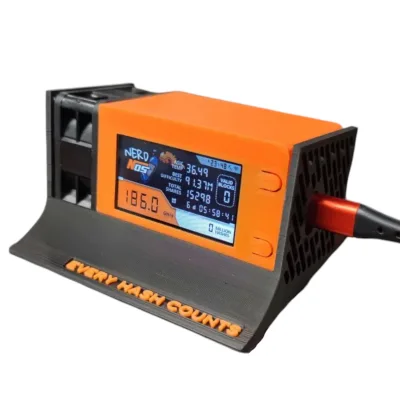
For miners operating in Canada, understanding the public company landscape helps contextualize the broader industry. These are the companies drawing megawatts of power, deploying tens of thousands of ASICs, and competing for the same block rewards as every other miner on the network — including the Bitaxe solo miner sitting on your desk.
The Decentralization Problem
Here is where the conversation shifts from finance to philosophy — and this matters deeply to anyone who cares about Bitcoin’s mission.
The rise of publicly traded mining companies represents a massive centralization of hash rate. A handful of companies, funded by institutional capital and operating industrial-scale facilities, now control a significant percentage of global hash rate. These companies answer to shareholders, boards of directors, and securities regulators. They operate in known, fixed locations with identifiable power contracts.
This creates several concerning dynamics:
- Regulatory leverage: Governments can pressure publicly traded miners to comply with sanctions, censor transactions, or implement surveillance measures. A private individual mining in their garage has no such exposure.
- Geographic concentration: Public miners tend to cluster in jurisdictions with favorable power costs and regulations, creating geographic hash rate concentration.
- Single points of failure: A regulatory crackdown, natural disaster, or grid failure in a major mining region can take significant hash rate offline simultaneously.
- Perverse incentives: When a mining company’s stock price depends on quarterly earnings calls, the pressure to maximize short-term profits can conflict with the long-term health of the network.
This is precisely why home mining and solo mining matter more than ever. Every terahash that runs outside the control of a publicly traded corporation is a terahash that strengthens Bitcoin’s censorship resistance. Every Bitaxe running on someone’s desk, every space heater warming a Canadian home while hashing, every garage miner running an S9 on solar power — these are the nodes of true decentralization.
D-Central’s entire mission is built on this principle: decentralization of every layer of Bitcoin mining. We believe the answer to mining centralization is not to fight the public companies, but to proliferate mining hardware so widely that no entity or coalition can dominate the hash rate. That is why we sell accessible mining hardware, from Bitaxe solo miners to full ASICs, and why we built the Bitcoin Space Heater line — to make mining a byproduct of heating your home.
Mining Stocks vs. Mining Your Own Bitcoin
If you are reading this article on D-Central’s site, chances are you are more interested in running your own hardware than buying shares of someone else’s mining operation. Good. Here is an honest comparison:
| Factor | Mining Stocks | Mining Your Own Hardware |
|---|---|---|
| Custody | You own shares in a brokerage account. The company holds the Bitcoin (or sells it). | You receive Bitcoin directly to your own wallet. Your keys, your coins. |
| KYC Exposure | Full KYC required through brokerage. Your holdings are visible to regulators and tax authorities. | Mining to your own wallet is the most sovereign way to acquire non-KYC Bitcoin. |
| Control | Zero control over operations, strategy, or which pool the company mines on. | Full control over your setup, pool choice, firmware, and overclocking. |
| Counterparty Risk | Management risk, fraud risk, dilution risk, bankruptcy risk. | Hardware failure risk (mitigated by ASIC repair services). |
| Network Contribution | You contribute nothing to decentralization. The company mines on centralized infrastructure. | Every hash you produce strengthens Bitcoin’s decentralization and censorship resistance. |
| Heat Recovery | Not applicable. | ASICs produce heat. In cold climates like Canada, this offsets heating costs — sometimes entirely. |
| Capital Required | A single share can cost anywhere from a few dollars to hundreds. | A Bitaxe starts under $200. Full ASICs range from a few hundred to several thousand. |
| Upside | Leveraged exposure to Bitcoin price (both directions). | You stack sats, learn the protocol deeply, and contribute to network security. |
The comparison is not entirely apples-to-apples. Mining stocks are a financial instrument; mining your own hardware is a sovereignty practice. One is passive speculation on someone else’s operations. The other is active participation in securing the most important monetary network in human history.
How to Evaluate a Mining Stock (If You Must)
If you do decide to invest in mining stocks, here is what to look at beyond the ticker price:
Hash Rate and Efficiency Metrics
Check the company’s self-reported hash rate (in EH/s), their fleet efficiency (J/TH), and their cost to mine one Bitcoin. Compare these across companies. A miner producing Bitcoin at $30,000/BTC cost is in a very different position than one at $60,000/BTC.
Energy Strategy
Where does the power come from? What is the blended cost per kWh? Are there long-term PPAs in place, or is the company exposed to spot energy prices? Companies with locked-in cheap renewable energy have a structural moat.
Bitcoin Treasury
How much BTC does the company hold on its balance sheet? What is their policy — sell immediately, hold strategically, or full HODL? This affects the company’s exposure to Bitcoin price movements beyond just mining revenue.
Dilution History
Mining companies are notorious for issuing new shares to fund expansion. Check the share count over time. If it has tripled in two years, existing shareholders have been significantly diluted. Look at the ratio of hash rate growth to share count growth.
Diversification Strategy
Many public miners have pivoted partially to HPC/AI compute center operations. While this can stabilize revenue, it also means you are no longer buying a pure Bitcoin mining play. Understand what you are actually investing in.
Management Track Record
Has leadership navigated previous bear markets? Have they made disciplined capital allocation decisions? Or have they over-expanded at cycle tops and diluted shareholders to survive downturns?
The Case for Self-Sovereignty in Mining
At D-Central, we are not financial advisors, and this article is not investment advice. We are Bitcoin mining hackers who have been building, repairing, and deploying mining hardware since 2016. Our perspective is simple: the best way to participate in Bitcoin mining is to mine Bitcoin yourself.
You do not need an industrial facility. You do not need megawatts of power. You need:
- A Bitaxe or similar open-source solo miner for lottery mining and learning (starting under $200)
- A Bitcoin Space Heater to mine while heating your home — turning a cost center into a revenue generator
- Basic electrical knowledge (or a willingness to learn through our mining training resources)
- A Bitcoin wallet and a mining pool (or solo mining setup)
For those who want to scale beyond home mining, D-Central offers hosting services in Quebec, where abundant hydroelectric power provides some of the lowest energy costs in North America. And when your hardware needs maintenance — because every ASIC eventually does — our repair technicians have serviced thousands of machines across every major manufacturer.
If you need help choosing the right hardware for your situation, our mining consulting service can help you design a setup that matches your power availability, noise tolerance, heat recovery goals, and budget.
The Bigger Picture: Why This All Matters
Bitcoin mining stocks exist because Bitcoin mining has become a serious industry. That is, in many ways, a positive development — it means the network is mature, well-funded, and resilient. The total hash rate securing Bitcoin has never been higher, and the barrier to attacking the network has never been steeper.
But maturity should not mean centralization. Satoshi designed Bitcoin so that anyone with a computer could participate in securing the network. The cypherpunk vision was not a world where a dozen NASDAQ-listed companies control most of the hash rate while retail investors buy their stock through a brokerage app. The vision was distributed, permissionless participation.
Every home miner is a vote for that original vision. Every Bitaxe plugged into a wall outlet is a tiny rebellion against the centralization of hash power. Every space heater warming a Canadian home while stacking sats is proof that mining can be decentralized, accessible, and practical.
Understanding mining stocks helps you understand the landscape. But participating in mining — actually running hardware, actually contributing hash rate, actually receiving Bitcoin to your own wallet — that is what changes the game.
Every hash counts. Whether you are running a single Bitaxe or a rack of S21s, your participation in Bitcoin mining strengthens the network for everyone. That is worth more than any stock certificate.
Frequently Asked Questions
What is a Bitcoin mining stock?
A Bitcoin mining stock is a publicly traded equity share in a company whose primary business is mining Bitcoin. By purchasing shares on a stock exchange like NASDAQ or the TSX, investors gain indirect exposure to Bitcoin mining operations without owning or operating mining hardware themselves. The stock price is influenced by Bitcoin’s price, the company’s operational efficiency, energy costs, and management decisions.
How do mining stocks differ from buying Bitcoin directly?
Mining stocks provide leveraged exposure to Bitcoin — they tend to rise faster than Bitcoin in bull markets and fall faster in bear markets. Unlike holding Bitcoin directly, mining stocks carry counterparty risk (management decisions, dilution, operational failures) and do not give you custody of any Bitcoin. Holding actual Bitcoin in your own wallet eliminates counterparty risk entirely.
Why are mining stocks so volatile?
Mining companies have relatively fixed operating costs (power, facilities, staff) but variable revenue that depends entirely on Bitcoin’s price and network difficulty. This creates an operating leverage effect: a 20% increase in Bitcoin’s price can double a miner’s profit margin, while a 20% decrease can eliminate it. The stock market prices in these amplified swings.
Who are the biggest public Bitcoin mining companies in 2026?
The largest public miners by hash rate and market capitalization include Marathon Digital (MARA), Riot Platforms (RIOT), CleanSpark (CLSK), Bitfarms (BITF), Hut 8 (HUT), IREN (formerly Iris Energy), Cipher Mining (CIFR), and TeraWulf (WULF). Several of these have diversified into HPC/AI compute center operations alongside Bitcoin mining.
Is buying mining stocks better than mining Bitcoin yourself?
They serve different purposes. Mining stocks are a passive financial investment with counterparty risk. Mining your own Bitcoin with hardware you control is an active sovereignty practice — you receive non-KYC Bitcoin directly to your wallet, contribute to network decentralization, and can recover heat from the hardware. For anyone aligned with Bitcoin’s cypherpunk values, running your own miner is the more meaningful choice.
What is the current Bitcoin block reward?
As of 2026, the block reward is 3.125 BTC per block, set by the April 2024 halving. This will reduce to 1.5625 BTC at the next halving, expected around 2028. In addition to the block reward, miners earn transaction fees, which become proportionally more important as the block subsidy decreases over time.
Can I start mining Bitcoin at home without a huge investment?
Absolutely. Open-source solo miners like the Bitaxe start under $200 and let you participate in solo mining (lottery mining) from your desk. For more substantial hash rate that also heats your home, Bitcoin Space Heaters repurpose ASIC mining hardware as functional space heaters. You do not need an industrial operation to mine Bitcoin.
How does D-Central Technologies support Bitcoin miners?
D-Central has been serving the Bitcoin mining community since 2016. We offer a complete ecosystem: open-source miners and full ASICs through our shop, professional ASIC repair services for all major manufacturers, hosting in Quebec with hydroelectric power, consulting services, and training resources. Our mission is the decentralization of every layer of Bitcoin mining.
Do mining stock companies contribute to Bitcoin centralization?
Yes, to some degree. Publicly traded mining companies concentrate significant hash rate in identifiable, regulatable facilities. They answer to shareholders and securities regulators, making them susceptible to government pressure regarding transaction censorship or compliance mandates. This is why distributed home mining is critical to maintaining Bitcoin’s censorship resistance — the more hash rate that runs outside institutional control, the stronger the network’s decentralization.
What should I look for when evaluating a Bitcoin mining stock?
Key metrics include: the company’s total hash rate (EH/s), fleet efficiency (J/TH), all-in cost to mine one Bitcoin, energy source and cost per kWh, Bitcoin treasury holdings, share dilution history, management track record through bear markets, and whether the company has diversified into non-mining operations like HPC/AI. Compare these metrics across multiple companies before making any decisions.