Bitcoin was built to be peer-to-peer electronic cash. But for years, the base layer’s throughput constraints made that vision feel incomplete. The Lightning Network changed everything — a second-layer protocol that enables instant, near-zero-fee Bitcoin transactions without sacrificing the security guarantees of the base chain. It is, without exaggeration, one of the most consequential engineering achievements in Bitcoin’s history.
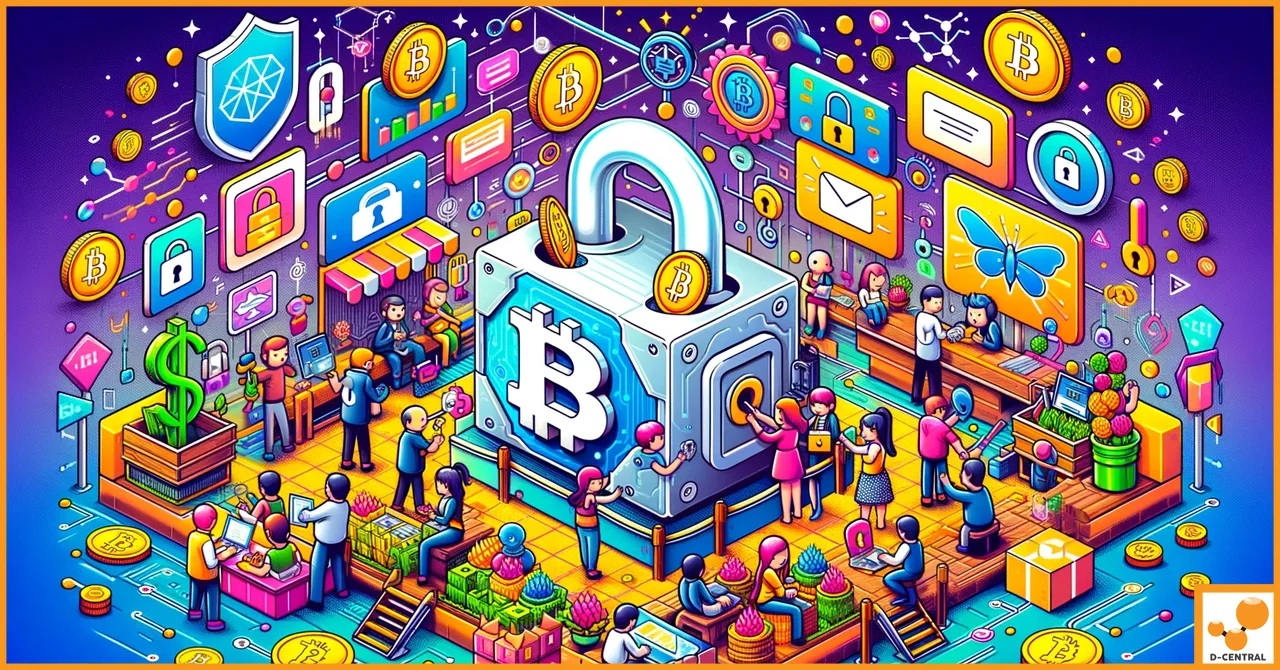
But Lightning had a UX problem. Generating invoices, managing channels, scanning ephemeral QR codes — the friction was real, and it kept everyday users at arm’s length. Enter LNURL: a protocol extension that strips away that complexity and makes Lightning transactions as intuitive as tapping a link. If Lightning Network is the engine, LNURL is the ignition key that lets anyone start it up.
At D-Central Technologies, we see LNURL as a critical piece of the sovereignty stack. We are Bitcoin mining hackers — we take institutional-grade technology and make it accessible to home miners, plebs, and cypherpunks. The same ethos that drives us to build Bitaxe solo miners and Bitcoin space heaters also drives our conviction that Bitcoin’s payment layer must be as decentralized and accessible as its mining layer. LNURL is a major step in that direction.
What Is LNURL and Why Does It Matter?
LNURL (Lightning Network URL) is a set of standardized sub-protocols that encode Lightning Network actions — payments, withdrawals, authentication, and channel requests — into simple URLs and QR codes. Instead of the tedious generate-invoice-scan-invoice-pay dance, LNURL condenses the entire flow into a single scan or click.
The protocol was born from the open-source Bitcoin development community’s recognition that Lightning’s technical excellence was being undermined by its user interface. Developers, merchants, and node operators needed a common language for simplifying interactions. LNURL emerged as that standard, and it has since been adopted by dozens of wallets, services, and applications worldwide.
Here is what matters: LNURL does not compromise on the properties that make Bitcoin and Lightning powerful. It does not introduce custodial intermediaries. It does not require KYC. It simply makes it easier for sovereign individuals to transact using the hardest money ever created.
How LNURL Works Under the Hood
At a technical level, LNURL operates through a straightforward request-response flow using HTTP callbacks. Understanding this flow demystifies what happens when you scan an LNURL QR code.
Step 1 — Encoding: A service provider generates an LNURL by encoding a callback URL into a bech32 string. This string can be rendered as a QR code, embedded in a webpage, or shared as plain text. The encoded data includes the action type, any amount constraints, and the server endpoint to contact.
Step 2 — Scanning/Clicking: The user’s Lightning wallet reads the LNURL (via QR scan, NFC tap, or URL click), decodes the bech32 string, and extracts the callback URL along with the action parameters.
Step 3 — Server Communication: The wallet sends an HTTP GET request to the callback URL. The server responds with a JSON payload containing the details needed to complete the action — for a payment, this would be a Lightning invoice; for a withdrawal, it would be a confirmation of the withdrawal parameters.
Step 4 — Execution: The wallet processes the response and executes the Lightning Network operation. For LNURL-pay, it pays the invoice. For LNURL-withdraw, it provides a payment request for the server to fulfill. The entire exchange happens in seconds.
Step 5 — Confirmation: Both parties receive confirmation through the Lightning Network’s native settlement mechanisms. No manual steps, no copying long invoice strings, no errors from mistyped payment hashes.
The elegance of this design is that it leverages universally understood interfaces — URLs and QR codes — as a transport layer for Lightning operations. Anyone who has ever clicked a link or scanned a QR code already knows the basic interaction pattern.
The Four Core LNURL Sub-Protocols
LNURL is not a single feature. It is a family of sub-protocols, each addressing a specific interaction pattern on Lightning. Here are the four most impactful ones.
LNURL-Pay: Frictionless Payments
LNURL-Pay replaces the traditional invoice generation workflow with a static, reusable payment endpoint. A merchant or recipient creates a single LNURL-Pay code. Any payer can scan it, and the server dynamically generates a fresh Lightning invoice behind the scenes. The payer never sees invoice complexity — they scan, confirm the amount, and pay.
For merchants accepting Bitcoin, this is transformative. A coffee shop can display one QR code at the register. A content creator can embed one donation link. A mining equipment seller — like D-Central’s shop — can integrate Lightning checkout without requiring customers to navigate invoice management.
LNURL-Pay also supports metadata: the server can include a text description, an image, or even a long description encoded alongside the payment request. This makes the payment experience informative, not just transactional.
LNURL-Withdraw: Pull Payments Made Simple
LNURL-Withdraw flips the payment direction. Instead of pushing sats to a recipient, the recipient pulls sats from a service. The service creates a withdrawal voucher encoded as an LNURL. The user scans it, and their wallet sends a payment request that the service fulfills.
Real-world applications are everywhere: Bitcoin ATMs dispensing Lightning sats, loyalty programs distributing rewards, mining pool payouts, and event giveaways. Any scenario where a service needs to distribute funds to users is simplified dramatically by LNURL-Withdraw.
For the home mining community, LNURL-Withdraw is particularly relevant. Some mining pools and services now offer Lightning withdrawals — letting miners receive their sats instantly into a self-custodial Lightning wallet rather than waiting for on-chain confirmations. When you are mining with a Bitaxe on a pool that supports Lightning payouts, LNURL-Withdraw makes claiming your rewards effortless.
LNURL-Auth: Passwordless, Sovereign Login
LNURL-Auth is arguably the most cypherpunk-aligned sub-protocol in the LNURL family. It enables passwordless authentication using your Lightning wallet’s cryptographic keys. No email addresses. No passwords. No third-party identity providers. Just math.
Here is how it works: a website generates a challenge and encodes it as an LNURL-Auth request. Your wallet signs the challenge with a derived key specific to that domain. The server verifies the signature and grants access. You are authenticated without revealing any personal information.
This is sovereign identity in practice. Your Lightning wallet becomes your login credential for any service that supports LNURL-Auth. No data breaches can leak your password because there is no password to leak. No phishing attacks can trick you into entering credentials on a fake site because authentication happens in-wallet, not in a browser form.
For Bitcoiners who understand that privacy and self-sovereignty extend beyond just holding your own keys, LNURL-Auth is a natural evolution of the cypherpunk toolkit.
LNURL-Channel: On-Demand Liquidity
LNURL-Channel addresses one of Lightning’s more technical friction points: channel management. Opening a Lightning channel typically requires an on-chain transaction, coordination between two nodes, and an understanding of liquidity allocation. LNURL-Channel simplifies this by letting a user request a channel from a service provider through a single scan.
The user scans the LNURL-Channel code, and the service opens an inbound channel to the user’s node — often with pre-allocated liquidity. This means a new Lightning user can go from zero channels to a fully functional Lightning node with receiving capacity in minutes, not hours.
For the broader Lightning Network, this matters because more channels with better liquidity distribution means a more robust, decentralized network. And decentralization — at every layer — is the entire point.
LNURL and the Decentralization Mission
We talk a lot about decentralizing Bitcoin mining. In 2026, with the network hashrate exceeding 800 EH/s and difficulty above 110 trillion, the pressure toward centralization in mining is immense. That is why D-Central exists — to put hashing power in the hands of individuals through products like the Bitaxe lineup, open-source mining firmware, and space heaters that mine Bitcoin while warming your home.
But decentralization cannot stop at mining. If the payment layer becomes dominated by custodial services and centralized Lightning hubs, we have simply moved the centralization problem from one layer to another. LNURL matters because it empowers non-custodial, permissionless interactions on Lightning. It makes it practical for individuals to run their own nodes, manage their own channels, and transact directly with each other — no intermediaries required.
The current block reward stands at 3.125 BTC. Every sat that flows through a self-custodial Lightning wallet, authenticated by LNURL-Auth, paid via LNURL-Pay, represents a small victory for sovereignty. Scale that across millions of users, and you have a payment network that is genuinely peer-to-peer — the way Satoshi envisioned it.
LNURL for Bitcoin Miners
If you are mining Bitcoin — whether running an Antminer S21 in a dedicated facility or a Bitaxe Supra on your desk — LNURL has practical implications for your workflow.
Pool payouts via Lightning: Several mining pools now support Lightning withdrawals. Using LNURL-Withdraw, you can claim your mining rewards directly to a self-custodial Lightning wallet. No waiting for on-chain payment thresholds. No consolidation headaches. Instant, low-fee payouts.
Accepting Bitcoin payments: If you sell mining services, ASIC repair work, or used equipment, LNURL-Pay lets you accept Lightning payments with a static QR code. Print it, post it online, embed it in invoices — one code handles all incoming payments.
Node authentication: Running a Lightning node alongside your mining operation? LNURL-Auth lets you authenticate to management interfaces, monitoring dashboards, and community platforms without creating yet another account with yet another password.
Automated channel management: As your mining income grows, LNURL-Channel can help you establish new Lightning channels with routing nodes, improving your node’s connectivity and earning routing fees — another income stream alongside your mining rewards.
Wallet Support and Ecosystem
LNURL’s value is directly proportional to its adoption, and in 2026, support is widespread across the Lightning ecosystem. Major wallets supporting LNURL include:
- Phoenix Wallet — Full LNURL support with automatic channel management
- Zeus — Node management wallet with comprehensive LNURL integration
- Breez — POS-oriented wallet with LNURL-Pay for merchants
- BlueWallet — Popular mobile wallet with LNURL support
- Alby — Browser extension bringing LNURL to the web
- Blixt — Full node mobile wallet with native LNURL
The list continues to grow. Services like LNbits, BTCPay Server, and LNDHub all support LNURL natively, making it straightforward for merchants and service providers to integrate Lightning payments into their existing infrastructure.
For those running BTCPay Server — which pairs naturally with a home mining setup — LNURL-Pay and LNURL-Withdraw are built in. You mine the sats, receive them via Lightning, and spend or reinvest them through LNURL-enabled services. The circular economy in action.
Challenges Worth Acknowledging
No protocol is without limitations, and intellectual honesty demands we address them.
HTTPS dependency: LNURL requires the callback server to be reachable via HTTPS. This means the service provider needs a domain, a TLS certificate, and reliable hosting. For fully offline or Tor-only setups, this introduces a constraint. Some implementations address this with .onion support, but it is not universal.
Server trust: While LNURL does not introduce custody, it does require a degree of trust in the callback server — particularly for LNURL-Withdraw, where the server holds the funds until withdrawal. If the server goes offline or acts maliciously, the withdrawal may fail. Choosing reputable services and verifying open-source implementations mitigates this risk.
Standardization gaps: Not all wallets implement all LNURL sub-protocols identically. Edge cases around error handling, amount ranges, and metadata display can vary between implementations. The LNURL specification continues to evolve, and community coordination remains essential for interoperability.
Education: For newcomers to Bitcoin, even the simplified LNURL flow can feel foreign. The Bitcoin community must continue investing in education — clear documentation, video tutorials, and hands-on workshops — to bridge the knowledge gap.
The Road Ahead for LNURL
LNURL is not a finished product. It is an evolving standard that continues to incorporate feedback from developers and users. Notable developments on the horizon include:
- LNURL over Nostr: Integration with the Nostr protocol enables LNURL interactions through decentralized social media, creating new paradigms for content monetization and peer-to-peer tipping
- Offline LNURL: Proposals for NFC-based LNURL interactions that work without an internet connection at the point of sale, expanding Lightning’s reach to environments with limited connectivity
- Enhanced privacy: Ongoing work to reduce metadata leakage in LNURL flows, aligning with the broader Bitcoin privacy movement
- Standardized error handling: Improved specifications for how wallets and servers communicate failures, reducing user confusion
Each of these developments pushes LNURL — and by extension, the Lightning Network — closer to its potential as Bitcoin’s everyday payment layer.
Why This Matters for Home Miners
You might be wondering what a payment protocol has to do with mining Bitcoin in your garage. The answer is everything.
The entire purpose of mining is to secure the network that makes these transactions possible. Every hash your Bitaxe computes, every block your space heater miner helps validate, every repair D-Central performs on your ASIC — it all serves the same mission: keeping Bitcoin decentralized, censorship-resistant, and functional as peer-to-peer electronic cash.
LNURL completes the loop. You mine the sats. Lightning moves the sats. LNURL makes moving them effortless. When a home miner in Quebec can receive pool payouts via Lightning, spend them at a local merchant accepting LNURL-Pay, and authenticate to their node dashboard with LNURL-Auth — all without a bank, a custodian, or a KYC form — that is the cypherpunk future we are building.
At D-Central, we have been building toward this future since 2016. From pioneering Bitaxe manufacturing to creating the original Bitaxe Mesh Stand, from hosting miners in Quebec to repairing thousands of ASICs — every product and service we offer is a brick in the wall of decentralization. LNURL is another brick, and it fits perfectly.
Frequently Asked Questions
What is LNURL in simple terms?
LNURL is a set of standards that turns Lightning Network operations — payments, withdrawals, logins, and channel requests — into simple URLs and QR codes. Instead of manually generating and sharing Lightning invoices, you scan a code and the transaction happens automatically. It makes using Lightning as easy as clicking a link.
Is LNURL custodial? Do I give up control of my Bitcoin?
No. LNURL itself is non-custodial. It is a communication protocol between your wallet and a service. Your wallet maintains control of your keys and funds throughout the transaction. However, the service on the other end of the LNURL may or may not be custodial — always verify that you are interacting with a service that respects your sovereignty.
Which Lightning wallets support LNURL?
Most major Lightning wallets support LNURL in 2026, including Phoenix, Zeus, Breez, BlueWallet, Alby, and Blixt. Wallet support varies by sub-protocol — some wallets support LNURL-Pay and LNURL-Withdraw but not LNURL-Auth. Check your wallet’s documentation for specific LNURL capabilities.
Can I use LNURL to receive mining pool payouts?
Yes, if your mining pool supports Lightning withdrawals. Several pools offer LNURL-Withdraw functionality, letting you pull your mining rewards directly into a self-custodial Lightning wallet. This is particularly useful for small miners running Bitaxe or NerdAxe devices, where on-chain payout thresholds might take a long time to reach.
How does LNURL-Auth protect my privacy?
LNURL-Auth uses your wallet’s cryptographic keys to sign a challenge from a website — no username, email, or password is exchanged. Each domain gets a unique derived key, so services cannot correlate your identity across sites. It is passwordless authentication that reveals nothing about you beyond proof that you control a specific key.
What is the difference between a Lightning invoice and LNURL?
A standard Lightning invoice is a one-time payment request with a fixed amount and expiration. LNURL is a reusable endpoint that can dynamically generate invoices, accept variable amounts, process withdrawals, handle authentication, and manage channels. Think of it as a smart wrapper around Lightning invoices that adds flexibility and reusability.
Does LNURL work with Bitcoin only?
LNURL is designed specifically for the Bitcoin Lightning Network. It is a Bitcoin-native protocol built by Bitcoiners for Bitcoiners. At D-Central, we focus exclusively on Bitcoin — the only truly decentralized, censorship-resistant, and sound monetary network.