Let’s cut through the noise. Every market cycle, a fresh wave of altcoins arrives promising to be “the next Bitcoin” — faster, greener, smarter, more scalable. And every cycle, the same pattern repeats: hype, speculation, insider enrichment, slow bleed, irrelevance. Meanwhile, Bitcoin keeps producing blocks roughly every ten minutes, as it has since January 3, 2009. No CEO. No foundation making backroom deals. No pre-mine. No venture capitalists pulling strings.
This is not a tribal argument. It is a technical, economic, and philosophical reality. Bitcoin is fundamentally different from every altcoin ever created, and understanding why is essential for anyone serious about decentralized technology, censorship resistance, and individual sovereignty. As Bitcoin Mining Hackers who have been deep in the trenches since 2016 — repairing hashboards, building space heaters out of S19s, and shipping Bitaxes to solo miners around the world — we have seen the difference play out at the hardware level, the network level, and the human level.
The Immaculate Conception: Why Bitcoin’s Origin Cannot Be Replicated
Bitcoin’s creation story is unique in all of technology. An anonymous individual (or group) published a whitepaper, launched a network, mined alongside everyone else with no pre-mine or allocation advantage, and then disappeared. Satoshi Nakamoto never sold coins. Never did a press tour. Never took VC funding. The estimated one million BTC in early Satoshi-era wallets have never moved.
This matters enormously. Every altcoin has a known founding team, a foundation, a treasury, investors with token allocations, or some combination of all four. Ethereum had a pre-sale. Solana had massive venture capital backing with insider token allocations. Ripple’s founders retained billions of XRP. These are not neutral monetary networks — they are technology companies with equity-like tokens.
Bitcoin’s immaculate conception — no pre-mine, no ICO, no insider advantage, anonymous founder who vanished — created something that cannot be replicated. It is the only digital asset that emerged without anyone in a privileged position. This is not a minor detail. It is the foundational requirement for a neutral, global, censorship-resistant monetary network.
Proof-of-Work: The Physical Anchor That Altcoins Abandoned
Bitcoin mining converts real-world energy into cryptographic security. This is not a bug — it is the entire point. Proof-of-work creates an unforgeable cost to producing blocks. To attack Bitcoin’s blockchain, you would need to outspend the entire network’s energy expenditure, which as of early 2026 exceeds 800 exahashes per second of SHA-256 computation. The thermodynamic reality of this security model is what makes Bitcoin settlement truly final.
Most altcoins have abandoned proof-of-work in favor of proof-of-stake (PoS). Ethereum completed its move to PoS in September 2022 with “The Merge.” The marketing pitch was environmental — less energy. But what was actually traded away was the physical anchor. In proof-of-stake, the wealthiest validators secure the network. Those who already hold the most tokens earn the most new tokens. It is a system that mirrors the fiat world’s Cantillon effect: those closest to money creation benefit the most.
Proof-of-stake also introduces fundamental security tradeoffs. There is no objective way for a new node to determine the correct chain without trusting existing validators — the “weak subjectivity” problem. Long-range attacks, validator collusion, and stake grinding are all theoretical attack vectors that simply do not exist in Bitcoin’s proof-of-work model. The energy Bitcoin consumes is not waste; it is the thermodynamic wall that protects every satoshi on the network.
This is why we are passionate about mining hardware — from industrial-scale ASICs to open-source Bitaxe solo miners. Every hash contributes to the most secure computational network humanity has ever built. Every watt converted to SHA-256 computation strengthens the monetary base layer that 8 billion people can potentially rely on.
True Decentralization: Not a Spectrum, a Binary
The word “decentralized” has been co-opted by nearly every altcoin project. But decentralization is not a marketing term — it is a measurable property with specific technical requirements. A truly decentralized network must have:
- No single point of control — no foundation, CEO, or core team that can unilaterally change the protocol
- Permissionless participation — anyone can run a node, mine, or transact without approval
- Credible neutrality — no insider advantages, no pre-mines, no governance tokens
- Resistance to capture — the network must resist co-option by governments, corporations, or wealthy individuals
Bitcoin meets all four criteria. Its node count — estimated at over 60,000 reachable nodes and likely tens of thousands more behind Tor and private networks — ensures that no single entity controls the consensus rules. The Bitcoin Core development process is deliberately conservative, requiring broad consensus for any changes. There is no “Bitcoin Foundation” with veto power. There is no governance token. There are no emergency shutdowns.
Compare this to the altcoin landscape in 2026. Ethereum’s development roadmap is driven by a small group of researchers. Solana has experienced multiple extended outages where the network was effectively halted — something impossible on Bitcoin without literally shutting down every miner on Earth simultaneously. Cardano’s direction is shaped by a single company. Even projects that claim to be “community-governed” through DAO structures are typically plutocratic: one token equals one vote, meaning whales and insiders control governance.
Decentralization is Bitcoin’s most important property because it enables all other properties — censorship resistance, immutability, permissionless access, and sound monetary policy. Without genuine decentralization, everything else is just a feature on a centralized platform that can be changed, paused, or reversed at the discretion of whoever holds the keys.
Sound Money: The 21 Million Hard Cap
Bitcoin’s monetary policy is the simplest and most credible in existence: 21 million coins, ever. New bitcoin enters circulation through mining block rewards, which halve approximately every four years. The most recent halving occurred in April 2024, reducing the block subsidy from 6.25 BTC to 3.125 BTC. By 2140, the last satoshi will be mined. Until then, the issuance schedule is mathematically predetermined and enforced by every node on the network.
This hard cap is not merely a parameter in the code — it is the social contract of Bitcoin. Changing it would require convincing the overwhelming majority of node operators, miners, exchanges, and users to adopt new consensus rules. The 2017 blocksize war demonstrated definitively that even well-funded corporate interests cannot force protocol changes on Bitcoin against the will of the user base. The hard cap is as close to immutable as any human-created system can be.
Altcoins treat monetary policy as a configurable parameter. Ethereum has changed its issuance model multiple times — from proof-of-work issuance to EIP-1559 fee burning to proof-of-stake yields. Solana’s inflation schedule was modified by governance vote. Many DeFi tokens have unlimited or dynamically adjustable supply. When monetary policy can be changed by a committee or token vote, it is not sound money — it is a central bank with extra steps.
In a world where the Canadian dollar, the US dollar, and every other fiat currency are being debased through monetary expansion, Bitcoin’s fixed supply is not just a technical feature. It is a profound statement: money should not be someone’s policy tool. It should be a neutral, predictable, incorruptible standard.
Network Effects and the Lindy Effect: Time Is Bitcoin’s Ally
Bitcoin has been running continuously since January 3, 2009 — over 17 years of uninterrupted block production. It has survived the Mt. Gox collapse, the China mining ban, multiple 80%+ price drawdowns, regulatory crackdowns in dozens of countries, the FTX implosion, and relentless technical attacks. Each year it survives strengthens the case that it will continue to survive. This is the Lindy Effect in action: the longer a technology endures, the longer its expected remaining lifespan.
The network effects compound this advantage. Bitcoin has the largest mining infrastructure, the most liquidity, the deepest market depth, the most developed custody solutions, the most regulatory clarity, and the broadest geographic distribution of any cryptocurrency. In January 2024, spot Bitcoin ETFs were approved in the United States, and by 2026 they have accumulated hundreds of billions in assets under management. Sovereign nations — El Salvador being the pioneer — hold Bitcoin on their balance sheets. Central banks are studying it. Every major financial institution offers Bitcoin exposure.
No altcoin comes close to this level of adoption, infrastructure, or institutional integration. And the gap is widening, not closing. The “flippening” — the idea that Ethereum would surpass Bitcoin in market cap — has receded from serious discussion. Bitcoin dominance in early 2026 remains well above 50%, and the trend since 2022 has been consistently upward.
Censorship Resistance: The Property That Actually Matters
Censorship resistance is not an abstract concept. It is the reason Bitcoin exists. The genesis block’s embedded message — “Chancellor on brink of second bailout for banks” — was a statement of purpose: build a monetary system that no government, corporation, or institution can control, freeze, or confiscate.
In 2022, the Canadian government invoked the Emergencies Act and froze the bank accounts of citizens who donated to the Freedom Convoy protests. This happened in Canada — not in an authoritarian regime, but in one of the world’s most stable democracies. The message was clear: if your money is in the banking system, it is not truly yours. Bitcoin transactions during that period continued unaffected, because no government can freeze a Bitcoin address or reverse a confirmed transaction.
This real-world demonstration of censorship resistance is something no altcoin can credibly offer. Networks with identifiable leadership can be pressured. Networks with validator sets concentrated in specific jurisdictions can be compelled to comply. Networks with foundation-controlled treasuries can be sanctioned. Bitcoin’s lack of leadership, its global distribution of miners across dozens of countries, and its proof-of-work security model make it uniquely resistant to state-level censorship.
For us at D-Central, operating in Canada, this hits close to home. We build and repair mining hardware because we believe that every individual who runs a miner — whether it is a full-scale Antminer S21 or a tiny Bitaxe on their desk — is contributing to the most important censorship-resistant network in human history. Decentralizing hashrate is not a hobby. It is a responsibility.
The Altcoin Pattern: Why “Better Technology” Misses the Point
Every altcoin pitch follows a predictable template: “We are like Bitcoin, but with [faster transactions / smart contracts / privacy features / lower fees / greener consensus].” This framing fundamentally misunderstands what makes Bitcoin valuable.
Bitcoin’s value does not come from transaction speed. It comes from being the most secure, most decentralized, most censorship-resistant, most credibly neutral monetary network ever created. Speed and programmability are layer-two problems. The Lightning Network already enables instant, near-free Bitcoin payments. Fedimint and Cashu are building privacy-preserving custody layers. Nostr is building censorship-resistant social communication. These solutions build on Bitcoin’s base layer security without compromising it.
Meanwhile, altcoins that optimize for speed or features at the base layer inevitably sacrifice decentralization or security. Solana’s hardware requirements make running a validator prohibitively expensive for individuals. Ethereum’s roadmap increasingly relies on complex cryptographic assumptions (danksharding, verkle trees) that fewer and fewer people can audit or understand. The pursuit of “better technology” at the base layer is a race to build faster databases, not harder money.
The crypto industry — with its thousands of tokens, DeFi protocols, NFT marketplaces, and yield farms — is largely a casino built on venture capital narratives and token speculation. Bitcoin is not part of that casino. Bitcoin is the exit from the casino. It is the only cryptocurrency that is trying to be money, and that distinction makes it categorically different from everything else in the space.
Mining: The Bridge Between Bitcoin and Physical Reality
Mining is where the digital meets the physical. A Bitcoin miner converts electricity into hashrate, hashrate into block production, and block production into network security. This physical process grounds Bitcoin in thermodynamic reality in a way that no proof-of-stake system can match.
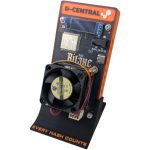
At D-Central, we live this reality every day. We have been repairing ASIC miners since 2016 — replacing blown MOSFETs on Antminer hashboards, reflowing BM1397 chips, diagnosing thermal issues on Whatsminer control boards. We have turned Antminer S9s and S19s into Bitcoin space heaters that heat Canadian homes while mining. We ship Bitaxe solo miners to people who want to contribute hashrate from their desks and take their shot at mining a full block — every hash counts.
This is what makes Bitcoin mining different from staking tokens. Mining requires real investment in hardware, real energy consumption, real maintenance. It creates real jobs — from chip fabrication to facility construction to repair technicians. It incentivizes the development of cheap, often stranded or renewable energy. It distributes security production across the globe. You cannot “stake” your way to censorship resistance. You have to work for it.
Bitcoin in 2026: Stronger Than Ever
As of February 2026, Bitcoin’s position has never been stronger. The network hashrate has surged past 800 EH/s. Spot Bitcoin ETFs in the US and other jurisdictions have brought institutional capital flooding in. The April 2024 halving reduced new supply issuance while demand accelerated. Layer-two development — Lightning, Fedimint, Ark, RGB — continues to expand Bitcoin’s capabilities without compromising the base layer.
Meanwhile, the altcoin landscape grows increasingly fragmented. Ethereum’s ecosystem faces competition from its own layer-two solutions cannibalizing mainnet activity. Solana continues to battle perception issues around outages and memecoin-driven speculation. The broader altcoin market remains overwhelmingly driven by narrative and speculation rather than genuine adoption or utility.
The contrast could not be clearer. Bitcoin is becoming institutional infrastructure — a global settlement layer, a treasury reserve asset, a censorship-resistant payment network. Altcoins remain, by and large, technology experiments and speculative vehicles. Both categories may have value in their respective contexts, but they are not the same thing, and pretending otherwise does a disservice to anyone trying to understand this space.
Frequently Asked Questions
What is the fundamental difference between Bitcoin and altcoins?
Bitcoin is a decentralized, censorship-resistant monetary network with no founder, no pre-mine, no foundation, and a fixed supply of 21 million coins secured by proof-of-work mining. Altcoins are technology platforms with known founding teams, adjustable monetary policies, and various consensus mechanisms that trade decentralization for speed or features. Bitcoin is trying to be sound money; altcoins are building programmable platforms.
Why does proof-of-work matter more than proof-of-stake?
Proof-of-work anchors Bitcoin’s security in physical reality — real energy expenditure that cannot be faked or reversed. This creates an objective, trustless consensus mechanism. Proof-of-stake relies on existing token holders to validate transactions, creating a system where the wealthy get wealthier and new participants must trust existing validators. PoW provides thermodynamic finality; PoS provides economic finality with weaker guarantees.
Is Bitcoin not too slow compared to newer blockchains?
Bitcoin’s base layer processes approximately 7 transactions per second by design — it prioritizes security and decentralization over speed. The Lightning Network, built on top of Bitcoin, enables millions of instant transactions per second at near-zero cost. Comparing base layer speeds is like comparing bank wire transfer times to Visa — they serve different purposes in the settlement stack.
What about Bitcoin’s energy consumption?
Bitcoin’s energy use is a feature, not a bug — it is the cost of running the most secure decentralized network in existence. Studies consistently show that Bitcoin mining increasingly uses renewable and stranded energy sources. At D-Central, we build Bitcoin space heaters that repurpose 100% of mining energy as home heating, demonstrating that mining energy is never wasted when properly directed.
Can altcoins eventually overtake Bitcoin?
It is extremely unlikely. Bitcoin’s network effects, institutional adoption, regulatory clarity, 17+ year track record, and genuine decentralization create a moat that no altcoin can realistically cross. The Lindy Effect suggests that Bitcoin’s longevity itself is evidence of its durability. No altcoin has the immaculate conception, the decentralization, or the Schelling point properties needed to serve as global neutral money.
How can I contribute to Bitcoin’s decentralization?
Run a full node to verify transactions independently. Mine Bitcoin — even a small Bitaxe solo miner contributes to hashrate decentralization and gives you a chance at mining a full block. Use the Lightning Network for everyday payments. Support companies and projects building Bitcoin infrastructure. Every hash counts, and every node strengthens the network.
What does D-Central Technologies do for Bitcoin mining?
D-Central is Canada’s leading Bitcoin mining company, operating since 2016. We are Bitcoin Mining Hackers — we repair ASIC miners, build custom Bitcoin space heaters, manufacture and stock the full range of Bitaxe open-source miners and accessories, and operate mining hosting in Quebec. We take institutional-grade mining technology and hack it into accessible solutions for home miners.