There is a scene in The Empire Strikes Back where Han Solo gets frozen in carbonite. The Rebel Alliance cannot pay his ransom. Jabba the Hutt does not accept Republic credits. He wants something tangible, something scarce, something that holds value across every star system regardless of who controls the Senate. In the Star Wars expanded universe, that something is Aurodium — a rare, lustrous metal so coveted that wars are fought over deposits of it and entire planetary economies revolve around its possession.
Now look at our world. Central banks print currency on demand. Governments inflate away savings. The monetary system most people trust is backed by nothing more than a promise from the same institutions that broke that promise in 2008. In the middle of all this, one asset emerged that shares every property that makes Aurodium powerful in a galaxy far, far away: Bitcoin.
This is not a financial thesis. This is a technology story — about cryptographic proof replacing institutional trust, about hash power replacing central authority, and about why the parallels between a fictional galactic metal and a real-world decentralized protocol tell us something profound about what humans (and apparently aliens) actually value.
Absolute Scarcity: The Property That Changes Everything
Aurodium is rare. Not “we could mine more if we tried harder” rare — geologically rare, distributed across a handful of planets, impossible to synthesize. Its supply is fixed by the physics of the Star Wars universe. That fixed supply is precisely what gives Aurodium its power. No Emperor can decree more of it into existence. No Trade Federation can dilute it.
Bitcoin mirrors this with mathematical precision. There will only ever be 21 million bitcoins. This is not a policy decision that a board of directors can reverse. It is enforced by consensus rules running on hundreds of thousands of nodes across the planet. The issuance schedule is transparent and predictable: every 210,000 blocks, the block reward halves. After the April 2024 halving, miners earn 3.125 BTC per block. The next halving will cut that to 1.5625 BTC. Eventually, the reward drops to zero and all 21 million coins will have been issued — likely around the year 2140.
In 2026, with the Bitcoin network hashrate exceeding 800 EH/s and difficulty above 110 trillion, the cost of producing each bitcoin is enormous. This is not a bug. This is proof-of-work doing exactly what it was designed to do: making the creation of new monetary units expensive, verifiable, and impossible to fake. Every single hash that a miner computes is a vote for the integrity of the network. Every joule of energy consumed is a wall against counterfeiting.
Gold was humanity’s best attempt at a scarce monetary base for thousands of years. But gold’s supply is not truly fixed — new deposits are discovered, asteroid mining is theoretically possible, and refining technology improves. Aurodium in the Star Wars universe comes closer to absolute scarcity, but even galactic metals are subject to the unpredictability of exploration. Bitcoin is the first asset in human history where the supply cap is not an estimate or a geological constraint — it is a mathematical certainty.
Decentralization: No Emperor, No Central Bank
The Galactic Empire’s greatest weapon was not the Death Star. It was centralized control — of trade routes, of information, of currency. When Emperor Palpatine controlled the money, he controlled the galaxy. Anyone who opposed the Empire had their accounts frozen, their trade routes blocked, their economic lifelines severed. Sound familiar?
The Rebel Alliance needed assets that could not be seized by Imperial decree. Aurodium served that purpose because it was physical, portable, and universally recognized. No Imperial edict could make Aurodium worthless. Its value was emergent — arising from the collective recognition of its scarcity and utility across thousands of star systems.
Bitcoin achieves the same resistance to centralized control, but through technology rather than geology. The Bitcoin network is maintained by miners distributed across the globe, from industrial facilities in Quebec to home mining setups running in basements and garages. No single government, corporation, or individual controls the protocol. Transactions are validated by consensus, not by permission. Your bitcoin cannot be frozen by a bank, seized without due process, or inflated away by a central authority.
This is why Bitcoin mining matters — and why the decentralization of mining matters even more. When mining is concentrated in a few massive data centers, the network becomes vulnerable to the same centralized control that the Rebel Alliance fought against. When mining is distributed across thousands of home miners, each running their own hardware and validating their own transactions, the network becomes antifragile. Every home miner is a node in the resistance.
At D-Central, this is not just philosophy — it is our mission. We exist to put mining hardware into the hands of individuals. Whether it is a Bitaxe solo miner on your desk or a full ASIC setup heating your home, every hash you produce strengthens the decentralization of the Bitcoin network. Every hash counts.
Proof-of-Work: The Force That Secures Value
In the Star Wars universe, Aurodium’s value is secured by the sheer difficulty of extracting it. You cannot talk Aurodium into existence. You cannot vote it into existence. You must physically mine it from the crust of planets under extreme conditions. The work is the proof.
Bitcoin’s proof-of-work consensus mechanism operates on the same principle. Miners expend real-world energy — measured in terahashes per second, quantified in joules per terahash — to solve cryptographic puzzles that validate transactions and produce new blocks. This energy expenditure is not waste. It is the thermodynamic bridge between the physical world and the digital ledger. It is what makes bitcoin unforgeable.
Consider what happens when you hold a bitcoin: you hold the accumulated proof that real energy was expended, real computation was performed, and real economic sacrifice was made to bring that coin into existence. No amount of political maneuvering, no clever financial engineering, no printing press can replicate that proof. The energy is spent. The work is done. The ledger is immutable.
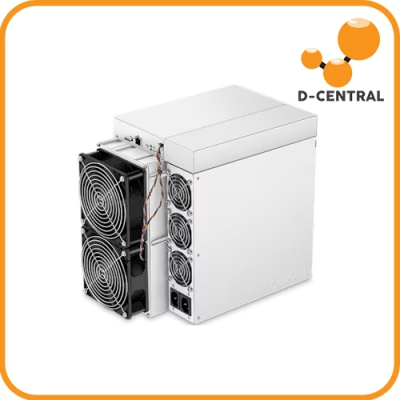
This is why we are passionate about mining hardware at D-Central. Every ASIC we sell, every miner we repair, every machine we tune and optimize is a tool for converting energy into unforgeable digital scarcity. Whether you are running an Antminer S21 or a Bitaxe Supra on your nightstand, you are participating in the most important proof-of-work system ever created.
The Dual-Purpose Revolution: Heating Your Home With Hash Power
Here is where our story diverges from Star Wars entirely — because Aurodium just sits in a vault. Bitcoin mining hardware does something far more interesting: it produces heat.
Every watt of electricity consumed by a mining ASIC is converted into two outputs: hash power that secures the Bitcoin network, and thermal energy that can heat your living space. In a country like Canada, where heating costs consume a significant portion of household budgets for six or more months per year, this dual-purpose capability is transformative.
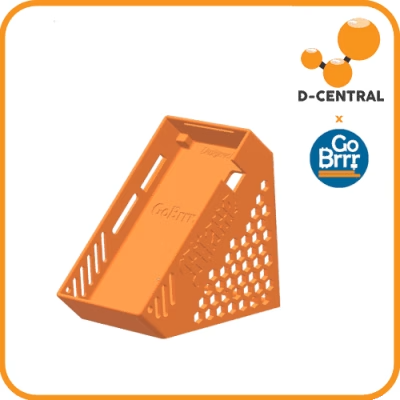
A Bitcoin space heater — an ASIC miner enclosed in a purpose-built housing with proper airflow management — replaces a conventional electric heater at equivalent thermal output. But unlike a conventional heater, it also mines bitcoin while it runs. Your heating bill does not disappear, but a portion of it comes back as satoshis. You are not just staying warm — you are securing the Bitcoin network and accumulating sound money simultaneously.
This is the kind of creative thinking that defines the home mining movement. It is not about competing with industrial-scale operations on pure hashrate. It is about finding the economic niches where mining makes sense at the individual level — and dual-purpose heating is the most compelling niche that exists today.
Solo Mining: Rolling the Dice for a Full Block Reward
In the Star Wars universe, fortune favors the bold. Smugglers like Han Solo built their reputations on long odds and audacious gambles. There is a parallel in Bitcoin mining that captures exactly this spirit: solo mining.
When you solo mine, you are not splitting rewards with a pool. You are pointing your hashrate directly at the Bitcoin network, competing independently to find the next block. The odds of any individual miner finding a block are proportional to their share of the total network hashrate. With the network running at over 800 EH/s, a single Bitaxe producing around 500 GH/s faces astronomical odds on any given day.
But blocks do get found by solo miners. It has happened. A single device, running quietly on a desk somewhere in the world, solves the puzzle before every industrial mining farm on the planet. When that happens, the miner earns the full block reward: 3.125 BTC plus all transaction fees in that block. At current valuations, that is a life-changing sum from a device that costs a few hundred dollars and consumes less power than a light bulb.
Solo mining with a Bitaxe is not an investment strategy. It is a lottery ticket denominated in proof-of-work, purchased with electricity instead of fiat, and secured by the laws of mathematics instead of a state gaming commission. It is also, and this matters, an act of decentralization. Every solo miner is an independent validator, beholden to no pool operator, contributing to the geographic and political distribution of hash power.
Resistance to Censorship: The Rebel Alliance Runs on Bitcoin
If the Rebel Alliance existed today, it would use Bitcoin. This is not hyperbole — it is a logical conclusion based on the properties of the technology.
The Alliance needed to move value across the galaxy without Imperial detection or seizure. Aurodium served this purpose because it was physical and fungible, but it had limitations: it was heavy, required physical transport, and could be intercepted at Imperial checkpoints. Bitcoin solves every one of these problems. A billion dollars worth of bitcoin can be memorized as a 12-word seed phrase and carried across any border — in your head, invisible to any scanner.
Censorship resistance is not a theoretical feature of Bitcoin. It is tested daily by individuals in authoritarian regimes who use Bitcoin to preserve their savings when local currencies collapse, to receive remittances without paying extortionate fees to intermediaries, and to transact freely when banks refuse to process their payments for political reasons.
Every home miner who runs a full node and mines independently adds to this censorship resistance. The more distributed the network, the harder it becomes for any government or corporation to control it. This is not paranoia — it is engineering. A decentralized system is, by definition, more resilient than a centralized one. The Rebel Alliance understood this principle. Bitcoin encodes it.
The Sound Money Standard: Bitcoin Is Not an Investment
Let us be clear about something that the mainstream financial press consistently gets wrong: Bitcoin is not an investment in the traditional sense. It is a technology. It is a protocol. It is a monetary network that operates on mathematical rules instead of political decisions.
When you acquire bitcoin, you are not “investing” in a company’s future earnings. You are opting out of a monetary system based on infinite supply and opting into one based on absolute scarcity. You are choosing to store the fruits of your labor in a medium that cannot be debased by the decisions of people you did not elect and cannot hold accountable.
Aurodium’s value in the Star Wars universe does not come from quarterly earnings reports or analyst price targets. It comes from the simple, undeniable fact that there is not very much of it and you cannot make more. Bitcoin is exactly the same — except that its scarcity is not geological. It is cryptographic. It is enforced by every node on the network, independently and simultaneously, every ten minutes on average, without interruption, since January 3, 2009.
This is the technology that we at D-Central are passionate about. Not price charts. Not trading strategies. The technology itself — the elegant solution to the double-spend problem, the thermodynamic security of proof-of-work, the game-theoretic incentive structure that aligns the self-interest of miners with the security of the network. This is what gets us out of bed in the morning and into the workshop to repair, build, and ship mining hardware to people around the world.
Building Your Own Mining Operation
The barrier to entry for Bitcoin mining has never been lower. You do not need a warehouse. You do not need a power purchase agreement. You do not need to live next to a hydroelectric dam (although if you are in Quebec, that certainly helps).
A Bitaxe solo miner fits on your desk, consumes roughly 15 watts, and connects to your home Wi-Fi. A Bitcoin space heater replaces your existing electric heater and mines while it warms your space. A refurbished Antminer, professionally tuned and tested in our repair facility, can run in your garage, basement, or dedicated mining room with proper ventilation.
The mining ecosystem has matured to the point where hardware is accessible, firmware is open-source, and the community knowledge base is deep enough to support miners at every level of technical expertise. Whether you want to build a Bitaxe from a DIY kit or plug in a turnkey space heater, the path is clear.
Here is what you need to get started:
- Choose your hardware: Solo miner (Bitaxe, NerdAxe) for the lottery, or full ASIC (Antminer, Whatsminer) for serious hash power
- Assess your power situation: Know your electricity rate, available amperage, and thermal management plan
- Decide on pool vs. solo: Pool mining for steady satoshi accumulation, solo mining for the chance at a full block reward
- Set up your wallet: Self-custody. Your keys, your bitcoin. No exceptions
- Start hashing: Every hash you produce is a vote for decentralization
Why This Matters More Than Science Fiction
The Star Wars analogy is fun, and the parallels between Aurodium and Bitcoin are genuinely instructive. But the critical difference is this: Aurodium is fiction. Bitcoin is running. Right now. On a network secured by more computational power than any system in human history.
The Bitcoin network does not care about your politics, your nationality, or your net worth. It processes transactions based on cryptographic validity and economic fee markets. It issues new coins according to a transparent and immutable schedule. It has operated continuously, without a single minute of downtime, for over sixteen years.
No bank can say that. No government can say that. No fictional galactic metal can say that.
The question is not whether Bitcoin is the Aurodium of our world. The question is whether you are going to watch from the sidelines or participate in securing the most important monetary network ever built. At D-Central, we have been building the tools for that participation since 2016 — and we are not slowing down.
Every hash counts. Start mining.
Frequently Asked Questions
Why compare Bitcoin to Aurodium instead of gold?
Gold is the obvious comparison, and it is a valid one. But Aurodium illustrates a point that gold cannot: even in a fictional universe with access to countless planets and advanced technology, the most valued monetary asset is the one with a naturally limited supply that no authority can inflate. Bitcoin achieves this same property through mathematics rather than geology or fictional physics, making it the first truly scarce digital asset in human history.
Is solo mining with a Bitaxe actually worth it?
It depends on how you define “worth it.” If you are looking for a guaranteed return on investment calculated in fiat terms, solo mining with a single low-power device is not the play. If you understand that every hash is a lottery ticket for a full 3.125 BTC block reward, that your device doubles as an educational tool and a statement of decentralization, and that the electricity cost is comparable to running a desk lamp — then yes, it is absolutely worth it. Blocks have been found by solo miners running small devices. It happens.
How does a Bitcoin space heater actually work?
A Bitcoin space heater is an ASIC mining chip (such as those from an Antminer S9 or S19 series) housed in a purpose-built enclosure with controlled airflow. The miner runs exactly as it would in a data center, producing hash power and heat. The enclosure directs the thermal output into your living space, replacing a conventional electric heater. Since all electrical energy consumed by a resistive heater or an ASIC miner is ultimately converted to heat, the thermal output is equivalent — but the miner also earns bitcoin while it heats. Learn more on our Bitcoin Space Heaters page.
Can I mine Bitcoin at home in Canada?
Absolutely. Canada is one of the best jurisdictions in the world for home mining. Electricity rates in several provinces are among the lowest in North America, the cold climate provides natural cooling for much of the year, and the regulatory environment is clear and stable. Whether you are in Quebec with hydroelectric power or in Alberta with natural gas, home mining is viable and legal. D-Central has been supporting Canadian home miners since 2016 and offers hosting services in Quebec for those who want professional management of their hardware.
What makes Bitcoin different from other digital currencies?
Bitcoin is the only decentralized monetary network secured by proof-of-work with a credibly fixed supply cap. It has no CEO, no foundation that can change the rules, no pre-mine, and no venture capital investors with outsized influence. It has operated without downtime since 2009. The network hashrate exceeds 800 EH/s, representing an unprecedented investment in physical security infrastructure. No other digital currency comes close to matching these properties, which is why Bitcoin stands alone as sound digital money.
Do I need technical knowledge to start mining?
Not necessarily. Devices like the Bitaxe come pre-assembled and ready to plug in — you connect to Wi-Fi, enter a mining pool address (or solo mine), and you are hashing within minutes. For more advanced setups like full ASIC miners and space heaters, some basic understanding of electrical requirements and ventilation is helpful, but the community resources and guides available through the Bitaxe Hub and our support channels make the learning curve manageable for anyone willing to read and ask questions.