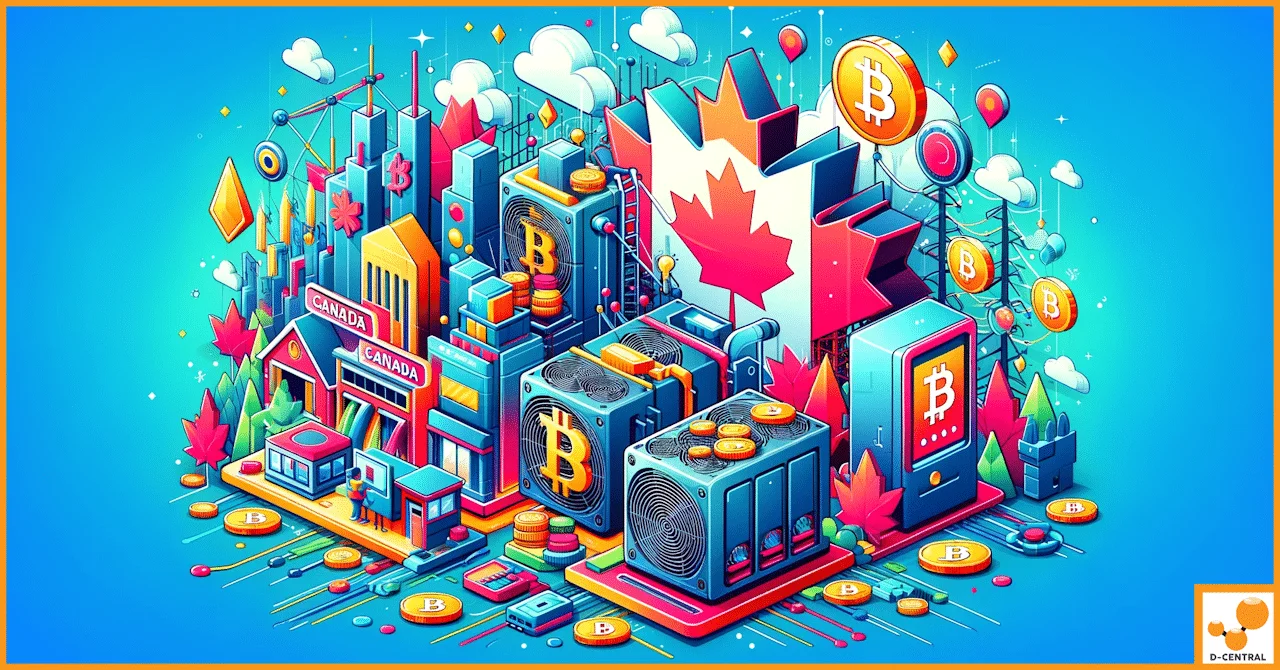
Canada is not just friendly territory for Bitcoin mining — it is one of the best jurisdictions on the planet to run proof-of-work infrastructure. Cheap hydroelectric power, a climate that acts as a natural heatsink, clear regulatory frameworks, and a culture that actually understands decentralization: these are not marketing bullet points. They are structural advantages baked into the geography and governance of this country.
If you are serious about Bitcoin mining — whether you are hosting a handful of ASICs or scaling an entire facility — Canada should be at the top of your shortlist. And if you want a partner who has been building mining infrastructure here since 2016, D-Central Technologies is the team to talk to.
Here is exactly why Canada earns that position, and why Quebec in particular is the sweet spot for hosted mining in 2026.
Canada’s Structural Advantages for Bitcoin Mining
Abundant Hydroelectric Power
Canada generates roughly 60% of its electricity from hydroelectric sources, making it one of the most hydro-dependent nations on Earth. Quebec alone accounts for a massive share of that capacity through Hydro-Quebec, one of the largest hydroelectric utilities in the world.
What does this mean for miners? Electricity that is clean, abundant, and cheap. Quebec’s industrial power rates remain among the lowest in North America — consistently in the range of CAD $0.05-0.06 per kWh for large consumers. For an operation where electricity is the single largest ongoing expense, that kind of pricing is the difference between profitability and a slow bleed.
Hydro power also offers something fossil fuels cannot: price stability. Quebec’s rates are set by the Regie de l’energie and do not swing with global oil or natural gas markets. When you are planning a multi-year mining deployment, predictable energy costs are not a luxury — they are a requirement.
Cold Climate as a Cooling System
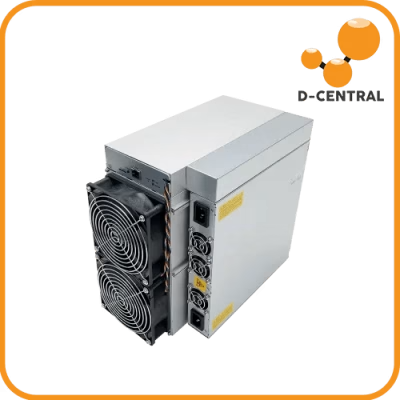
ASIC miners are heat engines. A modern Antminer S21 XP pushes north of 3,000 watts. Multiply that by hundreds of units in a facility and you have a serious thermal management challenge.
In Texas or the Middle East, operators spend heavily on industrial cooling — chillers, evaporative systems, immersion tanks — just to keep junction temperatures in check. In Quebec, the ambient temperature does most of the work. Average winter temperatures in Montreal hover around -10 degrees Celsius, and even summers rarely push above 25 degrees Celsius for extended periods.
This is not a marginal advantage. Reduced cooling requirements translate directly into lower electricity consumption (cooling can account for 30-40% of a facility’s total power draw in hot climates), lower capital expenditure on cooling infrastructure, and longer hardware lifespans. Your ASICs hash harder, last longer, and cost less to operate. That is physics working in your favor.
Stable Regulatory Environment
Canada treats Bitcoin as a commodity for tax purposes, with clear CRA (Canada Revenue Agency) guidelines on mining income, capital gains, and business deductions. There is no ambiguity about whether mining is legal. There are no surprise bans. Provincial securities regulators have established frameworks for digital assets, and the federal government has consistently signaled that it views blockchain technology as legitimate innovation.
Compare that to the regulatory whiplash miners face in other jurisdictions. China banned mining entirely in 2021. Kazakhstan imposed energy surcharges that crushed margins. Several US states have proposed or enacted moratoriums on proof-of-work mining. Canada has done none of these things.
For miners who think in multi-year time horizons — which you should, given the capital expenditure involved — regulatory stability is not optional. It is existential.
World-Class Internet Infrastructure
Mining does not require enormous bandwidth, but it does require rock-solid uptime and low latency to mining pools. Canada’s telecommunications infrastructure delivers. Major data center corridors in Quebec and Ontario provide redundant fiber connectivity, and facilities in the greater Montreal area benefit from proximity to major internet exchange points.
D-Central’s hosting facility in Montreal, Quebec sits within this connectivity corridor, ensuring that your hashrate reaches the network without interruption.
Why Quebec Is the Prime Location for Bitcoin Mining Hosting
Hydro-Quebec: A Miner’s Best Friend
Not all Canadian provinces are created equal when it comes to mining economics. Quebec stands apart for one simple reason: Hydro-Quebec operates one of the largest and lowest-cost hydroelectric grids on the continent.
Quebec generates over 95% of its electricity from hydro. That is not a greenwashing statistic — it is the literal structure of the provincial grid. Every watt your ASIC consumes in Quebec is almost entirely powered by falling water. For miners who care about the environmental narrative around proof-of-work (and for those who simply care about their electricity bill), this is a decisive factor.
Strategic Location and Logistics
Quebec offers practical logistical advantages that are easy to overlook. The province sits adjacent to Ontario and within trucking distance of major US border crossings. Hardware shipped from overseas typically arrives through the Port of Montreal. Domestic shipments from anywhere in Canada reach Quebec within days.
D-Central’s facility at 1325 Rue Bergar in Montreal is centrally positioned in the greater Montreal metropolitan area — close to ports, highways, airports, and a deep pool of technical talent.
French-English Bilingual Ecosystem
Quebec’s bilingual business environment is an often-overlooked advantage for international miners. Whether you operate primarily in English or French, you will find a workforce and service ecosystem that operates fluently in both languages. D-Central itself serves clients in both English and French across all services.
D-Central Technologies: Canada’s Bitcoin Mining Hackers Since 2016
D-Central Technologies has been building Bitcoin mining infrastructure in Canada since 2016. That is not a typo — we were here before the 2017 bull run, before the China ban, before “Bitcoin mining” became a mainstream search term. We have weathered every cycle, every difficulty adjustment, every market crash, and we are still here, still building.
We are Bitcoin Mining Hackers. We take institutional-grade mining technology and make it accessible to individual miners, home operators, and small-to-medium operations that want to participate in securing the Bitcoin network without needing a venture capital war chest.
Hosting in Quebec — And Only Quebec
D-Central’s hosting operations are based exclusively in Quebec. We made this decision deliberately. Quebec offers the best combination of power pricing, climate advantages, regulatory clarity, and infrastructure quality in Canada. Rather than spreading thin across multiple provinces, we concentrate our hosting operations where conditions are optimal.
Our Montreal facility provides:
- Competitive power rates backed by Hydro-Quebec’s stable pricing
- 24/7 on-site monitoring with trained technicians who know ASIC hardware inside and out
- Physical security including access control, surveillance, and environmental monitoring
- In-house repair capability — if a hashboard goes down, we fix it on-site rather than shipping it across the country
- Natural cooling advantages that keep operating costs down year-round
Full-Service Mining Ecosystem
Hosting is just one piece of what we do. D-Central operates a complete mining ecosystem that no other Canadian company matches:
- ASIC Repair — We maintain one of the largest ASIC repair operations in Canada, with dedicated repair pages and diagnostic expertise for 40+ miner models across Bitmain, MicroBT, Canaan, and Innosilicon hardware. Board-level diagnostics, chip replacement, firmware recovery — we do it all.
- Bitcoin Space Heaters — Our custom-built dual-purpose units turn mining heat into home heating, available in S9, S17, and S19 editions. Mine Bitcoin and heat your home with the same machine.
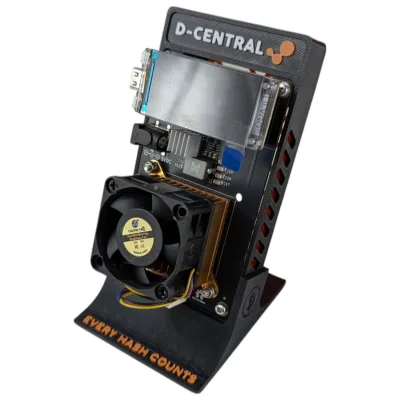
- Open-Source Mining Hardware — As pioneers in the Bitaxe ecosystem, we stock every variant (Supra, Ultra, Hex, Gamma, GT) plus NerdAxe, NerdQAxe, and the full open-source mining lineup. We created the original Bitaxe Mesh Stand and continue developing accessories for the community.
- Mining Consulting — From site selection to hardware procurement to operational optimization, our team helps you build mining operations that actually make economic sense.
Built on Conviction, Not Hype
D-Central exists because we believe in Bitcoin’s mission: a decentralized, censorship-resistant monetary network that no government, corporation, or institution can control. Every miner we repair, every hosting client we onboard, every Bitaxe we ship — it all serves the same goal. More hashrate in more hands means a more resilient network.
We are not here to sell you on “crypto investing” or promise returns. We are technologists and builders who are passionate about the engineering of decentralized systems. If that resonates with you, we are your people.
The Economics of Mining Hosting in Canada (2026)
Power Costs vs. Global Competitors
Here is a rough comparison of industrial electricity rates relevant to Bitcoin mining as of early 2026:
| Region | Approx. Rate (USD/kWh) | Primary Source |
|---|---|---|
| Quebec, Canada | $0.04 – $0.05 | Hydroelectric (95%+) |
| Texas, USA | $0.04 – $0.08 (variable) | Natural gas / wind / solar |
| Paraguay | $0.03 – $0.05 | Hydroelectric |
| Kazakhstan | $0.04 – $0.06 + surcharges | Coal / natural gas |
| Nordic Europe | $0.05 – $0.08 | Hydro / wind |
Quebec’s rates are globally competitive, but the real advantage is the combination: low rates plus cold climate plus regulatory stability plus first-world infrastructure. Very few jurisdictions offer all four simultaneously.
The Hidden Costs of “Cheap” Hosting
Miners chasing the absolute lowest kWh rate often learn an expensive lesson. A hosting facility in a politically unstable jurisdiction with unreliable power might quote $0.03/kWh — but what is your effective rate when the grid goes down for 48 hours a month? Or when a regulatory change triples your costs overnight? Or when your hardware is seized because the local government decided mining is no longer welcome?
Total cost of operation includes uptime reliability, regulatory risk, physical security, hardware maintenance capability, and logistical accessibility. On a risk-adjusted basis, Quebec is among the most economical places to mine Bitcoin on the planet.
Getting Started with Hosting at D-Central
If you are ready to host your miners in Quebec, here is what the process looks like with D-Central:
- Initial Consultation — We discuss your hardware, power requirements, timeline, and goals. Whether you have 5 units or 500, we will scope the right solution.
- Hardware Assessment — If your miners need repair, tuning, or firmware updates before deployment, our in-house repair team handles it. No need to coordinate with a third party.
- Facility Onboarding — Your hardware is racked, connected, configured, and pointed at your preferred mining pool. We handle the physical infrastructure so you can focus on strategy.
- Ongoing Monitoring and Maintenance — Our team monitors your machines 24/7. If a unit goes down, we diagnose and repair it on-site. You get regular uptime and performance reports.
We are miners ourselves. We understand that every hour of downtime is lost hashrate, and lost hashrate is lost sats. That mentality drives everything we do.
FAQ
Why is Canada a good country for Bitcoin mining?
Canada offers a rare combination of abundant hydroelectric power (especially in Quebec), naturally cold temperatures that reduce cooling costs, a stable regulatory environment that treats Bitcoin mining as a legitimate business activity, and world-class internet and electrical infrastructure. These structural advantages make it one of the most competitive jurisdictions globally for proof-of-work mining.
Why does D-Central only host miners in Quebec?
Quebec offers the optimal combination of factors for Bitcoin mining hosting: Hydro-Quebec provides some of the cheapest and cleanest electricity in North America (over 95% hydroelectric), the cold climate significantly reduces cooling costs, and the province has well-established infrastructure and logistics networks. Rather than spreading operations across multiple provinces, D-Central concentrates hosting in Quebec to deliver the best possible economics and service quality.
What are the electricity costs for Bitcoin mining in Quebec?
Industrial electricity rates in Quebec typically range from CAD $0.05-0.06 per kWh, which translates to approximately USD $0.04-0.05 per kWh. These rates are set by the Regie de l’energie and benefit from long-term stability, unlike natural gas or coal-dependent grids where prices fluctuate with commodity markets. This predictability is critical for long-term mining profitability planning.
How does Canada’s climate help Bitcoin mining operations?
ASIC miners generate enormous amounts of heat. In hot climates, facilities spend 30-40% of their total power budget on cooling alone. Canada’s cold climate — particularly Quebec, where winter temperatures regularly drop below -10 degrees Celsius — provides natural cooling that dramatically reduces or eliminates the need for energy-intensive cooling infrastructure. This lowers both capital and operating expenses while extending hardware lifespans.
Is Bitcoin mining legal in Canada?
Yes. Bitcoin mining is fully legal in Canada. The Canada Revenue Agency (CRA) provides clear guidelines on how mining income is taxed, whether as business income or capital gains depending on the nature of the operation. Canada has not imposed any bans or moratoriums on proof-of-work mining at the federal level, and Quebec specifically continues to support the industry through its hydroelectric infrastructure.
What services does D-Central provide beyond hosting?
D-Central operates a full mining ecosystem: ASIC repair services covering 40+ miner models with board-level diagnostics; a complete catalog of open-source mining hardware including all Bitaxe variants, NerdAxe, and NerdQAxe; custom Bitcoin Space Heaters for dual-purpose mining and heating; mining consulting for site selection and operational optimization; and an extensive library of technical guides and educational content for miners at every level.
Can I host just a few miners, or do I need a large operation?
D-Central serves miners of all scales. Whether you have a handful of units or hundreds, we can accommodate your hosting needs. Our facility is designed to provide the same quality of monitoring, maintenance, and support regardless of deployment size. We believe in making Bitcoin mining accessible — that is the core of our Mining Hackers philosophy.
What happens if my hosted miner breaks down?
This is where D-Central’s full-service model shines. Because we operate one of Canada’s largest ASIC repair facilities alongside our hosting operation, hardware failures are diagnosed and repaired on-site by our own technicians. There is no shipping delay, no third-party coordination — just fast turnaround to get your hashrate back online. This integrated approach minimizes downtime and maximizes your mining uptime.
How does Quebec compare to Texas for Bitcoin mining?
Both jurisdictions offer competitive electricity rates, but they differ significantly in stability and total operating cost. Texas electricity prices are volatile and tied to a deregulated grid that can spike dramatically during extreme weather events (as seen during winter storms). Quebec’s hydro-based rates are regulated and stable. Quebec also offers natural cooling advantages that Texas cannot match, and Canada’s regulatory environment for mining has been more consistent than the patchwork of state-level rules in the US.
Does D-Central support the decentralization of Bitcoin mining?
Absolutely — it is our core mission. D-Central was founded on the principle that every layer of Bitcoin mining should be decentralized. We support this through hosting services that put hashrate in individual miners’ hands rather than mega-corporations, through our open-source hardware catalog (Bitaxe, NerdAxe, NerdQAxe) that enables solo mining at home, and through educational content that empowers more people to participate in securing the Bitcoin network. Every hash counts.