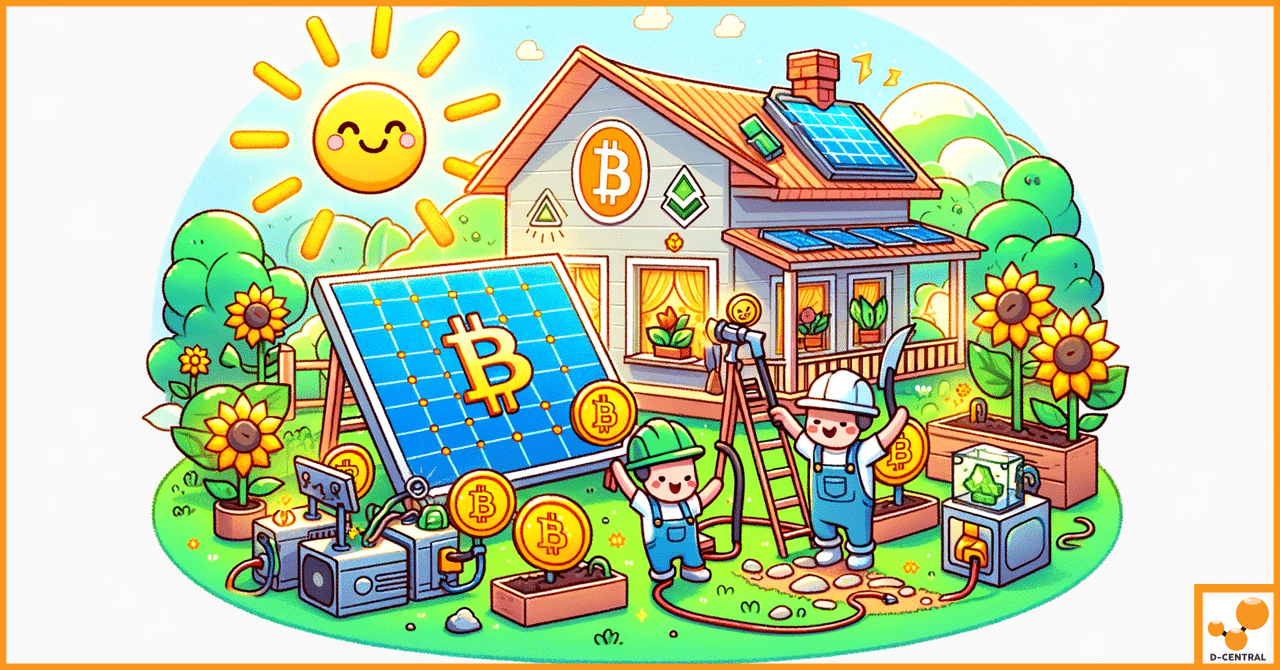
The mainstream narrative around Bitcoin mining and energy has it exactly backwards. Critics frame miners as energy parasites — draining grids, burning fossil fuels, and contributing to ecological ruin. The reality, especially for home miners running solar, is the polar opposite. Solar-powered Bitcoin mining does not just reduce your electricity bill. It transforms your home into a sovereign node of financial infrastructure, powered by the most abundant energy source in the solar system, answering to no utility company and no central authority.
If you already have solar panels on your roof, you are sitting on untapped potential. Every kilowatt-hour your panels generate beyond your household consumption is energy that could be hashing SHA-256, securing the most robust monetary network ever built. And if you are considering solar specifically to power a mining operation, the economics in 2026 make a compelling case — especially when you factor in the dual-purpose benefits of Bitcoin mining hardware that also heats your home.
This is the intersection of energy sovereignty and financial sovereignty. Welcome to the world of solar-powered home Bitcoin mining.
Why Bitcoin Mining and Solar Energy Are a Natural Fit
Bitcoin mining is, at its core, the conversion of energy into sound money. The Proof of Work consensus mechanism is deliberately energy-intensive by design — that energy expenditure is what gives Bitcoin its thermodynamic security guarantees. Every hash computed represents real-world energy committed to protecting the network’s immutability.
Solar energy, meanwhile, has a fundamental characteristic that makes it ideal for mining: intermittency with surplus. Residential solar installations routinely produce more electricity than a household can consume during peak sunlight hours. In most jurisdictions, the options for handling this surplus are limited — sell it back to the grid at wholesale rates (often pennies per kWh), store it in expensive battery systems, or simply waste it.
Bitcoin mining introduces a fourth option: convert that surplus into the hardest money ever created. Unlike selling back to the grid, mining lets you capture the full economic value of your excess energy production. A kilowatt-hour sold to the grid might net you $0.04 to $0.08. That same kilowatt-hour, fed into an efficient ASIC miner, can generate significantly more value in Bitcoin — and the Bitcoin you earn has no counterparty risk, no inflation schedule beyond the known supply cap, and appreciates in purchasing power over time.
This is not theoretical. Home miners across North America are already running this exact playbook.
The 2026 Mining Landscape: What You Need to Know
Before diving into the solar-mining setup, let us ground this in current reality. The Bitcoin network in 2026 operates at a scale that would have been unimaginable a decade ago:
| Parameter | 2026 Value |
|---|---|
| Block Reward | 3.125 BTC |
| Network Hashrate | ~800+ EH/s |
| Mining Difficulty | ~110T+ |
| Block Time (target) | 10 minutes |
| Halving Epoch | 4th (April 2024 halving) |
With network hashrate north of 800 EH/s and difficulty above 110 trillion, solo mining with a single home ASIC is a lottery — but it is a lottery with a mathematically fair payout, no house edge, and a prize denominated in the scarcest asset on Earth. Pool mining, on the other hand, delivers predictable, steady sats proportional to your contributed hashrate.
For solar-powered home miners, the key insight is this: your electricity cost approaches zero during daylight hours. When your marginal energy cost is near zero, even modest hashrate becomes profitable. You are not competing with industrial farms on hashrate — you are competing on cost basis. And solar gives you a cost basis that no grid-connected industrial operation can match.
Hardware Selection for Solar-Powered Mining
Choosing the right mining hardware for a solar installation requires thinking about power efficiency above all else. You want maximum hashes per watt, because every watt matters when your power budget is defined by your panel array.
ASIC Miners: The Only Serious Option
Let us be direct: GPU mining for Bitcoin is dead. It has been dead for years. Application-Specific Integrated Circuits (ASICs) are the only hardware that can meaningfully hash SHA-256. Modern ASICs deliver terahashes per second at efficiencies that GPUs cannot approach by orders of magnitude.
For solar-powered home mining, there are two broad categories to consider:
Open-Source Solo Miners (Low Power, Perfect for Solar)
The Bitaxe family of open-source solo miners represents the ideal entry point for solar-powered mining. These devices consume between 12 and 25 watts depending on the model — that is less than a light bulb. A single 400W solar panel produces more than enough power to run multiple Bitaxe units simultaneously.
| Device | Hashrate | Power Draw | Power Input |
|---|---|---|---|
| Bitaxe Supra / Ultra | ~500-600 GH/s | ~12-15W | 5V barrel jack (5.5×2.1mm) |
| Bitaxe Gamma | ~1.2 TH/s | ~15-20W | 5V barrel jack (5.5×2.1mm) |
| Bitaxe Hex | ~3+ TH/s | ~60-90W | 12V DC XT30 |
| NerdAxe | ~500 GH/s | ~12W | 5V barrel jack (5.5×2.1mm) |
| NerdQAxe++ | ~2+ TH/s | ~50-80W | 12V DC XT30 |
Important note on Bitaxe power: The Bitaxe Supra, Ultra, and Gamma all use a 5V barrel jack (5.5×2.1mm DC connector) and require a 5V/6A power supply. The USB-C port on these devices is for firmware flashing and serial communication only — it is NOT a power input. Plugging in USB-C alone will not power the device.
These open-source miners are purpose-built for solo mining — every hash is a ticket in the block reward lottery. At 3.125 BTC per block, hitting a block with a Bitaxe is life-changing. And when your electricity cost is effectively zero thanks to solar, there is no ongoing expense. You are literally mining Bitcoin for free with sunlight.
D-Central is a pioneer in the Bitaxe ecosystem, having been involved since the very beginning. We created the original Bitaxe Mesh Stand — the first company to manufacture it — and have developed leading accessories including heatsinks for both the standard Bitaxe and the Bitaxe Hex. Browse our full Bitaxe and open-source miner selection to find the right device for your solar setup.
Full-Size ASICs (Higher Power, Bigger Solar Arrays)
For miners with larger solar installations (5kW+ systems with battery storage), full-size ASIC miners open up pool mining with meaningful daily sats accumulation. Current-generation machines like the Antminer S21 series deliver 200+ TH/s at around 3,000-3,500 watts. Running one of these requires a dedicated solar array, but the hashrate output is orders of magnitude higher than open-source miners.
The trade-off is clear: full-size ASICs need serious power infrastructure, including proper 240V circuits, ventilation or exhaust for heat and noise, and enough solar capacity plus battery storage to keep them running through cloud cover and nighttime hours. But they also produce something else that open-source miners do not: serious heat output that can be repurposed.
The Dual-Purpose Advantage: Mining and Heating
Here is where solar-powered Bitcoin mining gets genuinely elegant. ASIC miners convert nearly 100% of their electrical input into heat. A 3,000W Antminer produces approximately 10,200 BTU/h of heat — equivalent to a decent space heater. In cold climates like Canada, this is not waste energy. It is home heating.
D-Central’s Bitcoin Space Heater line takes this concept to its logical conclusion. These are full ASIC miners enclosed in purpose-built housings that channel the heat output directly into your living space. During Canadian winters — which, for much of the country, stretch from October to April — your mining hardware replaces your electric space heater. The heating cost effectively becomes zero because the miner is doing double duty: securing the Bitcoin network while keeping your home warm.
Now combine this with solar power. Your solar panels generate electricity. That electricity powers your miner. The miner produces Bitcoin AND heat. You are converting sunlight into sound money and warmth simultaneously, with zero grid dependency, zero carbon emissions, and zero utility bills during daylight hours.
For home miners in northern climates, this is the triple win: energy sovereignty, financial sovereignty, and thermal comfort.
Designing Your Solar Mining System
Setting up a solar-powered mining operation requires matching your solar capacity to your mining hardware’s power requirements. Here is a practical framework.
Step 1: Determine Your Mining Power Budget
Start with the hardware you want to run and work backwards:
- Single Bitaxe: 15W — A single 100W panel with a small battery is more than sufficient
- Multiple Bitaxe / NerdAxe units: 50-100W — A 400W panel handles this comfortably
- Bitaxe Hex + accessories: 100-150W — Two 400W panels or one high-efficiency 500W panel
- Full-size ASIC (e.g., S19 class): 3,000-3,500W — Requires a 5kW+ dedicated solar array with battery storage
Step 2: Size Your Solar Array
Solar panels are rated at peak output under ideal conditions (Standard Test Conditions: 1000 W/m2 irradiance, 25C cell temperature). Real-world production varies by location, season, panel orientation, and shading. As a rule of thumb, a solar panel produces about 4-5 peak sun hours of output per day in most of North America, with significantly more in the southern US and less in northern Canada during winter.
For mining-specific calculations, use D-Central’s Mining Profitability Calculator to model your expected returns based on your hardware and power costs.
Step 3: Battery Storage Decision
This is the critical fork in the road for solar miners:
Option A — Solar-only (no battery): Mine only during daylight hours. Your miner runs when the sun shines and stops when it does not. This is the simplest and cheapest approach. It works excellently for low-power devices like the Bitaxe, which can hash during the day and sit idle at night with no penalty. You avoid the cost and complexity of batteries entirely.
Option B — Solar + battery: Store excess daytime production in a battery system (LiFePO4 recommended for longevity) and mine 24/7. This maximizes your hashrate uptime but adds significant cost ($3,000-$10,000+ for a properly sized battery system). For full-size ASICs, 24/7 operation is almost mandatory to justify the hardware investment, so batteries become essential.
Option C — Solar + grid hybrid: Use solar during the day and grid power at night or during cloudy periods. This is the most common approach for serious home miners. Your daytime mining cost is near zero, and your nighttime cost is whatever your grid rate is. In many Canadian provinces, off-peak grid rates are low enough that nighttime mining remains profitable.
Step 4: Electrical Infrastructure
- For Bitaxe/NerdAxe units: These run on 5V DC via barrel jack (or 12V DC XT30 for the Hex models). You can run them directly from a small solar charge controller and DC-DC converter, bypassing the inverter entirely. This is the most efficient setup possible — no AC conversion losses.
- For full-size ASICs: You need a proper grid-tie or hybrid inverter, 240V outlet, and all the standard electrical infrastructure. This should be installed by a licensed electrician.
Step 5: Thermal Management
Heat management is actually simpler for solar mining than traditional mining, because your peak heat output coincides with peak cooling availability (daytime, when you can open windows or run ventilation). During winter months, the heat is a feature, not a bug — see the Bitcoin Space Heater section above.
During summer, ensure adequate ventilation. For Bitaxe-class devices, a quiet desk fan is sufficient. For full-size ASICs, you will need exhaust ducting to the exterior or a dedicated mining space with ventilation.
Economics of Solar Bitcoin Mining in 2026
Let us run the numbers on two realistic scenarios.
Scenario 1: Bitaxe Solo Miner on Existing Solar
| Item | Details |
|---|---|
| Hardware | Bitaxe Gamma (~1.2 TH/s) |
| Power consumption | ~18W |
| Electricity cost | $0 (solar surplus) |
| Annual electricity cost | $0 |
| Mining mode | Solo (lottery mining) |
| Block reward if hit | 3.125 BTC |
| Ongoing cost | $0 |
With zero electricity cost, the Bitaxe is pure upside. Every hash is a free lottery ticket for a 3.125 BTC block reward. There is no monthly expense eating into a break-even timeline. The hardware cost is your only investment, and the device runs indefinitely on sunlight. This is the purest expression of solar-powered Bitcoin sovereignty.
Scenario 2: Full ASIC on Dedicated Solar Array
| Item | Details |
|---|---|
| Hardware | Antminer S21 class (~200 TH/s) |
| Power consumption | ~3,500W |
| Solar array needed | ~8-10kW (for ~5 peak sun hours/day) |
| Battery storage | ~15-20 kWh LiFePO4 for overnight mining |
| Estimated solar system cost | $15,000-$25,000 (panels + batteries + inverter) |
| Mining mode | Pool mining (steady daily sats) |
| Ongoing electricity cost | $0 (fully off-grid) or minimal (grid hybrid) |
| Winter heat offset | ~10,200 BTU/h (replaces electric heater) |
The full ASIC scenario requires a larger upfront investment, but the economics shift dramatically when you account for three factors: zero marginal electricity cost from solar, heat offset savings during cold months, and the long-term appreciation potential of the Bitcoin earned. If you would have spent $2,000-$3,000 per winter on electric heating anyway, that cost savings accelerates your break-even timeline significantly.
For detailed power cost modeling, use D-Central’s Power Cost Calculator.
Canadian Advantages for Solar Mining
Canada offers unique advantages for solar-powered Bitcoin mining that are often overlooked:
Extended winter heating season: Canadian winters last 5-7 months in most provinces. During this entire period, your ASIC’s heat output directly offsets heating costs. In provinces like Quebec, Ontario, and Alberta, heating costs are a significant household expense. A Bitcoin miner that pays for itself while heating your home is a compelling proposition.
Competitive solar economics: While Canada receives less peak sunlight than, say, Arizona, many provinces offer net metering programs, solar incentives, and clean energy tax credits that improve the economics. Ontario, Alberta, and British Columbia all have active residential solar programs.
Low-cost hydroelectric power for hybrid setups: For miners running a solar/grid hybrid, provinces like Quebec and British Columbia offer some of the cheapest electricity in North America. Your nighttime grid power might cost $0.04-$0.07/kWh — among the lowest rates globally.
Regulatory clarity: Canada has clearer regulatory frameworks for Bitcoin mining than many jurisdictions. Mining income is treated as business income or hobby income depending on scale, and the regulatory environment is relatively stable.
For miners who prefer a fully managed hosting solution, D-Central operates a mining hosting facility in Quebec, taking advantage of the province’s abundant hydroelectric power.
Maintaining Your Solar Mining Operation
A solar mining setup requires minimal but consistent maintenance:
Solar Panel Maintenance
- Clean panels 2-4 times per year (more frequently in dusty or pollen-heavy areas)
- Inspect for physical damage after severe weather
- Monitor production output through your inverter’s app or monitoring system
- Clear snow accumulation in winter (panels at steeper angles self-clear better)
Mining Hardware Maintenance
- Clean dust from heatsinks and fans every 3-6 months
- Monitor hashrate for signs of degradation
- Keep firmware updated (connect via USB-C for Bitaxe firmware updates)
- Check all power connections periodically
- For full-size ASICs, replace thermal paste every 1-2 years for optimal efficiency
If your ASIC hardware needs professional attention, D-Central’s ASIC Repair service handles repairs for all major manufacturers and models, with 38+ model-specific repair guides and diagnostic expertise built since 2016.
Battery System Maintenance
- Monitor state of charge and cycle counts
- Keep batteries in temperature-controlled environments (LiFePO4 tolerates cold better than lithium-ion)
- Check connections and terminals annually
- Most modern battery management systems (BMS) handle cell balancing automatically
Common Mistakes to Avoid
Oversizing your miner for your solar capacity: Running a 3,500W ASIC on a 2kW solar array means you are pulling from the grid most of the time. Match your hardware to your available solar power, or plan your solar installation around your mining goals.
Ignoring battery degradation costs: Batteries do not last forever. LiFePO4 batteries typically deliver 3,000-5,000 cycles before significant degradation. Factor replacement costs into your long-term ROI calculations.
Neglecting ventilation in summer: Solar production peaks in summer, but so does ambient temperature. Without proper ventilation, your mining space can overheat, throttling your ASIC’s performance and reducing its lifespan.
Using USB-C to power a Bitaxe: This is a common mistake. Bitaxe Supra, Ultra, and Gamma models require a 5V barrel jack (5.5×2.1mm DC) connection with a proper 5V/6A power supply. The USB-C port is for firmware flashing only.
Not securing your mining rewards: Self-custody your Bitcoin. Use a hardware wallet. The entire point of home mining is sovereignty — do not undermine it by leaving your sats on an exchange or a pool’s custodial wallet.
Getting Started: Your Path to Solar Mining
Whether you are a solar homeowner looking to monetize excess production or a Bitcoin enthusiast planning a ground-up solar mining installation, the path forward is straightforward:
- Audit your solar capacity: Determine your average daily surplus production. If you do not have solar yet, get quotes from local installers and factor mining into your system sizing.
- Choose your hardware: For beginners, a Bitaxe solo miner is the perfect starting point — low power, zero noise, and the thrill of solo block hunting. For more serious operations, explore full ASIC options in our shop.
- Set up your power delivery: For Bitaxe, this can be as simple as a small solar panel, charge controller, and DC-DC buck converter. For full ASICs, work with a licensed electrician to integrate with your solar system.
- Configure and hash: Set up your miner’s WiFi, choose your mining pool (or go solo), and start hashing. For guidance, D-Central offers mining training and consulting services to help you optimize your operation.
- Stack sats and stay sovereign: Withdraw your mining rewards to a self-custody wallet. Every hash counts.
Frequently Asked Questions
Can I really mine Bitcoin with just solar panels?
Yes. Bitcoin mining hardware requires electricity, and solar panels produce electricity. Whether you are running a 15W Bitaxe or a 3,500W Antminer, if your solar array produces enough power, you can mine entirely on sunlight. Low-power open-source miners like the Bitaxe are especially well-suited because a single residential solar panel produces far more power than they consume.
Do I need batteries to mine Bitcoin with solar?
Not necessarily. For low-power devices like the Bitaxe, you can mine during daylight hours only and let the device idle at night. There is no penalty for intermittent mining — you simply hash when the sun shines. For full-size ASICs where 24/7 uptime matters for pool mining returns, battery storage or a grid-hybrid setup is recommended.
How many solar panels do I need to run a Bitcoin miner?
It depends entirely on your hardware. A Bitaxe needs about 15-20W, so a single 100W panel is overkill. A full Antminer S21 at 3,500W needs roughly 8-10kW of solar capacity (accounting for real-world conditions and battery charging). Start with your hardware’s wattage, multiply by your desired daily runtime hours, and divide by your location’s average peak sun hours to get your panel requirements.
Is solar Bitcoin mining profitable in 2026?
When your electricity cost is zero (from solar surplus), profitability depends primarily on hardware cost, Bitcoin’s value, and network difficulty. With the block reward at 3.125 BTC and network hashrate above 800 EH/s, solo mining with small devices is a low-probability, high-reward lottery. Pool mining with larger ASICs produces steady returns. The key advantage of solar mining is that your operating cost approaches zero, making your break-even timeline much shorter than grid-powered operations.
Can Bitcoin miners really heat my home?
Absolutely. ASIC miners convert nearly 100% of electrical input to heat. A 3,000W miner produces approximately 10,200 BTU/h — comparable to a standard electric space heater. D-Central’s Bitcoin Space Heater line is specifically designed to channel this heat into your living space. In cold climates, your miner replaces your heater, and the Bitcoin it earns is a bonus on top of the heating you would have paid for anyway.
What is the best Bitcoin miner for solar power?
For most solar homeowners, the Bitaxe family is ideal — ultra-low power consumption (12-20W), silent operation, solo mining capability, and zero ongoing costs when powered by solar. The Bitaxe Gamma offers the best hashrate per watt in the Bitaxe lineup. For miners with large solar arrays and battery storage, current-generation Antminer S21 series machines offer the best efficiency in the full-size ASIC category.
Does the Bitaxe use USB-C for power?
No. The Bitaxe Supra, Ultra, and Gamma all use a 5V barrel jack (5.5×2.1mm DC connector) and require a dedicated 5V/6A power supply. The USB-C port is for firmware flashing and serial communication only. The Bitaxe Hex and Bitaxe GT use 12V DC XT30 connectors. Always use the correct power input for your model.
Is it legal to mine Bitcoin with solar power in Canada?
Yes. Bitcoin mining is legal in Canada, and powering your mining operation with solar energy is perfectly legal. Mining income may be subject to taxation as business or hobby income depending on the scale and nature of your operation. Consult a Canadian tax professional familiar with cryptocurrency for specifics. Solar installations may require local permits depending on your municipality.