Quick answer
Older-generation Antminers — the S19, S17, T19, and T17 — aren’t obsolete; as large operations retire them, they’ve become accessible machines for home miners, including as Bitcoin space heaters. D-Central has worked with every Antminer generation since 2016. This guide breaks down the real-world differences so you can choose based on power, heat, and budget rather than peak-efficiency numbers.
The Antminer Legacy: Why the S19, S17, T19, and T17 Still Matter in 2026
In the current Bitcoin mining landscape — with network hashrate surpassing 800 EH/s and difficulty climbing past 110 trillion — the conversation has shifted dramatically. The newest generation of ASIC miners like the S21 and T21 series dominate large-scale facilities. But here is the thing the industry press conveniently ignores: older-generation Antminers are not obsolete. They have simply found their true purpose.
The Antminer S19, S17, T19, and T17 represent an entire era of Bitmain engineering. Millions of these units were deployed globally. Now, as institutional operations retire them in favor of newer silicon, they have become some of the most accessible and versatile machines available to home miners, tinkerers, and anyone who believes that decentralizing Bitcoin’s hashrate is more important than chasing peak efficiency numbers.
At D-Central Technologies, we have been working with every generation of Antminer since our founding in 2016. We have repaired thousands of these machines, converted them into Bitcoin Space Heaters, and helped home miners across Canada and beyond put them to work. This guide breaks down the real-world differences between these four models so you can make a decision based on your actual situation — not marketing hype.
Quick Comparison: S19 vs S17 vs T19 vs T17 at a Glance
Before diving deep, here is the essential comparison. These are the stock specifications from Bitmain — real-world performance varies based on firmware, ambient temperature, and power supply quality.
| Specification | S19 Pro | S19 | T19 | S17 Pro | S17 | T17 |
|---|---|---|---|---|---|---|
| Hash Rate | 110 TH/s | 95 TH/s | 84 TH/s | 53-62 TH/s | 56-60 TH/s | 40 TH/s |
| Efficiency (J/TH) | 29.5 | 34.5 | 37.5 | 36-45 | ~45 | ~55 |
| Power Draw | 3,250 W | 3,250 W | 3,150 W | 1,900-2,790 W | 2,520-2,790 W | 2,200 W |
| ASIC Chip | BM1398 (7nm) | BM1398 (7nm) | BM1398 (7nm) | BM1397 (7nm) | BM1397 (7nm) | BM1397 (7nm) |
| Release Year | 2020 | 2020 | 2020 | 2019 | 2019 | 2019 |
| Noise Level | 75 dB | 75 dB | 75 dB | 72 dB | 72 dB | 72 dB |
| Cooling | 4 fans | 4 fans | 4 fans | 4 fans | 4 fans | 4 fans |
| Weight | 13.2 kg | 13.2 kg | 13.0 kg | 9.5 kg | 9.5 kg | 9.5 kg |
| Best For (2026) | Home mining, heating | Home mining, heating | Budget home mining | Space heaters, tinkering | Space heaters, tinkering | Entry-level, heating |
Antminer S19 Series: The Best All-Rounder for Home Mining
The S19 and S19 Pro were Bitmain’s flagship machines when they launched in 2020, built around the BM1398 7nm chip. The S19 Pro pushed boundaries with 110 TH/s at 29.5 J/TH — figures that were remarkable at the time and remain respectable today.
Why the S19 Series Still Works in 2026
Here is the math that most “experts” overlook: in 2026, with the block reward at 3.125 BTC post-halving, mining profitability is tighter than ever. But profitability calculations change completely when you factor in heat recovery. An S19 Pro pulling 3,250 watts is also producing roughly 11,000 BTU/hour of heat. In a Canadian winter — or anywhere with heating costs — that heat is not waste. It is a subsidy.
If you are paying $0.07/kWh for electricity (common in Quebec) and you would otherwise be running a 3,000-watt electric heater, the effective cost of mining with an S19 Pro drops dramatically. You were going to spend that electricity on heat anyway. Now you get heat AND sats.
S19 Pro vs S19: Which One?
- S19 Pro (110 TH/s, 29.5 J/TH) — Better efficiency means more hash per watt. If you can find one in good condition, this is the superior choice. The 15 TH/s advantage over the standard S19 translates to roughly 16% more mining output for essentially the same power draw.
- S19 (95 TH/s, 34.5 J/TH) — Still a solid machine. Slightly less efficient but often available at a lower price on the secondary market. The cost savings on acquisition may offset the efficiency difference, depending on your electricity rate.
Both models share the same physical form factor, use the same APW12 power supply, and are built with the same cooling system. From a repair and maintenance perspective, they are nearly identical — which matters when you are running hardware long-term. Our ASIC repair team has serviced thousands of S19 units and keeps a full stock of replacement hashboards, control boards, and fans.
Antminer S17 Series: The Space Heater Champion
The S17 and S17 Pro arrived in 2019, using the BM1397 7nm chip in an earlier board design. The S17 Pro offered 53-62 TH/s depending on operating mode (Normal, Low Power, Turbo), while the standard S17 delivered 56-60 TH/s.
The S17’s Reputation Problem — And Why It Does Not Matter Anymore
Let us address the elephant in the room: the S17 series had a notorious reputation for hashboard failures. Early batches suffered from thermal paste issues and solder joint problems that caused premature chip death. Bitmain eventually improved manufacturing, but the damage to the S17’s reputation was done.
In 2026, this actually creates an opportunity. S17 units that have survived this long — or that have been properly repaired and refurbished — are proven machines. The weak units died years ago. What remains on the market tends to be either units from improved batches or professionally refurbished machines with known-good hashboards.
D-Central has deep experience with S17 repairs. We know exactly which failure modes to look for, which hashboard revisions are reliable, and how to bring these machines back to full health. A refurbished S17 from a reputable repair shop is often a better bet than an untested unit from an unknown seller.
Why the S17 Excels as a Space Heater
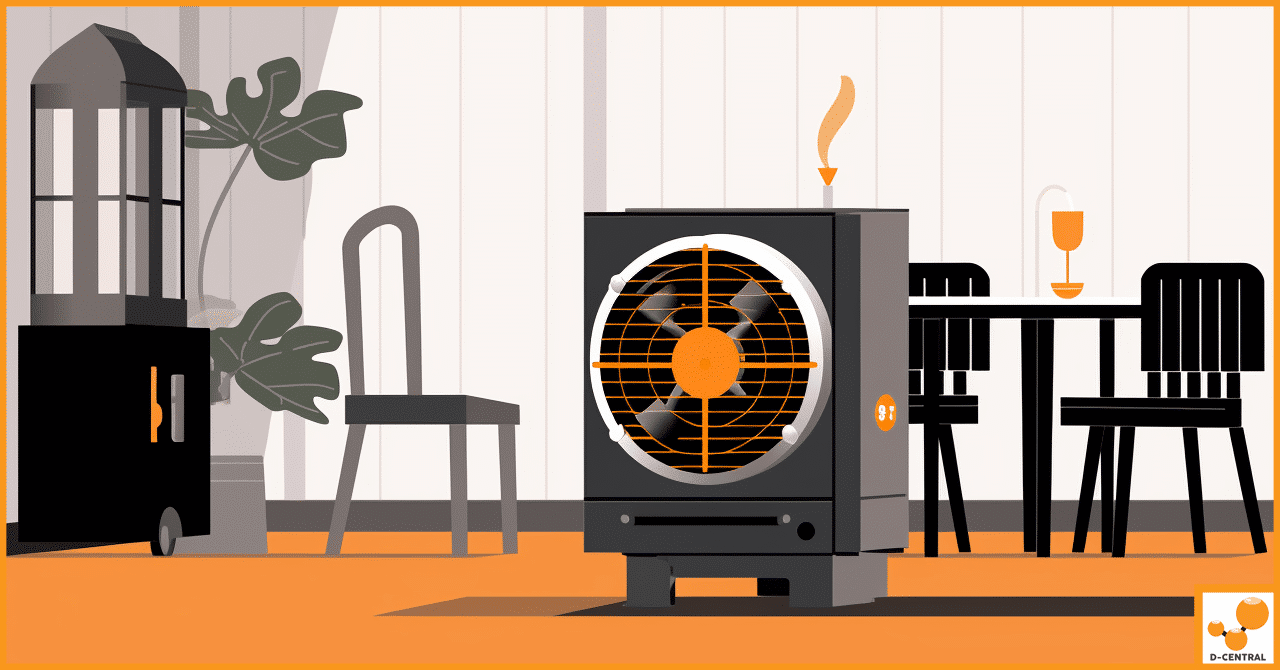
The S17’s lower power draw (1,900-2,790 W depending on mode) makes it particularly interesting for Bitcoin Space Heater conversions. At Low Power mode, an S17 Pro pulls around 1,900 W — that is roughly 6,500 BTU/hour of heat, similar to a medium-sized portable electric heater. The key difference: this heater also mines Bitcoin.
The S17’s multi-mode operation is a genuine advantage here. You can run it in Low Power mode during mild weather and switch to Turbo when you need maximum heat output. This flexibility is something the S19 series lacks in its stock firmware configuration.
Antminer T19: The Underrated Middle Ground
The T19 is the model that gets overlooked in most comparisons, and that is a mistake. Released in mid-2020, it delivers 84 TH/s at 37.5 J/TH — a meaningful step above the S17 series in both hash rate and efficiency, while coming in at a lower price point than the S19.
What the T19 Gets Right
The T19 shares the S19’s physical chassis and cooling design but uses a slightly different hashboard configuration. This gives it several practical advantages:
- Reliability — The T19 avoided most of the early manufacturing issues that plagued the S17. It uses a more mature board design that has proven durable over years of continuous operation.
- Repairability — Parts availability is excellent. T19 hashboards, control boards, and fans are widely available and relatively affordable on the secondary market.
- Power efficiency sweet spot — At 37.5 J/TH, the T19 is only marginally less efficient than the S19 (34.5 J/TH) but significantly better than the S17 (~45 J/TH) and T17 (~55 J/TH).
- Price-to-performance ratio — On the secondary market in 2026, T19 units often represent the best value proposition in this generation of hardware.
The T19 for Budget-Conscious Home Miners
If you are setting up your first home mining operation and want meaningful hashrate without paying top dollar, the T19 deserves serious consideration. At 84 TH/s, it contributes real work to the Bitcoin network. At 3,150 W, it produces roughly 10,700 BTU/hour of heat — enough to warm a large room or small workshop during winter months.
For Canadian home miners taking advantage of Quebec’s low electricity rates or anyone in a cold climate looking to offset heating costs, the T19 hits a practical sweet spot between cost, output, and thermal utility.
Antminer T17: The Entry Point
The T17, launched alongside the S17 in 2019, is the most modest machine in this comparison. At 40 TH/s and ~55 J/TH, it is neither the most powerful nor the most efficient. But it has a role to play, and understanding that role is important.
Where the T17 Makes Sense
- Learning and experimentation — If you have never operated an ASIC miner before, a T17 is a low-risk way to learn. You will understand power requirements, heat management, noise mitigation, pool configuration, and all the operational fundamentals without risking a more expensive machine.
- Low-power heating applications — At 2,200 W (roughly 7,500 BTU/hour), the T17 provides moderate heat output. For a small office, garage workshop, or cabin, it can serve as a supplemental heater that also earns sats.
- Parts donor — The T17 shares the BM1397 chip with the S17 and S17 Pro. A non-functional T17 can be a source of ASIC chips, fans, and other components for repairing its more powerful S17-series siblings.
- Custom firmware projects — The T17 is a popular platform for experimenting with third-party firmware like Braiins OS+, which can improve efficiency and add features like autotuning.
The Honest Assessment
At 55 J/TH, the T17 is not going to be profitable in most electricity cost scenarios purely from a mining-revenue perspective. But if you value the heat output, the educational experience, or the principle of contributing hashrate to decentralize the Bitcoin network, the T17 remains a functional machine at a very accessible price point.
The Home Mining Equation: It Is Not Just About Hashrate
Most comparison articles rank these miners purely by hashrate and efficiency, declare the highest-performing unit the “winner,” and call it a day. That analysis is incomplete and, frankly, lazy. The real question for home miners in 2026 is more nuanced.
Factor 1: Electricity Cost
Your electricity rate is the single most important variable. At $0.05/kWh, even the T17 can hold its own. At $0.15/kWh, even the S19 Pro becomes challenging without heat recovery. Know your rate. Know your tiered pricing structure. Factor in time-of-use rates if applicable.
Factor 2: Heat Recovery Value
Every watt your miner consumes becomes heat. In cold climates — and Canada has plenty of those — this heat displaces your existing heating costs. The formula is simple: if you would have spent $X on electric heating anyway, your effective mining cost is reduced by that amount.
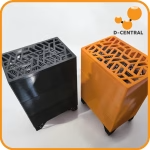
D-Central’s Bitcoin Space Heater line is built around exactly this principle. We take proven Antminer hardware and integrate it into purpose-built heating enclosures with noise reduction and duct adapters for directing warm air where you need it.
Factor 3: Noise Management
Stock Antminers are loud — 72-75 dB is comparable to a vacuum cleaner running continuously. For home deployment, you need a plan:
- Dedicated room or space — Garage, basement, utility room, or outbuilding
- Shroud and duct system — Channel hot air outside in summer and into living spaces in winter
- Fan replacement — Aftermarket fans (like Noctua replacements) can dramatically reduce noise at the cost of some cooling capacity
- Purpose-built enclosures — Space heater conversions address both noise and heat management in one package
Factor 4: Electrical Infrastructure
Every model in this comparison requires a 220-240V circuit. You cannot plug an Antminer into a standard North American 120V outlet. You will need:
- A dedicated 240V circuit (20A minimum for the T17/S17, 30A for the S19/T19)
- An appropriate power supply unit (Bitmain APW9+ for S17/T17, APW12 for S19/T19)
- Proper grounding and circuit protection
If you are not comfortable with electrical work, hire a licensed electrician. This is not optional — it is a safety requirement.
Factor 5: Network Contribution
Here is the factor that never appears in corporate mining analyses: running your own miner at home directly contributes to Bitcoin’s decentralization. Every terahash that runs outside of a mega-facility makes the network more resilient, more censorship-resistant, and more aligned with Bitcoin’s original vision.
Whether you are running 40 TH/s on a T17 or 110 TH/s on an S19 Pro, you are participating in the most important computer network in human history. That has value beyond what any profitability calculator can measure.
Which Model Should You Choose? A Decision Framework
Rather than declaring a single “best” model, here is a framework based on your actual situation:
| Your Situation | Recommended Model | Why |
|---|---|---|
| Maximum hash per watt, budget flexible | S19 Pro | Best efficiency in this generation (29.5 J/TH), highest output |
| Best value on secondary market | T19 | Strong performance (84 TH/s), excellent reliability, lower acquisition cost |
| Space heater conversion, flexible power modes | S17 Pro | Multi-mode operation (Low/Normal/Turbo), adjustable heat output |
| First ASIC miner, learning the ropes | T17 | Lowest cost, lower power requirement, forgiving learning platform |
| Home heating + mining, cold climate | S19 or T19 | High heat output (10,700-11,000 BTU/h), good efficiency for year-round mining |
| Small space, moderate heating needs | T17 or S17 | Lower power draw = less heat, more manageable in small rooms |
| Custom firmware experimentation | S17 Pro or T17 | Well-supported by Braiins OS+ and other third-party firmware |
Buying Used Antminers: What to Watch For
In 2026, most S17, T17, S19, and T19 units on the market are used. This is not inherently a problem — ASIC miners are industrial machines designed for continuous operation — but you need to buy smart.
Red Flags
- Suspiciously low prices — If a deal seems too good, it probably is. Scams are rampant in the used miner market.
- No hashboard testing results — A reputable seller will test each hashboard and provide hash rate verification before shipping.
- “As-is” sales with no return policy — You need at least a basic DOA (Dead on Arrival) protection window.
- Missing serial numbers or tampered stickers — Can indicate stolen or previously written-off equipment.
- S17 units with no repair history — Given the S17’s known hashboard issues, ask specifically about the unit’s service history and which hashboard revision it uses.
Green Flags
- Seller provides hashrate screenshots — Shows the unit was tested and performing within spec.
- Professional refurbishment — Units that have been cleaned, re-pasted, tested, and certified by a qualified repair shop.
- Clear return/warranty policy — Even a 7-day DOA policy shows the seller stands behind their product.
- Known provenance — Units from decommissioned corporate farms, especially from known hosting providers, tend to have been maintained properly.
D-Central stocks tested and refurbished Antminer units in our online shop. Every machine we sell is inspected, cleaned, and verified by our repair technicians before shipping.
Repair and Maintenance: Keeping Older Hardware Running
One of the biggest advantages of the S17/T17/S19/T19 generation is the maturity of the repair ecosystem. These machines have been in the field long enough that every common failure mode is well-documented, parts are widely available, and experienced repair technicians know exactly what to look for.
Common Issues by Model
| Model | Common Issues | Typical Fix |
|---|---|---|
| S19 / S19 Pro | Fan failures, control board issues, hashboard chip degradation after years of operation | Fan replacement, control board swap, chip-level hashboard repair |
| T19 | Similar to S19 but less frequent. Temperature sensor faults occasionally reported | Sensor replacement, standard maintenance |
| S17 / S17 Pro | Hashboard failures (thermal paste degradation, solder cracks), PSU compatibility issues | Hashboard re-paste and reflow, BM1397 chip replacement, PSU verification |
| T17 | Fan bearing wear, occasional EEPROM corruption, thermal paste drying | Fan replacement, firmware reflash, re-paste service |
D-Central’s ASIC repair service handles all of these issues and more. We maintain a full inventory of replacement parts for every model in this comparison, and our technicians have years of hands-on experience with Bitmain hardware. Whether it is a simple fan swap or a complex chip-level hashboard repair, we can diagnose and fix it.
Preventive Maintenance Tips
- Clean your miner every 3-6 months — Dust accumulation is the number one killer of ASIC miners. Use compressed air to clear heatsinks and fan blades.
- Monitor temperatures continuously — Set up alerts in your pool dashboard or monitoring software. Chips running consistently above 85 C are degrading faster than necessary.
- Check fan RPMs regularly — A fan running below its rated speed is often the first sign of bearing failure. Replace proactively rather than waiting for complete failure.
- Use a quality power supply — Cheap or undersized PSUs cause voltage fluctuations that stress hashboard components. Stick with Bitmain’s recommended APW units or verified equivalents.
- Keep firmware updated — Bitmain firmware updates and third-party options like Braiins OS+ can improve efficiency and add protective features like temperature-based throttling.
Beyond Stock: Custom Firmware and Modifications
One of the advantages of running older-generation hardware is the robust third-party firmware ecosystem that has developed around it.
Braiins OS+
Available for the S17 and S19 series, Braiins OS+ offers autotuning that can improve efficiency by 10-20% compared to stock firmware. It also provides better monitoring, temperature management, and the ability to mine on Braiins Pool (formerly Slush Pool) with reduced fees. For home miners squeezing every bit of value from older hardware, this is often worth the switch.
VNish and Other Options
VNish firmware supports several models in this comparison and offers similar autotuning and monitoring features. As with any third-party firmware, do your research, use official sources, and understand that modifying firmware may void manufacturer warranties (which, on 4-6 year old hardware, are long expired anyway).
Physical Modifications
The home mining community has developed countless physical modifications for these machines:
- Fan duct adapters — Connect miner exhaust to standard HVAC ductwork for heat distribution
- Noise reduction enclosures — Sound-dampened boxes that reduce noise by 20-30 dB while maintaining airflow
- Immersion cooling — Submerging hashboards in dielectric fluid eliminates fans entirely and can improve chip longevity
- Shroud systems — D-Central’s Universal ASIC Shroud line allows you to direct hot air exactly where you want it
The Bigger Picture: Why Home Mining Matters
Let us zoom out from specifications and talk about why this comparison matters beyond personal profitability.
Bitcoin’s security model depends on hashrate being distributed across as many independent operators as possible. Every S19 running in someone’s basement, every T17 heating a garage workshop, every S17 Space Heater warming a Canadian living room — these are all nodes of decentralized security. They make the network harder to attack, harder to censor, and more aligned with Bitcoin’s founding principles.
The machines in this comparison are no longer the cutting edge. They will not win any efficiency awards in 2026. But they are available, affordable, well-understood, and fully capable of contributing meaningful hashrate to the network. That matters.
At D-Central, we have been saying this since 2016: the mission is the decentralization of every layer of Bitcoin mining. That does not mean everyone needs the newest hardware. It means everyone who wants to participate should be able to — and these four Antminer models make that possible.
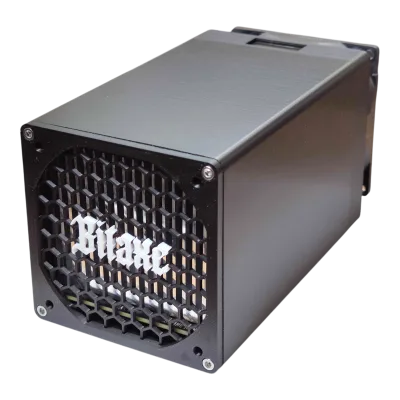
If you want to start even smaller before committing to a full ASIC, check out our Bitaxe Hub — open-source solo miners that plug into a standard 5V barrel jack power supply (5.5×2.1mm DC, not USB-C) and let you try your luck at solo mining a full block. D-Central is a pioneer in the Bitaxe ecosystem and stocks all variants.
Whether you choose an S19 Pro for maximum output, a T17 to dip your toes in, or something in between, you are joining a global movement of home miners who believe that Bitcoin’s hashrate belongs in the hands of the people who use it.
Need help choosing, repairing, or setting up your miner? Talk to our mining consultants, explore our training resources, or browse our full selection at d-central.tech/shop. We are Bitcoin Mining Hackers — and we are here to help you mine from home.
Frequently Asked Questions
Are the Antminer S19, S17, T19, and T17 still profitable in 2026?
Profitability depends primarily on your electricity cost. At rates below $0.07/kWh, the S19 Pro and S19 can still generate positive returns. For all four models, profitability improves dramatically when you factor in heat recovery — using the miner’s heat output to offset your existing heating costs. In cold climates like Canada, this dual-purpose approach can make even the less efficient T17 economically viable during heating season.
Which Antminer model is best for a Bitcoin Space Heater?
The S17 Pro is often the best choice for space heater conversions due to its multi-mode operation (Low Power at ~1,900 W, Normal, and Turbo at ~2,790 W), which lets you adjust heat output based on the season. The S19 and T19 produce more heat (3,150-3,250 W) but lack adjustable modes in stock firmware. The T17 works well for smaller spaces that need moderate heat. D-Central offers pre-built Bitcoin Space Heater editions for several of these models.
How loud are these Antminer models, and can I run one at home?
Stock noise levels range from 72-75 dB — roughly equivalent to a running vacuum cleaner. You cannot run a stock Antminer in a living space without noise mitigation. Options include placing the miner in a garage, basement, or outbuilding; using a sound-dampened enclosure; replacing stock fans with quieter aftermarket alternatives; or purchasing a purpose-built Space Heater conversion that includes noise reduction.
What power supply do I need for each model?
The S19 and S19 Pro use the Bitmain APW12 power supply unit. The T19 also uses the APW12. The S17, S17 Pro, and T17 use the APW9+ or compatible PSU. All models require a 220-240V circuit — they cannot run on a standard North American 120V outlet. You will need a dedicated circuit: 20A for the S17/T17, 30A for the S19/T19. A licensed electrician should install the circuit if you do not already have one available.
Is the S17 series reliable, given its reputation for hashboard failures?
The S17’s early batches did suffer from manufacturing defects, primarily related to thermal paste application and solder joint quality. However, units still operating in 2026 have either survived the weak-point period or been professionally repaired. Later production batches improved significantly. If buying a used S17, prioritize units from reputable sellers who provide hashboard testing results, or purchase professionally refurbished units from a qualified repair shop like D-Central.
Can I use custom firmware on these miners?
Yes. Braiins OS+ supports the S17 and S19 series and can improve efficiency by 10-20% through autotuning. VNish firmware is another option with similar features. Third-party firmware is particularly valuable on older hardware because it can extract more performance per watt. Note that installing third-party firmware voids any remaining manufacturer warranty, though on hardware this old, warranties have long since expired.
Where can I get these Antminers repaired in Canada?
D-Central Technologies, based in Montreal, Quebec, has been repairing ASIC miners since 2016. We service all four models in this comparison, maintaining a full inventory of replacement hashboards, control boards, fans, and ASIC chips. Our technicians perform chip-level diagnostics and repair, not just board swaps. Visit our ASIC Repair page at d-central.tech/asic-repair for details on turnaround times and service options.
Should I buy an older Antminer or a Bitaxe for home mining?
These serve different purposes. An Antminer (S19, S17, T19, T17) provides serious hashrate (40-110 TH/s) and significant heat output, making it suitable for pool mining and space heating. A Bitaxe is an open-source solo miner producing far less hashrate but consuming minimal power through a 5V barrel jack (5.5×2.1mm DC). The Bitaxe is ideal for solo mining (lottery-style, aiming for a full 3.125 BTC block reward) and learning about mining with minimal investment. Many home miners run both: an Antminer for consistent pool rewards and heat, plus a Bitaxe for the solo mining dream.