Bitaxe vs FutureBit Apollo: Two Visions for Home Bitcoin Mining
For a complete overview of all Bitaxe models and resources, visit our Bitaxe Hub.
Two devices. Two design philosophies. One shared conviction: Bitcoin mining does not belong exclusively in data centers. The Bitaxe and the FutureBit Apollo are both compact, home-friendly Bitcoin miners built for individual bitcoiners who want to participate in securing the network from their desk, shelf, or living room. But they approach the problem from fundamentally different angles — and those differences matter when you are deciding where to put your sats.
The Bitaxe is the world’s first fully open-source Bitcoin ASIC miner. Every schematic, every PCB trace, every line of firmware is published. It is a community-driven project with over a dozen hardware variants, an ever-expanding accessory ecosystem, and a philosophy rooted in radical transparency. The Bitaxe runs AxeOS, connects over WiFi, and draws less power than a light bulb. D-Central Technologies is a pioneer in the Bitaxe ecosystem — we created the original Bitaxe Mesh Stand, developed custom heatsinks for Bitaxe and Bitaxe Hex, and stock every variant from the entry-level Supra to the multi-chip beasts.
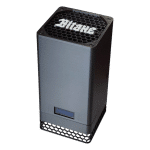
The FutureBit Apollo is a compact all-in-one Bitcoin system made in the USA by FutureBit LLC. It combines a Bitcoin ASIC miner with a full Bitcoin node in a single aluminum enclosure. The original Apollo BTC runs 44 BM1397 ASIC cores at up to 3 TH/s, while the newer Apollo II steps up to 5nm silicon pushing 6-10 TH/s. It ships with a custom Linux-based operating system (Apollo OS) and includes onboard storage for running a complete Bitcoin full node.
Both devices support decentralization. Both put real SHA-256 hashrate in your hands. But their approach to openness, expandability, noise, power, and ecosystem depth could not be more different. This guide breaks it all down so you can make an informed decision.
Let’s get into it.
What Is the Bitaxe?
The Bitaxe is an open-source ASIC Bitcoin miner created by Skot and the open-source hardware community. It takes the same SHA-256 chips found inside industrial Antminer machines — the BM1366, BM1368, and BM1370 — and mounts them on a tiny, WiFi-connected board that anyone can run from a standard wall outlet. No 240V circuits. No industrial cooling. No noise complaints. Just plug it in, open a browser, enter your Bitcoin address, and start hashing.
The Bitaxe project is fully open-source at every layer. The hardware schematics and PCB layouts are published on GitHub. The firmware — AxeOS — is open-source and community-developed. Anyone can audit the code, build their own boards, modify the design, or manufacture units. This is not “open-source in spirit” — it is open-source in practice, with active GitHub repositories, community pull requests, and transparent development.
What makes the Bitaxe ecosystem remarkable is its breadth of variants. The community has produced over a dozen models spanning different chips, form factors, and performance tiers:
- Bitaxe Ultra — 1x BM1366, ~500 GH/s, ~12W
- Bitaxe Supra — 1x BM1368, ~500 GH/s, ~12W
- Bitaxe Gamma — 1x BM1370, ~1.2 TH/s, ~18W
- Bitaxe GT (Gamma Turbo) — 2x BM1370, ~2.0-2.15 TH/s, ~35-43W
- Bitaxe Hex — 6x BM1366, ~3.0-3.3 TH/s, ~60-90W
- Bitaxe Supra Hex — 6x BM1368, ~4.2 TH/s, ~90W
Every single-chip Bitaxe runs on a 5V power supply — the same kind you might already own from an old router. Multi-chip models step up to 12V with XT30 connectors. All models connect via 2.4 GHz WiFi, and all are configured through AxeOS’s clean web-based dashboard. Firmware updates happen over-the-air. Setup takes minutes, not hours.
The Bitaxe is designed for solo mining by default. You point it at a solo mining pool like Solo CKPool, and every hash is your lottery ticket for the full 3.125 BTC block reward. No pool fees taking a cut. No KYC. Just your miner, your address, and the SHA-256 grind running 24/7 on less power than a desk lamp.
What Is the FutureBit Apollo?
The FutureBit Apollo is a compact ASIC Bitcoin miner manufactured by FutureBit LLC, a Brooklyn-based company founded by John Stefanopoulos. The Apollo was one of the first purpose-built home mining devices — a complete all-in-one system that combines Bitcoin mining hardware with a desktop-class ARM computer capable of running a full Bitcoin node.
The original Apollo BTC features 44 BM1397 ASIC cores on a custom hashboard, delivering 2-3 TH/s in stock configuration (up to 3.8 TH/s with an external power supply). It draws 125W in Eco mode and up to 200W in Turbo mode. The included ARM computer has 6 CPU cores at 2 GHz, 4 GB of LPDDR4 RAM, and an upgradable NVMe SSD (up to 2 TB) for storing the Bitcoin blockchain. The entire system fits in an aluminum enclosure measuring just 4 x 6 x 4 inches.
The newer Apollo II upgrades to 5nm ASIC silicon, pushing hashrate to 6-10 TH/s with power consumption of 175W (Eco) to 375W (Turbo). It ships in a redesigned aluminum case (6.5 x 6.5 x 5.5 inches) with an integrated 450W power supply and a custom vapor chamber heatsink.
The Apollo’s defining feature is its integrated full node. Out of the box, it can sync the entire Bitcoin blockchain and run Bitcoin Core, giving you a sovereign connection to the network. You can validate your own transactions, broadcast blocks, and verify the chain — all from the same device that is mining. This is a genuine advantage for bitcoiners who do not already run a separate node.
On the firmware side, the Apollo runs Apollo OS, a custom Linux-based operating system with a web-based management interface. Some components of the Apollo software stack are available on GitHub (the API backend, the web UI, and mining binaries), but the overall system is not fully open-source in the way the Bitaxe ecosystem is. The hardware schematics are not published, and the firmware is distributed as pre-built images rather than buildable source code.
Head-to-Head Comparison
Here is the full specification breakdown. We are comparing the Bitaxe Gamma (the most popular current single-chip Bitaxe) and the Bitaxe GT (the most powerful single-board Bitaxe) against the FutureBit Apollo BTC (original) and the Apollo II. This is the table you bookmark.
Bitaxe vs FutureBit Apollo: Full Specification Comparison
| Specification | Bitaxe Gamma | Bitaxe GT | Apollo BTC | Apollo II |
|---|---|---|---|---|
| ASIC Chip | 1x BM1370 | 2x BM1370 | 44x BM1397 | 5nm ASIC (proprietary) |
| Process Node | 5nm | 5nm | 7nm | 5nm |
| Stock Hashrate | 1.0-1.2 TH/s | 2.0-2.15 TH/s | 2-3 TH/s | 6-10 TH/s |
| Power (Eco/Stock) | 15-18W | 35-43W | 125W (Eco) | 175W (Eco) |
| Power (Turbo/OC) | ~25W | ~50W | 200W (Turbo) | 375W (Turbo) |
| Efficiency | ~15-18 J/TH | ~18 J/TH | ~42-67 J/TH | ~28-38 J/TH |
| Noise Level | <30-40 dB | ~35 dB | <25 dB (Eco) | ~25-40 dB |
| Dimensions | ~10 x 6 x 5 cm | ~15 x 10 x 5 cm | 4 x 6 x 4 in (10 x 15 x 10 cm) | 6.5 x 6.5 x 5.5 in (16.5 x 16.5 x 14 cm) |
| Weight | ~340g | ~500g | ~1.5 kg | ~2.7 kg (5.9 lbs) |
| Connectivity | WiFi 2.4 GHz | WiFi 2.4 GHz | Ethernet + WiFi | Ethernet + WiFi |
| Firmware | AxeOS (open-source) | AxeOS (open-source) | Apollo OS (partially open) | Apollo OS 2.0 (partially open) |
| Hardware Open-Source | Yes (schematics + PCB) | Yes (schematics + PCB) | No | No |
| Built-in Bitcoin Node | No | No | Yes (Bitcoin Core) | Yes (Bitcoin Core) |
| Onboard Storage | None (ESP32-S3) | None (ESP32-S3) | Up to 2 TB NVMe | Up to 2 TB NVMe |
| Power Input | 5V barrel jack | 12V XT30 | 12V (200W PSU included) | AC (450W PSU integrated) |
| Expandable | Yes (Hex, GT, Octaxe) | Yes (Hex, Octaxe) | No | No |
| Variants Available | 10+ models | 10+ models | 2 (Standard / Full) | 2 (Standard / Full Node) |
| Manufacturers | D-Central + community | D-Central + community | FutureBit only | FutureBit only |
| Price Range | ~$150-250 CAD | ~$300-400 CAD | ~$375-700 USD | ~$499-899 USD |
These devices serve overlapping but different use cases. The Bitaxe is a pure, ultra-efficient solo miner. The Apollo is a miner + full node combo. Comparing hashrate alone misses the point. Think about what role the device plays in your Bitcoin setup — then decide which approach fits.
Open-Source Philosophy: Why It Matters
This is where the Bitaxe and Apollo diverge most sharply — and for cypherpunks and sovereignty-minded bitcoiners, this difference is not trivial.
Bitaxe: Fully Open at Every Layer
The Bitaxe project publishes everything. Hardware schematics. PCB layout files (KiCad). Bill of materials. Firmware source code (AxeOS, based on ESP-IDF). Everything is on GitHub under open licenses. You can download the schematic right now, send it to a PCB fabrication house, source the components, and build your own Bitaxe from scratch. Or you can fork the design, modify it, and create something entirely new — which is exactly how variants like the Bitaxe Gamma, GT, and Hex came to exist.
This matters for several reasons:
- Trust minimization. You do not have to trust that the firmware is not doing something malicious. You can read every line of code. You can compile it yourself and flash it onto your device. This is “don’t trust, verify” applied to mining hardware.
- Community innovation. Dozens of manufacturers and developers contribute to the Bitaxe ecosystem. New cooling solutions, new board layouts, new firmware features — all driven by a global community, not a single company’s roadmap.
- Repairability and longevity. When everything is documented, anyone can repair, modify, or upgrade a Bitaxe. No proprietary connectors. No locked-down firmware. No planned obsolescence.
- Decentralization of manufacturing. Because the design is open, no single manufacturer controls supply. D-Central manufactures Bitaxes in Canada. Others manufacture in the US, Europe, and Asia. This is decentralization of Bitcoin mining hardware production — a layer that the Bitaxe project intentionally addresses.
Apollo: Partially Open
FutureBit’s approach to openness is more selective. The Apollo’s hardware design — schematics, hashboard layout, case engineering — is proprietary. You cannot download the PCB files and manufacture your own Apollo. The mining software binaries and the web UI API are available on GitHub (under the jstefanop account), which allows some degree of community contribution to the software layer. But the ASIC driver, the core mining firmware, and the operating system image are distributed as pre-compiled binaries, not buildable source.
This is not inherently bad. FutureBit is a real company making a real product, and they have invested heavily in R&D — particularly on the integrated node experience and the custom heatsink engineering. But it does mean you are trusting FutureBit more than you are trusting the Bitaxe community. If FutureBit stops updating the Apollo OS, or goes out of business, or makes a firmware decision you disagree with, your options are more limited than they would be with a fully open device.
For bitcoiners who care about sovereignty at every layer — and that is the kind of miner D-Central exists to serve — the Bitaxe’s fully open approach is philosophically aligned with Bitcoin itself: open, permissionless, auditable, and owned by no one.
Solo Mining Performance
Both the Bitaxe and Apollo are primarily solo mining devices. You are not buying these for profitability — you are buying them for the chance to find a block and claim the full 3.125 BTC reward. Every hash is a lottery ticket. More hashrate means more tickets per second.
To put the numbers in perspective: the Bitcoin network’s total hashrate fluctuates but is measured in hundreds of exahashes per second (EH/s). Your solo miner measures in terahashes per second (TH/s). The gap is enormous. But solo miners have found blocks — including Bitaxe miners finding full blocks on the Bitcoin network. Every hash genuinely counts.
Here is a rough comparison of how many lottery tickets per second each device generates:
Solo Mining Hashrate Comparison
| Device | Hashrate | Power Draw | Relative Odds (vs Gamma) | Daily Power Cost* |
|---|---|---|---|---|
| Bitaxe Gamma | 1.2 TH/s | 18W | 1x (baseline) | $0.06 |
| Bitaxe GT | 2.15 TH/s | 43W | ~1.8x | $0.14 |
| Apollo BTC (Eco) | 2 TH/s | 125W | ~1.7x | $0.42 |
| Apollo BTC (Turbo) | 3 TH/s | 200W | ~2.5x | $0.67 |
| Bitaxe Hex | 3.3 TH/s | 90W | ~2.75x | $0.30 |
| Apollo II (Turbo) | 10 TH/s | 375W | ~8.3x | $1.25 |
* Daily power cost estimated at $0.14/kWh (Canadian average). Your rate may vary.
The Apollo II in Turbo mode delivers the highest raw hashrate, but at a steep power cost. The Bitaxe Gamma and GT deliver their hashrate at a fraction of the power consumption — which matters when you are running a solo miner 24/7 for months or years waiting for the statistical improbable. At 18 watts, the Bitaxe Gamma costs roughly $22 per year in electricity at typical Canadian rates. The Apollo BTC in Turbo mode costs closer to $245 per year. Over a multi-year solo mining campaign, that difference compounds significantly.
The Bitaxe’s philosophy here is clear: maximize time in the game at minimal cost. Solo mining is a marathon, not a sprint. The most efficient device keeps hashing the longest before electricity costs become a consideration.
As a Bitcoin Node
This is the Apollo’s signature advantage. The FutureBit Apollo ships with a built-in ARM computer, NVMe storage, and the ability to sync and run a full Bitcoin Core node. Out of the box, you can validate every transaction, store the complete blockchain, and broadcast your own mined blocks — all from one device on your desk.
The Bitaxe does not include node functionality. It is a pure miner — an ESP32-S3 microcontroller running AxeOS, optimized for one task: generating SHA-256 hashes. If you want to run a full node alongside your Bitaxe, you need a separate device.
But here is the nuance: most Bitaxe owners who care about running a node already have one. The Bitcoin home node ecosystem is mature and diverse. Purpose-built solutions like Umbrel, Start9, RaspiBlitz, and myNode run on Raspberry Pi or mini-PCs and offer not just Bitcoin Core but also Lightning Network, Electrum Server, Mempool visualization, and dozens of other Bitcoin-related services. A dedicated node device typically outperforms the Apollo’s onboard computer in storage options, cooling, and software flexibility.
The Apollo’s integrated node is convenient if you are starting from zero and want a single box that does everything. But for anyone who already runs a node — or plans to run one on dedicated hardware for better reliability and expandability — the Bitaxe’s lack of a built-in node is not a limitation. It is a design choice: do one thing well.
Running a miner and a full node on the same hardware means sharing CPU, RAM, and thermal headroom. If your mining generates excessive heat, your node performance may suffer. If your node’s blockchain sync is pegging the SSD, your mining stability can be affected. Dedicated devices for each role — a Bitaxe for mining, a separate box for your node — typically results in better uptime and easier troubleshooting for both.
Ecosystem and Accessories
The Bitaxe ecosystem is vast and growing. Because the hardware is fully open-source, a global community of manufacturers, makers, and companies produce accessories, cases, stands, cooling solutions, and modifications. D-Central alone has developed and manufactures:
- Bitaxe Mesh Stand — the original, created by D-Central. The first purpose-built stand for Bitaxe miners, with mesh ventilation for optimal airflow.
- Custom heatsinks — engineered specifically for Bitaxe and Bitaxe Hex thermal profiles.
- Minibit Case — a professional overclocking platform with thermal management.
- Darth Validator Case — 3D-printed PETG enclosure with vented design.
- Power supplies, cables, and adapters — everything needed to get any Bitaxe variant running.
Beyond D-Central, the community produces custom PCBs, 3D-printed cases in every style imaginable, aftermarket cooling fans, stackable racks for multi-Bitaxe setups, and even art pieces that incorporate working Bitaxe miners. The Bitaxe DIY Kit lets you solder and assemble your own miner from components — a hands-on experience that connects you directly to the hardware layer of Bitcoin.
The FutureBit Apollo has a much smaller accessory ecosystem. FutureBit is the sole manufacturer, and accessories are limited to what FutureBit produces: replacement fans, power supplies, and the Standard Unit (a hashboard-only version for use with your own computer). There is no third-party case market, no community-designed cooling mods, no DIY kit option. The Apollo is a finished product — well-made, but closed to the kind of grassroots innovation that drives the Bitaxe world.
Upgradeability and Scaling
The Bitaxe ecosystem is designed for incremental scaling. You can start with a single Bitaxe Gamma at ~1.2 TH/s and $150 CAD. When you are ready for more hashrate, you add a Bitaxe GT for ~2.15 TH/s, or a Bitaxe Hex for ~3.3 TH/s. You can run multiple Bitaxes simultaneously on the same WiFi network, each pointed at your solo mining pool, each independently managed through its own AxeOS dashboard. Some home miners run five, ten, or even twenty Bitaxes — a distributed desktop mining farm consuming less power than a space heater.
The upgrade path within the Bitaxe family also spans chip generations. Started with a BM1366-based Ultra? Upgrade to a BM1370-based Gamma for roughly 2x the hashrate per watt. The older device does not become waste — it keeps hashing, keeps generating lottery tickets, and keeps contributing to network decentralization. Many miners keep their older Bitaxes running indefinitely because the power cost is so low that there is no economic reason to turn them off.
The Apollo is a fixed system. You buy it, you run it, and that is the hashrate you get. There is no “Apollo Hex” with six hashboards. There is no community-designed multi-Apollo rack. When FutureBit releases a new generation (like the Apollo II), upgrading means buying an entirely new device — the previous generation cannot be expanded or upgraded in place. The onboard computer and NVMe storage can be upgraded, but the mining hardware itself is fixed at the factory.
For miners who want to grow their operation gradually, reinvesting over time, the Bitaxe’s modular ecosystem offers a path that the Apollo simply does not.
Community and Support
The Bitaxe community is one of the most active in all of Bitcoin hardware. The Bitaxe GitHub organization hosts dozens of repositories covering every hardware variant and firmware release. Development is transparent — you can watch new features being discussed, bugs being reported and fixed, and new hardware variants being designed in real time. The Bitaxe Discord server has thousands of members sharing configurations, overclocking results, cooling experiments, and block-find celebrations.
D-Central Technologies provides direct support for every Bitaxe and open-source miner we sell. Our technicians in Laval, Quebec assemble, test, and quality-check every device before it ships. If you have a problem — firmware issues, connectivity problems, overclocking questions — our support team has hands-on experience with these exact chips because we also repair thousands of industrial Antminers using the same BM1366 and BM1370 silicon. We know these chips at the silicon level. That is not marketing — it is the reality of running a repair workshop alongside a mining hardware business.
FutureBit provides support through their website, a Bitcointalk forum thread, and email. The community is smaller but engaged. FutureBit’s founder, John Stefanopoulos, is accessible and responsive on forums. However, because FutureBit is the sole manufacturer, support capacity is limited to one company rather than a distributed network of manufacturers and community contributors.
Who Should Buy What
Choose the Bitaxe If You…
- Value open-source philosophy. You believe mining hardware should be auditable, forkable, and owned by no single company — just like Bitcoin itself.
- Want ultra-low power consumption. Running a solo miner 24/7 for years means every watt matters. The Bitaxe Gamma draws 18W. That is less than a CFL light bulb.
- Want ecosystem breadth. Cases, stands, heatsinks, DIY kits, multiple chip generations, dozens of manufacturers — the Bitaxe ecosystem is unmatched.
- Plan to scale gradually. Start with one Gamma, add a GT later, then a Hex. Build your desktop mining farm over time without replacing anything.
- Already run a node. If you have Umbrel, Start9, or any other node setup, you do not need the Apollo’s integrated node. The Bitaxe does what you need: mine.
- Are in Canada. D-Central ships from Laval, Quebec. No cross-border customs, no US exchange rate hit, no weeks-long international shipping. Fast, domestic delivery with Canadian support.
- Want near-silent operation. With aftermarket cooling like the Argon THRML or a Noctua fan swap, a Bitaxe can run at under 25 dB — quieter than a whisper.
Choose the FutureBit Apollo If You…
- Want an all-in-one miner + node. If you do not already run a Bitcoin full node and want a single device that mines and validates, the Apollo delivers this out of the box.
- Prioritize raw hashrate from a single device. The Apollo II in Turbo mode pushes up to 10 TH/s — more than any single Bitaxe board (though multiple Bitaxes can exceed this collectively at better efficiency).
- Prefer a turnkey commercial product. The Apollo is a finished, polished consumer device. Unbox it, plug it in, and it works. No ecosystem decisions, no accessory choices, no firmware forks to evaluate.
- Want Ethernet connectivity. The Apollo supports wired Ethernet in addition to WiFi, which can be more reliable for both mining and node operation.
These devices are not mutually exclusive. Some bitcoiners run an Apollo as their full node and a fleet of Bitaxes for pure solo mining hashrate. The Bitaxes handle the lottery tickets while the Apollo validates the chain. If your budget allows, there is no reason not to combine both approaches — every hash counts, and every node strengthens the network.
Frequently Asked Questions
Can the Bitaxe run a Bitcoin full node?
No. The Bitaxe uses an ESP32-S3 microcontroller optimized for mining — it does not have the storage or processing power to run Bitcoin Core. If you want to run a full node alongside your Bitaxe, use a dedicated device like a Raspberry Pi running Umbrel, a Start9 server, or a mini-PC running Bitcoin Core directly. Many Bitaxe owners already run a separate node and prefer keeping mining and validation on independent hardware for better reliability.
Is the FutureBit Apollo actually open-source?
Partially. FutureBit publishes some software components on GitHub — including the web UI API, backend code, and mining binaries. However, the hardware schematics are not public, and the core mining firmware and Apollo OS are distributed as pre-built images rather than fully buildable source code. The Bitaxe, by contrast, is fully open-source at every layer: hardware schematics, PCB layouts, firmware source code, and bill of materials are all public and forkable.
Which device is more power-efficient?
The Bitaxe wins handily on efficiency. The Bitaxe Gamma achieves approximately 15-18 J/TH thanks to its modern BM1370 chip and minimalist board design. The Apollo BTC, using older BM1397 chips, operates at roughly 42-67 J/TH. Even the Apollo II with 5nm silicon runs at 28-38 J/TH. For a solo mining device that will run 24/7 for years, the Bitaxe’s efficiency translates directly into lower operating costs.
Can I use the Bitaxe for pool mining instead of solo mining?
Yes. AxeOS supports pointing your Bitaxe at any Stratum-compatible mining pool. You can mine on pools like Braiins Pool, Ocean, or any other pool that accepts SHA-256 hashrate. Solo mining via Solo CKPool is the default and most popular configuration, but pool mining works if you prefer regular (tiny) payouts over the lottery approach.
How loud are these devices in real-world use?
The Bitaxe Gamma is extremely quiet at stock settings — comparable to a quiet desk fan. With aftermarket cooling modifications (Noctua fan swap or Argon THRML cooler), it can run at under 25 dB, which is essentially inaudible in a room with any ambient noise. The Apollo BTC is also designed for quiet operation, rated at under 25 dB in Eco mode, though Turbo mode increases fan speed significantly. The Apollo II generates more heat and can become noticeably louder under full load.
What happens if FutureBit goes out of business?
Because the Apollo’s hardware is proprietary and firmware is partially closed, end-of-life support would be limited. Firmware updates would stop, and replacement parts would become unavailable. The Bitaxe, being fully open-source, does not have this risk. Even if every current Bitaxe manufacturer closed tomorrow, the designs are permanently public — anyone can manufacture new boards, compile the firmware, and keep the project alive indefinitely. This is the resilience that open-source provides.
Does D-Central sell the FutureBit Apollo?
No. D-Central specializes in the open-source mining ecosystem — Bitaxe, NerdAxe, NerdMiner, NerdQAxe, and the full range of accessories. We chose to focus on fully open-source hardware because it aligns with our mission: decentralization of every layer of Bitcoin mining, including hardware manufacturing.
What is the best Bitaxe model to buy right now?
For most miners, the Bitaxe Gamma is the sweet spot — 1.2 TH/s at just 18W on the latest BM1370 chip. If you want more hashrate and do not mind the higher power draw, the Bitaxe Hex pushes 3.3 TH/s. For a deep dive into every model, read our Bitaxe Buying Guide.
Conclusion: Both Devices Serve Decentralization
The Bitaxe and the FutureBit Apollo exist for the same reason: to put Bitcoin mining back in the hands of individuals. Both are legitimate tools for home miners. Both generate real SHA-256 hashrate. Both contribute to the decentralization of the Bitcoin network. There is no wrong choice here — only the choice that fits your priorities.
If you believe in radical openness — hardware you can audit, firmware you can compile, designs you can fork — the Bitaxe is your miner. It is the most open Bitcoin mining hardware ever created, backed by a thriving global community and an ecosystem of accessories and variants that no single company could match. It runs on less power than a night light, it is silent enough for a bedroom, and it scales from a single chip to a multi-board desktop mining operation.
If you want a complete Bitcoin workstation — mining and full node in one box, no additional hardware needed — the Apollo is a well-engineered solution, particularly the Apollo II with its 5nm silicon and significant hashrate.
D-Central Technologies stocks the complete Bitaxe ecosystem: every variant from the Supra to the Hex, plus NerdAxe, NerdMiner, NerdQAxe, and every accessory you need to get mining. We are a pioneer manufacturer in this space — we created the original Bitaxe Mesh Stand, we developed custom heatsinks, and our repair technicians work with these exact ASIC chips every day in our workshop in Laval, Quebec.
Every hash counts. Whether you choose a Bitaxe, an Apollo, or both — what matters is that you are pointing hashrate at the Bitcoin network and contributing to the most important decentralized system ever built. But if you want to do it with fully open hardware, shipped fast from Canada, backed by engineers who know these chips at the silicon level — explore the Bitaxe lineup at D-Central.
Can the Bitaxe run a Bitcoin full node?
No. The Bitaxe uses an ESP32-S3 microcontroller optimized for mining — it does not have the storage or processing power to run Bitcoin Core. If you want to run a full node alongside your Bitaxe, use a dedicated device like a Raspberry Pi running Umbrel, a Start9 server, or a mini-PC running Bitcoin Core directly. Many Bitaxe owners already run a separate node and prefer keeping mining and validation on independent hardware for better reliability.
Is the FutureBit Apollo actually open-source?
Partially. FutureBit publishes some software components on GitHub — including the web UI API, backend code, and mining binaries. However, the hardware schematics are not public, and the core mining firmware and Apollo OS are distributed as pre-built images rather than fully buildable source code. The Bitaxe, by contrast, is fully open-source at every layer: hardware schematics, PCB layouts, firmware source code, and bill of materials are all public and forkable.
Which device is more power-efficient?
The Bitaxe wins handily on efficiency. The Bitaxe Gamma achieves approximately 15-18 J/TH thanks to its modern BM1370 chip and minimalist board design. The Apollo BTC, using older BM1397 chips, operates at roughly 42-67 J/TH. Even the Apollo II with 5nm silicon runs at 28-38 J/TH. For a solo mining device that will run 24/7 for years, the Bitaxe’s efficiency translates directly into lower operating costs.
Can I use the Bitaxe for pool mining instead of solo mining?
Yes. AxeOS supports pointing your Bitaxe at any Stratum-compatible mining pool. You can mine on pools like Braiins Pool, Ocean, or any other pool that accepts SHA-256 hashrate. Solo mining via Solo CKPool is the default and most popular configuration, but pool mining works if you prefer regular (tiny) payouts over the lottery approach.
How loud are these devices in real-world use?
The Bitaxe Gamma is extremely quiet at stock settings — comparable to a quiet desk fan. With aftermarket cooling modifications (Noctua fan swap or Argon THRML cooler), it can run at under 25 dB, which is essentially inaudible in a room with any ambient noise. The Apollo BTC is also designed for quiet operation, rated at under 25 dB in Eco mode, though Turbo mode increases fan speed significantly. The Apollo II generates more heat and can become noticeably louder under full load.
What happens if FutureBit goes out of business?
Because the Apollo’s hardware is proprietary and firmware is partially closed, end-of-life support would be limited. Firmware updates would stop, and replacement parts would become unavailable. The Bitaxe, being fully open-source, does not have this risk. Even if every current Bitaxe manufacturer closed tomorrow, the designs are permanently public — anyone can manufacture new boards, compile the firmware, and keep the project alive indefinitely. This is the resilience that open-source…
Does D-Central sell the FutureBit Apollo?
No. D-Central specializes in the open-source mining ecosystem — Bitaxe, NerdAxe, NerdMiner, NerdQAxe, and the full range of accessories. We chose to focus on fully open-source hardware because it aligns with our mission: decentralization of every layer of Bitcoin mining, including hardware manufacturing.
What is the best Bitaxe model to buy right now?
For most miners, the Bitaxe Gamma is the sweet spot — 1.2 TH/s at just 18W on the latest BM1370 chip. If you want more hashrate and do not mind the higher power draw, the Bitaxe Hex pushes 3.3 TH/s. For a deep dive into every model, read our Bitaxe Buying Guide.